Beef
Tender beef ribs recipe oven method: Foolproof results
Master this beef ribs recipe oven method for tender, fall-off-the-bone ribs with reliable timing, easy BBQ finishing, and foolproof results. Try it
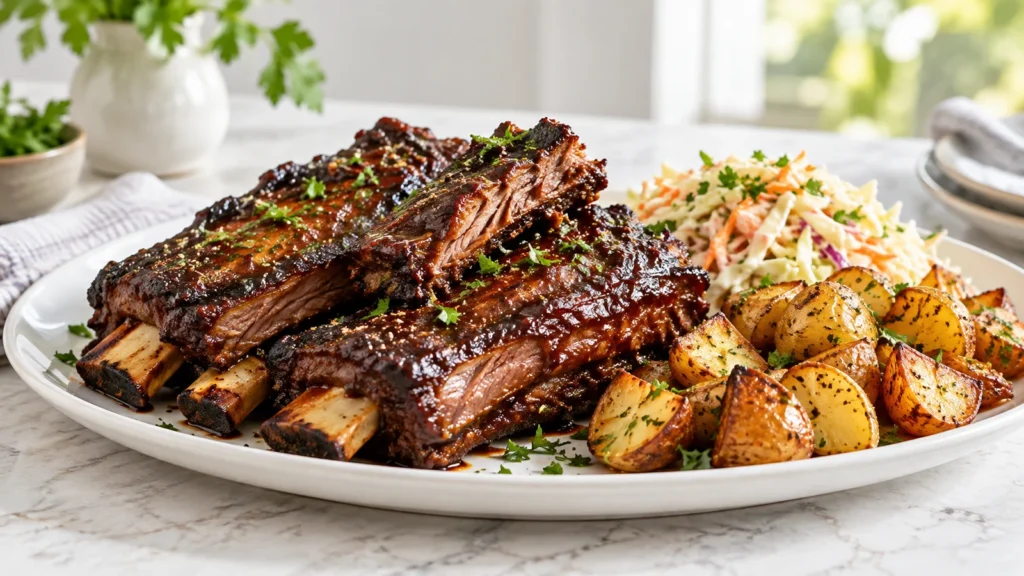
This beef ribs recipe oven method turns a tough, flavorful cut into tender ribs with a deeply seasoned crust and a sticky barbecue finish. Bake them tightly covered at 275°F (135°C) for about 3 to 4 hours, adjusting the time for the rib cut and thickness.
The gentle heat and foil seal hold in moisture while the connective tissue softens. Unlike a rushed beef ribs recipe, this method allows collagen-rich meat to become tender without drying out. A short rest followed by careful broiling gives you caramelized sauce and juicy ribs.
This approach also adapts easily to a beef short ribs recipe or a boneless beef short ribs recipe. The important points remain the same: season thoroughly, seal the ribs tightly, cook until a probe meets little resistance, and add sugary sauce near the end.
Table of Contents
Why You’ll Love This Recipe
- Reliable: Clear timing ranges and tenderness tests remove the guesswork.
- Flexible: The method works with beef back ribs, plate or chuck short ribs, and boneless short ribs.
- Flavorful: A savory dry rub seasons the beef before barbecue sauce is added at the end.
- Make-ahead friendly: The ribs can be baked in advance and reheated before broiling.
- Easy to scale: You can prepare a smaller or larger batch as long as the ribs fit without being crowded and every packet is sealed securely.
Ingredients
- 4 to 5 pounds (1.8 to 2.3 kg) bone-in beef ribs
- 1 tablespoon yellow mustard or olive oil
- 2 teaspoons kosher salt
- 2 teaspoons smoked paprika
- 2 teaspoons packed brown sugar
- 1 1/2 teaspoons garlic powder
- 1 1/2 teaspoons onion powder
- 1 teaspoon ground black pepper
- 1/2 teaspoon ground cumin
- 1/4 teaspoon cayenne pepper, optional
- 1/2 cup (120 ml) beef broth or water
- 3/4 cup (180 ml) barbecue sauce
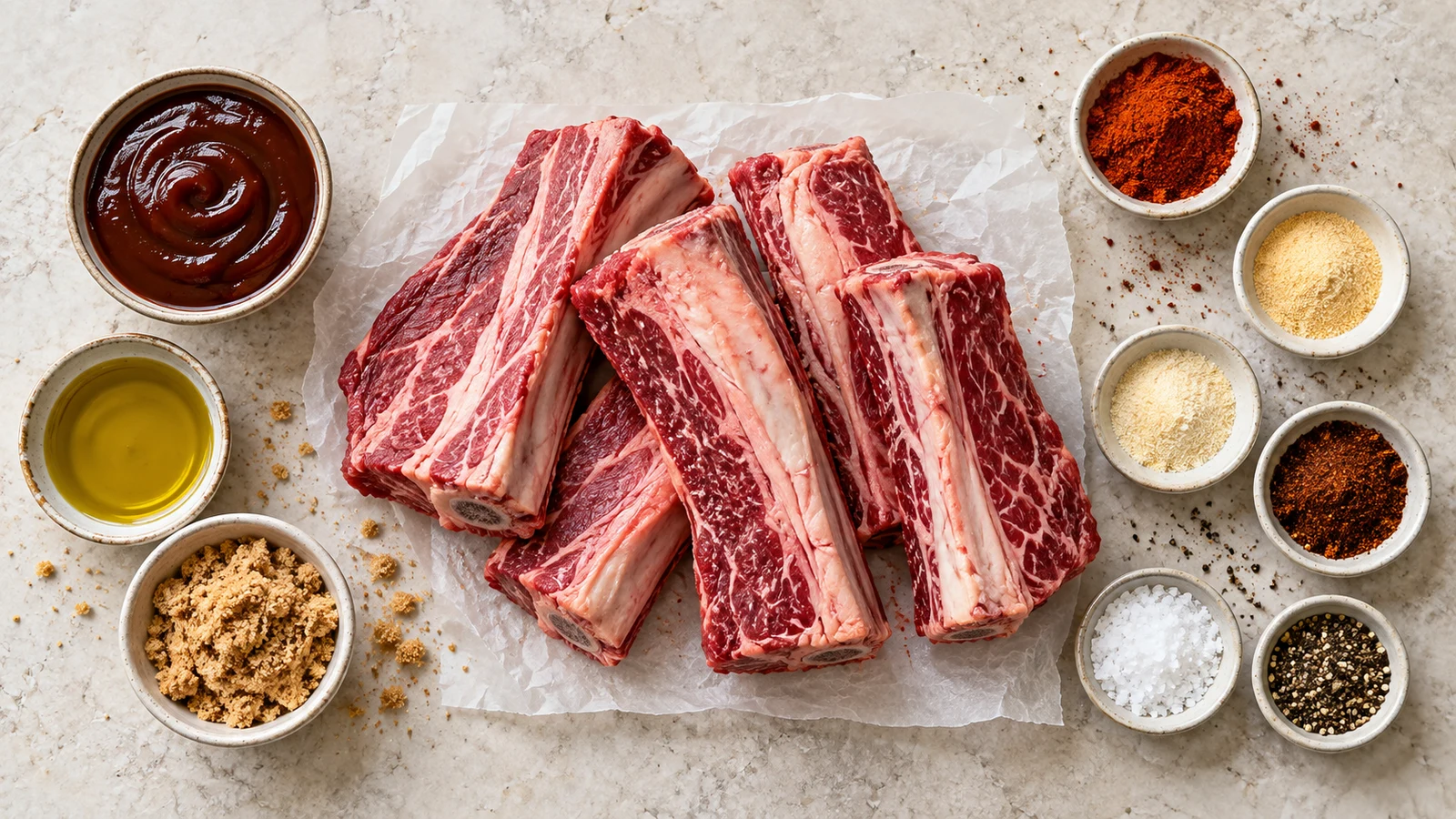
You will also need a rimmed baking sheet or roasting pan, heavy-duty aluminum foil, a small bowl, paper towels, tongs, and an instant-read thermometer if using temperature as an optional doneness check.
Choosing the Right Beef Ribs
Know your cut before setting the timer. Beef back ribs have curved bones with meat mainly between them and generally cook faster. Short ribs are thicker, meatier sections cut from the plate or chuck; see this beef short ribs oven baked recipe for a cut-specific variation. For a leaner rack with prominent bones, this beef back ribs guide is helpful.
A traditional beef short ribs recipe often uses compact, heavily marbled pieces. Their extra thickness means they generally need more time than back ribs. Look for even marbling and pieces of similar size so they finish at approximately the same time.
For a boneless beef short ribs recipe, choose thick pieces rather than thin strips intended for quick cooking. The long, covered bake works best when the meat has enough thickness and connective tissue to stay succulent as it tenderizes.
How to Make This Beef Ribs Recipe Oven Method
- Heat the oven: Set a rack in the center and preheat the oven to 275°F (135°C). Line a rimmed pan with foil for easier cleanup.
- Remove the membrane: Pat the ribs dry and place them bone-side up. Slide a butter knife beneath the thin membrane covering the bones, grip it with a paper towel, and pull it away. If it will not release cleanly, score it between the bones rather than cutting deeply into the meat.
- Mix the dry rub: Combine the salt, paprika, brown sugar, garlic powder, onion powder, pepper, cumin, and optional cayenne. Lightly coat the ribs with mustard or oil, then press the seasoning over every side.
- Wrap tightly: Place the ribs meat-side up on a large double layer of heavy-duty foil. Add the broth beside the ribs, avoiding the seasoned surface. Seal the foil tightly and set the packet on the prepared pan. Covering traps steam and limits moisture loss; baking uncovered for the entire time can toughen the exterior before the center becomes tender.
- Bake low and slow: Cook average beef back ribs, about 1 to 1 1/2 inches thick, for 2 1/2 to 3 1/2 hours. Thick back ribs or 2-inch short ribs need about 3 1/2 to 4 1/2 hours. Very thick plate ribs may require 4 1/2 to 5 1/2 hours. Begin checking at the low end of the range.
- Test for tenderness: Carefully open one corner of the packet, keeping your face away from the steam. The meat should have pulled back slightly from the bones, and a thin knife or skewer should enter between the bones with little resistance. An optional internal-temperature cue is approximately 195°F to 205°F (91°C to 96°C), but tenderness matters more than a single number.
- Add sauce: Remove the ribs from the foil and discard or save the juices after removing excess fat. Place the ribs meat-side up on the pan and brush with barbecue sauce. Adding sugary sauce now prevents it from scorching during the long bake.
- Broil: Set the broiler to high and position the ribs 6 to 8 inches from the heating element. Broil for 2 to 5 minutes, watching continuously and rotating the pan if needed. Sauce can move from bubbling to burned quickly, so never leave the broiler unattended. An alternative oven beef rib technique can provide additional preparation context.
- Rest and slice: Let the ribs rest for 10 to 15 minutes. Turn the rack bone-side up so you can see the bones, then slice between them with a sharp knife.
Expert Tips for a Beef Ribs Recipe Oven Success
- Match timing to thickness: Weight alone is misleading. A thick, compact short rib needs longer than a thinner rack of similar weight.
- Seal the foil: Crimp every seam firmly. Escaping steam can leave the ribs dry or extend the cooking time.
- Trust the probe test: Beef ribs can reach a food-safe temperature before their connective tissue has softened. If a skewer meets resistance, reseal and bake for another 20 to 30 minutes.
- Do not boil first: Boiling can wash away beef flavor and gives less control over texture.
- Rest before slicing: This allows the hot juices to settle and makes the ribs easier to cut cleanly.
- Keep the meat side up: This protects the seasoned surface from sitting in the cooking liquid and helps preserve the rub.
- Use heavy-duty foil: Thin foil tears more easily around sharp bones. A double layer provides extra protection against leaks.
The best beef ribs recipe depends more on patience than constant attention. Avoid opening the foil repeatedly because each inspection releases heat and steam. Start checking at the earliest suggested time, then continue in short intervals only if needed.
For another useful perspective on seasoning and covered baking, review this oven-baked beef back rib method.
Variations and Substitutions
Bone-In Short Ribs
For a classic beef short ribs recipe, use thick bone-in chuck or plate short ribs and plan on the longer timing range. Arrange separate pieces in a single layer with a little space between them so heat can circulate around each one.
Boneless Short Ribs
To make a boneless beef short ribs recipe, choose pieces about 2 inches thick, wrap them as directed, and start checking after 2 1/2 hours. Most become tender within 2 1/2 to 3 1/2 hours. This boneless beef short ribs recipe offers more cut-specific guidance.
Seasoning and Sauce Options
If you prefer a simpler beef ribs recipe, replace the individual spices with 3 tablespoons of a low-salt barbecue rub, then adjust the kosher salt to taste. Check the prepared rub for salt before adding any extra.
Use honey or maple syrup instead of brown sugar, regular paprika instead of smoked, or apple juice instead of broth. These substitutions slightly change the flavor while preserving the covered cooking method and tenderness cues.
For a sauce-free finish, open the foil for the last 15 minutes and broil the dry-rubbed ribs for 1 to 2 minutes. This barbecue beef rib preparation is another reference for sauce-forward ribs.
Mild and Spicy Variations
For a mild beef short ribs oven baked recipe, omit the optional cayenne and choose a sweet or smoky barbecue sauce. For extra heat, keep the cayenne and use a spicy sauce. Apply the sauce in a thin layer so it caramelizes evenly rather than pooling and burning.
Make-Ahead Instructions
This beef ribs recipe oven method is especially useful for entertaining because most of the work can be completed early. Bake the ribs until tender, keep them unsauced, and let them cool before refrigerating. Saving a small amount of defatted cooking juice helps protect the meat during reheating.
When you are ready to serve, let the covered ribs stand at room temperature for 20 minutes. Reheat them gently, brush on the barbecue sauce, and broil just before serving. This sequence keeps the surface fresh and glossy while reducing last-minute preparation.
You can mix the dry rub ahead and store it in an airtight container. You can also trim the ribs and remove the membrane a day in advance. Keep prepared raw ribs refrigerated, then season and bake according to the beef ribs recipe directions.
How to Store and Reheat
Cool leftovers promptly, then refrigerate them in an airtight container with a spoonful of cooking juices for up to 4 days. For make-ahead ribs, complete the covered bake, cool, and refrigerate before saucing; bring them toward room temperature for 20 minutes, then reheat and finish under the broiler.
Reheat covered in a 300°F (150°C) oven with 2 tablespoons of broth for 20 to 30 minutes, or until hot throughout. Add fresh sauce and broil briefly afterward. This gentle approach suits both a bone-in beef short ribs recipe and boneless pieces.
Freeze cooled ribs in an airtight freezer container for up to 3 months. Package portions with a little defatted cooking liquid, remove excess air, and label the container. Thaw overnight in the refrigerator before reheating.
Troubleshooting Oven-Baked Beef Ribs
The Ribs Are Still Tough
Tough ribs usually need more time rather than more heat. Reseal the packet carefully and return it to the 275°F (135°C) oven for another 20 to 30 minutes. Repeat the skewer test before removing them. Thick short ribs may require more time than the average beef short ribs oven baked recipe suggests.
The Ribs Taste Dry
Dryness can result from a leaking foil packet, cooking thin ribs too long, or holding them uncovered after baking. Add a small amount of warm broth, wrap them again, and heat gently. When making the beef ribs recipe oven method again, check thin racks at the earliest recommended time.
The Sauce Burns Under the Broiler
Move the pan farther from the heating element and watch continuously. Thick layers of sauce contain more sugar in one place and burn quickly, so use a thin, even coating. Rotate the pan if one side of your broiler runs hotter.
The Seasoning Falls Off
Patting the meat dry is essential. The mustard or oil should form only a light coating, not a wet layer. Press the rub onto the meat instead of rubbing it back and forth, then place the ribs gently into the foil packet.
There Is Too Much Liquid in the Packet
Rendered fat and meat juices naturally collect during a long bake. Carefully pour the liquid into a heat-safe container and let the fat rise before removing it. The defatted juices can be used for reheating or spooned over a side dish.
Serving Ideas
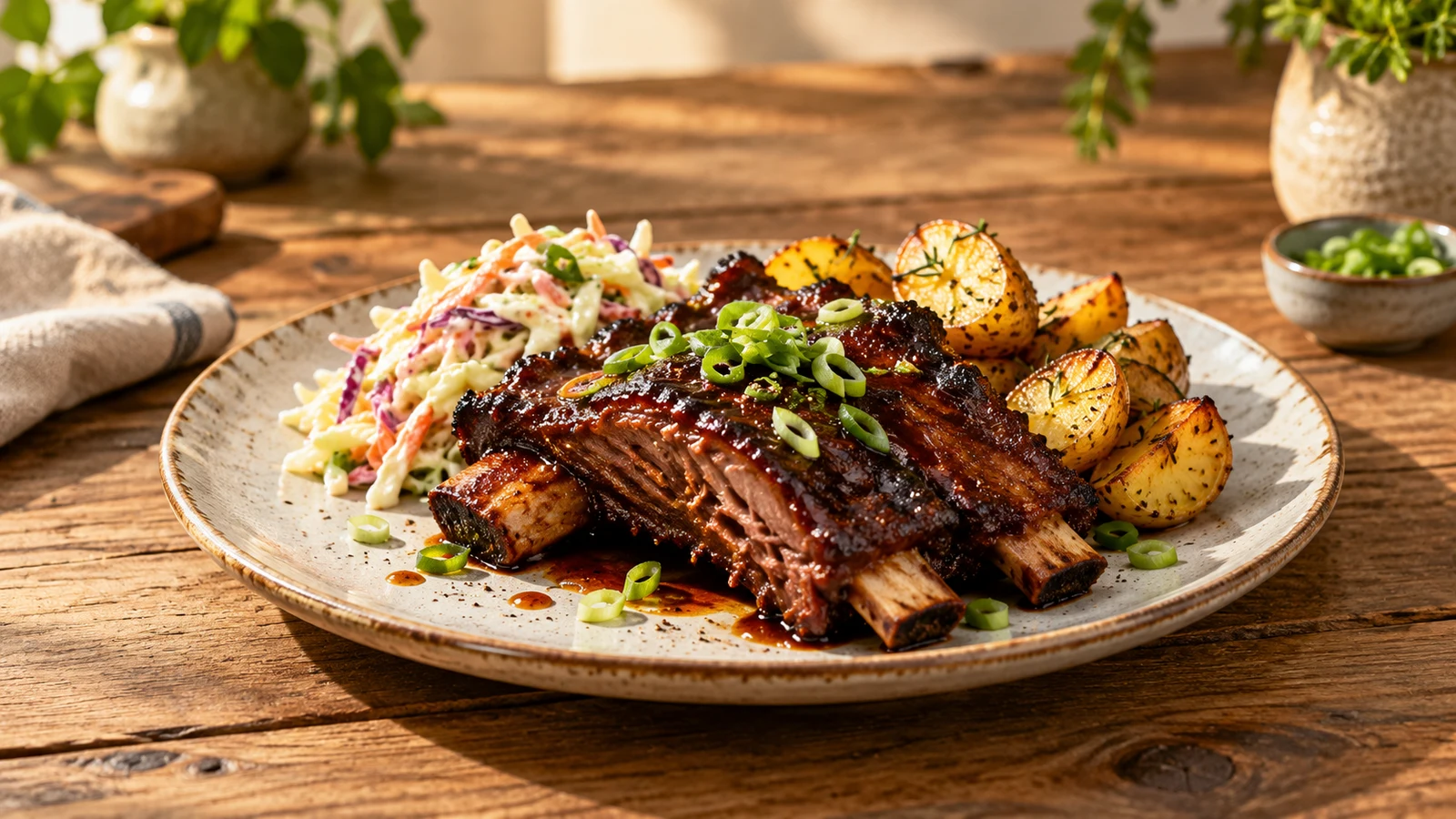
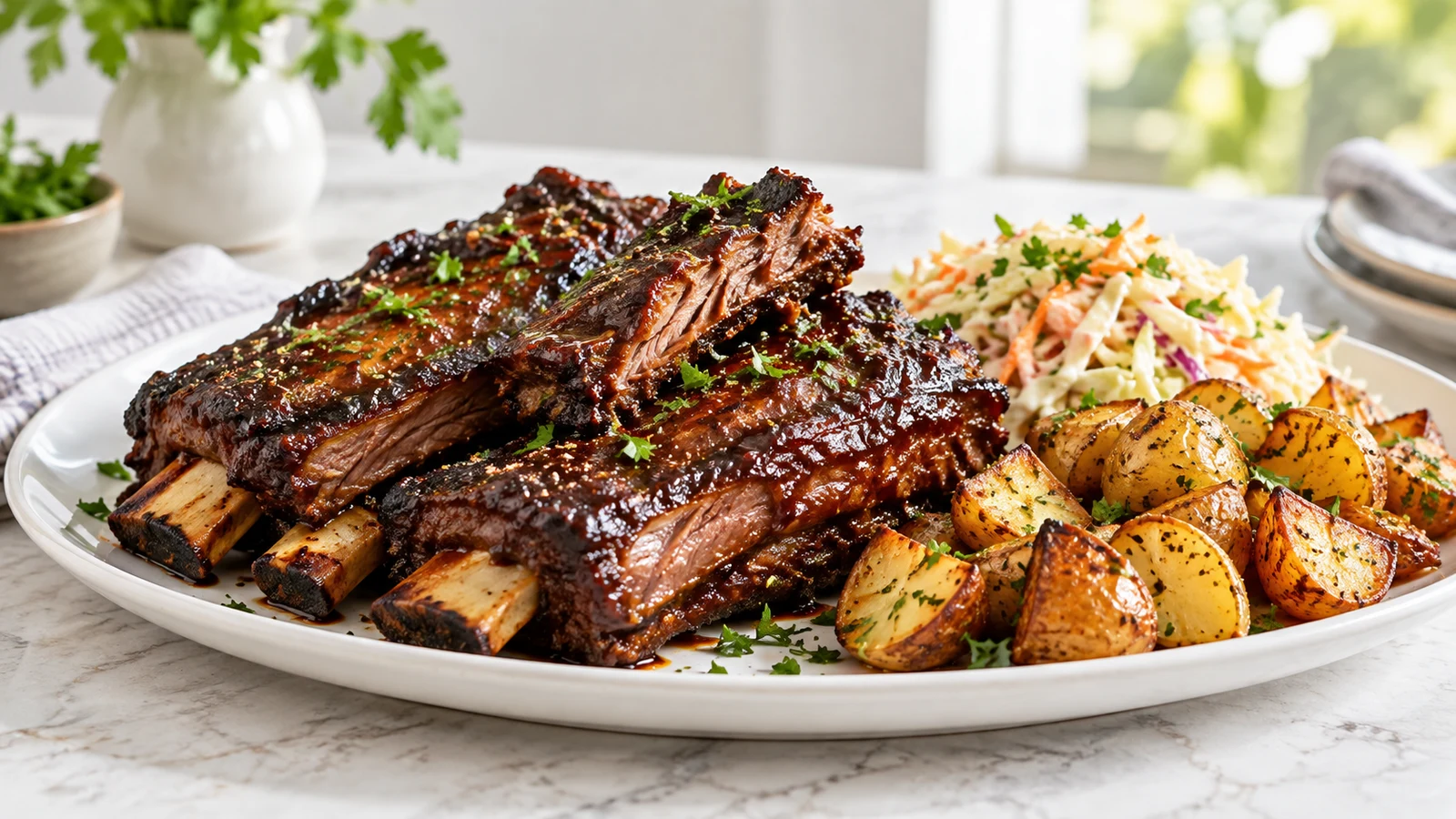
Serve the beef ribs recipe oven style with cool, crisp sides that balance the rich meat. Coleslaw, a green salad, or lightly dressed vegetables provide freshness, while baked beans, roasted potatoes, cornbread, and mashed potatoes make the meal more substantial.
For a casual gathering, slice the rack into individual ribs and arrange them on a platter with extra warm barbecue sauce. Add napkins and sturdy tongs because properly tender ribs can be wonderfully messy.
A beef short ribs recipe also pairs well with mashed potatoes because the potatoes catch the savory cooking juices. Spoon only defatted juices over the potatoes so the finished plate tastes rich without becoming greasy.
For boneless pieces, slice the meat across the grain after resting. A boneless beef short ribs recipe can be served in sandwiches, beside roasted vegetables, or over soft polenta while keeping the original quantities and cooking method unchanged.
Frequently Asked Questions
Should a beef ribs recipe oven method be covered or uncovered?
Keep the ribs tightly covered for most of the cooking time to retain moisture and encourage tender results. Uncover them only for the final sauce and broiler finish. The sealed environment is particularly helpful for thick, collagen-rich cuts.
Why are my beef ribs still tough?
They usually need more time. Reseal the foil and continue baking in 20- to 30-minute intervals until a skewer slides into the meat easily. Increasing the temperature sharply can dry the exterior before the connective tissue softens.
Can I cook this beef ribs recipe at 350°F?
Yes, but the margin for error is smaller and the meat may be less evenly tender. For foolproof results, 275°F (135°C) gives the collagen time to soften without excessive moisture loss.
How do I know when a beef short ribs recipe is done?
Oven-baked short ribs are ready when the meat has visibly relaxed around the bone and a knife enters with very little resistance. A reading near 195°F to 205°F (91°C to 96°C) can support the tenderness test but should not replace it.
Can I use boneless ribs in this beef ribs recipe oven method?
Yes. A boneless beef short ribs recipe works well when the pieces are about 2 inches thick. Start checking them after 2 1/2 hours because boneless pieces may become tender sooner than very thick bone-in plate ribs.
Do I have to remove the membrane?
Removing the membrane improves tenderness and helps seasoning reach the underside of the rack. If it is difficult to pull away, score it between the bones. Avoid cutting deeply into the meat.
Can I season the ribs overnight?
Yes. Apply the mustard or oil and dry rub, cover the ribs, and refrigerate them overnight. Set them out while the oven preheats, then continue with the beef short ribs oven baked recipe method as written.
Why is barbecue sauce added at the end?
Most barbecue sauces contain sugar, which can darken too much or burn during a long bake. Adding sauce after the ribs are tender allows it to bubble and caramelize briefly under the broiler without developing a bitter taste.
Can I cook two racks at once?
Yes, if the racks fit in a single layer without crowding. Wrap each rack securely and allow room for heat circulation. The cooking range should remain similar, but rely on thickness and the probe test rather than assuming both racks will finish simultaneously.
What is the difference between back ribs and short ribs?
Back ribs come from near the rib roast and usually have meat between curved bones. Short ribs come from the plate or chuck and are generally thicker and meatier. A beef short ribs recipe therefore often needs a longer cooking time than one designed for a thin back-rib rack.
Can I make the beef ribs recipe without barbecue sauce?
Yes. Leave the ribs dry-rubbed, uncover them for the last 15 minutes, and broil for only 1 to 2 minutes. The spice crust supplies plenty of flavor even without a sticky finish.
How many ribs should I serve per person?
The listed 4 to 5 pounds of bone-in ribs yield 6 servings. Individual portions vary with the cut because thick short ribs contain a different proportion of meat and bone than back ribs. Serving hearty side dishes also affects portion size.
Printable Recipe Card
- Prep time: 20 minutes
- Cook time: 3 to 4 1/2 hours, plus broiling
- Resting time: 10 to 15 minutes
- Yield: 6 servings
- Oven temperature: 275°F (135°C)
- Optional tenderness range: 195°F to 205°F (91°C to 96°C)
- Estimated nutrition: About 620 calories, 44 grams protein, 42 grams fat, and 16 grams carbohydrate per serving; values vary by cut and sauce.
- Notes: Check thinner back ribs early. Allow extra time for thick plate ribs, and use the skewer test as the final guide.
Final Tips for Tender Oven-Baked Ribs
A successful beef ribs recipe oven method comes down to gentle heat, a tight foil seal, and tenderness-based timing. Keep the sauce off during the long bake, check the meat with a skewer, and give thick ribs additional time when they resist.
Whether you prepare a beef short ribs recipe, a beef ribs recipe using back ribs, or a boneless beef short ribs recipe, thickness matters more than weight alone. Rest the finished meat briefly, slice carefully, and serve while the sauced edges are still warm and caramelized.
Reviews
Reader reviews are managed separately (outside this build).