Beef
Beef Back Ribs Recipe: Perfectly Tender Oven-Baked Ribs
Make this beef back ribs recipe for tender, oven-baked ribs with simple seasoning, exact timing, doneness cues, plus optional grill or smoker tips.
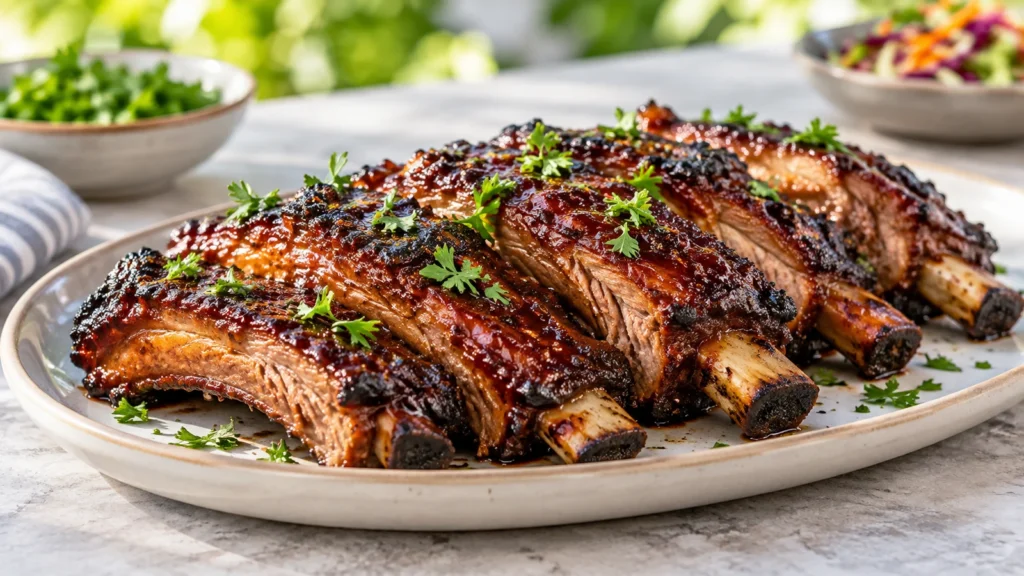
This beef back ribs recipe turns a well-seasoned rack into tender, juicy ribs with crisp edges and a sticky finish. The ribs cook low and slow at 275°F (135°C) for about 3 to 3 1/2 hours, followed by a brief uncovered finish and a 15-minute rest.
Unlike a typical beef short ribs recipe, this method is designed for the curved bones left beside the ribeye. Gentle covered cooking protects the leaner meat, while the high-temperature finish caramelizes the sauce without burning it.
Back ribs have meat between the bones, unlike short ribs, which are cut from the plate or chuck and carry a thicker layer of meat on top. For another cut comparison and cooking approach, see this complete beef ribs recipe guide.
Table of Contents
Why You’ll Love This Beef Back Ribs Recipe
- Low-temperature baking produces tender ribs without special equipment.
- Dry-brining seasons the meat more deeply and improves browning.
- Precise tenderness cues are more dependable than cooking time alone.
- The method includes oven, grill, and smoker options.
- One rack serves two generously or three with substantial side dishes.
- The sauce is applied late, creating a glossy finish without scorching.
Ingredients
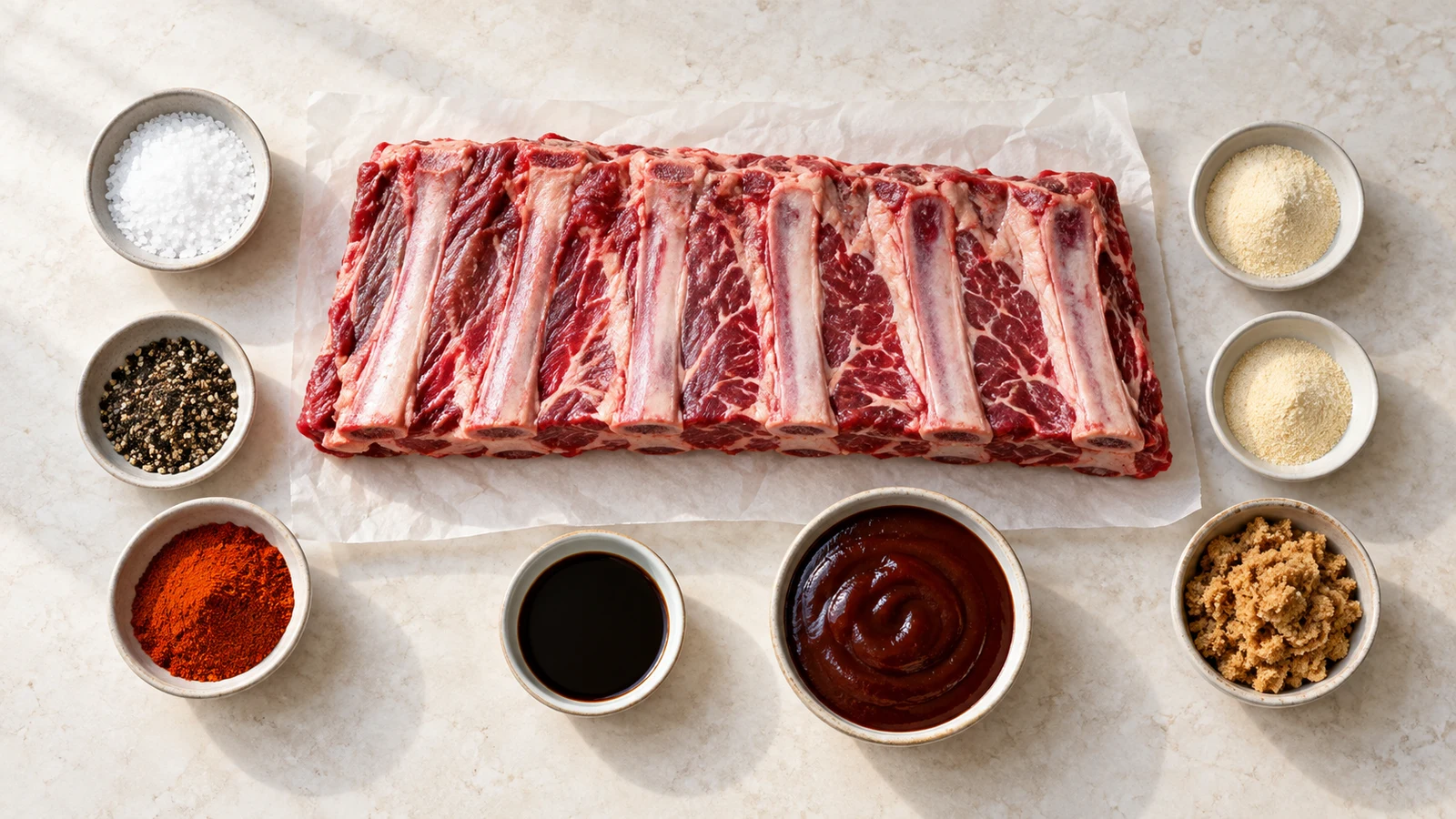
- 1 rack beef back ribs, 3 to 4 pounds (1.4 to 1.8 kilograms), ideally 7 bones
- 1 1/2 teaspoons Diamond Crystal kosher salt or 1 teaspoon fine sea salt
- 1 tablespoon brown sugar
- 2 teaspoons smoked paprika
- 2 teaspoons garlic powder
- 1 teaspoon onion powder
- 1 teaspoon ground black pepper
- 1 teaspoon ground cumin
- 1/4 teaspoon cayenne pepper, optional
- 1 tablespoon yellow mustard or neutral oil
- 1/2 cup barbecue sauce
- 2 tablespoons apple juice, beef broth, or water
Equipment and Choosing the Ribs
You will need a rimmed baking sheet, wire rack, aluminum foil, sharp knife, paper towels, pastry brush, and an instant-read thermometer. Tongs are useful for testing flexibility without piercing the meat.
Choose a rack with visible meat between every bone and as little exposed bone as possible. Packages vary, so inspect both sides rather than selecting by weight alone. Avoid racks with dried edges, gray patches, or excessive surface liquid.
Back ribs are not interchangeable with short ribs. If you want thick, meaty pieces suited to slow cooking, use a beef short ribs oven baked recipe instead. Choosing the correct cut is important because a beef short ribs recipe normally needs different timing and moisture management.
Preparing, Dry-Brining, and Seasoning
Pat the rack dry and place it bone-side up. Slide a butter knife beneath the thin membrane covering the bones, loosen one corner, then grip it with a paper towel and pull steadily. If it tears, lift another section and continue. Removing it helps the seasoning penetrate and makes the finished ribs easier to eat.
Sprinkle the salt evenly over both sides. Refrigerate the rack uncovered for 4 to 24 hours, then let it stand at room temperature for 30 minutes. If time is short, salt it immediately before adding the rub. Avoid salting it 30 minutes to 3 hours ahead because moisture may be drawn out without enough time to be reabsorbed.
Combine the brown sugar, paprika, garlic, onion, pepper, cumin, and cayenne. Coat the ribs lightly with mustard, then press on the spice mixture. The mustard helps the rub adhere but does not leave a strong mustard flavor.
This dry-brining step gives the beef back ribs recipe a more evenly seasoned interior. Leaving the rack uncovered also dries the surface slightly, helping the spice crust cling during cooking.
How to Make This Beef Back Ribs Recipe
- Heat the oven: Preheat it to 275°F (135°C). Set a wire rack inside a rimmed baking sheet.
- Arrange the rack: Place the ribs bone-side down on the wire rack. Add the apple juice beneath the rack, keeping the liquid away from the meat.
- Cover tightly: Seal the baking sheet with foil. Bake a 3-pound rack for 2 1/2 hours or a 4-pound rack for about 3 hours before checking it.
- Test tenderness: Carefully open one corner of the foil. The rack should bend readily when lifted, and a skewer should slide between the bones with little resistance. The meat will usually register 195–205°F (91–96°C), although tenderness matters more than one exact temperature.
- Continue if necessary: If the ribs resist the skewer, reseal the foil and bake for another 20 to 30 minutes. Repeat until tender.
- Add sauce: Remove the foil and brush on a thin layer of barbecue sauce. Increase the oven to 425°F (220°C) and cook for 8 to 12 minutes, brushing on a second thin layer halfway through. Watch closely because sugary sauce can burn.
- Rest and slice: Transfer the rack to a board and rest it for 15 minutes. Turn it bone-side up so you can see the gaps, then slice between the bones.
How to Tell When Beef Ribs Are Tender
An instant-read thermometer is helpful, but it should not be the only test. Insert the probe into the thickest meat between two bones without touching bone. A reading of 195–205°F (91–96°C) commonly indicates that the connective tissue has softened.
Next, lift the rack near its center with tongs. It should bend easily, and the surface may crack slightly without the rack falling apart. Finally, slide a thin skewer between the bones. Properly cooked ribs offer little resistance, similar to softened butter.
These physical checks make this beef ribs recipe more reliable than following a clock alone. Rack thickness, oven calibration, starting temperature, and the amount of meat left on the bones can all change the required cooking time.
Optional Grill or Smoker Methods
For a grilled finish, bake the covered ribs until nearly tender, then place them over medium indirect heat at about 350°F (175°C). Sauce and grill for 5 to 10 minutes, turning once. This technique is similar in spirit to these Asian grilled beef ribs.
For a full smoker method, cook bone-side down at 250°F (120°C) for 3 to 4 hours. When the bark is set and the internal temperature reaches roughly 165°F (74°C), wrap the rack with a splash of broth and continue until probe-tender. Unwrap, sauce, and smoke for another 10 to 15 minutes.
You can also grill entirely over indirect heat at 275–300°F (135–150°C), but maintain a steady temperature and keep the ribs away from direct flames. For another seasoning approach, consult these spicy beef back ribs.
When adapting this beef back ribs recipe outdoors, keep the lid closed as much as possible. Frequent opening releases heat and extends the cooking time. Move the rack farther from the fire if the sugar begins to darken before the meat is tender.
Expert Tips for the Best Beef Back Ribs Recipe
- Check the oven temperature: An inexpensive oven thermometer can reveal temperature swings that make a beef ribs recipe finish too early or too late.
- Cook bone-side down: The bones shield the meat from direct heat and help prevent the underside from drying.
- Seal the foil carefully: Crimp it around the pan so steam stays inside during the tenderizing stage.
- Use thin sauce layers: Apply sauce only near the end because an early, heavy coating can scorch before the ribs soften.
- Trust tenderness tests: Bone pullback varies from rack to rack, while the bend and skewer tests provide clearer evidence.
- Keep the rack whole: Individual ribs expose more surface area and lose moisture more quickly.
- Rest before slicing: Fifteen minutes allows the hot juices to settle and gives the glaze time to become tacky.
- Slice from the bone side: The spaces between the bones are easier to see, producing neater portions with more meat attached.
Variations and Substitutions
Adjusting the Spice Rub
Replace the brown sugar with maple sugar or omit it for a less sweet crust. Dijon mustard can replace yellow mustard, while regular paprika can replace smoked paprika when you prefer a milder flavor. Keep the listed salt quantity unchanged so the seasoning remains balanced.
For more heat, retain the cayenne and choose a spicy barbecue sauce. For a soy-ginger variation, use a low-sodium soy glaze during the final minutes rather than mixing wet ingredients into the dry rub. This preserves the same low-and-slow structure while changing the finish.
Scaling the Beef Ribs Recipe
To scale the beef back ribs recipe, allow about 1 1/2 to 2 pounds of raw bone-in ribs per adult. Two racks can bake simultaneously on separate sheets. Rotate the pans halfway through and expect the cooking time to increase slightly.
Do not stack racks or crowd them onto one pan. Each rack needs space for heat to circulate, and every pan must be sealed tightly. Check each rack separately because one may become tender before the other.
Using a Different Cut
Boneless ribs require a different method because they lack protective bones. This boneless beef short ribs recipe explains how to cook that cut without drying it out. A boneless beef short ribs recipe is the better choice when you want thick, fork-tender portions without bones.
For smaller glazed portions, these bite-size sweet and spicy beef ribs offer another serving idea. If your package contains short ribs rather than back ribs, follow a dedicated beef short ribs recipe instead of simply substituting them here.
Make-Ahead Options
You can remove the membrane, salt the rack, and refrigerate it uncovered up to 24 hours before cooking. Mix the dry spices separately and keep them in a covered container at room temperature. Apply the mustard and rub shortly before the ribs go into the oven.
For easier entertaining, cook the ribs through the covered stage earlier in the day. Let them cool briefly, cover, and refrigerate within two hours. Before serving, warm them covered at 300°F (150°C), then add the sauce and complete the 425°F (220°C) finish.
The same staged approach works when preparing a beef short ribs oven baked recipe for a gathering, although its original instructions should determine the timing. Avoid leaving cooked meat at room temperature while side dishes are prepared.
Serving Ideas for Beef Back Ribs
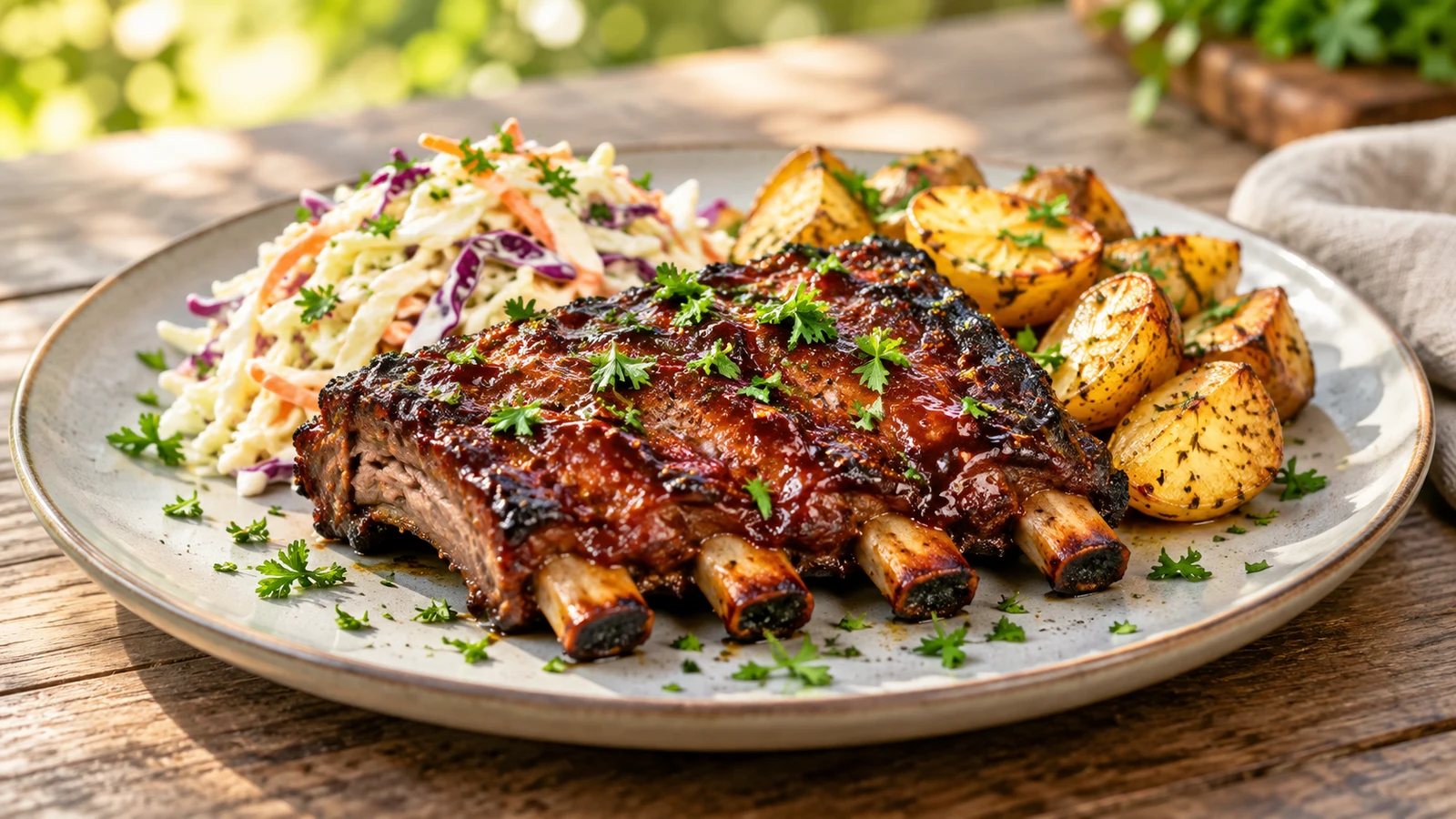
Serve two to three bones per person with coleslaw, roasted potatoes, cornbread, baked beans, or a crisp green salad. Pickles or a vinegar-dressed slaw balance the richness especially well.
For a summer meal, add grilled corn, sliced tomatoes, and chilled watermelon. In cooler weather, pair the ribs with mashed potatoes, roasted carrots, or braised greens. Keep at least one side fresh or tangy so the plate does not feel overly heavy.
A casual sauce bar can make this beef ribs recipe suitable for a party. Offer the original barbecue sauce along with a spicy version and a less sweet option. Serve extra sauce on the side rather than pouring it over the finished crust.
How to Store, Freeze, and Reheat
Refrigerating Leftovers
Refrigerate cooled ribs in an airtight container within two hours and use them within three to four days. Store extra sauce separately when possible so the crust does not become overly soft.
Freezing Cooked Ribs
Freeze individual portions with a spoonful of cooking juices or sauce in freezer-safe wrapping for up to three months. Removing excess air helps prevent freezer burn. Label the package with the date, then thaw it overnight in the refrigerator before reheating.
Reheating Without Drying
Place the ribs in a baking dish with 1 to 2 tablespoons of broth, cover tightly, and warm at 300°F (150°C) for 20 to 30 minutes, or until heated through. Uncover and brush with sauce for the final five minutes.
A microwave works for small portions when the ribs are covered and heated at 50 percent power. Use short intervals and turn the portion between them. Gentle reheating preserves the texture of this beef back ribs recipe better than intense heat.
Troubleshooting This Beef Ribs Recipe
Why Are My Ribs Still Tough?
Tough ribs are usually undercooked rather than overcooked. Reseal the foil and continue baking in 20- to 30-minute intervals. Test between the bones after every interval until a skewer slides in with little resistance.
Why Did the Ribs Turn Dry?
The rack may have cooked uncovered too long, been divided before cooking, or contained very little meat. Brush dry ribs with warm broth and sauce, cover loosely, and rest for 10 minutes. Next time, keep the foil tightly sealed and begin checking a smaller rack earlier.
Why Did the Sauce Burn?
Barbecue sauce contains sugar that darkens rapidly at 425°F (220°C). Use two thin coats, watch continuously during the final minutes, and remove the pan as soon as the glaze is bubbling and tacky.
Why Is the Spice Crust Patchy?
Excess surface moisture or a heavy mustard layer can make the rub slide. Pat the meat thoroughly dry and use only enough mustard to create a thin film. Press the seasoning onto the rack instead of rubbing it back and forth.
Why Is Liquid Leaking from the Foil?
A loose seal allows steam to escape and can slow tenderizing. Use a sheet of foil large enough to cover the entire pan, then crimp it firmly around every edge. Add a second sheet if the first one tears.
Frequently Asked Questions
Should a beef back ribs recipe cook covered or uncovered?
Keep the ribs covered for most of the low-and-slow cooking period to reduce moisture loss. Uncover them only for the final sauce-setting stage, when a short burst of higher heat creates caramelized edges.
Which way should the bones face?
Place the rack bone-side down in the oven or smoker. The bones provide some protection from the heat while the exposed meat develops its crust.
Can I cook the ribs from frozen?
Thaw them first for even seasoning and predictable cooking. Cooking from frozen can leave the exterior dry before the center becomes tender, and the membrane is difficult to remove.
How does rack size affect cooking time?
A 2- to 3-pound rack may become tender in 2 1/2 to 3 hours, while a thick 4- to 5-pound rack can require 3 1/2 to 4 1/2 hours. Begin checking early and use the bend and skewer tests.
Can I make this beef ribs recipe without barbecue sauce?
Yes. Complete the covered cooking stage, then uncover the rack and finish it briefly at 425°F (220°C) without sauce. Watch the spice crust closely because the exposed surface can darken quickly.
What is the difference between a beef back ribs recipe and a beef short ribs recipe?
Back ribs are cut from beside the ribeye and carry most of their meat between the bones. Short ribs come from the plate or chuck and usually have a thicker cap of meat. Their different shapes and fat distribution require cut-specific cooking methods.
Can I use boneless short ribs in this recipe?
No direct substitution is recommended. A boneless beef short ribs recipe accounts for the absence of bones and the thicker shape of the meat. Following that method provides more dependable timing and moisture control.
When should I choose a beef short ribs oven baked recipe?
Choose a beef short ribs oven baked recipe when you have rectangular, meaty short ribs rather than a curved rack. Short ribs suit braising and other moist, slow-cooking methods, while back ribs benefit from the covered rack method used here.
Do I have to remove the membrane?
Removing it is recommended because the membrane can become chewy and prevent seasoning from reaching the bone side. If a butcher has already removed it, the bones will not have a smooth, papery covering.
Can I skip the dry-brine?
Yes, when time is limited. Salt the rack immediately before adding the remaining seasonings. The result will still be flavorful, although a 4- to 24-hour dry-brine seasons the meat more evenly and supports better browning.
Nutrition Information
One serving, based on three servings and including sauce, provides approximately 620 calories, 44 grams of protein, 43 grams of fat, 15 grams of carbohydrates, and 820 milligrams of sodium. Values vary with rack meatiness, trimming, sauce, and portion size.
Printable Recipe Card
Beef Back Ribs Recipe
- Prep time: 20 minutes
- Dry-brine time: 4 to 24 hours
- Cook time: 3 to 3 1/2 hours
- Rest time: 15 minutes
- Total time: About 7 hours 35 minutes, including the minimum dry-brine
- Yield: 2 generous or 3 moderate servings
- Oven temperature: 275°F (135°C), then 425°F (220°C)
- Doneness: Probe-tender, generally 195–205°F (91–96°C)
Recipe card instructions: Remove the membrane, salt the rack, and refrigerate uncovered for 4 to 24 hours. Apply mustard and the spice rub. Bake bone-side down, tightly covered, at 275°F (135°C) until probe-tender. Uncover, sauce, finish at 425°F (220°C), and rest for 15 minutes before slicing.
Notes: Begin checking smaller racks after 2 1/2 hours. Add sauce only at the end, and extend the covered cooking time if the meat remains tough. Recipe schema fields include prep time, cook time, rest time, total time, yield, ingredients, instructions, temperatures, and notes.
Final Tips for a Dependable Beef Back Ribs Recipe
Patient cooking, a tightly covered pan, and hands-on tenderness tests make this beef back ribs recipe dependable. Give the finished rack its full 15-minute rest, then slice from the bone side and serve it with simple sides that let the smoky beef flavor remain the focus.
If you buy another cut, switch to a suitable beef short ribs recipe or boneless beef short ribs recipe instead of changing the core method. Matching the cooking technique to the ribs is the simplest way to achieve moist meat, a flavorful crust, and consistent results.
Reviews
Reader reviews are managed separately (outside this build).