Beef
Irresistible Korean Beef Short Ribs Recipe—Oven-Broiled
Discover this korean beef short ribs recipe, marinated for authentic Korean flavor, oven-baked until tender then broiled for a caramelized finish.
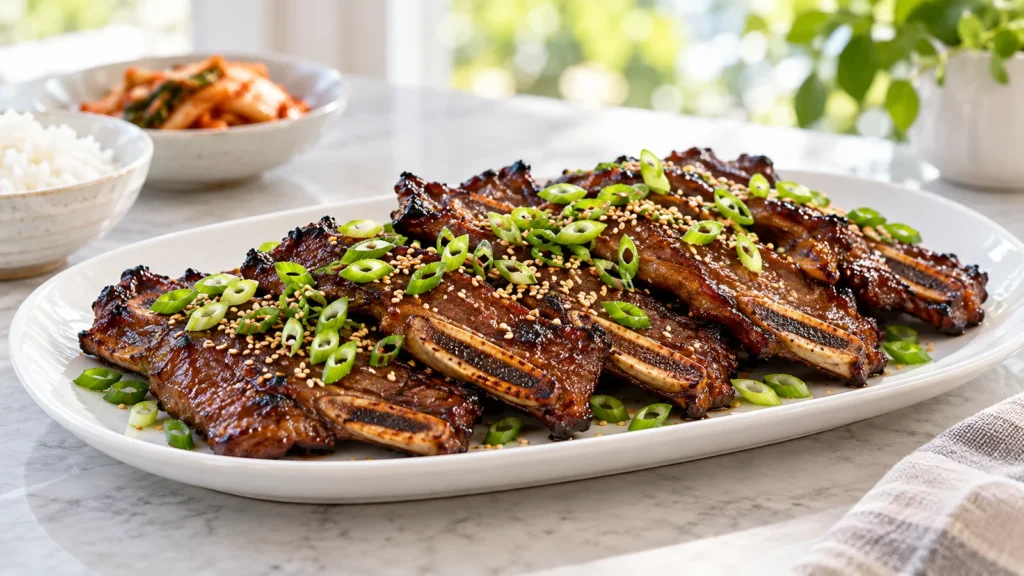
This Korean beef short ribs recipe turns thin, flanken-cut ribs into a deeply savory, caramelized dinner using an ordinary oven and broiler. The marinade balances soy sauce, Asian pear, garlic, sesame, and brown sugar, giving you the flavor of Korean galbi without an outdoor grill.
Unlike a slow-braised beef short ribs recipe, these thin ribs cook quickly after marinating. The oven provides steady heat, while a brief broil creates the glossy, lightly charred edges that make this beef ribs recipe especially satisfying.
Jump to the recipe: Follow the ingredient list and numbered oven instructions below. Allow at least 4 hours for marinating, although 8 to 12 hours produces the best flavor.
Table of Contents
What Are Korean Short Ribs?
Korean short ribs, commonly called galbi or kalbi, are usually cut across several rib bones into thin strips. This flanken cut exposes small bone sections and creates more surface area for marinade and quick, high-heat cooking. For useful background on the dish, see this guide to Korean galbi.
Choose flanken-cut ribs about 1/3 to 1/2 inch (8 to 13 mm) thick, with even marbling and bright red meat. Avoid thick English-cut ribs, which contain one large bone and need slow braising rather than brief broiling. For that style, use this slow-cooked beef short ribs recipe instead.
The cut matters as much as the marinade. A traditional korean beef short ribs recipe relies on thin slices that become tender during a relatively short cooking time. Thick ribs cannot be substituted without changing both the cooking method and timing.
Why You’ll Love This Korean Beef Short Ribs Recipe
- Fast cooking: Thin ribs cook in about 10 minutes after marinating.
- Big flavor: Pear, soy sauce, garlic, ginger, and sesame create a balanced marinade.
- No grill required: A broiler produces browned, lightly charred edges indoors.
- Flexible: The method includes boneless, gluten-free, and lower-sugar options.
- Good for entertaining: Most preparation for this beef ribs recipe happens before guests arrive.
Ingredients
- 2 pounds (907 g) flanken-cut beef short ribs, 1/3 to 1/2 inch thick
- 1/2 cup low-sodium soy sauce
- 1 small Asian pear, peeled, cored, and grated
- 1/3 cup finely grated yellow onion
- 3 tablespoons packed brown sugar
- 2 tablespoons mirin or water
- 1 tablespoon toasted sesame oil
- 5 garlic cloves, minced
- 2 teaspoons grated fresh ginger
- 1/2 teaspoon black pepper
- 2 scallions, thinly sliced, plus more for serving
- 1 teaspoon toasted sesame seeds, plus more for serving
- Cooked rice, lettuce leaves, and kimchi, for serving
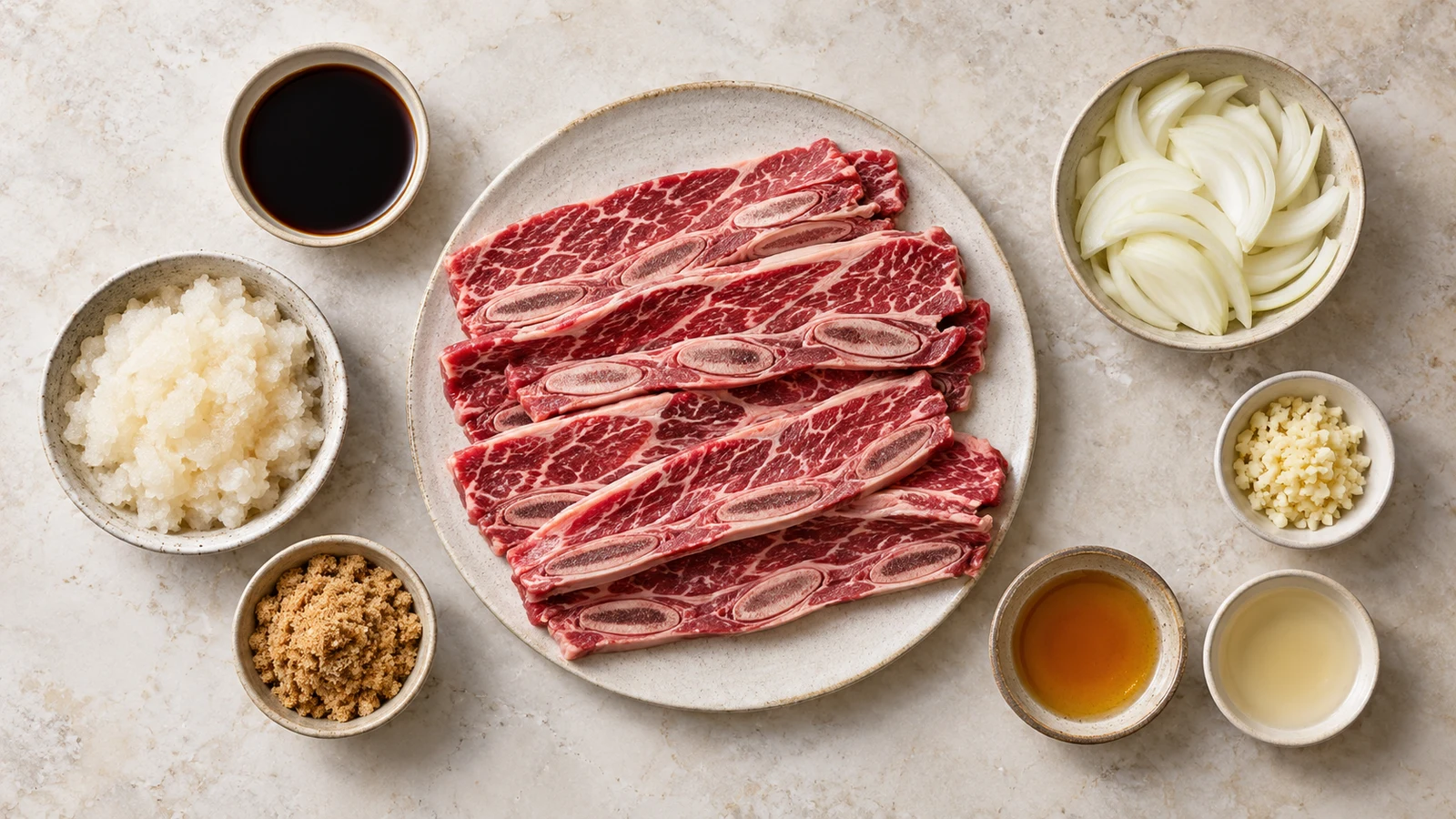
Buying guidance: Ask the butcher for Korean-style or LA-style flanken ribs. Packages may also be labeled cross-cut short ribs. Look for uniform slices so they finish together; this LA galbi reference illustrates the characteristic thin, cross-cut shape.
What Each Marinade Ingredient Does
Asian pear and grated onion supply moisture, sweetness, and enzymes that gently soften the surface of the meat. Brown sugar encourages caramelization, while soy sauce supplies salt and savory depth. Together, these ingredients give the korean beef short ribs recipe its characteristic balance.
Garlic, ginger, scallions, black pepper, and toasted sesame oil build aroma. Mirin rounds out the salty and sweet flavors, while sesame seeds add a mild nutty note. Mixing the marinade thoroughly helps distribute these strong ingredients evenly across every rib.
How to Make This Korean Beef Short Ribs Recipe
- Clean the ribs. Check for loose bone fragments left by cross-cutting. Rinse briefly only if fragments are visible, then dry the ribs very thoroughly with paper towels.
- Mix the marinade. Combine soy sauce, pear, onion, brown sugar, mirin, sesame oil, garlic, ginger, pepper, scallions, and sesame seeds in a large nonreactive bowl.
- Marinate. Add the ribs and turn until every piece is coated. Cover and refrigerate for at least 4 hours, ideally 8 to 12 hours. Do not exceed 24 hours because the fruit and salt can make the surface overly soft and salty.
- Heat the oven. Position a rack 6 inches below the broiler. Heat the oven to 425°F (220°C), line a rimmed sheet pan with foil, and place a wire rack on top. If you do not have a rack, use a foil-lined pan and turn the ribs carefully.
- Bake. Lift the ribs from the marinade and let excess liquid drip away. Arrange them in one layer without overlapping. Discard the used marinade. Bake for 6 minutes.
- Broil and turn. Switch the oven to high broil. Broil for 2 to 3 minutes, turn the ribs, and broil for another 2 to 3 minutes. Watch continuously because the sugar can darken quickly.
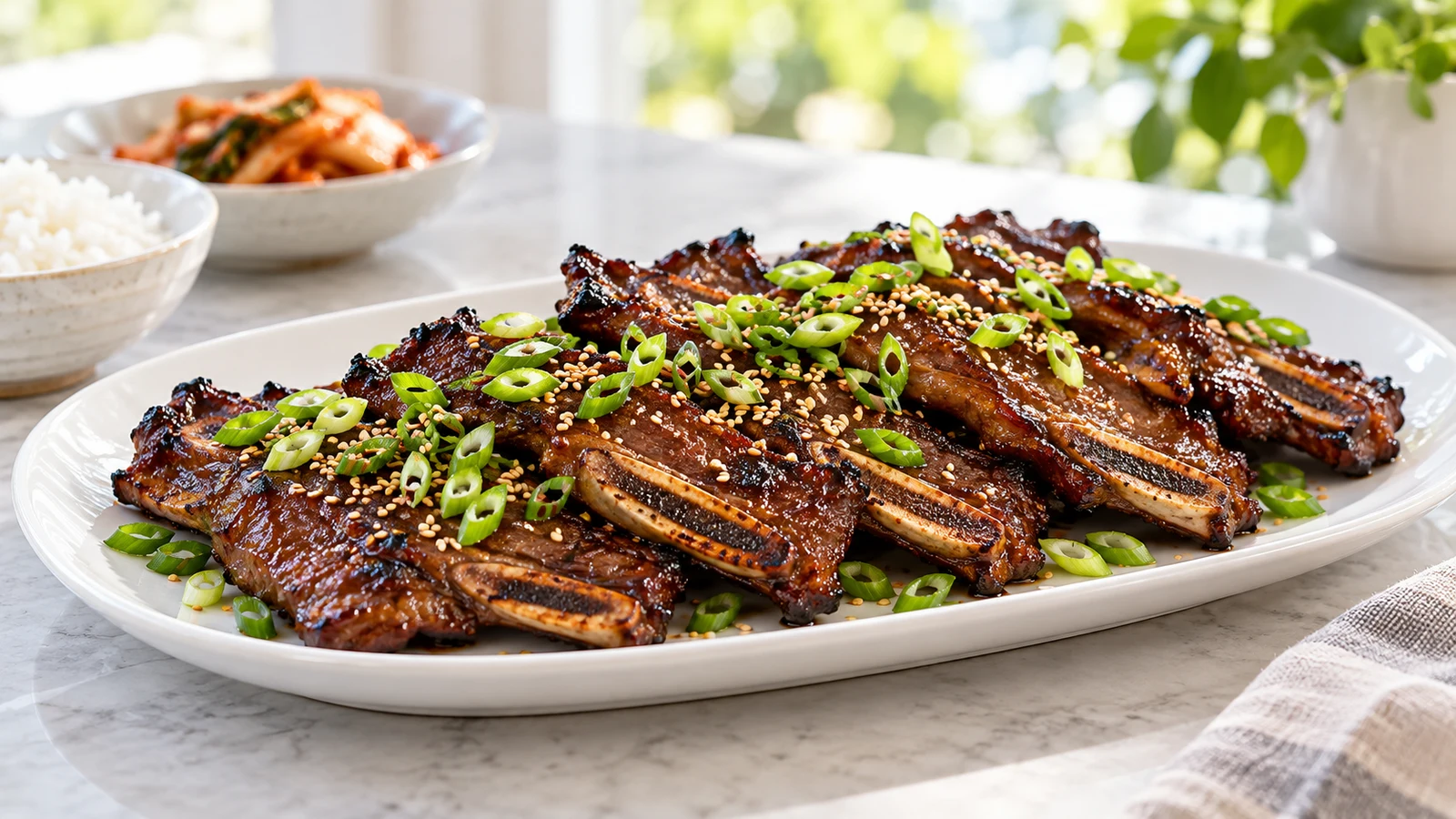
- Check and rest. The ribs should be sizzling, browned, and lightly charred at the edges, with no raw-looking center. Rest for 3 minutes, then garnish with scallions and sesame seeds.
Expert Tips for Better Korean Short Ribs
Choose Consistent Slices
Uniform thickness is essential for this korean beef short ribs recipe. If one end of a rib is noticeably thinner, position that end farther from the hottest area of the broiler. Remove any fully cooked pieces early rather than allowing their sugary coating to burn.
Dry the Surface Before Marinating
After checking for bone fragments, pat the meat thoroughly dry. Excess surface water dilutes the marinade and makes browning more difficult. This small step gives the finished beef ribs recipe a more concentrated flavor and a better seared exterior.
Use a Nonreactive Container
Marinate the ribs in glass, ceramic, food-safe plastic, or stainless steel. Avoid reactive aluminum or copper containers, which can interact with salty ingredients. Turn the ribs once or twice during marinating if they are not completely surrounded by liquid.
Control the Broiler Carefully
Broilers vary considerably, so treat the listed time as a close guide rather than an invitation to leave the kitchen. Watch the ribs continuously. If the coating darkens before the meat is ready, lower the pan by one rack position and continue cooking.
Cook in Batches When Necessary
Each piece needs exposure to circulating heat. If the pan is crowded, prepare a second batch instead of overlapping the ribs. Proper spacing is one of the simplest ways to make a beef short ribs oven baked recipe brown rather than steam.
Oven Method and Other Cooking Options
This beef short ribs oven baked recipe uses moderate heat first and a broiler finish for reliable cooking and caramelization. For a lower, slower approach designed for thicker cuts, consult this oven-baked short ribs guide.
Grill: Cook over medium-high heat for 3 to 4 minutes per side. Skillet: Sear in a lightly oiled cast-iron pan for 3 to 4 minutes per side, working in batches. Both methods suit thin ribs and create excellent browning.
Slow cooker or pressure cooker: These are better for thick English-cut ribs, not traditional thin galbi. Slow-cook thick ribs for 7 to 8 hours on low, or pressure-cook for about 45 minutes with a natural release. Compared with this quick beef ribs recipe, those methods produce tender, braised meat without crisp edges.
The grill adds smoke, and a skillet offers direct contact with a hot surface. However, the oven method is convenient when the weather is poor or several portions must cook at once. It also makes the korean beef short ribs recipe accessible without specialized equipment.
Boneless Adaptation
For a tested boneless beef short ribs recipe adaptation, use 1/2-inch-thick slices cut across the grain from boneless chuck short ribs. Marinate for 4 to 8 hours, bake at 425°F (220°C) for 5 minutes, then broil for 2 to 3 minutes per side. Thicker boneless pieces need longer cooking and will not behave like thin galbi; see this boneless short ribs recipe for additional cut-specific guidance.
Slicing across the grain is especially important in a boneless beef short ribs recipe because there are no bones to indicate the serving direction. Shorter muscle fibers feel more tender when chewed. Keep the slices evenly thick so their centers finish at approximately the same time.
Tips for the Best Results
- For tender ribs: Buy thin, well-marbled flanken ribs and slice each serving across the grain between bone sections. Tough ribs are usually too thick, undercooked, or cut from a lean package.
- For better browning: Drain off excess marinade and leave space between pieces. A crowded, wet pan steams the meat.
- If the ribs burn: Move the pan farther from the element or reduce broiling time. Dark brown edges are desirable; bitter black patches are not.
- If they taste salty: Use low-sodium soy sauce, limit marinating to 12 hours, and serve with plain rice. Never boil and reuse marinade that contacted raw beef unless it reaches a safe temperature; this Korean-style beef recipe offers another preparation and serving reference.
- For easy turning: Use long tongs and grip each rib near its center so the thin meat does not tear.
- For clean flavor: Use toasted sesame oil as written rather than increasing it, since too much can overpower the pear, garlic, and beef.
Variations and Substitutions
Pear and Apple Options
Replace Asian pear with a ripe Bosc pear, Fuji apple, or 1/2 cup unsweetened applesauce. Kiwi tenderizes aggressively, so use no more than 1 tablespoon and marinate for only 1 to 2 hours. These alternatives change the fruit character slightly without changing the central method of the korean beef short ribs recipe.
Gluten-Free and Lower-Sugar Options
For gluten-free ribs, substitute certified gluten-free tamari for soy sauce and confirm that the mirin is gluten-free. For a lower-sugar version, reduce brown sugar to 1 tablespoon; browning will be lighter, but the pear still contributes sweetness.
Alcohol-Free and Spicy Variations
Water can replace mirin without altering the stated cooking process. For gentle heat, add a pinch of red pepper flakes or gochugaru. Keep the amount restrained so the chile complements rather than hides the sweet-savory profile of this beef short ribs recipe.
Using Boneless Meat
If bone-in flanken ribs are unavailable, follow the thickness and timing in the boneless beef short ribs recipe adaptation above. Do not use large, thick boneless chunks with the quick method because their centers will not cook at the same rate as thin slices.
Make-Ahead Planning
The marinade can be mixed up to 2 days ahead and refrigerated without the beef. Add the ribs 4 to 12 hours before cooking for the best texture. This makes the korean beef short ribs recipe practical for a dinner party because the active work before serving is brief.
You may inspect the ribs for bone fragments, dry them, and prepare the marinade ingredients earlier in the day. Keep the raw beef refrigerated throughout preparation. Once the ribs enter the marinade, do not leave them at room temperature to speed up the process.
For a next-day meal, assemble this beef ribs recipe in the evening and cook it the following day. Avoid exceeding 24 hours in the marinade. Prolonged exposure to pear enzymes and salty soy sauce can make the surface soft while increasing saltiness.
Troubleshooting This Beef Ribs Recipe
Why Are the Ribs Tough?
The most likely causes are ribs that are too thick, a lean package, or slices cut in the wrong style. Confirm that the meat is flanken-cut and 1/3 to 1/2 inch thick. Thick English-cut ribs require the longer method used in a braised beef short ribs recipe.
Why Are the Ribs Watery?
Excess marinade, overcrowding, or an underheated oven can cause steaming. Let each rib drip before placing it on the rack, arrange the pieces in one layer, and preheat fully. Divide the korean beef short ribs recipe into batches if your sheet pan is small.
Why Did the Marinade Burn?
Brown sugar can change from caramelized to burned quickly beneath a powerful broiler. Move the pan farther from the element, shorten the broiling stage, or remove darkened pieces early. Do not reduce the initial baking time simply to compensate for an unusually strong broiler.
Why Is the Flavor Too Salty?
Use low-sodium soy sauce and keep marinating within the stated range. Drain the ribs before cooking and pair them with plain rice and unseasoned lettuce. If you prefer a milder beef ribs recipe, use the minimum 4-hour marinating time.
Why Is the Meat Browning Unevenly?
Household broilers often have hot spots. Rotate the sheet pan during broiling and turn every rib carefully. Pieces with heavier marbling or thinner edges may finish first, so transfer them to a clean platter while the remaining ribs continue cooking.
Serving Ideas
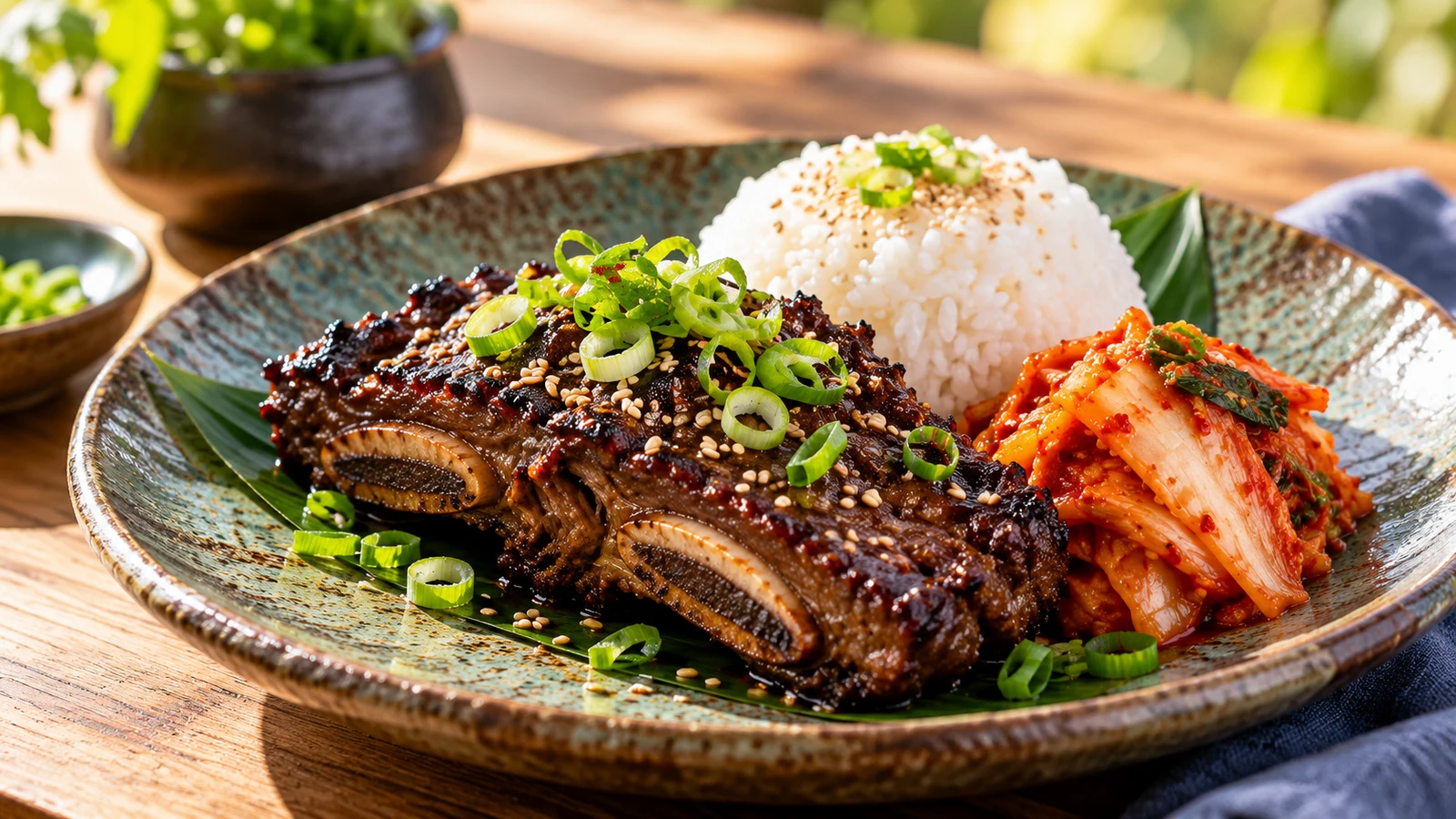
Serve the ribs with steamed short-grain rice, kimchi, sliced cucumbers, and lettuce leaves for wrapping. Scallions and sesame seeds add freshness and texture. A typical serving is about 8 ounces of bone-in ribs before cooking.
For lettuce wraps, place a small portion of rice and meat in a crisp leaf, then add kimchi or cucumber. Cutting the meat between the bone sections before serving makes the korean beef short ribs recipe easier to share at the table.
A simple cucumber salad provides cooling contrast, while lightly seasoned vegetables balance the rich meat. Plain rice is especially useful because it absorbs the savory juices without competing with the marinade. These restrained sides let the flavor of the beef short ribs recipe remain central.
For a larger meal, offer several small vegetable dishes and let guests assemble their own plates. The ribs are also excellent with grilled scallions or mushrooms. Avoid very sweet side dishes because the beef ribs recipe already contains pear and brown sugar.
Estimated nutrition per serving, excluding rice and side dishes, is approximately 520 calories, 34 grams protein, 34 grams fat, 20 grams carbohydrate, and 1,050 milligrams sodium. Values vary with the rib cut, trimming, and the amount of marinade retained.
How to Store and Reheat
Refrigerate cooled ribs in an airtight container within 2 hours and use within 3 to 4 days. Freeze cooked ribs for up to 3 months, separated with parchment in a freezer-safe container. Thaw overnight in the refrigerator.
Reheat on a covered sheet pan at 325°F (165°C) for 8 to 12 minutes, adding a teaspoon of water to prevent drying. For crisp edges, uncover and broil for the final minute. A skillet over medium-low heat also works well; turn the ribs frequently until hot throughout.
Storing Uncooked Marinated Ribs
Keep uncooked marinated ribs covered in the refrigerator and cook them within the 24-hour maximum. Do not freeze ribs after an extended refrigerator marinade, since the surface may soften further during thawing. For freezing ahead, freeze the meat and freshly mixed marinade together promptly.
Reheating Without Drying the Meat
Gentle covered heat warms leftovers more evenly than an immediate high broil. Add the crisp finish only after the meat is hot. This approach preserves the tenderness of the korean beef short ribs recipe while restoring some caramelization around the edges.
Frequently Asked Questions
Can I use thick English-cut short ribs in this korean beef short ribs recipe?
Not with the quick timing in this recipe. English-cut ribs require braising, slow cooking, or pressure cooking to soften their connective tissue. Use a dedicated beef short ribs recipe designed for thick pieces instead of extending the broiling time.
How can I tell when thin Korean ribs are done?
Look for bubbling juices, deep browning, lightly charred edges, and meat that is no longer raw in the center. Because the slices are thin, visual cues are more practical than inserting a thermometer into every piece.
Can I prepare the marinade ahead?
Yes. Mix it up to 2 days ahead and refrigerate it without the beef. Once raw ribs are added, keep everything chilled and discard the used marinade after removing the meat.
Why are my ribs watery instead of caramelized?
The ribs were probably crowded or carried too much marinade onto the pan. Drain them well, cook in batches, and preheat the broiler fully before finishing. Proper spacing helps this beef short ribs oven baked recipe develop browned edges.
Can I make this beef ribs recipe without a wire rack?
Yes. Place the ribs directly on a foil-lined rimmed sheet pan and turn them carefully as directed. A rack improves airflow and keeps the meat above pooled liquid, but the recipe still works without one if the ribs are well drained.
Can I reuse the marinade?
Discard marinade that has contacted raw beef. If you want extra sauce for serving, prepare and reserve a separate portion before adding the ribs. Never brush uncooked used marinade onto the finished meat.
Is Asian pear essential for a korean beef short ribs recipe?
Asian pear gives the most characteristic balance of sweetness, moisture, and gentle tenderizing action, but it is not the only option. A ripe Bosc pear, Fuji apple, or 1/2 cup unsweetened applesauce can be substituted as described above.
Can I cook the ribs on the grill instead?
Yes. Cook the thin ribs over medium-high heat for 3 to 4 minutes per side. Watch for flare-ups caused by dripping marinade and sugar. The grill adds smokiness, while the oven version offers easier heat control indoors.
How is a boneless beef short ribs recipe different?
Boneless meat lacks the cross-cut bones and may be thicker than galbi. Use 1/2-inch slices cut across the grain, marinate for 4 to 8 hours, bake for 5 minutes, and then broil for 2 to 3 minutes per side.
Can I double this beef short ribs recipe?
Yes, double every ingredient and cook the ribs in batches or on separate pans. Do not crowd two batches onto one sheet pan. If using multiple oven racks, broil one pan at a time so each batch sits the proper distance from the element.
What is the best way to serve leftovers?
Reheat the ribs gently, remove the meat from the small bone sections, and serve it with rice or lettuce wraps. Leftover meat can also accompany cucumbers and kimchi, provided it was refrigerated within 2 hours and used within 3 to 4 days.
Recipe Card
- Yield: 4 servings
- Equipment: Large bowl, rimmed sheet pan, foil, wire rack, tongs
- Preparation time: 20 minutes
- Marinating time: 4 to 12 hours
- Cooking time: 10 to 12 minutes
- Oven temperature: 425°F (220°C), followed by high broil
- Estimated nutrition: 520 calories, 34 g protein, 34 g fat, 20 g carbohydrate per serving
- Combine all marinade ingredients in a large bowl.
- Coat the ribs and refrigerate for 4 to 12 hours.
- Arrange drained ribs on a rack-lined sheet pan.
- Bake at 425°F (220°C) for 6 minutes.
- Broil for 2 to 3 minutes per side until browned and lightly charred.
- Rest for 3 minutes, garnish, and serve.
Final Notes
With the right thin-cut ribs, a balanced marinade, and a close eye on the broiler, this korean beef short ribs recipe delivers tender beef and caramelized edges in minutes. Serve it hot with rice and crisp vegetables for an easy, satisfying Korean-inspired meal.
The keys are simple: buy uniformly thin flanken ribs, keep the marinating time within the recommended range, drain each piece, and avoid crowding the pan. Follow those principles and this quick beef ribs recipe will produce savory, sweet, and lightly charred results without an outdoor grill.
Reviews
Reader reviews are managed separately (outside this build).