Beef
Delicious Beef Short Ribs Recipe: Foolproof Magic
Master this beef short ribs recipe for rich, fall-apart tender results with easy low-and-slow oven or Dutch-oven methods. Get foolproof tips today.
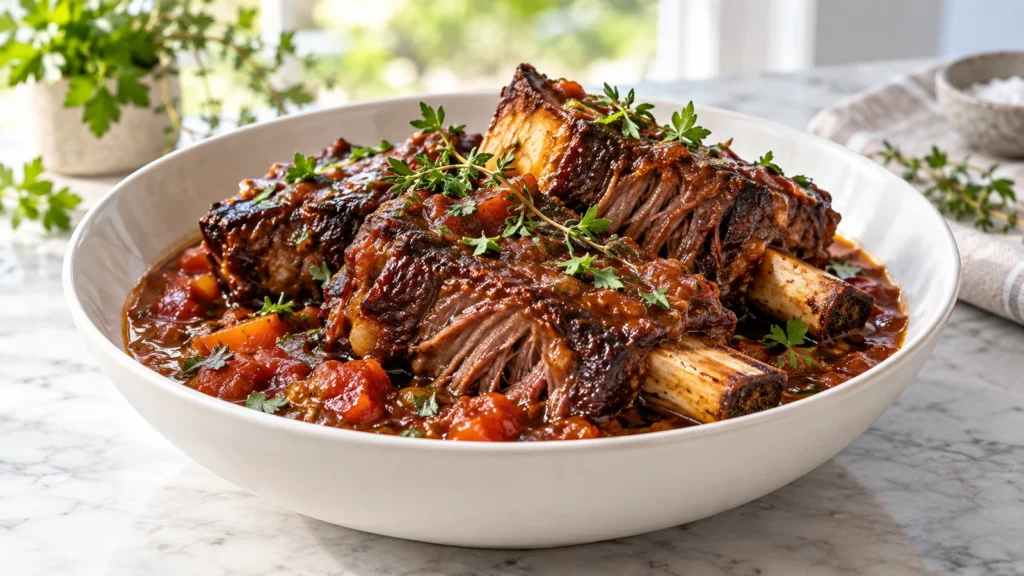
This beef short ribs recipe delivers fork-tender meat in a glossy, savory sauce after about 3 hours in a 325°F (163°C) oven. Searing builds deep flavor, while covered, low-and-slow braising gently softens the ribs without drying them out.
It is an approachable beef ribs recipe for a weekend dinner or make-ahead gathering. Most of the cooking is hands-off, and the rich sauce pairs naturally with mashed potatoes, polenta, noodles, or crusty bread. This beef short ribs oven baked recipe also gives you practical tenderness cues, substitution ideas, and reheating guidance for dependable results.
Table of Contents
Why You’ll Love This Beef Short Ribs Recipe
- Reliable: Clear tenderness cues take the guesswork out of doneness.
- Flavorful: A proper sear, aromatic vegetables, and slow braising create a restaurant-style sauce.
- Make-ahead friendly: Chilling makes excess fat easy to remove and gives the flavors time to develop.
- Flexible: Bone-in, boneless, alcohol-free, gluten-free, and BBQ options are included.
- Comforting: The tender beef and generous sauce make a complete centerpiece for a relaxed family meal.
Choosing Beef Short Ribs
Choose thick, well-marbled ribs with firm white fat and plenty of meat surrounding the bone. English-cut ribs are divided parallel to the bone and work best for braising. Flanken-cut ribs are sliced across several bones; because they are thinner, they cook much faster and are better suited to grilling or quick oven recipes.
Plan on two meaty English-cut ribs, or about 1 to 1 1/4 pounds before cooking, per adult. Bone-in ribs offer excellent flavor and usually need 2 1/2 to 3 hours. Uniform pieces help this beef ribs recipe cook evenly, so ask the butcher for ribs of similar thickness when possible.
Can You Use Boneless Short Ribs?
For a boneless beef short ribs recipe, use well-marbled chuck short ribs and begin checking them 30 minutes earlier. Boneless pieces lack the visual cue of meat pulling back from a bone, so test the thickest section with a fork or thin knife. This guide to cooking boneless beef ribs provides additional timing guidance.
A boneless beef short ribs recipe can be easier to portion for sandwiches, bowls, or guests who prefer meat without bones. Avoid unusually lean pieces because their limited connective tissue and marbling may produce a drier result during the long braise.
Ingredients
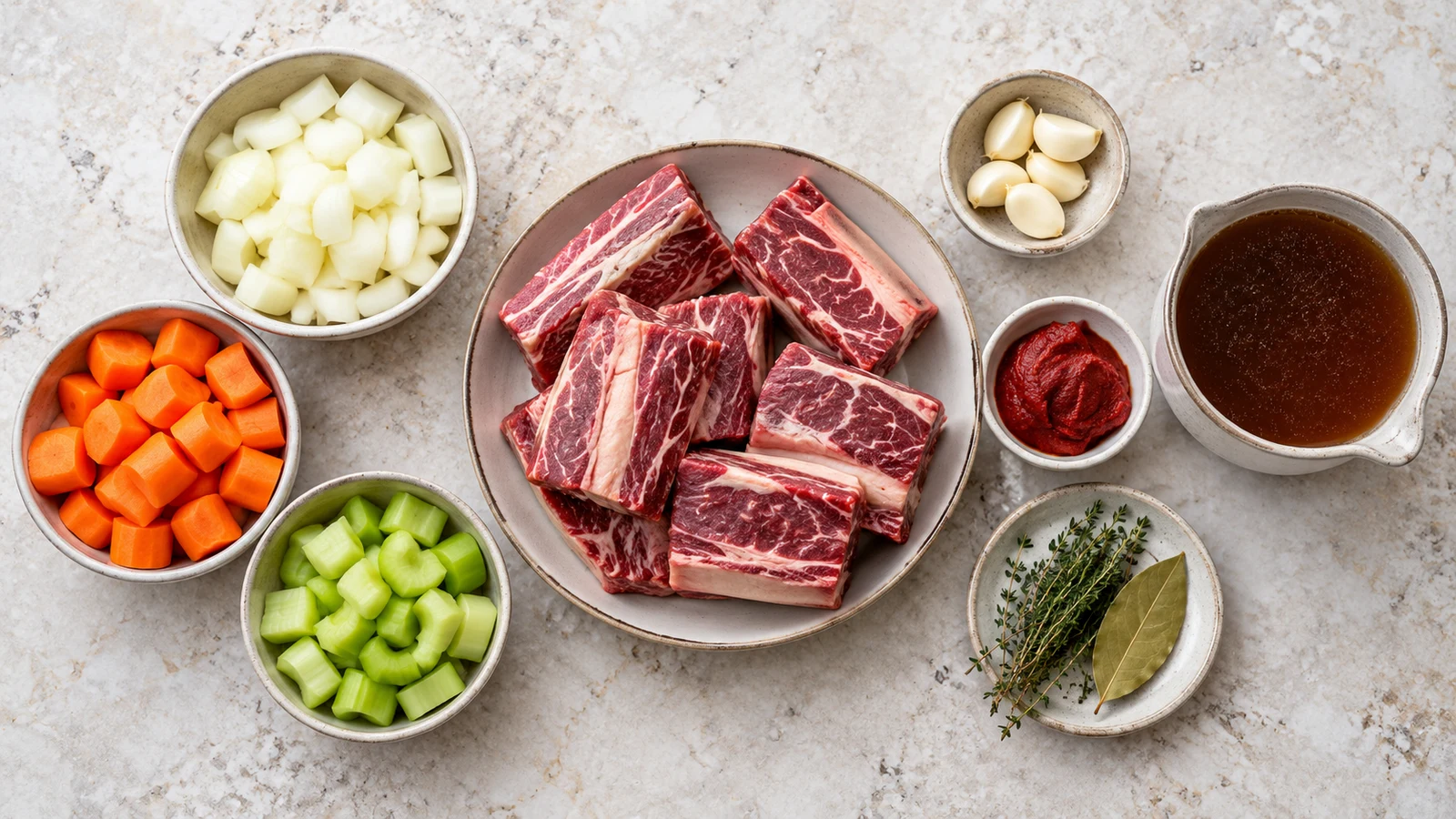
- 4 pounds (1.8 kg) bone-in English-cut beef short ribs, about 8 ribs
- 2 teaspoons kosher salt, plus more to taste
- 1 teaspoon freshly ground black pepper
- 1 tablespoon neutral cooking oil
- 1 large yellow onion, diced
- 2 medium carrots, diced
- 2 celery ribs, diced
- 4 garlic cloves, minced
- 2 tablespoons tomato paste
- 2 tablespoons all-purpose flour
- 1 cup dry red wine
- 2 cups low-sodium beef stock
- 1 tablespoon Worcestershire sauce
- 4 fresh thyme sprigs
- 1 bay leaf
What Each Ingredient Contributes
The onion, carrots, and celery form an aromatic base, while garlic and tomato paste add depth. Flour gives the sauce light body, and dry red wine loosens the flavorful browned bits from the pot. Beef stock supplies the braising liquid, Worcestershire sauce adds savory complexity, and thyme and bay leaf provide a restrained herbal finish.
Low-sodium stock is especially useful in this beef short ribs recipe because the sauce concentrates as it reduces. You can season the finished sauce accurately after simmering instead of risking an overly salty result at the beginning.
Equipment
Use a large, heavy Dutch oven with a tight-fitting lid, plus tongs, a cutting board, a sharp knife, and a fat separator or wide spoon. A shallow bowl and fine-mesh strainer are useful when finishing the sauce. The pot should hold the ribs in a snug single layer without forcing them together.
A heavy Dutch oven retains steady heat and limits evaporation, making it ideal for a beef short ribs oven baked recipe. If the lid does not seal well, the liquid may reduce too quickly, so check the pot during cooking and add a small splash of stock if the ribs appear dry.
How to Make This Beef Short Ribs Recipe
- Prepare the oven and ribs: Heat the oven to 325°F (163°C). Pat the ribs thoroughly dry, then season every side with salt and pepper. Dry surfaces brown more effectively.
- Sear in batches: Heat the oil in a Dutch oven over medium-high heat. Sear the ribs for 3 to 4 minutes per broad side until deeply browned. Avoid overcrowding, which traps steam. Transfer the ribs to a plate.
- Cook the aromatics: Reduce the heat to medium. Add the onion, carrots, and celery and cook for 6 to 8 minutes. Add the garlic and tomato paste; cook for 1 minute. Stir in the flour and cook for another minute.
- Deglaze: Pour in the wine gradually, scraping up the browned fond with a wooden spoon. Simmer for 3 minutes. If the fond smells burned rather than toasted, carefully wipe out the pot before continuing so bitterness does not enter the sauce.
- Build the braise: Add the stock, Worcestershire sauce, thyme, and bay leaf. Return the ribs to the pot with the meaty sides mostly submerged and bring the liquid to a gentle simmer.
- Braise: Cover tightly and transfer to the oven for 2 1/2 to 3 hours. Turn the ribs once halfway through. For more method detail, see this guide to cooking short ribs in the oven.
- Check tenderness: The ribs are ready when a fork or thin knife slides into the meat with little resistance. They commonly reach 195°F to 205°F (91°C to 96°C), but tenderness matters more than a single temperature. Stop before the meat completely disintegrates if you want neat portions.
- Finish the sauce: Transfer the ribs to a warm platter. Discard the herbs, skim off fat, and simmer the sauce uncovered for 8 to 15 minutes. Strain it for a smoother finish, then season to taste.
The basic sequence follows the same dependable sear-and-braise principles demonstrated in The Kitchn’s braised short rib technique. Following the stages in order allows this beef ribs recipe to develop a complex sauce without requiring complicated cooking skills.
Expert Tips for the Best Beef Ribs Recipe
Dry and Season the Meat Thoroughly
Surface moisture turns to steam and delays browning. Press paper towels against every side, including the ends, before seasoning. If time permits, season the ribs shortly before you organize the remaining ingredients. Keep the stated salt quantity unchanged, then adjust only after the sauce has reduced.
Sear in Small Batches
Leave visible space around each rib. A crowded pot cools quickly and causes the meat to release liquid, producing gray surfaces instead of a dark crust. That crust and the browned residue beneath it provide much of the savory character in this beef short ribs recipe.
Control the Braising Liquid
The meaty sides should be mostly submerged, but the ribs do not need to disappear completely beneath the liquid. A braise uses moist heat and gentle steam rather than boiling the meat like a stew. Bring the liquid only to a gentle simmer before covering the pot and transferring it to the oven.
Use Tenderness as the Final Test
Cooking time is a guide because rib thickness, marbling, pot shape, and oven calibration vary. Begin testing near the early end of the stated range. The thickest section should yield easily to a fork, but the meat can still remain attached to the bone for attractive portions.
- Buy ribs of similar thickness so they finish at roughly the same time.
- Keep the braising liquid at a gentle simmer; vigorous boiling can toughen the exterior.
- If the meat is tough, cover it and continue cooking in 20-minute intervals.
- For watery sauce, remove the meat and simmer the liquid uncovered for the stated 8 to 15 minutes.
- For faster thickening, stir in a slurry of 1 tablespoon cornstarch and 1 tablespoon cold water.
- For greasy sauce, skim it with a spoon or chill the dish overnight and lift away the solidified fat.
- To scale up, use a second pot rather than packing the ribs tightly. The oven temperature stays the same, although a fuller pot may need 15 to 30 extra minutes.
Variations and Substitutions
Beef Short Ribs Oven Baked Recipe with BBQ Sauce
For oven-baked BBQ ribs, replace the wine, tomato paste, flour, and Worcestershire sauce with 1 1/2 cups beef stock and 1 cup barbecue sauce. Braise until tender, then brush the ribs with additional sauce and broil for 2 to 4 minutes. Watch closely to prevent burning.
This beef short ribs oven baked recipe variation has a sweeter, smokier finish than the red-wine braise. Use a barbecue sauce you already enjoy, since its flavor becomes more concentrated as it cooks and during the brief broiling step.
Dutch-Oven Red-Wine Braised Ribs
The main method is the classic red-wine version. Cabernet Sauvignon, Merlot, or another dry red works well; use a wine you enjoy drinking. For another flavor reference, explore Food Network’s braised short ribs method.
Boneless Beef Short Ribs Recipe
Boneless ribs generally need 2 to 2 1/2 hours; start testing at 2 hours. More preparation ideas are available in this boneless beef short ribs guide. Keep the pieces similarly sized and arrange them in one layer so they braise evenly.
When adapting the main method into a boneless beef short ribs recipe, retain the same gentle oven temperature and judge doneness by resistance rather than the clock. The meat should yield to a fork without becoming dry or shredding uncontrollably.
Alcohol-Free and Gluten-Free Options
For an alcohol-free version, replace the wine with extra beef stock plus 1 tablespoon balsamic vinegar. For gluten-free ribs, use certified gluten-free Worcestershire sauce and replace flour with a cornstarch slurry added after braising. These changes preserve the low-and-slow technique and maintain the sauce’s balance.
Related Special-Occasion Roast
For a different special-occasion main course, the smoked prime rib roast beef recipe is a clearly labeled related-recipe idea rather than a substitute for this braise. A smoked prime rib roast beef recipe uses a large tender roast and dry smoking heat, while short ribs rely on moist braising to soften connective tissue.
Make-Ahead Plan for This Beef Short Ribs Recipe
This dish is particularly suited to advance preparation. Cook the ribs completely, let them cool in their sauce, and refrigerate them overnight. The chilled fat will rise and firm on the surface, making it easy to lift away without removing much of the flavorful sauce.
After removing the fat, place the ribs back over gentle heat with their sauce. Reheating slowly protects their texture and gives the center time to warm without boiling the exterior. If the sauce has thickened substantially in the refrigerator, loosen it with a small splash of stock.
You can also complete the chopping earlier in the day. Refrigerate the diced onion, carrots, and celery together in a covered container, but keep the minced garlic separate so its aroma stays fresh. Pat and season the ribs shortly before searing for the best crust.
Serving Ideas for a Complete Meal
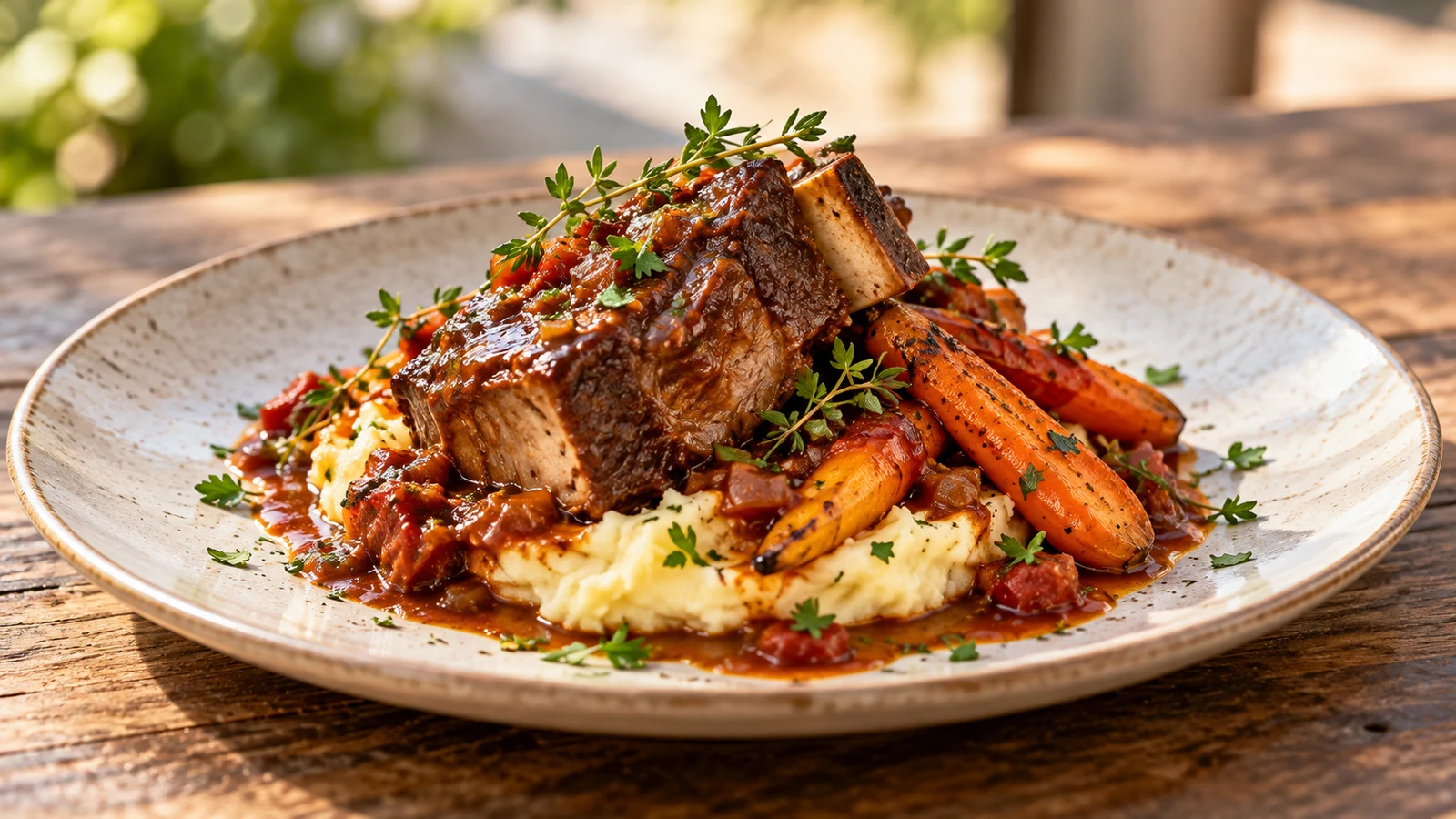
Spoon the ribs and sauce over mashed potatoes, creamy polenta, buttered noodles, or cauliflower mash. Each option provides a mild base that catches the sauce without competing with it. Crusty bread is another practical choice for an informal meal.
Roasted carrots, green beans, Brussels sprouts, and a crisp salad balance the richness. Choose one creamy or starchy side and one fresh vegetable for a well-rounded plate. Garnish lightly with fresh herbs if desired, but let the deep flavor of the beef ribs recipe remain the focus.
Ways to Use Leftover Meat
Remove the meat from the bones while it is cool, shred it, and moisten it with a little sauce. It makes an excellent filling for tacos, sandwiches, ravioli, or baked potatoes. You can also spoon it over rice or fold it into cooked noodles for an easy second meal.
If serving leftovers in sandwiches or tacos, reduce the sauce until it lightly coats a spoon so the filling does not become soggy. Reheat only the portion you intend to serve, keeping the remaining beef chilled.
How to Store, Freeze, and Reheat
For the best make-ahead result, cool the ribs in their sauce, refrigerate overnight, and remove the hardened fat before reheating. Refrigerate leftovers in a shallow airtight container within two hours and use them within 3 to 4 days, following USDA leftovers and food-safety guidance.
Freeze cooled ribs with enough sauce to cover them for up to 3 months. Use a tightly sealed freezer-safe container and leave enough room for the contents to expand. Label the container so you can track the storage time.
Thaw overnight in the refrigerator. Reheat covered in a 300°F (149°C) oven for 25 to 35 minutes, or warm gently on the stovetop, adding a splash of stock if needed. Low heat and plenty of sauce prevent this beef short ribs recipe from drying out.
For individual portions, place one or two ribs with sauce in a small covered baking dish. Check them toward the early end of the reheating range. Avoid a vigorous boil, which can break the tender meat apart and make the reduced sauce overly salty.
Troubleshooting This Beef Short Ribs Oven Baked Recipe
The Ribs Are Still Tough
Tough short ribs are usually undercooked rather than ruined. Their connective tissue needs sustained gentle heat to soften. Make sure the pot is tightly covered, return it to the oven, and test again after another 20 minutes. Repeat if necessary without raising the oven temperature.
The Sauce Is Thin
Transfer the tender ribs to a warm platter and simmer the sauce uncovered for 8 to 15 minutes as directed. A wide pot reduces liquid faster than a narrow one. If you prefer quicker thickening, use the stated slurry of 1 tablespoon cornstarch and 1 tablespoon cold water.
The Sauce Is Too Thick
Stir in a small splash of beef stock and warm gently until the consistency becomes spoonable. Add liquid gradually because an over-thinned sauce must be reduced again. Remember that the sauce thickens further as it cools.
The Finished Dish Tastes Greasy
Short ribs contain substantial fat, and some will render into the sauce. Skim the surface with a wide spoon or use a fat separator. For the cleanest result, chill the completed beef ribs recipe overnight and remove the solid fat before reheating.
The Sauce Tastes Bitter
The fond may have scorched during searing. Use medium-high rather than extreme heat, work in batches, and discard truly blackened residue before cooking the vegetables. Deep brown fond tastes savory; black residue can make the entire sauce harsh.
The Meat Falls Apart Before Serving
The ribs have cooked beyond the point needed for neat portions. They are still suitable for serving, but move them carefully with a wide utensil and spoon sauce over them on the plate. Next time, begin checking earlier and remove each rib as soon as it becomes tender.
Frequently Asked Questions
Why are the ribs in my beef short ribs recipe still tough?
They need more time. Collagen softens gradually during moist, low-temperature cooking, so cover the pot and cook for another 20 to 30 minutes before testing again. A thin knife should enter the thickest part with little resistance.
Can short ribs become overcooked?
Yes. They remain edible but can lose their structure and turn stringy or mushy. Begin checking early and remove them when tender but still able to hold their shape.
Can I prepare this beef ribs recipe a day ahead?
Yes. The flavor often improves overnight, and chilled fat is simple to remove. Cool the ribs in their sauce, refrigerate them promptly, and reheat them slowly in the sauce shortly before serving.
Can I make a boneless beef short ribs recipe with the same ingredients?
Yes. Keep the ingredient list and technique, but use well-marbled chuck short ribs and start checking them after 2 hours. Boneless ribs generally need 2 to 2 1/2 hours, compared with 2 1/2 to 3 hours for the bone-in version.
What wine works best in a beef short ribs oven baked recipe?
Use a dry red wine such as Cabernet Sauvignon or Merlot. Choose one you enjoy drinking because its flavor remains in the finished sauce. For an alcohol-free version, use extra beef stock plus 1 tablespoon balsamic vinegar.
Do short ribs need to be completely covered with liquid?
No. Return them to the pot with their meaty sides mostly submerged, as directed. The covered pot traps steam and creates a moist environment, so complete submersion is unnecessary and may dilute the sauce.
Should I remove the bones before serving?
You can leave the bones attached for a traditional presentation. If a bone releases naturally, remove it rather than forcing the tender meat back into place. For sandwiches, tacos, ravioli, or baked potatoes, remove all bones before shredding the leftovers.
How is this different from a smoked prime rib roast beef recipe?
A smoked prime rib roast beef recipe typically cooks a large, naturally tender roast with dry smoking heat. Short ribs contain more connective tissue and benefit from a covered braise. The two dishes require different cuts, methods, and doneness cues.
Can I double the beef short ribs recipe?
Yes, but use two pots so the ribs are not crowded. Keep the oven at 325°F (163°C). A fuller oven or pot may add 15 to 30 minutes, so rely on the fork-tender test rather than extending the time automatically.
Printable Recipe Card
Recipe: Braised Beef Short Ribs
- Prep time: 25 minutes
- Cook time: 3 hours 15 minutes
- Yield: 4 servings
- Oven temperature: 325°F (163°C)
- Tenderness range: Commonly 195°F to 205°F (91°C to 96°C)
- Estimated nutrition: About 720 calories, 48 g protein, 18 g carbohydrate, and 45 g fat per serving; values vary with trimming and ingredients.
- Notes: Sear in batches, keep the pot covered, and judge doneness primarily by tenderness. Chill overnight for the easiest fat removal.
Final Tips for Tender Short Ribs
A successful beef short ribs recipe depends on three essentials: thorough browning, gentle covered cooking, and patience during the tenderness check. Give the collagen enough time to soften, then reduce the sauce separately so the meat does not overcook.
Whether you follow the classic beef ribs recipe, the BBQ variation, or the boneless beef short ribs recipe, keep the heat controlled and use the texture of the meat as your guide. Serve the ribs with something that can catch every spoonful of their deeply savory sauce.
Reviews
Reader reviews are managed separately (outside this build).