Salmon
Healthy Salmon Dinner Recipes: Delicious One-Pan Dijon
Try healthy salmon dinner recipes with one-pan lemon-garlic Dijon salmon, roasted vegetables, and quinoa—easy, flavorful, and weeknight-ready.
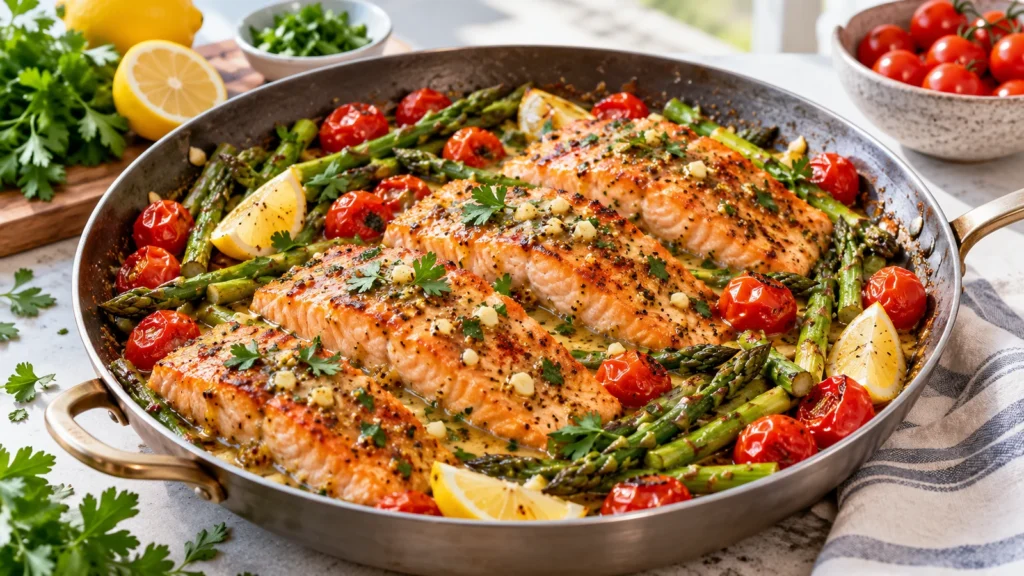
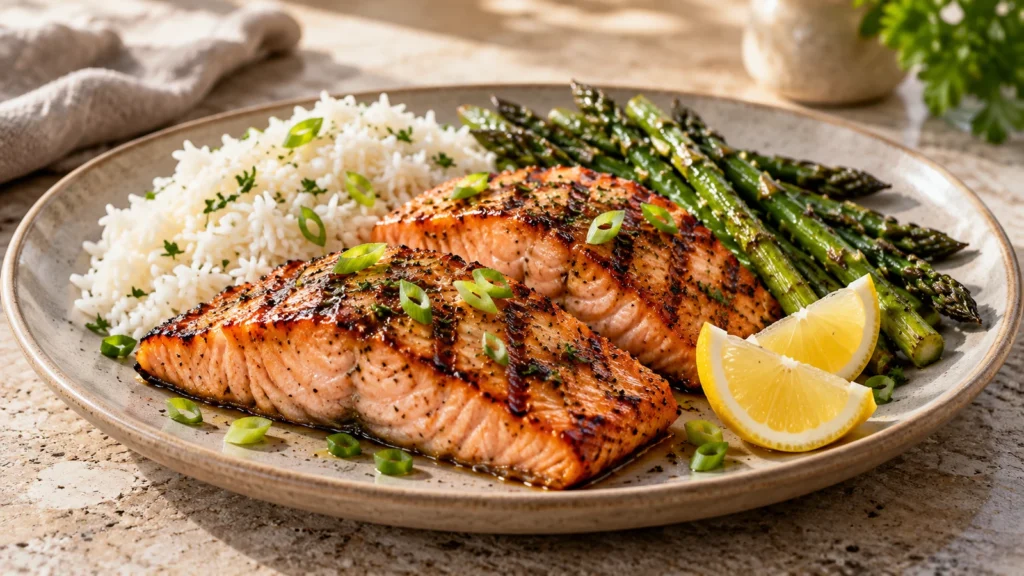
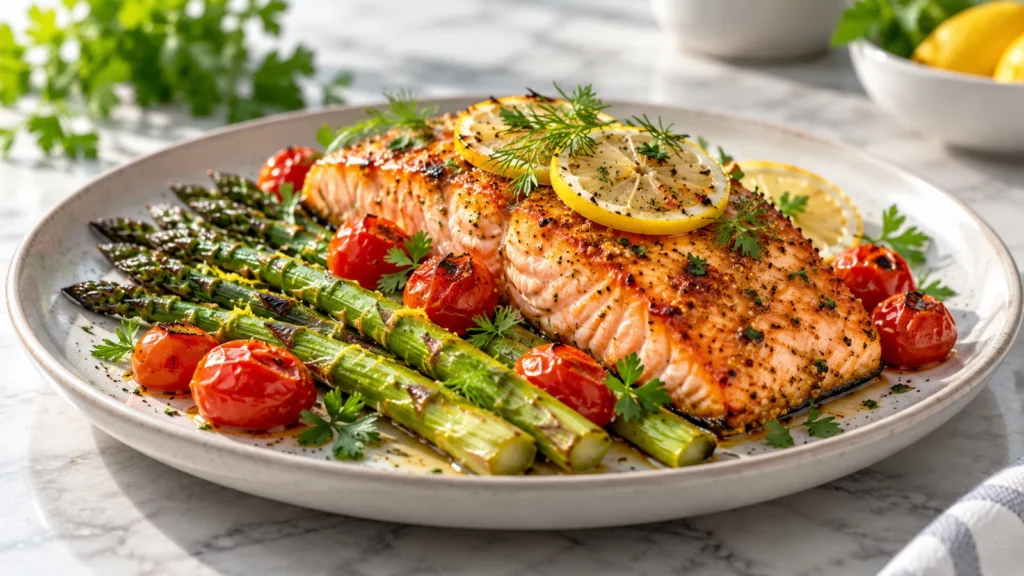
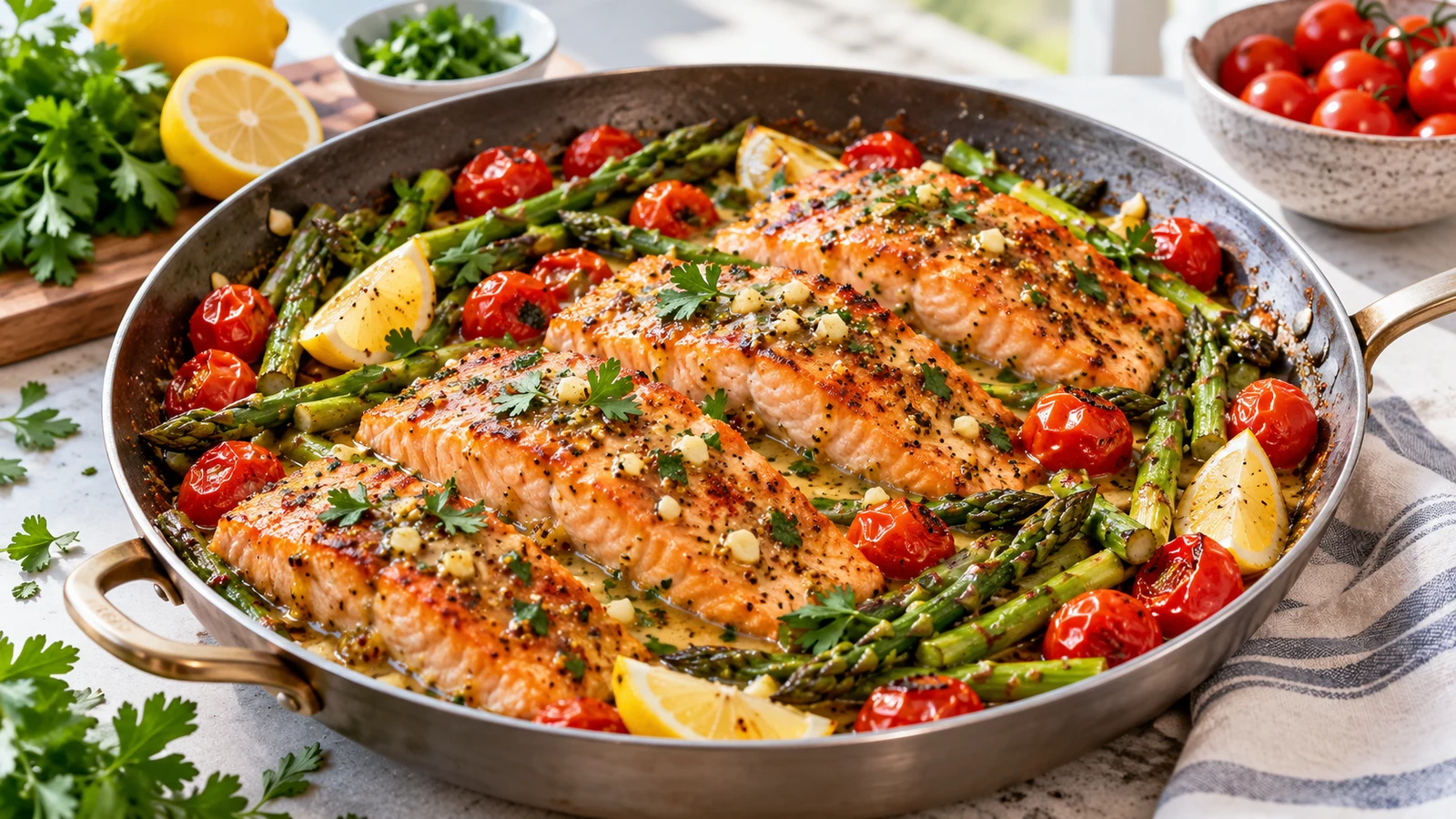
Healthy salmon dinner recipes should be simple enough for a weeknight while still delivering a balanced, satisfying plate. This one-pan meal pairs flaky lemon-garlic Dijon salmon with tender asparagus and juicy cherry tomatoes, with cooked quinoa served alongside. It is one of those healthy salmon recipes that feels fresh and colorful without requiring complicated preparation.
The salmon and vegetables roast together in about 15 minutes, so cleanup stays manageable. A tangy mustard glaze keeps the fish flavorful, while practical timing and temperature cues help prevent dry or undercooked fillets. Among healthy salmon meal recipes, this is especially useful when you want protein, vegetables, and a whole grain in one coordinated dinner.
Table of Contents
Why You’ll Love This Recipe
- Fast: Dinner is ready in about 30 minutes.
- Minimal cleanup: The salmon and roasted vegetables cook on one lined sheet pan.
- Balanced: Salmon supplies protein, quinoa adds whole grains, and asparagus and tomatoes provide colorful vegetables, following the general principles of building a balanced MyPlate meal.
- Reliable: Thickness-based baking times and clear doneness cues take away the guesswork.
- Flexible: Easy substitutions cover different seasons, dietary needs, and budgets.
Many healthy salmon dinner recipes depend on several pots or lengthy marinades. Here, the quick glaze is mixed while the oven heats, and the quinoa can be cooked in advance. The streamlined method makes the recipe approachable for newer cooks while giving experienced cooks plenty of room for seasonal variations.
Ingredients
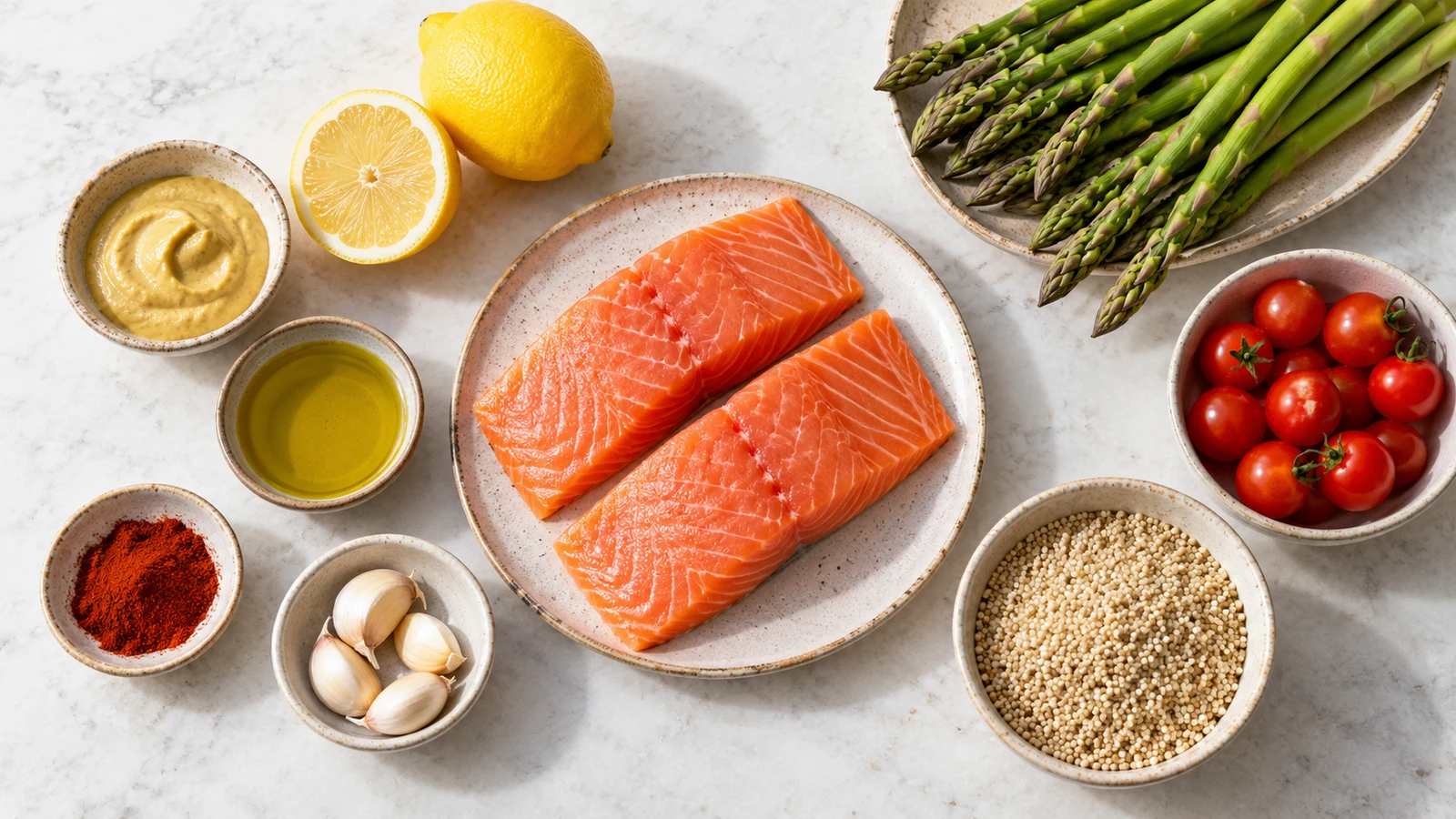
- 4 center-cut salmon fillets, 5 to 6 ounces (142 to 170 g) each, about 1 inch thick
- 1 pound (454 g) asparagus, woody ends trimmed
- 2 cups cherry tomatoes
- 2 tablespoons extra-virgin olive oil, divided
- 2 tablespoons Dijon mustard
- 1 tablespoon fresh lemon juice
- 1 teaspoon finely grated lemon zest
- 2 garlic cloves, finely grated or minced
- 1 teaspoon honey or maple syrup
- 3/4 teaspoon kosher salt, divided
- 1/4 teaspoon black pepper
- 2 tablespoons chopped fresh parsley
- Lemon wedges, for serving
- 2 cups cooked quinoa, warm
How to Choose the Salmon
Center-cut portions are ideal for healthy baked salmon recipes because their relatively even shape promotes consistent cooking. Look for moist, firm flesh without dry edges or a strong odor. Four portions of similar thickness are more important than four portions of exactly the same weight.
Fresh or frozen salmon: Either works. Thaw frozen fillets overnight in the refrigerator, then remove them from their packaging and pat them very dry. The FDA offers additional guidance for selecting, thawing, and serving seafood safely.
Skin and pin bones: Skin-on or skinless fillets are suitable. Place skin-on salmon skin-side down; the skin helps protect the flesh from direct heat. Run clean fingertips over each fillet and remove any pin bones with clean tweezers.
Equipment and Pan Size
Equipment: Use a large rimmed sheet pan, parchment paper or foil, a small bowl, a pastry brush or spoon, and an instant-read thermometer. A roomy pan matters because crowded vegetables steam instead of roast. These basic tools are useful for many healthy salmon recipes, so no specialty cookware is required.
A light-colored metal pan offers predictable browning. A dark pan may cook the bottoms more quickly, so begin checking early. If your pan is small, divide the ingredients between two pans rather than piling them together. Rotate the pans halfway through cooking if they occupy separate oven racks.
How to Make Healthy Salmon Dinner Recipes in One Pan
- Heat the oven: Position a rack in the center and preheat the oven to 425°F (220°C). Line a large rimmed sheet pan with parchment paper or foil.
- Start the vegetables: Place the asparagus and cherry tomatoes on the pan. Toss with 1 tablespoon olive oil and 1/4 teaspoon salt, then spread them into a single layer. Roast for 5 minutes to give the vegetables a head start.
- Make the Dijon glaze: In a small bowl, stir together the remaining tablespoon of olive oil, Dijon mustard, lemon juice, lemon zest, garlic, honey, remaining 1/2 teaspoon salt, and black pepper.
- Prepare the salmon: Pat the salmon fillets dry, especially if they were frozen. Arrange them among the vegetables with space between each piece. Tuck a thin tail end underneath itself so the fillet has a more even thickness.
- Glaze and bake: Spoon the Dijon mixture over the top and sides of the fillets. Return the pan to the oven and bake until the salmon is nearly opaque, flakes with gentle pressure, and reaches the desired internal temperature.
- Finish and serve: Rest the salmon for 3 minutes. Sprinkle with parsley and serve with lemon wedges and 1/2 cup cooked quinoa per person. For another streamlined combination, try this baked asparagus and salmon recipe.
Timing the Salmon Correctly
Baking time by thickness: Fillets about 3/4 inch thick generally need 8 to 10 minutes after the vegetables are pre-roasted. Allow 10 to 13 minutes for 1-inch fillets and 13 to 16 minutes for 1 1/4-inch fillets. Begin checking early because oven calibration, starting temperature, and fillet shape affect the timing.
Doneness guide: Insert an instant-read thermometer into the thickest part without touching the pan. For the conservative food-safety benchmark, cook fish to 145°F (63°C). At that point, the flesh should be opaque and separate easily; remove it promptly because carryover heat can raise the temperature slightly.
Thickness matters more than weight when estimating the finish time for healthy baked salmon recipes. Measure the deepest part of the fillet and treat published times as a checking window rather than a guarantee. If one portion finishes first, move it to a warm plate and let the thicker pieces continue baking.
Expert Tips for Healthy Salmon Dinner Recipes
- Dry the surface: Excess moisture from thawed fish dilutes the glaze and causes watery juices. Blot every side thoroughly with paper towels.
- Choose similar fillets: Pieces with matching thickness cook more evenly. If sizes vary, check the thin pieces first and transfer them to a plate when ready.
- Use a thermometer: Visual cues help, but temperature gives the most dependable result. The center should no longer look raw or translucent.
- Avoid burned garlic: Keep the minced garlic mixed into the moist mustard glaze rather than scattering it directly on the pan. If your oven runs hot, loosely shield deeply browned fillets with foil.
- Rescue slightly dry salmon: Flake it over quinoa and add a squeeze of lemon plus a spoonful of plain yogurt or olive oil. Avoid baking it longer during reheating.
- Do not crowd the pan: Leave room around the asparagus and tomatoes so their moisture can evaporate.
More Ways to Improve Flavor and Texture
Let the oven fully preheat before adding the vegetables. Steady heat encourages the asparagus to become tender while the tomatoes soften and concentrate. Starting in a cool oven lengthens the cooking period and can make the vegetables limp before the salmon is ready.
Spread the glaze shortly before baking. A brief coating adds flavor, but leaving acidic lemon juice on raw fish for an extended period can alter the surface texture. For the cleanest presentation, brush the glaze from the center toward the edges and wipe away any large drips that land on exposed parchment.
Resting for 3 minutes is a small but valuable step in healthy salmon recipes. It allows the temperature to settle and gives you time to portion the quinoa. Serve immediately after that short rest so the fish remains warm and the vegetables retain their best texture.
Salmon contains omega-3 fats, and the American Heart Association’s fish and omega-3 guidance explains why fish can be part of a heart-conscious eating pattern. For more everyday options, browse these healthy salmon recipes.
Variations and Substitutions
- Different vegetables: Replace asparagus with thin green beans, broccoli florets, sliced zucchini, or bell pepper strips. Firm broccoli may need an 8-minute head start.
- Dairy-free: The recipe is naturally dairy-free; use olive oil rather than butter when reheating.
- Gluten-free: Use certified gluten-free Dijon mustard and check all condiment labels.
- Lower-sodium: Reduce the salt to 1/4 teaspoon, choose no-salt-added quinoa, and emphasize lemon, pepper, parsley, and garlic.
- Budget option: Use individually frozen salmon portions and seasonal vegetables. Thaw only the number of portions required.
- Air fryer: Cook glazed salmon at 400°F (205°C) for approximately 7 to 11 minutes, depending on thickness. Cook vegetables separately or in batches so the basket is not crowded.
- Grain swap: Serve with brown rice, farro, couscous, or roasted baby potatoes instead of quinoa.
Flavor Variations
For an herb-forward version, add chopped dill to the finished plate alongside the parsley. If you prefer more warmth, stir a small pinch of crushed red pepper into the glaze. These changes keep the core method intact and make healthy salmon meal recipes easier to rotate without making dinner feel repetitive.
Orange zest can replace the lemon zest for a softer citrus note, while the listed lemon juice preserves the glaze’s balance. Maple syrup gives a deeper flavor than honey but performs the same role. Avoid adding extra sweetener, since the goal is to round out the mustard rather than create a sugary coating.
Seasonal Vegetable Swaps
Use thin zucchini slices or bell pepper strips during summer. In cooler months, small Brussels sprout halves can work, but they need a longer head start than asparagus. Cut replacement vegetables into similarly sized pieces so they finish together, a useful principle for all one-pan healthy baked salmon recipes.
Watery vegetables should be thoroughly dried, and frozen vegetables are not ideal on the same pan because they release additional moisture. If frozen vegetables are your only option, roast them on a separate pan and combine everything when serving.
If you are planning several dinners at once, these healthy salmon meal recipes offer more serving combinations. This preparation also belongs among practical healthy baked salmon recipes because the mustard coating adds moisture and flavor without a heavy sauce.
Serving Ideas for Healthy Salmon Meal Recipes
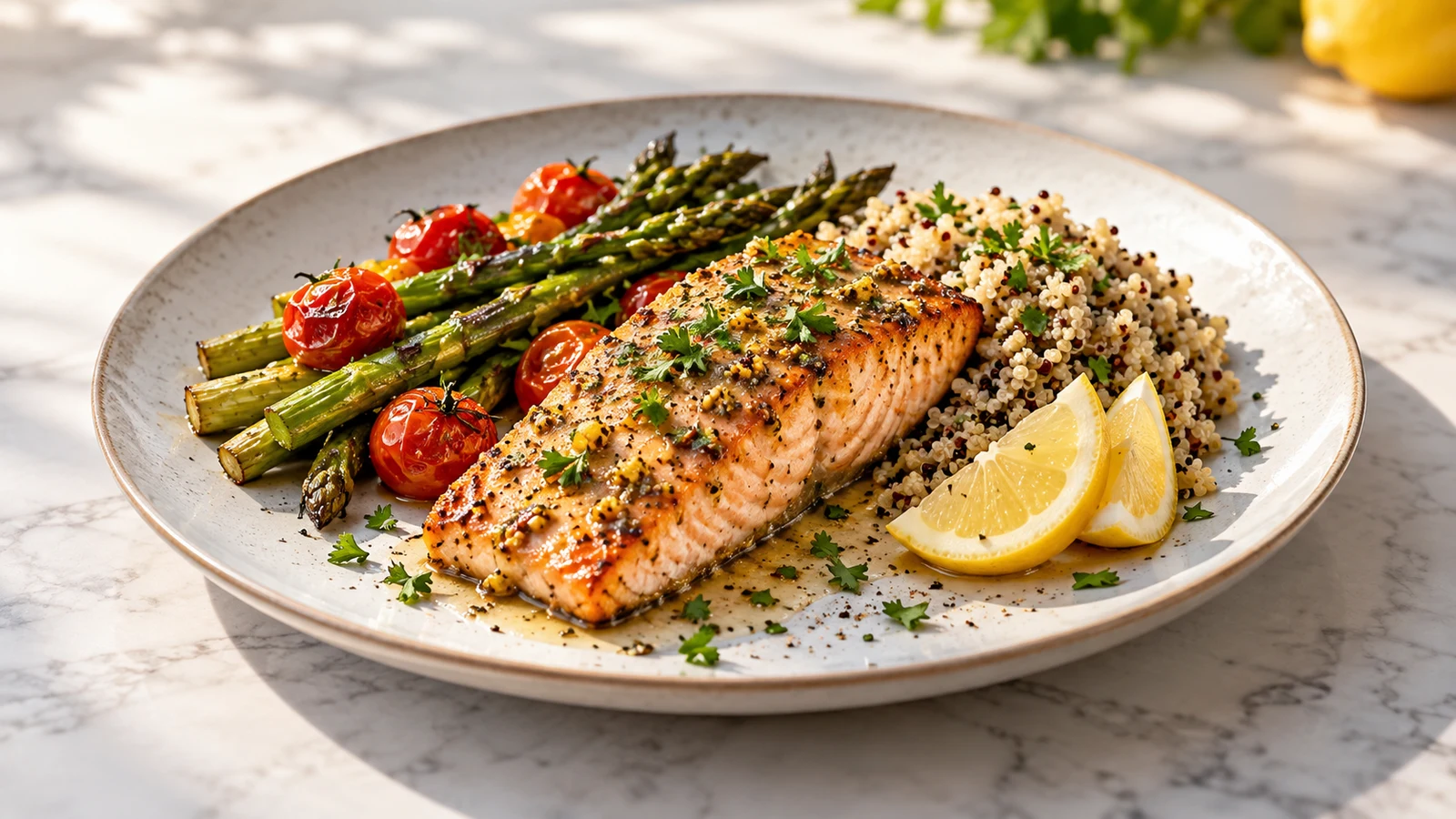
Serve one salmon fillet with one-quarter of the roasted vegetables and 1/2 cup cooked quinoa. The exact nutrition depends on fillet size and ingredient brands, but the meal provides protein, unsaturated fat, whole-grain carbohydrate, and vegetables. Add a simple green salad for a larger meal or omit the quinoa for a lighter serving.
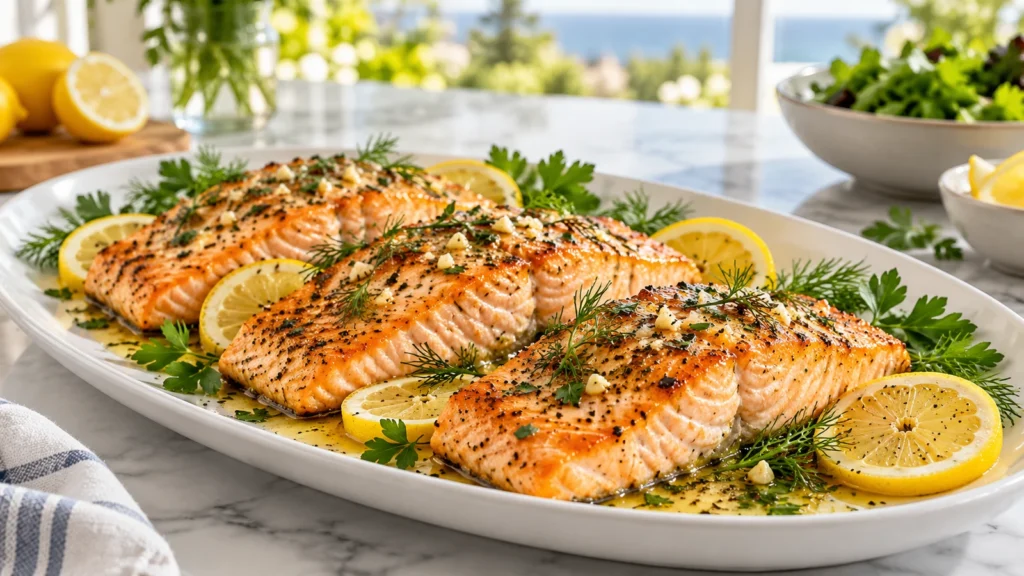
For family-style service, spoon the warm quinoa onto a platter, arrange the vegetables around it, and place the salmon on top. Keep lemon wedges at the table so each person can adjust the acidity. This presentation makes healthy salmon dinner recipes feel inviting without adding extra cooking.
A crisp cucumber salad, steamed green beans, or lightly dressed leafy greens can add freshness. If you replace quinoa with potatoes, keep the roasted asparagus and tomatoes for color and contrast. For a lunch bowl, flake chilled leftover salmon over quinoa and add the vegetables just before eating.
Printable recipe card: Preparation time: 10 minutes. Cooking time: 15 to 21 minutes. Total time: 25 to 31 minutes. Yield: 4 servings. Rating: Leave your rating after preparing the recipe. Oven: 425°F (220°C). Follow the listed ingredients and numbered method, checking the salmon early based on its thickness.
Make-Ahead Plan for Healthy Salmon Meal Recipes
Up to 2 days ahead, trim the asparagus, mix the glaze, and cook the quinoa. Refrigerate each component in a separate airtight container. Keeping them separate protects their textures and lets you assemble these healthy salmon meal recipes quickly on a busy evening.
Do not apply the glaze to the raw fish in advance. Instead, refrigerate the salmon in its original wrapping or a covered container and pat it dry immediately before cooking. The pre-mixed glaze may thicken when chilled, so stir it and let it stand briefly at room temperature while the oven heats.
For meal prep, cook the full recipe and divide it into four shallow containers after cooling. Place quinoa on one side and the salmon and vegetables on the other. This arrangement makes it easier to add a small amount of moisture to the fish before reheating without soaking the grain.
How to Store and Reheat
Cool leftovers promptly and refrigerate them in shallow airtight containers for up to 3 days. Store the quinoa separately when possible so it does not absorb moisture from the vegetables. This meal is best for three-day meal prep rather than long refrigerated storage.
Reheat salmon gently in a covered baking dish at 275°F (135°C) for 10 to 15 minutes, or until hot throughout. Add a teaspoon of water or olive oil before covering to limit drying. For the microwave, use 50% power in 30-second intervals; reheat only the portion you plan to eat.
Cooked salmon can be frozen for up to 2 months in an airtight freezer-safe container, although its texture will be softer after thawing. Defrost overnight in the refrigerator before reheating. The roasted tomatoes and asparagus are better refrigerated because freezing makes them watery.
Leftovers from healthy salmon dinner recipes are also enjoyable cold, which avoids a second round of heat. Flake the fish into a quinoa bowl and add chilled vegetables, lemon, and parsley. Discard leftovers that have been left at room temperature too long or show any signs of spoilage.
Troubleshooting Healthy Baked Salmon Recipes
Why is there white material on the salmon?
The white protein that sometimes appears on cooked salmon is albumin. It is harmless, although a large amount can indicate that the fish heated quickly or cooked a little too long. Patting the fish dry, checking it early, and removing it promptly can reduce its appearance in healthy baked salmon recipes.
Why did the glaze slide off?
The salmon was probably damp, or the glaze was applied to a very wet surface. Blot the fillets carefully and stir the glaze until it is fully combined. Place the fish flat on the pan, then spoon the mixture over the top and sides without repeatedly moving the portions.
Why are the vegetables watery?
Crowding traps steam, while wet vegetables introduce unnecessary moisture. Dry the produce, use a large pan, and maintain space around each ingredient. If the salmon releases substantial liquid, it may not have been fully thawed or dried before baking.
Why is the asparagus undercooked?
Very thick spears may need more than the initial 5-minute head start. Choose medium spears or split unusually thick stalks lengthwise. You can also roast thick asparagus for a few extra minutes before placing the salmon on the pan.
Why did the thin end of the salmon dry out?
Uneven fillets cook unevenly. Tuck the narrow tail underneath itself before baking to create a more uniform thickness. This simple shaping technique improves many healthy salmon recipes and does not change the ingredients or overall timing method.
Frequently Asked Questions
Can I put frozen salmon directly on the sheet pan?
Thawing is preferable for this recipe because the glaze adheres better and the vegetables finish at the same time. Frozen fillets release water and require longer cooking, which can leave the asparagus overdone.
Why is my salmon dry?
It was likely overcooked, unusually thin, or reheated too aggressively. Check it several minutes before the estimated finish time and use an instant-read thermometer in the thickest section.
Can I prepare the meal ahead?
Yes. Trim the asparagus, mix the glaze, and cook the quinoa up to 2 days ahead, storing each separately in the refrigerator. For the best texture, glaze and bake the raw salmon just before serving.
What can I use instead of Dijon mustard?
Whole-grain mustard provides a milder, textured coating. Yellow mustard also works but tastes sharper, so begin with 1 1/2 tablespoons and adjust the honey and lemon to balance it.
Are healthy salmon dinner recipes suitable for meal prep?
Yes. Healthy salmon dinner recipes work well for short-term meal prep when they are cooled promptly and refrigerated for up to 3 days. Keep quinoa separate if possible, and reheat the fish gently to preserve moisture.
Can I double these healthy salmon recipes?
You can double healthy salmon recipes by using two sheet pans and keeping the ingredients in single layers. Rotate the pans between oven racks halfway through cooking and check each fillet independently because the pans may cook at slightly different rates.
What makes healthy salmon meal recipes feel complete?
Healthy salmon meal recipes usually pair the fish with vegetables and a satisfying side such as quinoa. This recipe coordinates all three elements while allowing you to replace the grain or vegetables according to preference and season.
Can I use one large side of salmon?
Individual portions are easier to fit among the vegetables and may cook more evenly. A larger piece can work, but its thickness and baking time may differ substantially. Use the thermometer and visual cues rather than relying only on the timing given for four fillets.
Can I use parchment paper instead of foil?
Yes. Either parchment paper or foil can line the pan as directed. Parchment limits sticking, while foil makes cleanup easy. Keep either liner flat inside the rimmed pan and do not allow loose edges to contact heating elements.
How can I keep healthy baked salmon recipes from tasting repetitive?
Change the herbs, vegetables, and grain while retaining the dependable baking method. Dill, seasonal produce, brown rice, or roasted potatoes create a different experience. Healthy baked salmon recipes also benefit from fresh lemon added at the table, where each person can adjust the flavor.
A Dependable Dinner to Keep in Rotation
This lemon-garlic Dijon salmon makes a colorful one-pan dinner with clear timing, flexible ingredients, and dependable doneness cues. Among healthy salmon dinner recipes, it stands out for its manageable cleanup and practical use of vegetables, whole grains, and a flavorful glaze.
Keep this method handy when you need healthy salmon recipes that adapt to the season. With advance preparation, careful temperature checks, and gentle reheating, it can also become one of your most reliable healthy salmon meal recipes for weeknights and planned lunches.
Reviews
Reader reviews are managed separately (outside this build).