Salmon
Old Fashioned Salmon Patties Recipe: Crispy & Easy
Try this old fashioned salmon patties recipe: canned salmon, crackers, egg, onion, flour and mustard, skillet-fried; lemon, parsley and fresh slaw.

This old fashioned salmon patties recipe turns inexpensive pantry staples into six golden, crisp-edged patties with tender, moist centers. It takes about 35 minutes from start to finish and makes a budget-friendly dinner for four.
If you want an old fashioned salmon patties recipe easy enough for a busy evening, canned salmon is the key. There is no raw fish to clean or cook first, and most of the remaining ingredients may already be in your kitchen.
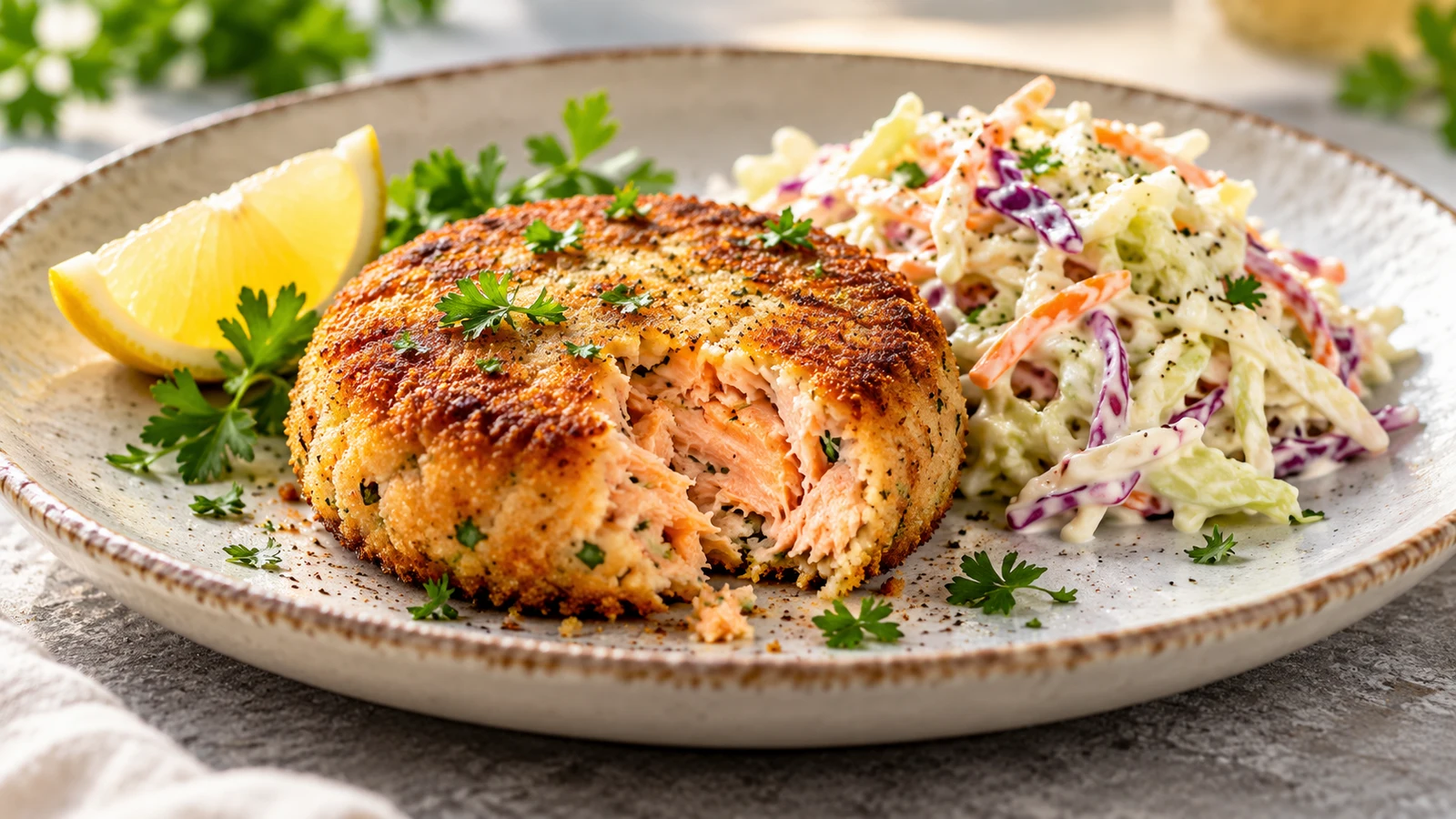
Saltine crackers, egg, onion, mustard, and a little flour give the patties their familiar flavor and sturdy texture. This old fashioned salmon patties recipe with crackers is especially dependable because the crumbs absorb moisture without overwhelming the salmon. Serve the patties hot with lemon wedges, chopped parsley, and fresh coleslaw for a simple, nostalgic meal.
Table of Contents
Why You’ll Love This Recipe
- Quick: The patties are ready in about 35 minutes.
- Affordable: Canned salmon and pantry ingredients keep costs low.
- Well balanced: A short rest helps create crisp edges without drying the centers.
- Flexible: The recipe includes gluten-free, lower-oil, air-fryer, and fresh-salmon options.
- Easy to serve: Pair the patties with coleslaw, vegetables, or potatoes.
The appeal of this old fashioned salmon patties recipe is its practical method. Careful draining, gentle mixing, and a short chill solve the most common texture problems without adding complicated techniques or specialty equipment.
Ingredients
- 2 cans pink or red salmon, 14.75 ounces (418 g) each
- 1 cup finely crushed saltine crackers, about 24 crackers
- 1 large egg, lightly beaten
- 1/3 cup finely chopped yellow onion
- 2 tablespoons all-purpose flour
- 1 tablespoon yellow or Dijon mustard
- 1/2 teaspoon kosher salt
- 1/4 teaspoon ground black pepper
- 1/3 cup neutral frying oil, such as canola or vegetable oil
- Lemon wedges and chopped parsley, for serving
- Fresh coleslaw, for serving
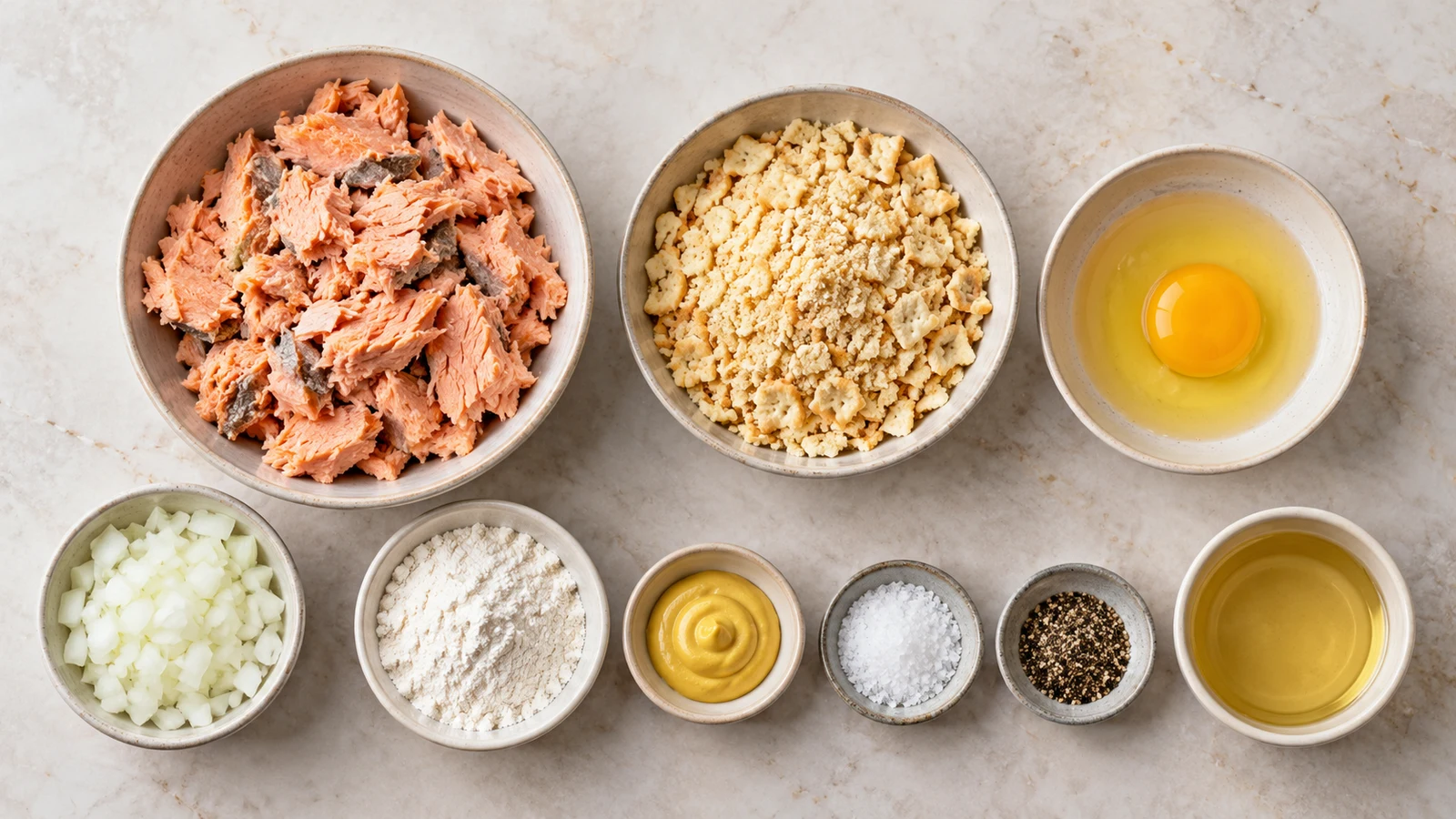
This old fashioned salmon patties recipe with crackers uses saltines as the main binder because they absorb moisture while keeping the texture light. The flour adds just enough reinforcement to help the patties survive shaping and flipping.
Choosing and Preparing the Ingredients
Pink salmon has a mild taste and is usually the most economical choice. Red salmon tends to have a deeper color and more pronounced flavor. Either works without changing the quantities or method, so choose according to availability and preference.
Crush the saltines into fine, even crumbs rather than leaving large shards. Fine crumbs distribute throughout the mixture and make this old fashioned salmon patties recipe easy to shape. A few slightly coarser pieces are harmless, but large chunks may create weak spots that split during frying.
Chop the onion very finely so it softens during the brief cooking time. Larger pieces can remain sharp and may push the mixture apart. Yellow mustard gives the most traditional flavor, while Dijon contributes a slightly sharper finish without changing the patties’ structure.
How to Drain and Prepare Canned Salmon
Open each can and drain it thoroughly in a fine-mesh strainer, pressing very gently to remove excess liquid without squeezing the fish dry. Transfer the salmon to a bowl and flake it with a fork. Proper draining prevents a loose mixture that demands too much binder.
Good draining is particularly important in an old fashioned salmon patties recipe with crackers. Saltines can absorb some liquid, but adding too many to compensate for wet salmon will make the finished patties dry and mute their seafood flavor.
The soft bones and skin in canned salmon are edible, and the bones provide calcium; the USDA canned-salmon resource offers additional canned salmon nutrition information. Mash the bones into the fish and they will be barely noticeable, or remove the bones and darker skin if you prefer a more uniform texture.
How to Make This Old Fashioned Salmon Patties Recipe
Read through the method before heating the oil. The resting and chilling periods are brief, but both help the binders work and make the patties easier to transfer. That preparation is what keeps an old fashioned salmon patties recipe from becoming fragile in the skillet.
- Mix gently: Place the drained, flaked salmon in a large bowl. Add the cracker crumbs, egg, onion, flour, mustard, salt, and pepper. Fold just until combined; overmixing makes the patties dense.
- Check the texture: Squeeze a small portion in your palm. It should feel moist and hold together without releasing liquid. If it smears or feels wet, add cracker crumbs 1 tablespoon at a time. If it looks dry or cracks badly, mix in 1 teaspoon of water or mayonnaise at a time.
- Rest the mixture: Let it stand for 10 minutes so the crumbs can absorb moisture. Do not skip this step, since shaping immediately can lead to crumbling.
- Shape: Divide the mixture into six equal portions. Form patties about 3 inches wide and 1/2 inch thick, pressing only firmly enough to hold them together. This size cooks evenly and is easy to flip.
- Chill: Arrange the patties on a plate and refrigerate for 10 minutes. Chilling firms the binder and reduces breakage in the skillet.
- Heat the oil: Pour enough oil into a large skillet to make a layer about 1/8 inch deep. Heat over medium heat to approximately 350°F (177°C). A crumb should sizzle immediately but should not burn.
- Fry: Add the patties without crowding the skillet, working in two batches if needed. Cook for 3 to 4 minutes per side until deeply golden. Wait until the first side has formed a firm crust before flipping once with a thin spatula.
- Drain and serve: Transfer the patties to a wire rack or paper-towel-lined plate. Garnish with parsley and serve immediately with lemon wedges and coleslaw.
Expert Tips for Crisp, Tender Patties
The best old fashioned salmon patties recipe depends more on texture cues than vigorous mixing. Moist salmon should remain in small flakes, while the binders should be evenly distributed. Stop folding as soon as no dry pockets of cracker crumbs or flour remain.
- Control the oil temperature: Oil that is too cool makes greasy patties; overheated oil browns the exterior before the center is hot. Aim for 350°F (177°C) and adjust the burner between batches.
- Protect the texture: Fold rather than vigorously stir, and avoid compacting the patties. Gentle handling produces moist centers.
- Use a consistent size: Equal portions brown at the same rate. Flatten the centers to the same thickness as the edges so each patty heats evenly.
- Leave room: Crowding lowers the oil temperature and traps steam, which softens the crust.
- Flip at the right time: If a patty resists the spatula or bends, give it another 30 to 60 seconds. Flipping too early is a common cause of breakage.
- Use a thin spatula: Slide it completely beneath each patty before turning. Supporting the entire base makes this old fashioned salmon patties recipe easy to manage, even when the mixture is tender.
- Drain without covering: Covering hot patties traps steam and softens their crust. A wire rack provides the best airflow, while paper towels are a practical alternative.
- Check doneness: Canned salmon is already cooked, so heat the patties until the centers reach 165°F (74°C) because they contain egg. For broader seafood-handling guidance, review the FDA’s seafood safety recommendations.
How to Test the First Patty
Cook one patty before adding the rest if you are uncertain about the mixture or oil temperature. If it spreads, return the uncooked patties to the refrigerator and add a small amount of crumbs if needed. If it browns too quickly, lower the heat before cooking the remaining batch.
A test patty also lets you confirm the seasoning. Because the canned salmon and crackers both contribute salt, taste the cooked sample before making any adjustment. This small step makes an old fashioned salmon patties recipe with crackers more predictable across different brands.
Troubleshooting Salmon Patties
Most problems with an old fashioned salmon patties recipe come from moisture balance, temperature, or timing. Make small adjustments instead of adding a large amount of binder at once, since the mixture will continue to firm as the crumbs hydrate.
Why Is the Mixture Too Wet?
A mixture that slumps or sticks heavily to your hands may contain excess canning liquid. Add cracker crumbs 1 tablespoon at a time, fold gently, and allow another five-minute rest before reassessing. Avoid adding flour by the spoonful because too much can give the centers a pasty texture.
Why Is the Mixture Too Dry?
If the portions crack badly and will not hold their shape, add 1 teaspoon of water or mayonnaise at a time. Fold after each addition and stop as soon as the mixture holds together. Dry patties often result from overly thorough draining, too much binder, or crumbs that were packed into the measuring cup.
Why Do the Patties Break While Frying?
Fragile patties may not have rested or chilled long enough. They can also break when turned before the bottom crust is firm. Give the first side the full cooking time, slide a thin spatula underneath, and flip only once.
Why Are the Patties Greasy?
Oil below the target temperature is usually responsible. Let the oil return to approximately 350°F (177°C) between batches and avoid crowding the pan. Drain cooked patties promptly so they do not sit in excess oil.
Why Are the Centers Tough?
Hard packing, vigorous mixing, excessive binder, or overcooking can produce dense centers. Shape with light pressure and remove the patties once they are deeply golden and have reached the stated internal temperature.
Variations and Substitutions
This old fashioned salmon patties recipe is flexible, but substitutions can alter how quickly the mixture absorbs moisture. After changing a binder, always rest the mixture and judge its consistency before shaping.
Cracker and Breadcrumb Options
Saltines give a savory, tender result, while plain breadcrumbs produce a slightly firmer patty. If making an old fashioned salmon patties recipe with crackers other than saltines, choose a crisp, mild cracker and crush it finely. Strongly seasoned varieties may compete with the salmon and can add considerable salt.
Panko creates a slightly lighter, rougher texture, although the mixture may need a few extra minutes to hydrate. Regular dry breadcrumbs absorb moisture more evenly. Begin with the same measured amount when substituting, then adjust only if the rested mixture does not hold together.
Cornmeal Variation
For an old fashioned salmon patties recipe with cornmeal, replace the cracker crumbs with 3/4 cup fine cornmeal. Expect a more pronounced crunch and allow the mixture to rest for 15 minutes so the cornmeal can absorb moisture before shaping.
Fine cornmeal works better as an internal binder than coarse cornmeal, which can remain gritty during the short cooking time. An old fashioned salmon patties recipe with cornmeal should still feel moist after resting. If the mixture cracks, correct it with 1 teaspoon of water or mayonnaise at a time.
Gluten-Free Variation
Use certified gluten-free crackers or breadcrumbs and replace the flour with a gluten-free all-purpose blend. Check the mustard label as well. These swaps preserve the basic method and keep the old fashioned salmon patties recipe easy to prepare without introducing an unfamiliar binder.
Fresh Salmon Variation
Replace the canned fish with 1 1/2 pounds (680 g) cooked, cooled, and finely flaked salmon. Remove the skin and pin bones first. FoodSafety.gov provides useful advice on the safe handling of fish and shellfish.
Fresh cooked salmon may be drier than canned salmon, so check the mixture after its rest. Add water or mayonnaise only in the small increments already specified if the patties crack during shaping.
Lower-Oil and Air-Fryer Methods
For a lower-oil skillet method, brush both sides lightly with oil and cook in a nonstick skillet over medium heat for 4 to 5 minutes per side. The crust will be thinner than it is with shallow frying, but the patties will still brown.
For an air fryer, spray the basket and patties with oil, then cook at 390°F (199°C) for 9 to 11 minutes, flipping halfway through. Leave space around each patty so hot air can circulate. Check that the centers reach 165°F (74°C).
Serving Ideas
Fresh coleslaw adds cool crunch, while tartar sauce or a mustard-lemon sauce makes a useful dip. Bright, acidic accompaniments balance the richness of an old fashioned salmon patties recipe and keep the plate from feeling heavy.
For a heartier dinner, serve the patties with roasted potatoes and carrots or crisp roasted Yukon Gold potatoes. Add steamed green beans, peas, or a simple leafy salad for color and freshness.
This old fashioned salmon patties recipe with crackers also suits a casual lunch. Tuck one patty into a soft roll with lettuce, pickles, and tartar sauce, or place it over dressed greens with lemon on the side.
For a smaller appetizer, divide the mixture into more portions and shape compact patties, keeping the total quantity unchanged. Watch them closely because smaller pieces cook faster. Serve with a dipping sauce rather than stacking them, which can soften their crisp surfaces.
Leftovers also work well in a sandwich with lettuce and pickles. If you enjoy economical skillet dishes, try these golden mashed potato cakes on another evening.
Make-Ahead, Storage, and Reheating
Planning ahead makes this old fashioned salmon patties recipe easy to fit into a weeknight schedule. The mixture benefits from resting, but seafood and egg must remain properly refrigerated during longer pauses.
Preparing the Patties Ahead
Shape the uncooked patties up to 24 hours in advance, cover tightly, and refrigerate. Keep them cold until the skillet is ready. Place parchment between layers if they must be stacked, and handle them gently when transferring them to the pan.
You can also crush the crackers and chop the onion earlier in the day, storing them separately until mixing time. Do not leave the drained salmon or the prepared mixture at room temperature while completing other meal preparation.
Refrigerating Cooked Patties
Cool cooked patties promptly and store them in an airtight container for up to three days. Separate layers with parchment paper to prevent sticking. Refrigeration softens the crust, but dry oven or air-fryer heat will restore much of its texture.
Freezing Cooked Patties
Freeze cooked, cooled patties on a tray until firm, then transfer them to a freezer container for up to two months. Freezing them individually first prevents the patties from adhering to one another and makes it easy to thaw only the amount needed.
Thaw frozen patties overnight in the refrigerator. Keeping the old fashioned salmon patties recipe in individual portions is convenient for quick lunches, but do not thaw seafood patties on the counter.
Reheating Without Losing the Crust
Place refrigerated patties on a wire rack over a baking sheet and heat at 375°F (190°C) for 10 to 12 minutes. Alternatively, air-fry them at 375°F (190°C) for 4 to 6 minutes. Heat leftovers thoroughly before serving.
A skillet over medium-low heat can also restore the exterior. Add only a light film of oil and turn the patties once they release easily. Avoid the microwave when possible because trapped steam softens the crust, though it remains an option when speed matters most.
Nutrition
One serving of about one and a half patties contains approximately 390 calories, 33 grams of protein, 19 grams of fat, and 20 grams of carbohydrates, depending on the salmon and the amount of oil absorbed. Bones retained from canned salmon add calcium, while draining the fish does not remove its valuable protein.

Frequently Asked Questions
Why do my salmon patties fall apart?
They may be too wet, insufficiently rested, or flipped before a crust develops. Drain the salmon well, adjust with crumbs, rest and chill the shaped patties, then let the first side brown fully.
Can I make an old fashioned salmon patties recipe easy enough for a weeknight?
Yes. Crush the crackers and chop the onion while the salmon drains, then shape all six patties at once. Including the rest and chill time, this old fashioned salmon patties recipe easy method can put dinner on the table in about 35 minutes.
What makes an old fashioned salmon patties recipe with crackers tender?
Finely crushed crackers absorb the salmon’s moisture while remaining lighter than an excessive amount of flour. Resting the mixture gives the crumbs time to hydrate, and gentle shaping prevents the finished centers from becoming compact.
Can I prepare an old fashioned salmon patties recipe with cornmeal instead?
Yes. Replace the cracker crumbs with 3/4 cup fine cornmeal and extend the resting time to 15 minutes. Fine cornmeal hydrates more readily than coarse meal and gives the patties a noticeable crunch.
Can I use the liquid from canned salmon?
Drain it for this recipe. Retaining the liquid makes the mixture difficult to shape and may force you to add enough binder to dull the salmon flavor.
Should I remove the bones and skin?
That is a matter of preference. The soft bones are edible and can be mashed into the salmon, while the skin is also edible. Remove either one if you prefer a more uniform appearance or texture.
Can I use breadcrumbs instead of crackers?
Yes. Plain dry breadcrumbs make a slightly firmer patty, while panko creates a lighter texture. Let the mixture rest before deciding whether it needs any adjustment, since different crumb styles absorb moisture at different rates.
What oil is best for frying salmon patties?
Choose a neutral oil with a suitable frying point, such as canola, vegetable, avocado, or peanut oil. Olive oil can add a stronger flavor and is less economical for shallow frying.
How do I keep the first batch warm?
Set the cooked patties on a wire rack over a baking sheet in a low oven while the second batch fries. Do not cover them, since trapped steam will soften the crust.
Can I double the recipe?
Yes. Double each ingredient and mix in a bowl large enough to fold the salmon gently. Fry in several uncrowded batches, allowing the oil to return to approximately 350°F (177°C) before adding the next group.
Is this old fashioned salmon patties recipe suitable for meal prep?
Yes. Cooked patties keep for up to three days in the refrigerator or two months in the freezer. Reheat them in an oven or air fryer to restore the crisp exterior more effectively than a microwave.
Recipe Card
- Yield: 6 patties, about 4 servings
- Prep time: 20 minutes
- Cook time: 15 minutes
- Total time: 35 minutes
Method: Drain and flake two 14.75-ounce cans of salmon. Gently fold in 1 cup crushed saltines, one egg, 1/3 cup onion, 2 tablespoons flour, 1 tablespoon mustard, 1/2 teaspoon salt, and 1/4 teaspoon pepper. Rest for 10 minutes, shape six patties, and chill for 10 minutes. Shallow-fry at 350°F (177°C) for 3 to 4 minutes per side, until golden and heated to 165°F (74°C).
A Dependable Pantry Dinner
With careful draining, a brief rest, and properly heated oil, this old fashioned salmon patties recipe develops the crisp crust and tender middle that make it a dependable family dinner. The straightforward method also leaves room for cracker, cornmeal, gluten-free, fresh-salmon, skillet, and air-fryer variations.
Whether you choose the classic old fashioned salmon patties recipe with crackers or the crunchier old fashioned salmon patties recipe with cornmeal, judge the rested mixture before shaping and adjust it gradually. That simple habit produces patties that hold together while staying moist inside.
Reviews
Reader reviews are managed separately (outside this build).