Cake
carrot bundt cake recipe: Luscious, Moist & Foolproof
Try this carrot bundt cake recipe for a moist, warmly spiced bake with cream cheese frosting, easy release tips, and foolproof results every time at home.
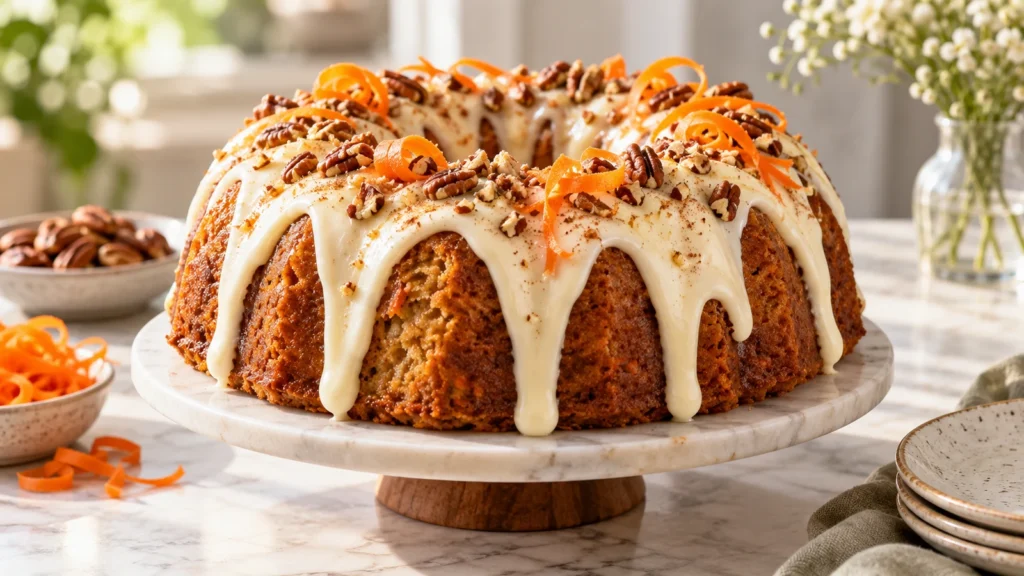
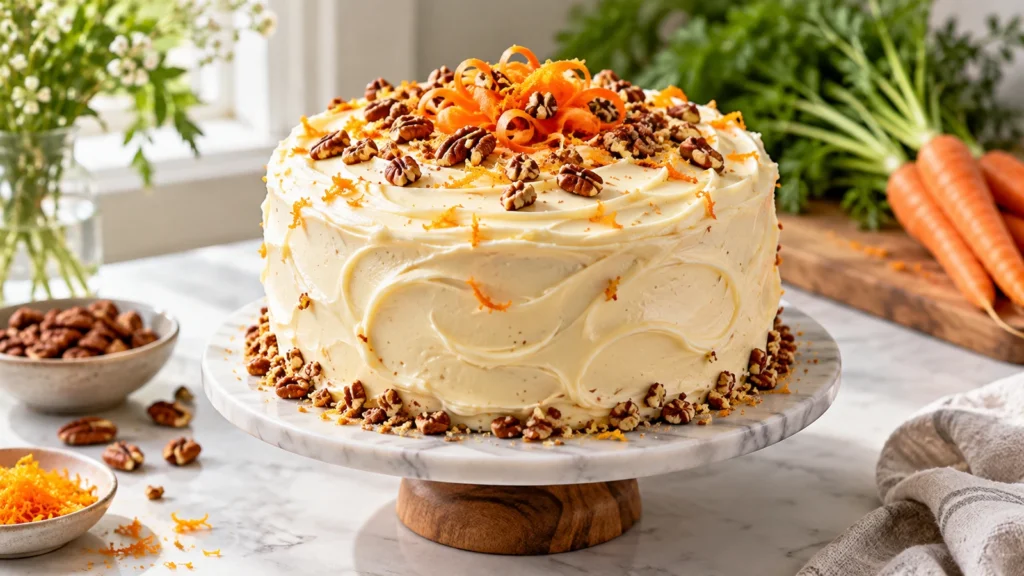
This carrot bundt cake recipe makes a tender, warmly spiced cake with plenty of freshly grated carrots and a smooth cream cheese frosting. Careful pan preparation, accurate measurements, and clear cooling instructions help it release cleanly every time.
The cake is rich enough for a celebration but simple enough for an afternoon treat. Unlike a carrot cake cookies recipe or a layered carrot cake cheesecake recipe, it needs no shaping, stacking, or water bath. This carrot cake recipe with cream cheese frosting serves 12 to 16 people and can be baked ahead, chilled, or frozen without losing its soft texture.
Table of Contents
Why You’ll Love This Carrot Bundt Cake Recipe
- Reliably moist: Oil, brown sugar, and carrots keep every slice tender.
- Easy release: A thorough greasing method reaches every curve of the Bundt pan.
- Balanced flavor: Cinnamon, ginger, nutmeg, and salt add warmth without overpowering the carrots.
- Make-ahead friendly: The unfrosted cake freezes well, while the finished cake keeps for several days.
- Flexible: Nuts, raisins, coconut, or pineapple can be added in measured amounts.
This carrot bundt cake recipe also travels more easily than a layer cake because the sturdy ring shape protects the tender crumb. The frosting can be spooned over shortly before serving, giving the cake a polished finish without complicated decorating.
Ingredients
- 2 1/2 cups (300 g) all-purpose flour
- 2 teaspoons baking powder
- 1 teaspoon baking soda
- 2 teaspoons ground cinnamon
- 1/2 teaspoon ground ginger
- 1/4 teaspoon ground nutmeg
- 3/4 teaspoon fine salt
- 4 large eggs, at room temperature
- 1 cup (200 g) granulated sugar
- 3/4 cup (150 g) packed light brown sugar
- 1 cup (240 ml) neutral vegetable or canola oil
- 2 teaspoons vanilla extract
- 3 cups (300 g) peeled, freshly grated carrots
- 3/4 cup (85 g) chopped pecans or walnuts, optional
- Softened butter or shortening and flour for preparing the pan
- 8 ounces (226 g) full-fat block cream cheese, softened
- 4 tablespoons (57 g) unsalted butter, softened
- 2 cups (240 g) confectioners’ sugar, sifted
- 1 teaspoon vanilla extract
- 1 to 2 tablespoons milk, as needed
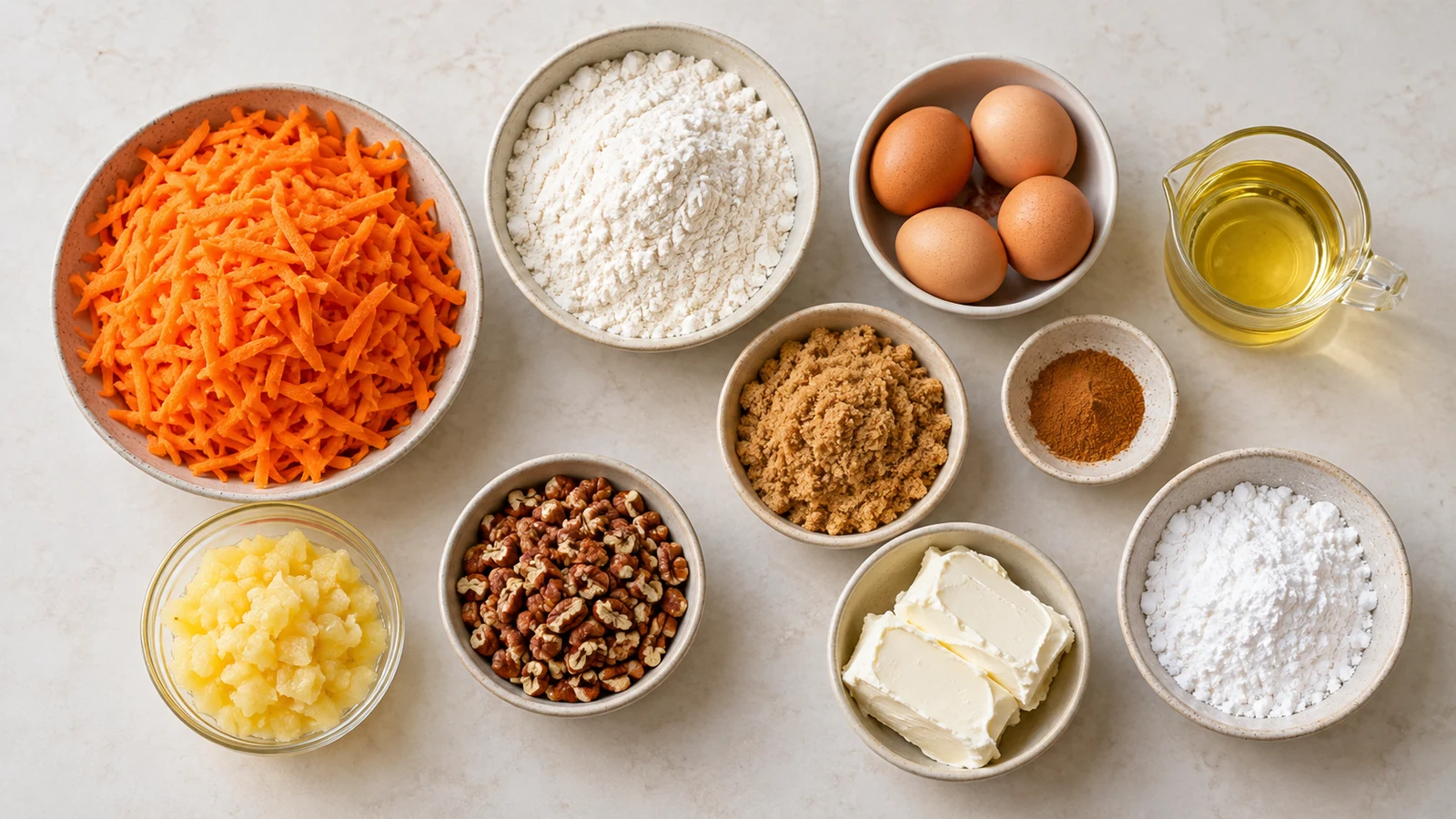
Ingredient Notes for a Moist Cake
Fresh carrots are essential to the texture of this carrot bundt cake recipe. Peel and grate them shortly before mixing so they retain their natural moisture. Fine or medium shreds soften into the crumb, while very coarse pieces can remain firm and make clean slicing more difficult.
Neutral oil keeps the cake soft even after refrigeration. Brown sugar contributes moisture and a mild caramel flavor, while granulated sugar supports the cake’s structure. Room-temperature eggs blend more smoothly with the oil and sugars, helping the batter bake evenly.
Full-fat block cream cheese produces a thicker, more dependable frosting than spreadable cream cheese from a tub. Sifting the confectioners’ sugar prevents small lumps. Add the milk gradually because a little changes the consistency quickly.
Equipment and Bundt-Pan Preparation
Use a 10- to 12-cup Bundt pan; a smaller pan may overflow. A box grater’s fine or medium holes produce short, delicate carrot strands that soften during baking. Avoid packaged shredded carrots, which are usually thick and dry, and weigh the carrots after peeling and grating.
Brush every ridge, corner, and center-tube seam with softened butter or shortening, then dust evenly with flour and tap out the excess. Prepare the pan immediately before filling it so the coating does not slide or pool. These Bundt cake release techniques provide additional guidance for intricate pans.
A pastry brush is useful for reaching narrow grooves, but inspect the pan afterward for bare spots. Flour should form a thin, continuous coating rather than collect in pale clumps. This preparation is one of the most important steps in the entire carrot bundt cake recipe.
How to Make This Carrot Bundt Cake Recipe
- Prepare the oven: Position a rack in the center and preheat to 350°F (175°C). Grease and flour the Bundt pan thoroughly.
- Combine the dry ingredients: Whisk the flour, baking powder, baking soda, cinnamon, ginger, nutmeg, and salt in a medium bowl until evenly distributed.
- Mix the wet ingredients: In a large bowl, whisk the eggs, granulated sugar, and brown sugar for about 60 seconds. Whisk in the oil and vanilla until smooth.
- Make the batter: Add the dry mixture to the wet ingredients and fold just until a few flour streaks remain. Fold in the carrots and optional nuts until evenly dispersed. Do not continue mixing once the flour disappears.
- Fill the pan: Spoon the thick batter evenly into the prepared pan. Gently tap the pan twice on a folded towel to settle the batter and release large air pockets.
- Bake: Bake for 50 to 60 minutes. Begin checking at 48 minutes; dark metal pans absorb more heat, so consult this dark-pan baking guidance and consider reducing the temperature to 325°F (165°C).
- Check doneness: The top should spring back after a light touch, the edges should pull slightly from the pan, and a long skewer inserted near the center should emerge clean or with a few moist crumbs. Wet batter means it needs another 3 to 5 minutes.
- Cool and unmold: Cool upright in the pan for exactly 15 minutes. Loosen the exposed edges gently with a thin flexible spatula, place a rack over the pan, and invert in one confident motion. Lift the pan straight up, then cool the cake completely for about 2 hours.
- Make the frosting: Beat the cream cheese and butter until smooth. Mix in confectioners’ sugar and vanilla, then add milk a teaspoon at a time until the frosting falls from a spoon in a thick ribbon. Spoon it over the completely cooled cake.
Expert Tips for the Best Results
Measure Without Packing the Flour
Measure flour by weight or spoon it lightly into the measuring cup and level it. Too much flour causes dryness, while overmixing develops gluten and creates a dense texture. For more detail about pan capacity and baking, see this Bundt cake guide.
Mix Gently and Deliberately
Fold with a broad spatula, scraping the bottom and sides of the bowl as you work. Stop as soon as the carrots, flour, and optional nuts are evenly distributed. This gentle method gives the carrot bundt cake recipe a soft crumb instead of a tight or rubbery one.
Judge Doneness in Several Ways
Do not rely on color alone because decorative pans hide most of the cake’s surface. Check for a springy top, slightly released edges, and a skewer with no wet batter. Testing near the center of the cake ring gives the most useful result.
Respect the Cooling Window
If the cake sticks, place a warm, damp towel around the inverted pan for 5 minutes, then tap and lift gently. A sunken center usually indicates underbaking, excess leavener, or opening the oven too early. Dry cake generally comes from excess flour or overbaking.
The 15-minute pan rest lets the crumb become firm enough to hold together while the cake is still warm enough to release. Inverting immediately can cause tearing, while leaving the cake in the pan until cold can make its sugared crust adhere.
Frost Only a Cool Cake
Warm cake softens cream cheese frosting and makes it slide into a puddle. Let the cake cool completely for about 2 hours before frosting. If the kitchen is warm, the frosting can be chilled briefly until it forms a thick ribbon from the spoon.
For neat slices, chill the frosted cake for 20 minutes and use a sharp serrated knife wiped clean between cuts. Serve at cool room temperature with coffee, black tea, or fresh orange segments.
Variations and Substitutions
Coconut Variation
For a coconut and carrot cake recipe variation, fold in 1/2 cup (43 g) unsweetened shredded coconut. Coconut absorbs some liquid, so avoid adding more than this amount. Its mild flavor complements the warm spices without hiding the carrots.
When preparing the coconut and carrot cake recipe version, distribute the coconut evenly as you fold. Break apart any compressed clusters before adding them so one area of the finished cake does not become noticeably heavier than another.
Cheesecake-Inspired Variation
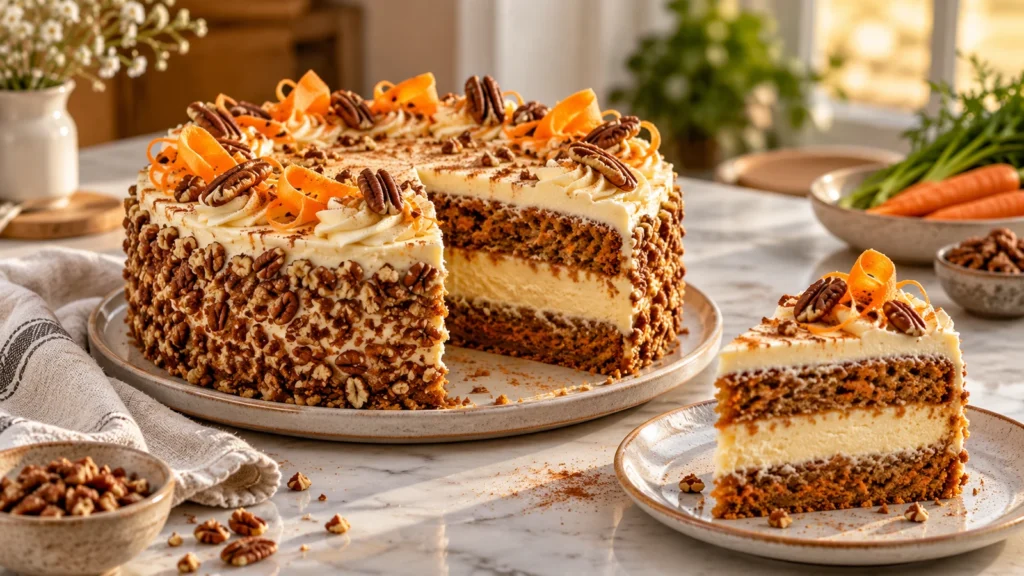
For a richer option inspired by a carrot cake cheesecake recipe, pipe 8 ounces of sweetened cheesecake filling into a shallow channel in the batter, cover it completely, and bake until the cake portion tests done. Keeping the filling away from the pan helps the cake release cleanly.
A carrot cake cheesecake recipe variation benefits from complete cooling before slicing because the filling becomes more stable as it rests. Use a clean serrated knife and wipe it between cuts to keep the contrasting layers distinct.
Fruit and Nut Options
Add up to 1/2 cup raisins or drained crushed pineapple. Raisins absorb moisture and become plump; pineapple adds moisture, so press out excess juice before measuring. Keep the total amount of combined nuts, fruit, and coconut to 1 1/2 cups to prevent a heavy or fragile cake.
Walnuts and pecans are interchangeable. Toasting them before chopping can deepen their flavor, but let them cool before adding them to the batter. Warm nuts can affect the surrounding batter and may soften the prepared pan coating if they touch it.
Oil Substitution
Use melted refined coconut oil instead of vegetable oil, provided the eggs are at room temperature so the oil stays fluid. Refined coconut oil has a milder flavor, making it suitable for either the classic cake or a coconut and carrot cake recipe variation.
For a different vegetable-based dessert, try this softly spiced sweet potato cake. It offers another practical way to pair naturally sweet vegetables with warm baking spices.
How This Cake Differs From Other Carrot Desserts
A carrot cake cookies recipe is formulated with enough structure to hold individual portions on a baking sheet. Bundt batter is more fluid, so it cannot be placed directly onto a cookie sheet. Choose a dedicated carrot cake cookies recipe when you want portable, hand-held treats.
A carrot cake cheesecake recipe usually emphasizes a creamy filling or distinct cheesecake layer. This Bundt cake remains primarily a tender spice cake, even when the optional filling variation is used. It is simpler to transport and serve to a larger group.
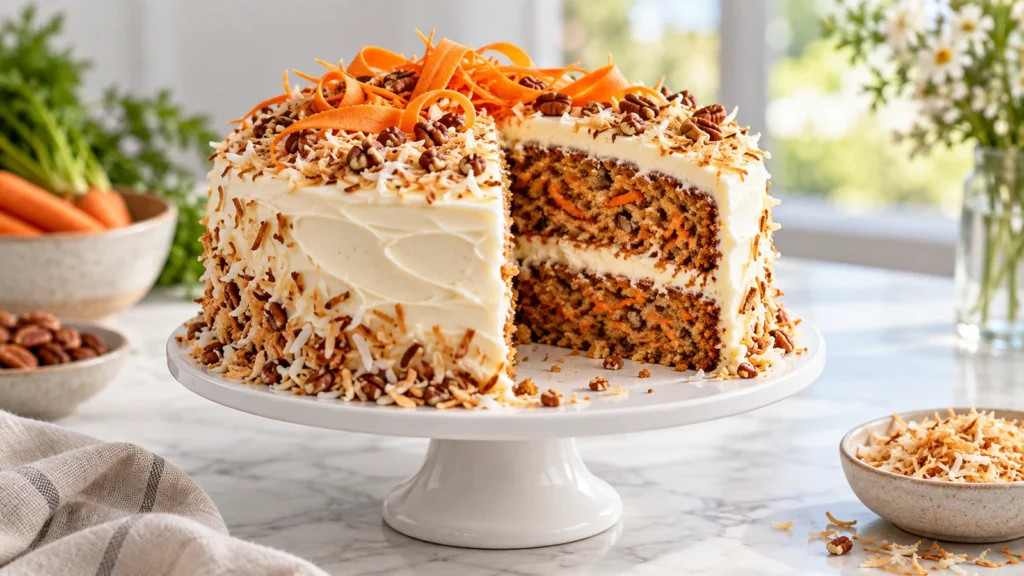
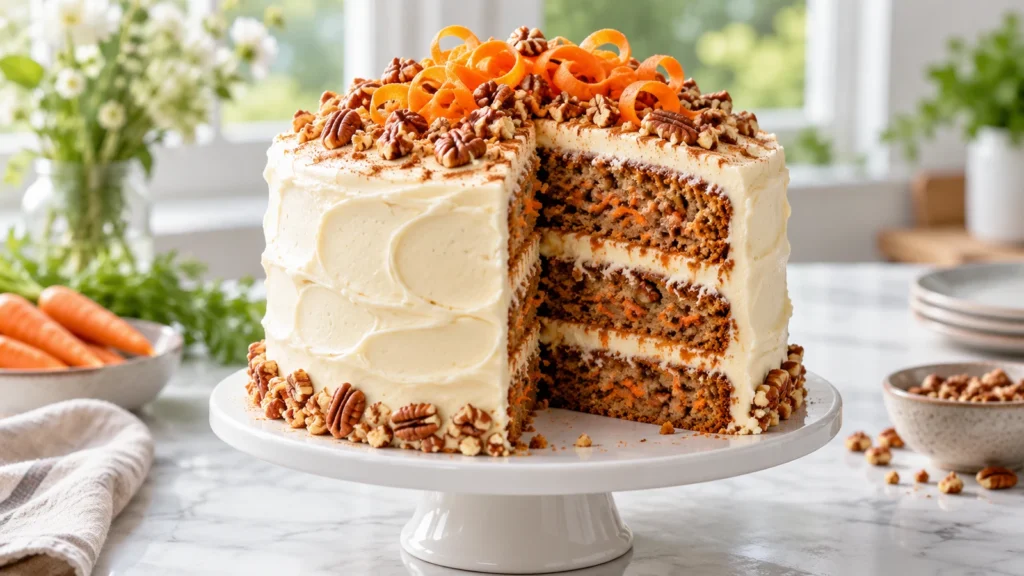
A classic carrot cake recipe with cream cheese frosting may be baked in layers and covered on the top and sides. This version uses the same familiar flavor pairing but requires less frosting. The decorative pan supplies its shape, and the thick ribbon of frosting highlights the ridges.
Troubleshooting This Carrot Bundt Cake Recipe
- Sticking: Coat every crevice, flour the pan, and unmold after 15 minutes rather than waiting until fully cool.
- Dry cake: Weigh the flour, use fresh carrots, and remove the cake when the skewer has moist crumbs.
- Sinking: Confirm the leaveners are fresh, measure accurately, and do not open the oven during the first 40 minutes.
- Dense texture: Bring eggs to room temperature and fold the batter only until combined.
- Runny frosting: Chill it for 20 minutes or mix in more sifted confectioners’ sugar. If it is too stiff, add milk one teaspoon at a time.
Why Are There Large Holes in the Cake?
Large tunnels can form when the batter is mixed too vigorously or when air pockets remain in the filled pan. Fold gently, spoon the batter around the pan evenly, and tap the pan twice on a folded towel as directed.
Why Is the Outside Too Dark?
A dark metal pan absorbs heat quickly and can brown the crust before the center finishes. Use 325°F (165°C) for a very dark pan and begin checking according to the recipe. Position the rack in the center so the cake is not too close to either heating element.
Why Does the Frosting Slide Off?
The cake may still be warm, or the frosting may contain too much milk. Let the cake cool completely and add liquid only a teaspoon at a time. Brief chilling can restore the thick consistency expected from a carrot cake recipe with cream cheese frosting.
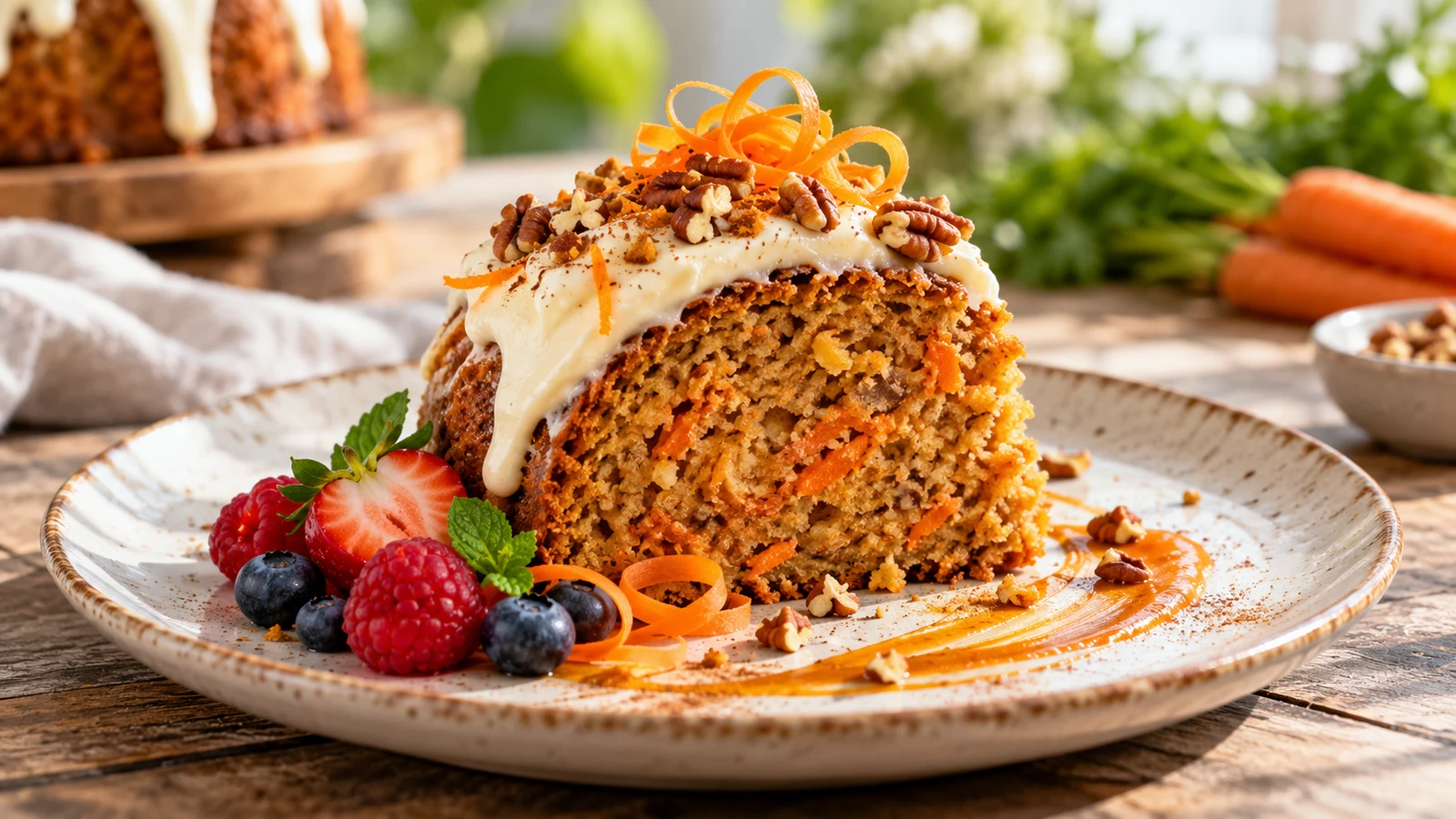
Make-Ahead, Storage, and Freezing Details
Making the Cake Ahead
Make the unfrosted cake up to two days ahead and keep it tightly wrapped at room temperature. Wait until it is completely cool before wrapping because trapped steam can make the exterior sticky. Add the frosting before serving for the cleanest presentation.
This make-ahead option makes the carrot bundt cake recipe especially convenient for holidays. Baking in advance also gives the spices time to settle into the crumb, while correct wrapping prevents exposed surfaces from drying.
Refrigerating the Frosted Cake
Because this carrot cake recipe with cream cheese frosting contains dairy, refrigerate it in an airtight container for up to 5 days. Let individual slices stand at room temperature for 20 to 30 minutes before serving; reheating is unnecessary and can melt the frosting.
Cover cut surfaces closely when possible. The exposed crumb loses moisture faster than the glazed exterior, so an airtight container is more effective than a loose covering. Keep strongly scented foods away from the cake because cream cheese frosting can absorb refrigerator odors.
Freezing the Cake
To freeze, wrap the fully cooled, unfrosted cake or individual slices in plastic and foil, then freeze for up to 3 months. Thaw overnight in the refrigerator, bring to room temperature, and frost.
Individual portions are useful when only a few servings are needed. Wrap each slice carefully to limit freezer exposure, and thaw only the amount you plan to serve. Freezing the cake without frosting preserves the smoothest finish.
Serving Ideas
Dust an unfrosted cake with confectioners’ sugar for a simple finish, or garnish the cream cheese frosting with toasted nuts or fine orange zest. For a brunch spread, pair smaller slices with a batch of sweet potato pancakes. Savory crispy mashed potato cakes offer a useful contrast on a larger buffet.
Serve a carrot cake recipe with cream cheese frosting at cool room temperature so both the crumb and topping feel soft. Coffee emphasizes the toasted spice notes, while black tea and fresh orange segments provide a lighter contrast to the rich frosting.
For birthdays or spring gatherings, decorate the top with finely chopped pecans or walnuts. A light scattering looks polished while preserving the pan’s sculpted design. If guests have different preferences, serve the frosting on the side and leave the cake plain.
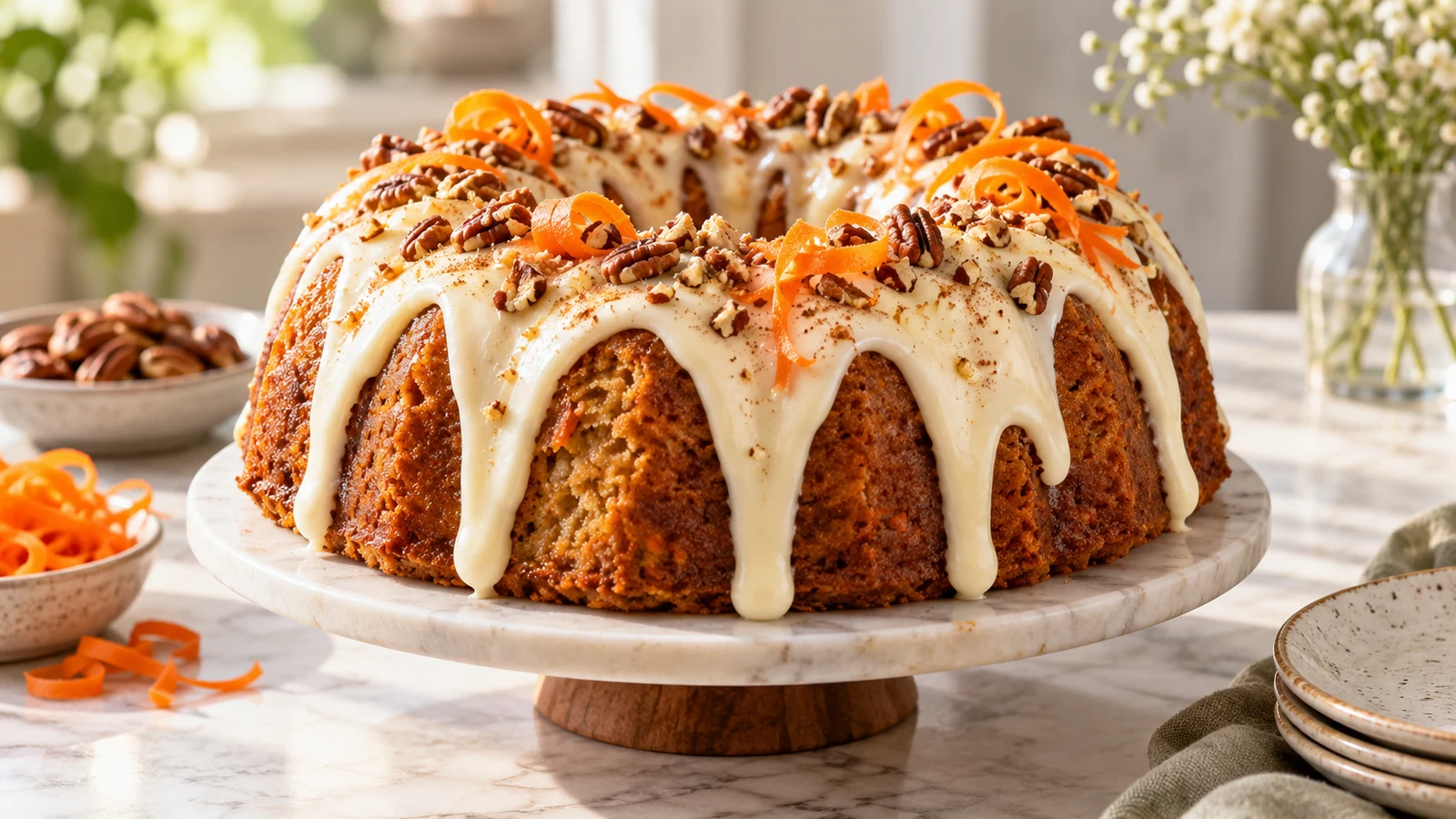
Frequently Asked Questions
Can I use pre-shredded carrots in this carrot bundt cake recipe?
Freshly grated carrots are strongly recommended because they are finer and contain more moisture. If packaged carrots are the only option, pulse them briefly in a food processor to shorten the strands, without turning them into a paste.
Why did my Bundt cake break during release?
The pan may have been incompletely greased, or the cake may have cooled too long. Let it rest for 15 minutes, loosen only the accessible edges, and invert it while it is still slightly warm.
Can I turn this into a carrot cake cookies recipe?
This batter is too fluid for a carrot cake cookies recipe and will spread rather than hold cookie shapes. Use a cookie-specific formula with less liquid and more flour. Do not try to correct this batter by adding unmeasured flour because the resulting cookies may become heavy or dry.
Can I make a carrot cake cheesecake recipe with this batter?
You can use the cheesecake-inspired variation described above, but a traditional carrot cake cheesecake recipe is a separate dessert with different proportions and handling. Keep the optional filling surrounded by batter so it does not stick directly to the Bundt pan.
Can I make the coconut and carrot cake recipe variation ahead?
Yes. The coconut and carrot cake recipe variation follows the same make-ahead and storage guidance as the original. Cool it fully, wrap it tightly, and leave it unfrosted if freezing. Coconut absorbs moisture, so measure it carefully rather than adding an extra handful.
Can I leave off the cream cheese frosting?
Yes. The cake is flavorful enough to serve plain, with a light dusting of confectioners’ sugar, or with a thin vanilla glaze. Omitting the dairy frosting also makes room-temperature service more convenient.
How do I know whether my Bundt pan is large enough?
Use a 10- to 12-cup Bundt pan as directed. If you are unsure of its capacity, consult the manufacturer’s information before mixing. A smaller pan may overflow, so do not force all the batter into a pan that lacks sufficient capacity.
Should I peel the carrots before grating?
Yes. Peel the carrots, grate them with fine or medium holes, and weigh 300 g afterward. This produces delicate strands that soften well and ensures the quantity remains consistent from one cake to the next.
Can I bake this carrot cake recipe with cream cheese frosting in a dark pan?
Yes. For a very dark pan, consider reducing the temperature to 325°F (165°C), as directed, because dark metal absorbs more heat. Begin checking the cake carefully and use the skewer, spring-back, and edge-release tests together.
Why must the eggs be at room temperature?
Room-temperature eggs blend more readily with the sugar and oil. They are particularly important if refined coconut oil is used because cold eggs can cause melted coconut oil to firm into small pieces before the batter reaches the oven.
Can I combine raisins, nuts, pineapple, and coconut?
Yes, but keep the total combined amount of nuts, fruit, and coconut to 1 1/2 cups. Press excess juice from pineapple before measuring. Limiting the additions protects the cake’s structure and prevents it from becoming heavy or fragile.
Nutrition and Printable Recipe Card
Yield: 12 to 16 servings. Pan: 10- to 12-cup Bundt pan. Prep time: 25 minutes. Bake time: 50 to 60 minutes. Cooling time: About 2 hours 15 minutes. Temperature: 350°F (175°C), or 325°F (165°C) for a very dark pan.
Estimated nutrition: Based on 16 servings with frosting, each slice contains approximately 470 calories. Exact values vary with brands and optional additions. For best results, weigh the flour and carrots, prepare the pan carefully, and test doneness with a long skewer.
A Dependable Carrot Cake for Any Occasion
With fresh carrots, warm spices, and a well-prepared pan, this carrot bundt cake recipe bakes into a moist, cleanly shaped dessert with an elegant finish. Allow it to cool fully before frosting, then slice with a clean serrated knife and enjoy.
Whether you choose the classic version, the coconut and carrot cake recipe variation, or the option inspired by a carrot cake cheesecake recipe, careful measuring and gentle mixing are the keys. For a traditional carrot cake recipe with cream cheese frosting flavor in an easy ring-shaped cake, this is a practical recipe to keep.
Reviews
Reader reviews are managed separately (outside this build).