Cake
Easy chocolate bundt cake recipe: Rich, Foolproof Results
Chocolate bundt cake recipe for a rich, moist crumb, easy pan release, and glossy ganache. Get foolproof baking tips for stunning homemade results.
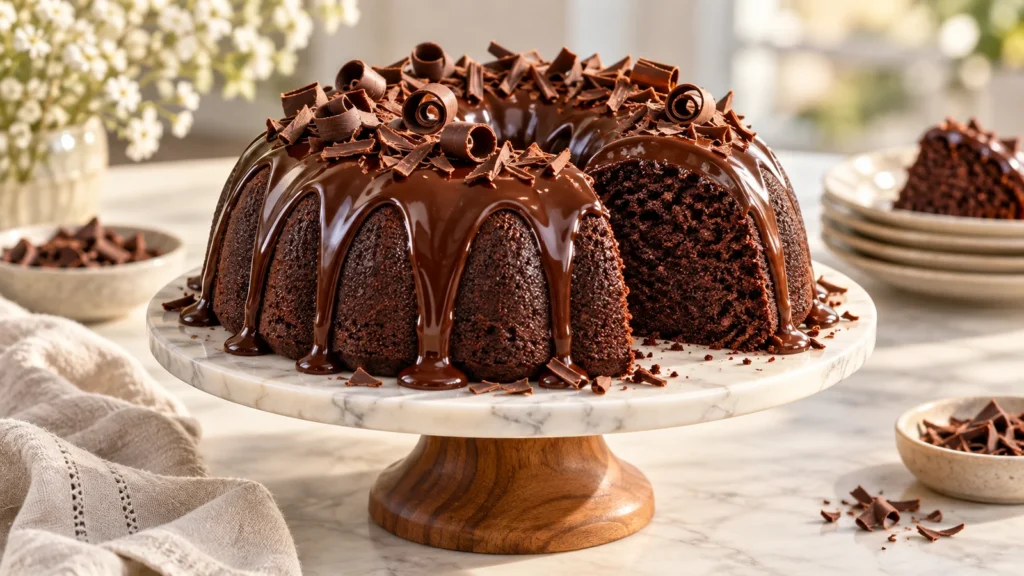
This chocolate bundt cake recipe produces a deeply cocoa-rich cake with a moist, tender crumb and a glossy chocolate ganache. Sour cream keeps it soft, while brewed coffee strengthens the chocolate flavor without making the finished cake taste like coffee.
The method is straightforward, but small details—room-temperature ingredients, careful pan preparation, and accurate doneness checks—make the results especially reliable. Allow about 25 minutes for preparation, 45 to 55 minutes for baking, and at least 90 minutes for cooling.
Unlike a chocolate pound cake recipe, this cake uses a relatively thin, oil-based batter for a softer crumb. It also offers the dramatic shape of a celebration cake without the assembly required by a baker’s german chocolate cake recipe or the broad pan used for a chocolate sheet cake recipe.
Table of Contents
Why You’ll Love This Chocolate Bundt Cake Recipe
- Rich but balanced: Dutch-process cocoa provides smooth, intense chocolate flavor.
- Moist for days: Sour cream, oil, and brown sugar help prevent dryness.
- Reliable release: Thorough greasing reaches every Bundt-pan ridge.
- Make-ahead friendly: The undecorated cake freezes well for up to three months.
- Easy to serve: The defined ridges make it simple to cut neat, consistent portions.
Recipe Overview and Why It Works
This moist chocolate Bundt cake uses oil rather than melted butter, so it stays tender when chilled. Sour cream adds richness and acidity, brown sugar retains moisture, and hot coffee helps bloom the cocoa. Mixing only until the flour disappears limits excess gluten, preventing tunneling and a tough or gummy crumb.
The balance of ingredients distinguishes this chocolate bundt cake recipe from a denser chocolate pound cake recipe. Baking soda and baking powder give the batter enough lift to rise through the deep pan while still producing slices sturdy enough to hold ganache.
Ingredients
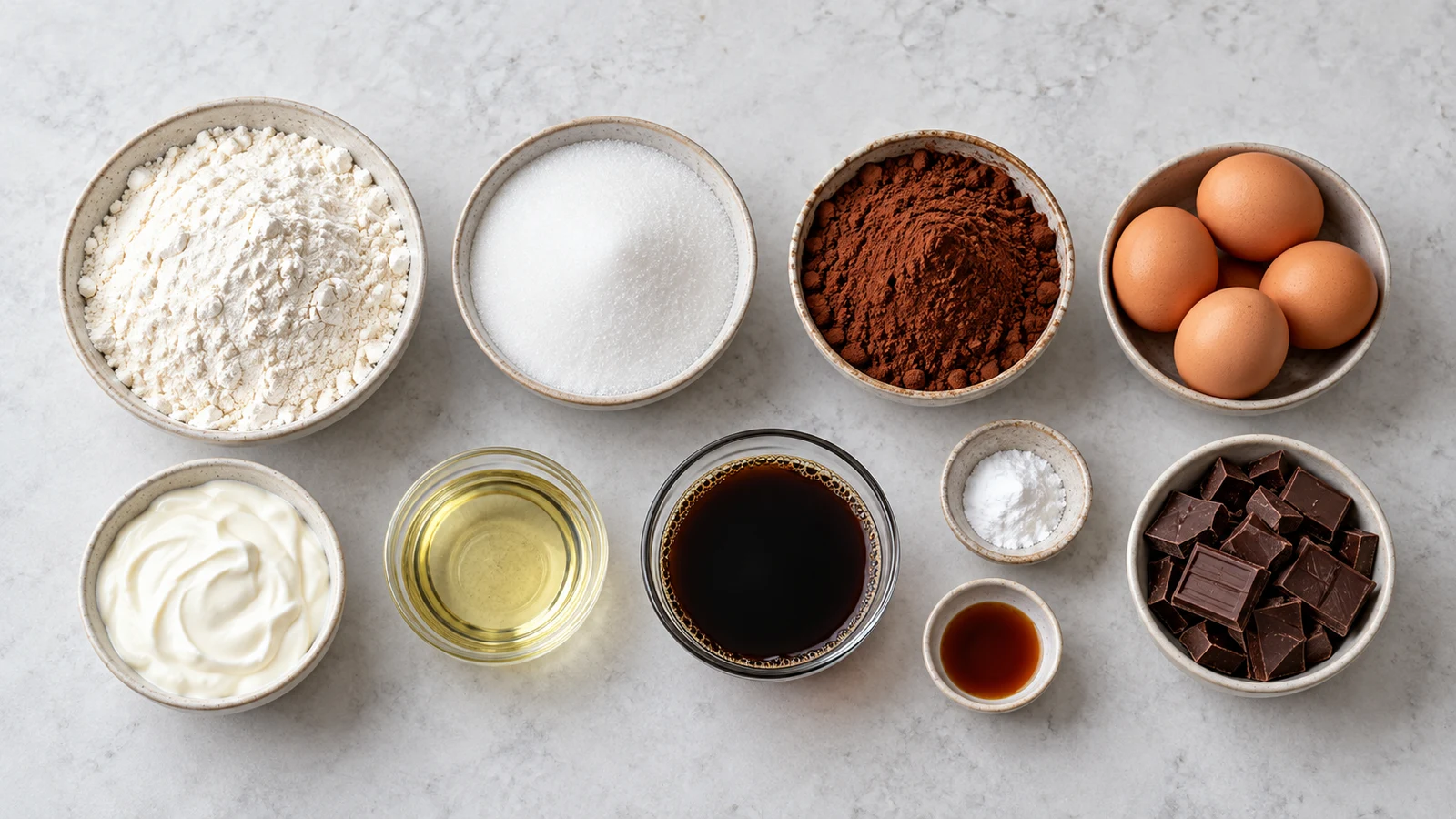
- 2 cups (240 g) all-purpose flour
- 3/4 cup (64 g) Dutch-process cocoa powder
- 1 3/4 cups (350 g) granulated sugar
- 1/4 cup (53 g) packed light brown sugar
- 2 teaspoons baking soda
- 1 teaspoon baking powder
- 1 teaspoon fine salt
- 3 large eggs, at room temperature
- 1 cup (240 g) full-fat sour cream, at room temperature
- 3/4 cup (180 ml) neutral vegetable oil
- 2 teaspoons vanilla extract
- 1 cup (240 ml) hot brewed coffee
- For the ganache: 6 ounces (170 g) semisweet chocolate, finely chopped
- For the ganache: 2/3 cup (160 ml) heavy cream
- For the pan: softened shortening and 2 tablespoons cocoa powder
Equipment and Bundt-Pan Capacity
Use a 10- to 12-cup Bundt pan, ideally a light-colored metal pan. The batter should fill it no more than three-quarters full; place excess batter in lined muffin cups rather than risk overflow. Dark pans absorb heat faster, so guidance on baking cake in a dark pan can help you adjust the temperature and timing.
A pastry brush, two mixing bowls, a whisk, a flexible spatula, a cooling rack, and a long cake tester make this chocolate bundt cake recipe easier to manage. A kitchen scale is especially useful because cocoa and flour compact differently when measured by volume.
Pan Preparation
Use a pastry brush to coat every ridge, corner, and center tube with a thin, continuous layer of shortening. Dust the pan with cocoa, rotate it until evenly covered, then tap out the excess. Prepare the pan immediately before adding the batter so the coating does not slide or pool; the broader Bundt cake guide also explains pan choice and release techniques.
Cocoa is preferable to flour for this chocolate bundt cake recipe because it will not leave pale marks on the dark crust. Inspect the prepared pan under good light, paying particular attention to sharp decorative ridges and the base of the center tube.
How to Make This Chocolate Bundt Cake Recipe
- Heat the oven: Position a rack in the center and preheat to 350°F (175°C). For a very dark pan, use 325°F (165°C).
- Combine dry ingredients: Whisk the flour, cocoa, both sugars, baking soda, baking powder, and salt in a large bowl. Break up every cocoa lump.
- Combine wet ingredients: In another bowl, whisk the eggs, sour cream, oil, and vanilla until smooth. Room-temperature ingredients blend more evenly and reduce the risk of a dense, separated batter.
- Make the batter: Add the wet mixture to the dry ingredients and fold until mostly combined. Slowly whisk in the hot coffee just until smooth. The batter will be fairly thin; do not beat it after the flour is incorporated.
- Fill the pan: Pour the batter evenly into the prepared pan. Tap the pan gently on a folded towel two or three times to release large air pockets without knocking out too much air.
- Bake: Bake for 45 to 55 minutes. Avoid opening the door during the first 35 minutes, which can cause the center to sink.
- Check doneness: The top should spring back lightly, the edges should begin pulling from the pan, and a tester inserted into the thickest section should show a few moist crumbs but no liquid batter. These visual cake doneness cues are more dependable than time alone.
- Cool and release: Cool upright in the pan for exactly 15 minutes. Loosen the edges and center tube gently with a thin flexible spatula, place a rack over the pan, and invert in one confident motion. Let the cake cool completely before glazing.
Chocolate Ganache
Put the chopped chocolate in a heatproof bowl. Heat the cream until steaming but not boiling, pour it over the chocolate, and leave it undisturbed for three minutes. Stir slowly from the center until glossy, then cool for 10 to 15 minutes before pouring over the cake.
If the ganache is too thin, let it cool longer or stir in a little more melted chocolate. If it is too thick, mix in warm cream one teaspoon at a time. A grainy ganache can often be rescued by gently warming it over barely simmering water and stirring slowly.
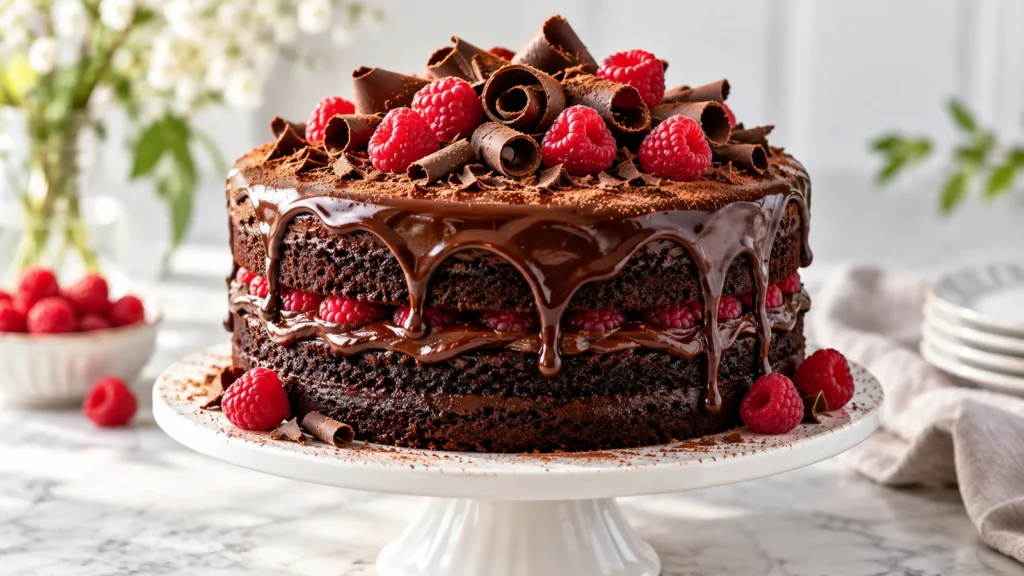
Pour the ganache around the crown and allow it to follow the ridges naturally. For a different finish, a german chocolate cake frosting recipe supplies a chewy coconut-pecan contrast, although its texture and flavor differ considerably from smooth ganache.
Expert Tips for the Best Chocolate Bundt Cake Recipe
- Measure accurately: Weigh the flour and cocoa when possible; excess dry ingredients are a common cause of a dry cake.
- Choose the correct cocoa: Use Dutch-process cocoa for the smoothest flavor. Natural cocoa has different acidity and is not the best direct swap in this formula.
- Check the leaveners: Use fresh baking soda and baking powder so the heavy, moist batter rises properly.
- Control the mixing: Scrape the bottom and sides of the bowl, but stop as soon as the batter is evenly combined. Extended mixing can create tunnels.
- Keep the coffee hot: Hot liquid helps release the cocoa’s flavor and lets it disperse evenly through the batter.
- Judge more than time: Oven accuracy and pan material can shift the baking time, so inspect the cake rather than relying only on the clock.
- Cool before glazing: Ganache stays glossy and forms attractive drips when the cake is completely cool.
For the most consistent chocolate bundt cake recipe, bring the eggs and sour cream to room temperature before beginning. If you forget, place the eggs in lukewarm water briefly and set the measured sour cream out while preparing the pan and dry ingredients.
Variations and Substitutions
Replace sour cream with an equal weight of full-fat plain Greek yogurt. If coffee is unavailable, use hot water; coffee primarily deepens cocoa flavor, and its flavor is not prominent. For a mocha variation, add one teaspoon of espresso powder, or finish with berries, toasted nuts, whipped cream, or a light dusting of confectioners’ sugar.
For dairy-free cake batter, use a thick plant-based sour cream, but the ganache also requires dairy-free chocolate and full-fat coconut milk. This recipe contains wheat, eggs, and dairy, and chocolate may contain soy or trace allergens, so check every label when serving someone with allergies.
Coconut-Pecan Finish
Use your favorite german chocolate cake frosting recipe in place of ganache when you want a nutty, caramel-like topping. Spoon it along the crown after the cake has cooled so some decorative ridges remain visible. This variation brings familiar flavor to the chocolate bundt cake recipe without converting it into a layered cake.
Layer-Cake-Inspired Decoration
A baker’s german chocolate cake recipe traditionally emphasizes layers and coconut-pecan filling. To echo that presentation, serve small spoonfuls of the topping beside individual Bundt slices. Keep the original cake ingredients, quantities, temperature, and baking method unchanged.
Mocha and Nut Variations
The espresso powder option intensifies the chocolate without changing the structure. Toasted pecans or hazelnuts can be scattered over the set ganache for crunch. These finishes make the chocolate bundt cake recipe feel festive while preserving its reliably moist crumb.
Choosing a Different Cake Style
Choose a chocolate pound cake recipe when you prefer a tighter, heavier crumb and smaller slices. Select a chocolate sheet cake recipe when fast pan-to-table serving matters more than a sculpted shape. The Bundt version sits between them, combining an elegant presentation with a tender texture.
Make-Ahead Plan
This chocolate bundt cake recipe is well suited to advance preparation because the oil, sour cream, and brown sugar help the crumb retain moisture. Bake and release the cake one day ahead, cool it fully, and keep it covered. Add ganache on the day of serving for the freshest shine.
You may prepare the dry mixture several hours ahead and leave it tightly covered at room temperature. Keep the wet ingredients refrigerated until it is time to bring them to room temperature. Do not combine the wet and dry mixtures early because the leaveners begin working once moistened.
If preparing a dessert spread, a chocolate sheet cake recipe can be easier to portion for a large crowd, while the Bundt cake creates a stronger centerpiece. A chocolate pound cake recipe is another make-ahead choice, but its crumb will generally feel firmer when served cold.
Troubleshooting
- Cake stuck: The pan may have had missed crevices, an overly thick coating, or an incorrect cooling time.
- Dry crumb: Check the flour weight, oven temperature, and baking time.
- Tunnels: Avoid vigorous mixing and excessive pan tapping.
- Sunken center: Bake until the structure is fully set, and keep the oven door closed early in baking.
- Gummy layer: Use room-temperature ingredients, measure accurately, and confirm doneness in the thickest area.
What if the Cake Will Not Release?
Set the inverted pan on the rack and wait briefly to see whether gravity releases it. If it remains stuck, return it upright and loosen only the accessible outer edge and center tube with a thin flexible spatula. Avoid forceful shaking, which can tear the warm cake.
Why Is the Batter Lumpy?
Small cocoa specks can remain if the dry ingredients were not whisked thoroughly. Larger flour pockets mean the bowl needs a few more gentle folds. The finished batter for this chocolate bundt cake recipe should be thin and mostly smooth, but it should not be beaten aggressively.
Why Did the Ganache Split?
Overheated cream, seized chocolate, or overly vigorous stirring can make ganache look oily. Warm it very gently and stir from the center in small circles. Adding warm cream gradually may help restore the emulsion without changing the cake underneath.
How to Store and Reheat
Keep the glazed cake covered at room temperature for up to two days or refrigerate it for up to five days. Bring chilled slices to room temperature before serving, or warm an unglazed slice in the microwave for 8 to 10 seconds.
For make-ahead preparation, bake the cake one day before serving and add ganache after it cools. To freeze, wrap the unglazed cake or individual slices tightly in plastic and foil, then freeze for up to three months. Thaw overnight in the refrigerator, unwrap, and bring to room temperature before glazing.
Store the chocolate bundt cake recipe away from strongly scented foods because uncovered cake and ganache can absorb refrigerator odors. Place parchment between individual unglazed slices before freezing if you expect to remove them one at a time.
Serving Suggestions
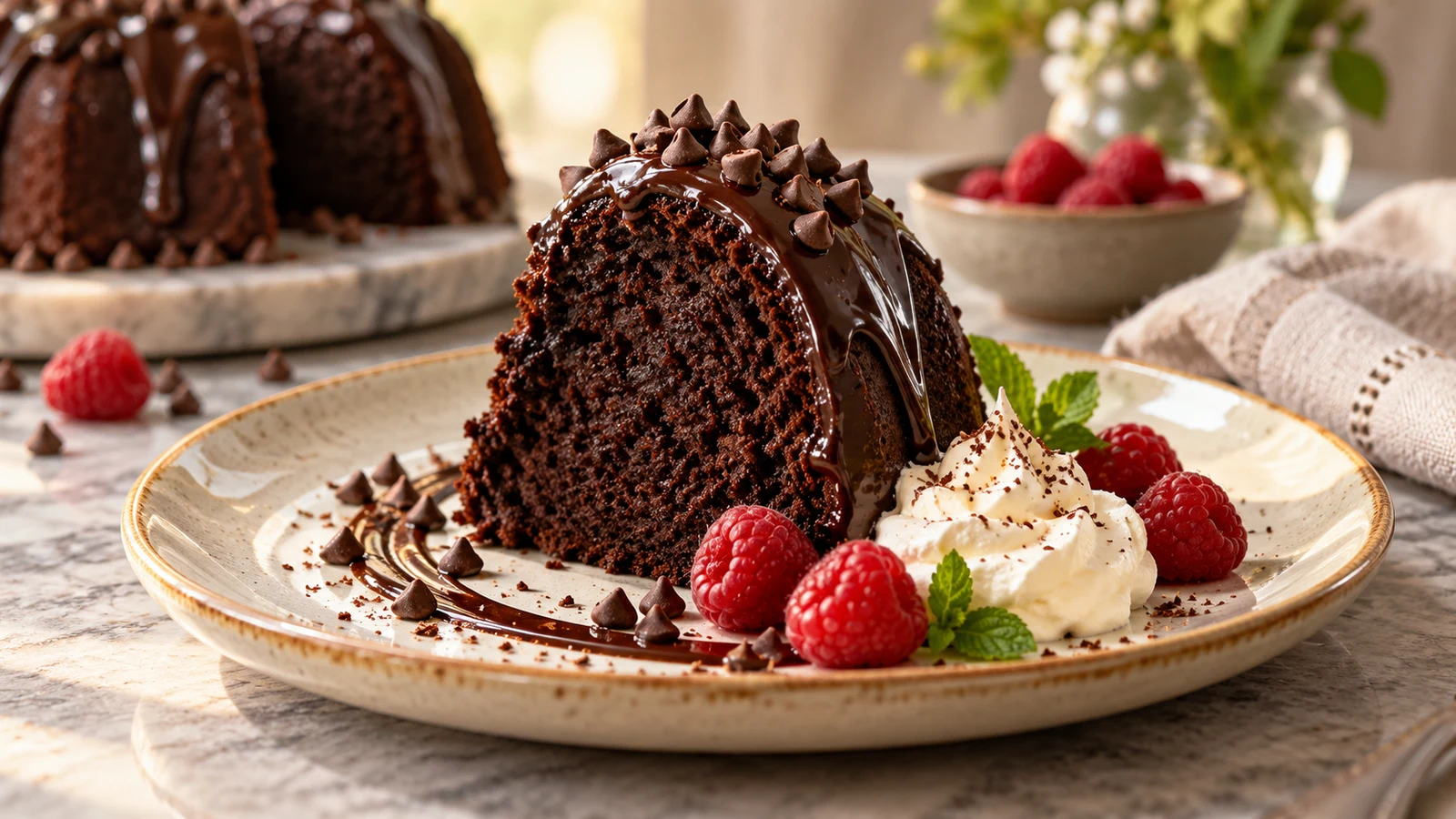
Serve thin slices with raspberries, strawberries, vanilla ice cream, or lightly sweetened whipped cream. A pinch of flaky salt over the ganache provides contrast, while chopped pecans or hazelnuts add crunch.
For a dinner party, plate each slice with a spoonful of berry sauce and a small cloud of whipped cream. At a casual gathering, set the whole cake on a stand and let guests follow the natural ridges when cutting portions.
A coconut-pecan topping made from a german chocolate cake frosting recipe adds sweetness and texture. If guests enjoy traditional layer cakes, offer this Bundt cake alongside a baker’s german chocolate cake recipe so they can compare the tender oil-based crumb with the classic layered presentation.
Nutrition
When divided into 14 servings, one ganache-topped slice contains approximately 480 calories. This estimate varies with ingredient brands, pan yield, and serving size.
Frequently Asked Questions
Can I make this chocolate bundt cake recipe without coffee?
Yes. Replace it with the same amount of hot water. The cake will still work, although its chocolate flavor may be slightly less intense. Neither choice changes the stated baking temperature or expected baking time.
Why did my Bundt cake stick?
The most likely causes are incomplete pan coverage or waiting too long to invert it. Coat every detail and release the cake after 15 minutes.
Can I bake the batter in a smaller Bundt pan?
Do not overfill the pan. Transfer extra batter to muffin cups and begin checking those after 16 minutes.
How do I know whether the cake is underbaked?
A properly baked cake springs back and gives a tester moist crumbs. Shiny batter, a wobbling center, or a sunken wet line indicates that it needs more time.
Is this the same as a chocolate pound cake recipe?
No. A chocolate pound cake recipe generally has a denser, more compact texture. This batter uses oil, sour cream, hot coffee, and two leaveners to create a softer crumb while remaining sturdy enough for the shaped pan.
Can I use a german chocolate cake frosting recipe?
Yes. A german chocolate cake frosting recipe can replace the ganache after the cake has cooled completely. Its coconut and pecans produce a sweeter, more textured finish, so apply it according to your taste rather than expecting smooth chocolate drips.
Is this a baker’s german chocolate cake recipe?
No. A baker’s german chocolate cake recipe is a distinct layered dessert commonly paired with coconut-pecan filling. This recipe is a cocoa Bundt cake with ganache, although you can borrow that classic topping as an optional variation.
Can I turn this into a chocolate sheet cake recipe?
A chocolate sheet cake recipe requires pan-specific baking guidance, so do not assume the Bundt timing will transfer directly. Use a tested sheet-cake formula when you need that shape, especially because the shallower batter will bake more quickly.
Can I freeze the finished chocolate bundt cake recipe?
Freezing it without ganache gives the best appearance. Wrap the fully cooled cake or slices tightly in plastic and foil, freeze for up to three months, and thaw overnight in the refrigerator before unwrapping and glazing.
How far ahead can I make the ganache?
Ganache is simplest to prepare shortly before glazing. If made earlier, keep it covered and gently warm it until it returns to a pourable consistency. The cake must still be completely cool before the topping is applied.
Why is hot coffee used in the batter?
Hot coffee helps bloom the cocoa, strengthening its aroma and flavor. The finished cake does not taste strongly of coffee. Hot water remains a suitable substitute when coffee is unavailable or unwanted.
Complete Recipe Card
Easy Chocolate Bundt Cake
Prep: 25 minutes. Bake: 45 to 55 minutes. Cooling: 90 minutes. Yield: 14 servings.
Prepare a greased and cocoa-dusted 10- to 12-cup pan and heat the oven to 350°F (175°C). Combine the dry ingredients, whisk the wet ingredients separately, fold the mixtures together, and add hot coffee. Bake until the cake springs back and a tester has moist crumbs. Cool in the pan for 15 minutes, invert, cool completely, and cover with chocolate ganache.
Related Chocolate Cake Recipes
For a classic layered option, try this baker’s German chocolate cake recipe. Its coconut-pecan topping pairs naturally with the separate German chocolate cake frosting recipe.
If you want a naturally sweetened chocolate treat, explore this fudgy sweet potato brownie recipe. You can also use the baking principles here when choosing a chocolate pound cake recipe or an easy chocolate sheet cake recipe.
Choose the baker’s german chocolate cake recipe for a traditional layered centerpiece, the chocolate sheet cake recipe for easy crowd portions, or the chocolate pound cake recipe for a compact, buttery-style crumb. Each format serves a different occasion.
A Reliable Cake for Any Occasion
This chocolate bundt cake recipe delivers a soft crumb, clean release, and rich chocolate finish. Follow the pan, mixing, and doneness cues carefully, then serve it simply for an afternoon treat or dress it up with berries, cream, nuts, or ganache for a celebration.
Reviews
Reader reviews are managed separately (outside this build).