Cake
Best Moist Chocolate Pound Cake Recipe with Ganache
Bake this chocolate pound cake recipe for a rich, moist homemade Bundt cake topped with velvety chocolate ganache. Discover an easy favorite today.
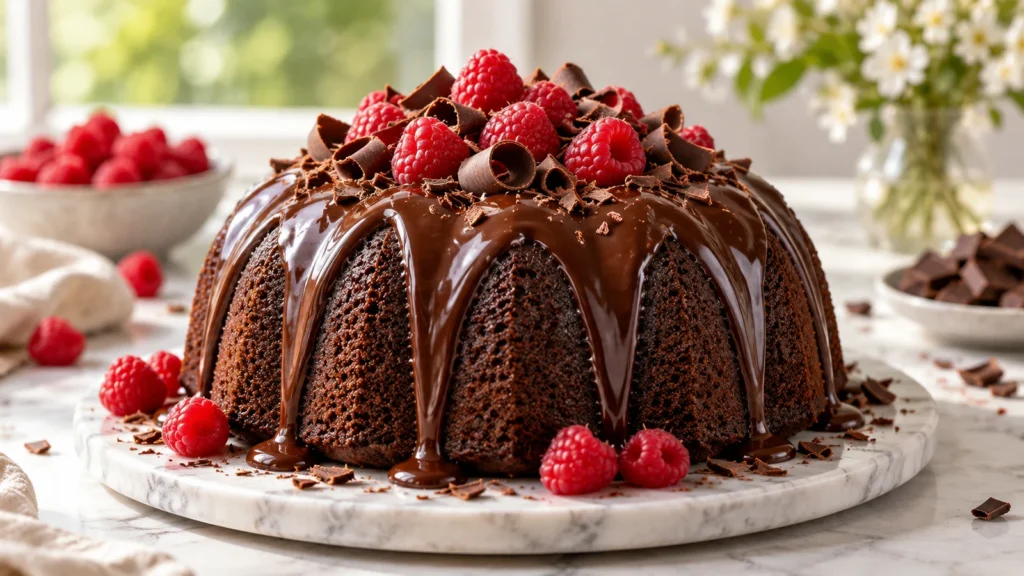
This chocolate pound cake recipe delivers a tight, buttery crumb that stays moist thanks to a balanced combination of butter, neutral oil, and buttermilk. Deep cocoa flavor and a glossy chocolate ganache make it suitable for celebrations, yet the method is straightforward enough for everyday baking.
For reliable results, bring the butter, eggs, and buttermilk to room temperature before mixing. This helps the batter emulsify evenly and gives the finished cake a smooth, tender texture. Unlike a lighter chocolate bundt cake recipe, this cake has the substantial crumb expected from a traditional pound cake.
Table of Contents
Why You’ll Love This Chocolate Pound Cake Recipe
- Moist texture: Butter supplies flavor while oil helps the cake remain soft for several days.
- Rich chocolate flavor: Cocoa powder seasons both the batter and the prepared pan.
- Reliable release: A carefully greased, cocoa-dusted Bundt pan minimizes sticking.
- Flexible finish: Choose ganache, powdered sugar, cocoa, berries, or whipped cream.
- Make-ahead convenience: The flavor and texture remain excellent after an overnight rest.
Ingredients
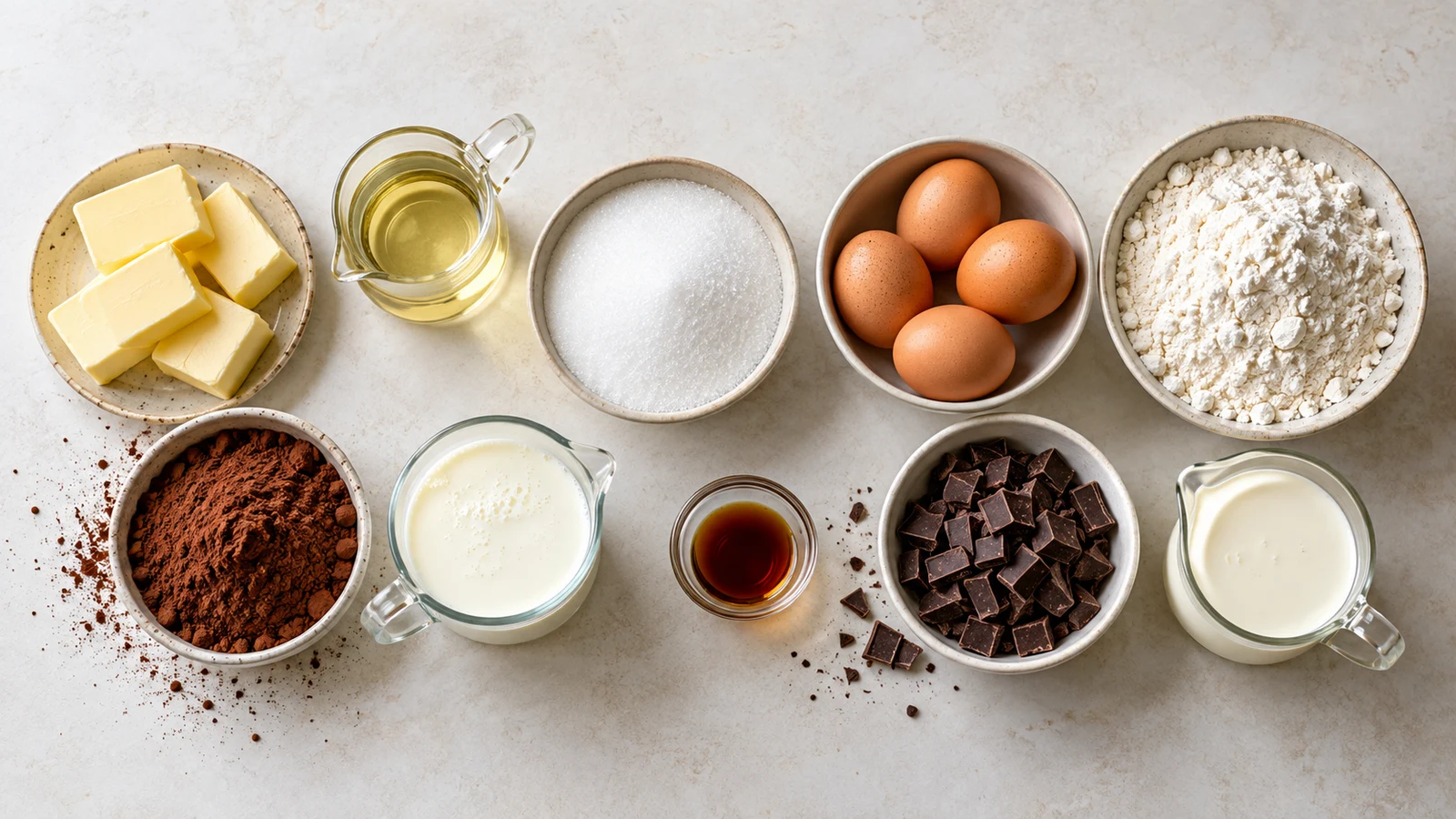
- 1 cup unsalted butter (227 g), softened to about 65°F to 68°F (18°C to 20°C)
- 1/4 cup neutral oil (60 ml), such as canola, vegetable, or avocado oil
- 2 1/2 cups granulated sugar (500 g)
- 5 large eggs (about 250 g without shells), at room temperature
- 2 1/2 cups cake flour (285 g), spooned and leveled
- 3/4 cup unsweetened cocoa powder (64 g), plus 1 tablespoon for the pan
- 1 teaspoon baking powder
- 1/2 teaspoon fine salt
- 1 cup full-fat buttermilk (240 ml), at room temperature
- 2 teaspoons vanilla extract
- 1 cup semisweet chocolate chips or chopped chocolate (170 g)
- 1/2 cup heavy cream (120 ml)
- Optional chocolate curls, fresh berries, vanilla ice cream, or lightly sweetened whipped cream
Ingredient Notes
Butter and oil: Butter creates classic pound-cake flavor and supports the cake’s structure when creamed with sugar. Oil remains liquid after cooling, helping produce a moist chocolate pound cake without making it greasy. Use a neutral-tasting oil so the cocoa and vanilla remain prominent.
Flour and cocoa: Cake flour creates a finer crumb than all-purpose flour. Natural cocoa gives a sharper flavor, while Dutch-process cocoa tastes darker and smoother; either works here because the batter uses baking powder rather than relying on cocoa acidity. This natural and Dutch-process cocoa guide explains their differences.
Buttermilk and eggs: Buttermilk adds moisture and a subtle tang. Room-temperature eggs blend more readily into the creamed fat, reducing the chance of a curdled batter and uneven crumb. Full-fat buttermilk gives this chocolate pound cake recipe its best balance of richness and structure.
Chocolate and cream: Semisweet chocolate makes a ganache that is rich without becoming excessively sweet. Chop a chocolate bar finely so the hot cream melts it evenly, or use chips of consistent size. Heavy cream supplies enough fat to create a smooth glaze that remains soft enough to slice.
How to Make This Chocolate Pound Cake Recipe
- Heat the oven: Position a rack in the lower-middle of the oven and preheat to 325°F (165°C). Use a light-colored 10- to 12-cup Bundt pan; a smaller pan may overflow.
- Prepare the pan: Brush every ridge with softened shortening or nonstick baking spray containing flour. Add 1 tablespoon cocoa powder, rotate until evenly coated, and tap out the excess.
- Combine the dry ingredients: Whisk the cake flour, 3/4 cup cocoa powder, baking powder, and salt until evenly blended.
- Cream the fats and sugar: Beat the softened butter, oil, and sugar on medium speed for 4 to 5 minutes, scraping the bowl twice. The mixture should look lighter and fluffy.
- Add the eggs: Beat in one egg at a time, mixing for about 20 seconds after each addition. Scrape the bowl before adding the vanilla.
- Alternate additions: On low speed, add one-third of the flour mixture, followed by half the buttermilk. Repeat, then finish with the remaining flour. Stop mixing as soon as no dry streaks remain.
- Fill and bake: Spoon the batter evenly into the pan and smooth the surface. Tap the pan gently on a folded towel to release large air pockets. Bake for 65 to 75 minutes.
- Cool and release: Cool in the pan for exactly 15 minutes. Loosen the upper edge gently with a thin plastic knife if needed, place a rack over the pan, and invert in one confident motion. Cool completely before finishing.
- Add ganache: Place the chocolate in a bowl. Heat the cream until steaming but not boiling, pour it over the chocolate, and wait 3 minutes. Stir until smooth, cool until slightly thickened, then spoon over the cake.
Expert Tips for Consistent Results
The creaming stage is essential in this chocolate pound cake recipe. Properly softened butter should yield when pressed but should not look shiny, oily, or partially melted. Butter that is too cold cannot trap air effectively, while overly warm butter may collapse around the sugar and produce a heavy or greasy layer.
- Measure by weight: A kitchen scale prevents excess flour or cocoa from drying the crumb. If measuring by volume, loosen each dry ingredient, spoon it into the cup, and level without packing.
- Warm ingredients gently: Place cold eggs in lukewarm water for several minutes. Let measured buttermilk stand at room temperature rather than heating it until hot.
- Scrape thoroughly: Stop the mixer and scrape the bottom, sides, and beater after creaming and again after the eggs. Dense streaks of unmixed butter can create gummy patches.
- Mix flour minimally: Once flour enters the bowl, low speed is sufficient. Excess mixing develops gluten and changes the intended fine crumb of the chocolate pound cake recipe.
- Rotate only if necessary: If the oven heats unevenly, rotate the pan once after the first 50 minutes. Opening the door earlier can interrupt the cake’s rise.
- Cool completely: Warm cake is delicate, and warm ganache will run off instead of forming a glossy coating. Allow enough time for both components to reach the proper consistency.
Bundt-Pan Preparation
Coat the pan immediately before filling it so the grease does not slide into the bottom. Pay special attention to the center tube and intricate grooves. For additional technique guidance, see these tips for preventing Bundt cakes from sticking.
A pastry brush helps reach narrow ridges that spray may miss. After dusting with cocoa, hold the pan over a sink and tap away loose powder. Thick pockets of cocoa can leave bitter marks, but a thin, even film improves release without creating the pale flour coating sometimes visible on chocolate cakes.
Doneness and Troubleshooting
Begin checking at 65 minutes. A wooden tester should emerge with a few moist crumbs rather than wet batter, and the top should spring back lightly. For extra certainty, the center should register approximately 205°F to 210°F (96°C to 99°C) on an instant-read thermometer.
- Dry cake: Too much flour, overbaking, or an inaccurate oven temperature is usually responsible. Weigh the flour and check early.
- Sunken center: Avoid opening the oven during the first 50 minutes, and confirm that the baking powder is fresh.
- Tunnels: Overmixing after adding flour develops too much gluten. Use low speed and stop promptly.
- Sticking: Coat every crevice, dust with cocoa, and invert after 15 minutes rather than cooling completely in the pan.
- Cracked top: A modest crack is normal for pound cake as the dense batter expands. Excessive cracking can indicate an oven that is too hot.
Why Did the Batter Look Curdled?
A curdled appearance usually means the eggs were colder than the butter or were added too quickly. Stop the mixer, scrape the bowl, and continue with the recipe. The dry ingredients often bring the emulsion back together. Next time, add each room-temperature egg gradually and wait until it disappears before adding another.
Why Is the Bottom Dense or Gummy?
Dense streaks can form when butter remains unmixed at the bottom of the bowl or when the batter sits before baking. Scrape underneath the mixture with a flexible spatula, fill the prepared pan promptly, and place it in the preheated oven. Accurate oven heat is especially important for a dense chocolate pound cake recipe.
Why Did the Ganache Turn Grainy?
Chocolate may seize if water enters the bowl or if the cream becomes excessively hot. Use a completely dry bowl and heat the cream only until steaming. Let it rest on the chocolate before stirring slowly from the center. Avoid vigorous whisking, which can introduce bubbles and dull the finish.
Chocolate Ganache and Other Finishes
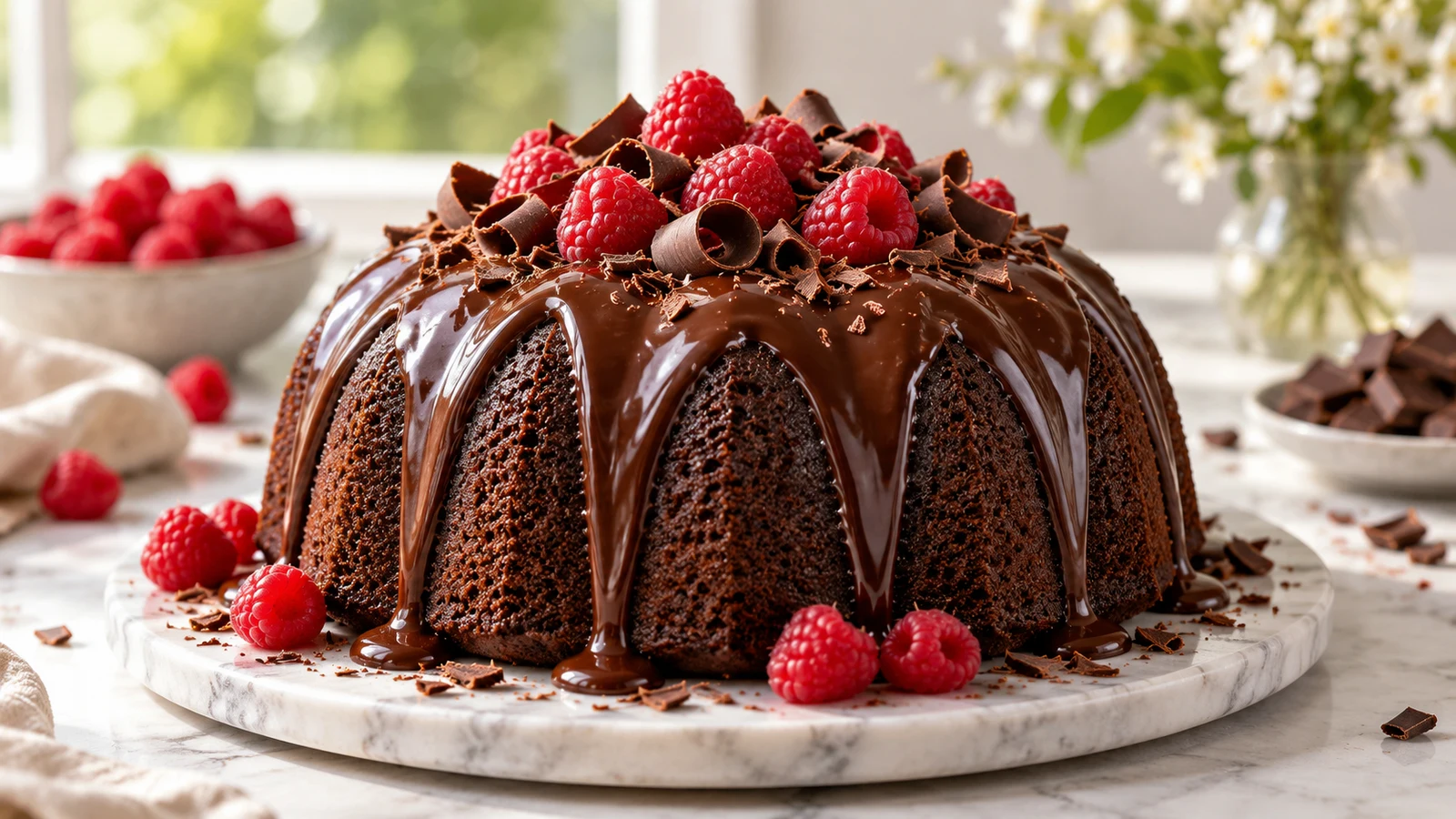
Ganache gives the richest finish, but the cooled cake can also be dusted with powdered sugar, cocoa powder, or a mixture of both. For a lighter presentation, spoon berries into the center and garnish with chocolate curls.
A coconut-pecan topping creates a different flavor profile. Use this german chocolate cake frosting recipe when you want a caramel-like finish instead of ganache. The german chocolate cake frosting recipe adds chewy coconut, toasted nuts, and a custard-like richness that contrasts with the dark crumb.
Allow ganache to cool until it falls from a spoon in a thick ribbon. If it is too fluid, wait several minutes and stir again. If it becomes too firm, warm it gently until pourable. Apply it near the cake’s top ridge and let gravity create natural drips rather than spreading it over every surface.
Variations and Substitutions
- No cake flour: Replace each cup with 3/4 cup plus 2 tablespoons all-purpose flour and 2 tablespoons cornstarch, measured by volume and whisked thoroughly.
- No buttermilk: Mix 1 tablespoon lemon juice with enough whole milk to make 1 cup; let it stand for 5 minutes.
- Shortening option: Replace the oil with an equal amount of melted, cooled shortening. The cake will be slightly firmer.
- Different chocolate: Use bittersweet chocolate in the ganache for less sweetness or milk chocolate for a milder finish.
- Equipment alternative: Divide the batter between two greased 9-by-5-inch loaf pans and begin checking after 50 minutes. Do not fill either pan beyond two-thirds full.
Coconut-Pecan Variation
For a celebratory variation, omit the ganache and spoon the prepared german chocolate cake frosting recipe over the completely cooled cake. Keep the original cake ingredients, quantities, temperature, and baking time unchanged. This variation borrows the familiar topping associated with a baker’s german chocolate cake recipe while preserving the denser pound-cake base.
Loaf-Cake Variation
The loaf-pan option is useful when you want to freeze one cake and serve the other. Because pan materials differ, rely on the original doneness cues and begin checking at the stated time. This remains a chocolate pound cake recipe even though the decorative ring shape changes.
Understanding Similar Chocolate Cakes
A chocolate bundt cake recipe refers partly to shape and may use a softer, lighter batter. A chocolate sheet cake recipe is baked in a shallow rectangular pan and usually serves a crowd with minimal slicing. A baker’s german chocolate cake recipe is traditionally layered and paired with coconut-pecan filling. Those recipes should not be substituted without adjusting the complete method.
Serving Ideas for Every Occasion
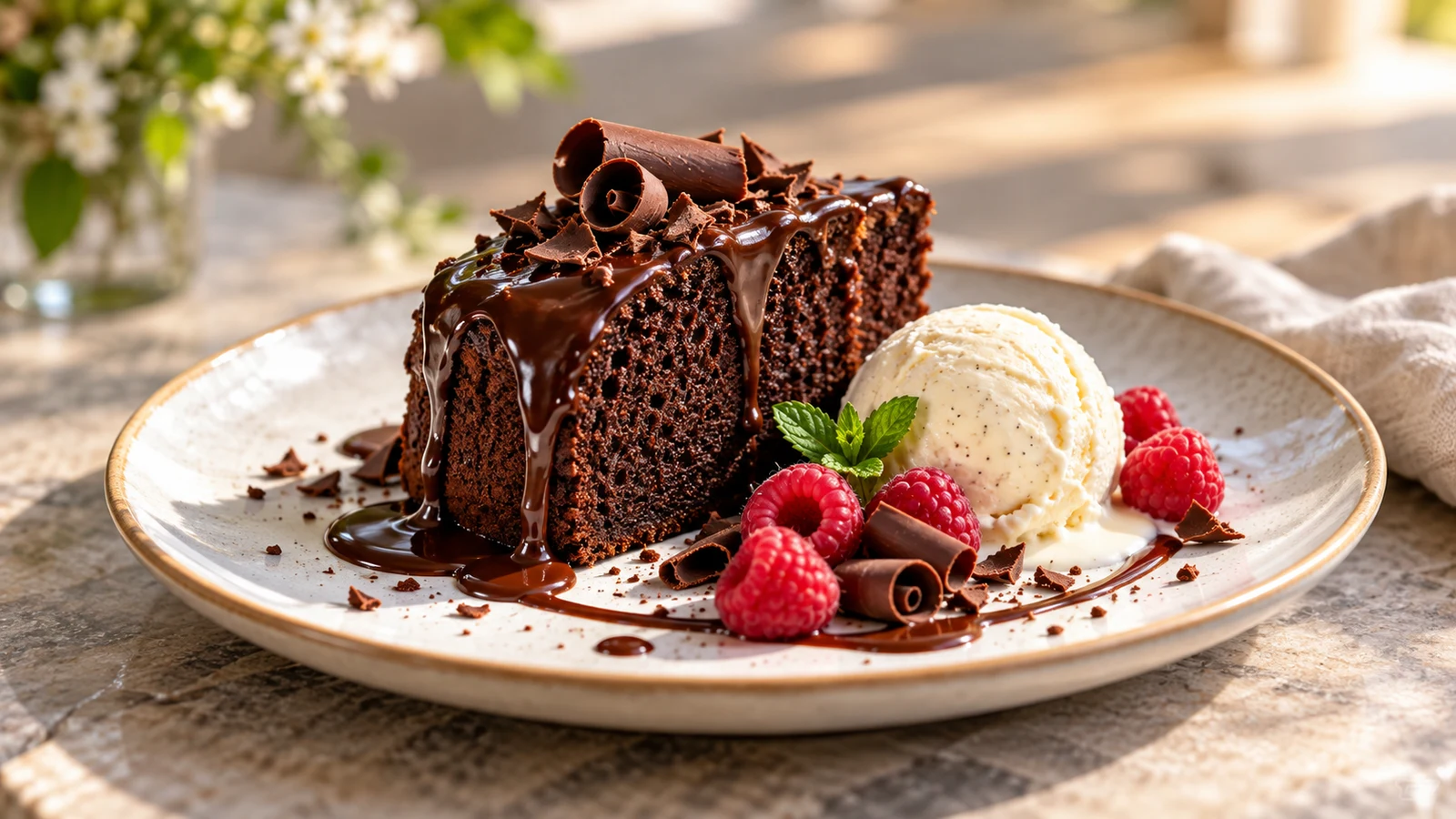
Serve slices at room temperature with vanilla ice cream or lightly sweetened whipped cream. Fresh raspberries or strawberries add acidity that balances the dense chocolate crumb, while hot coffee complements the cocoa flavor.
- For a dinner party: Add a small spoonful of whipped cream, several berries, and a few chocolate curls to each plate.
- For an afternoon snack: Serve a plain slice with coffee, black tea, or cold milk. The cake is flavorful enough to enjoy without a topping.
- For a birthday: Use ganache and chocolate curls for a polished presentation, then place berries around the serving platter for color.
- For a holiday dessert: Replace the ganache with the german chocolate cake frosting recipe to add a caramel, coconut, and pecan element.
Use a sharp serrated knife and a gentle sawing motion for tidy slices. Wipe the blade between cuts when the ganache is soft. Because the cake is rich, the stated 16 slices provide satisfying portions, especially when served with ice cream or another accompaniment.
Make-Ahead Instructions
This chocolate pound cake recipe is particularly well suited to advance preparation because the crumb settles and slices cleanly after resting. Bake the cake one day before serving, cool it completely, and cover it tightly. Add ganache that evening or several hours before serving, allowing enough time for the coating to set.
The dry ingredients may be whisked together one day ahead and kept in an airtight container at room temperature. Measure the sugar separately. For the best emulsion, wait to combine the butter, oil, sugar, eggs, and buttermilk until you are ready to mix and bake the batter.
Ganache can be prepared ahead and refrigerated in an airtight container. Before decorating, let it soften at room temperature or warm it very gently, stirring often. Do not pour cold, firm ganache directly onto the cake because it will be difficult to spread without damaging the surface.
How to Store, Freeze, and Reheat
Keep the uncut cake covered at room temperature for up to 3 days. Refrigerate it in an airtight container for up to 7 days, particularly when topped with ganache; let slices stand at room temperature for 20 to 30 minutes before serving.
Freeze individual slices or the undecorated cake, tightly wrapped and placed in a freezer-safe container, for up to 3 months. Thaw overnight in the refrigerator, then bring to room temperature. Consult the USDA’s freezing and food-safety guidance for general safe handling information.
For convenient portions, freeze slices separately until firm and then place them together in a freezer-safe container with wrapping between layers. Add ganache after thawing when appearance matters. A decorated slice can still be frozen, although the glaze may lose some shine as it thaws.
This cake does not require reheating, but a room-temperature slice has a softer crumb and fuller chocolate aroma than a cold one. If desired, warm an individual undecorated slice only briefly. Avoid overheating because the crumb can dry and ganache can melt away from the cake.
Related Chocolate Cake Recipes
A chocolate bundt cake recipe may have a lighter crumb than pound cake, while a chocolate sheet cake recipe is thinner, quicker to bake, and designed for easy portioning. These names describe distinct cake styles rather than interchangeable recipes.
Choose a chocolate bundt cake recipe when you want the decorative ring shape with a less compact texture. Choose a chocolate sheet cake recipe when speed, simple frosting, and easy portions are the priorities. The chocolate pound cake recipe is the strongest choice for neat slices, a buttery crumb, and make-ahead serving.
For layered cake with coconut-pecan filling, try this baker’s german chocolate cake recipe. Its filling and structure differ substantially from this dense cocoa pound cake. A baker’s german chocolate cake recipe is ideal when distinct cake and filling layers are part of the desired presentation.
Frequently Asked Questions
Can I make this chocolate pound cake recipe without a stand mixer?
Yes. Use a sturdy hand mixer and a large bowl, allowing enough time to cream the butter, oil, and sugar thoroughly. Fold the final flour addition by hand to avoid overmixing. Stop occasionally to scrape the bowl because a hand mixer may leave unmixed butter near the bottom.
Which cocoa powder tastes best in a chocolate pound cake recipe?
Dutch-process cocoa produces a dark color and mellow chocolate flavor, while natural cocoa tastes brighter and slightly fruitier. Choose a high-quality unsweetened cocoa you enjoy. Do not replace unsweetened cocoa with a sweetened drink mix because its sugar and cocoa content are substantially different.
Can I make the chocolate pound cake recipe ahead?
Yes. Bake it one day before serving, cool completely, and store it covered. Add ganache several hours before serving so it has time to set. The rested cake often slices more neatly than it does immediately after cooling.
What equipment do I need?
A 10- to 12-cup Bundt pan, mixer, mixing bowls, whisk, flexible spatula, cooling rack, and wooden tester are sufficient. A kitchen scale and instant-read thermometer improve consistency but are optional.
Can I use the german chocolate cake frosting recipe instead of ganache?
Yes. Cool the cake fully, omit the ganache, and apply the german chocolate cake frosting recipe as the finishing layer. Its coconut and pecans create more texture than ganache, so spoon it over the top rather than expecting a smooth glaze.
Is this the same as a baker’s german chocolate cake recipe?
No. A baker’s german chocolate cake recipe typically uses layered cake with coconut-pecan filling, whereas this cake has a dense cocoa crumb baked in a Bundt pan. The topping variation can provide a related flavor, but the recipes have different structures and methods.
Can I bake this as a chocolate sheet cake recipe?
The batter and baking directions are designed for a Bundt pan or the stated loaf-pan alternative. A chocolate sheet cake recipe uses a shallower pan and requires its own baking time and handling. Follow a purpose-written chocolate sheet cake recipe when you need that format.
How does this differ from a chocolate bundt cake recipe?
Pound cake generally has a tighter, richer crumb because its formula emphasizes butter, sugar, eggs, and flour. A chocolate bundt cake recipe describes a cake baked in a ring-shaped pan but can have a lighter texture. This recipe combines the Bundt shape with pound-cake density.
Why must the cake cool in the pan for exactly 15 minutes?
The cake needs time to firm after leaving the oven, but prolonged cooling can allow it to cling to the pan as steam condenses. Fifteen minutes provides a practical balance. Prepare the cooling rack before the timer ends so you can invert the pan promptly and confidently.
Can I reduce the sugar?
The listed sugar does more than sweeten the cake; it contributes moisture, tenderness, browning, and structure. Reducing it can make the crumb drier or change how the cake rises. For a less sweet finish, retain the cake formula and use bittersweet chocolate in the ganache.
How can I tell whether my Bundt pan is large enough?
Use a 10- to 12-cup pan as directed, and never fill a pan so high that the batter may overflow as it rises. If the pan is smaller, use the specified loaf-pan alternative rather than forcing all the batter into it.
Recipe Card
Yield: 16 slices
Preparation time: 25 minutes
Baking time: 65 to 75 minutes
Cooling time: 2 hours
Approximate nutrition: 510 calories per slice, depending on the chocolate and optional garnishes used.
Final Baking Notes
This chocolate pound cake recipe rewards careful measuring, complete creaming, and patient cooling. Follow the visual and temperature cues rather than relying only on the clock, release the cake after 15 minutes, and wait until it is fully cool before adding the ganache.
Serve the cake simply for an everyday dessert or add berries, cream, and chocolate curls for a celebration. When you want a different finish, the german chocolate cake frosting recipe provides a flavorful alternative inspired by the baker’s german chocolate cake recipe. For lighter or faster formats, consider a chocolate bundt cake recipe or chocolate sheet cake recipe instead.
Reviews
Reader reviews are managed separately (outside this build).