Cake
Amazing recipe for fluffy vanilla cake: Foolproof Guide
Master this recipe for fluffy vanilla cake with a moist, light crumb, precise mixing tips, doneness cues, frosting advice, and fixes. Try it today.
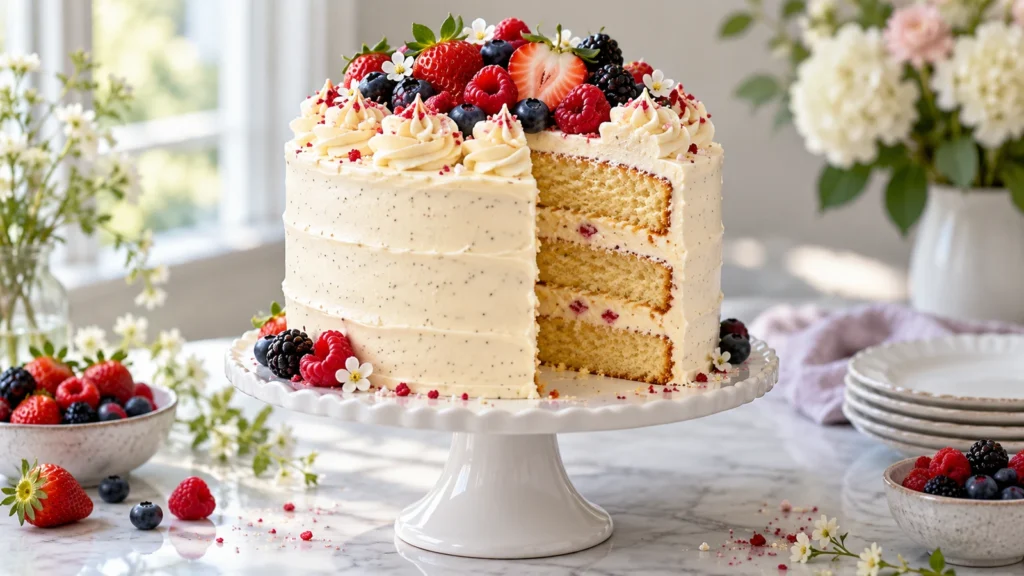
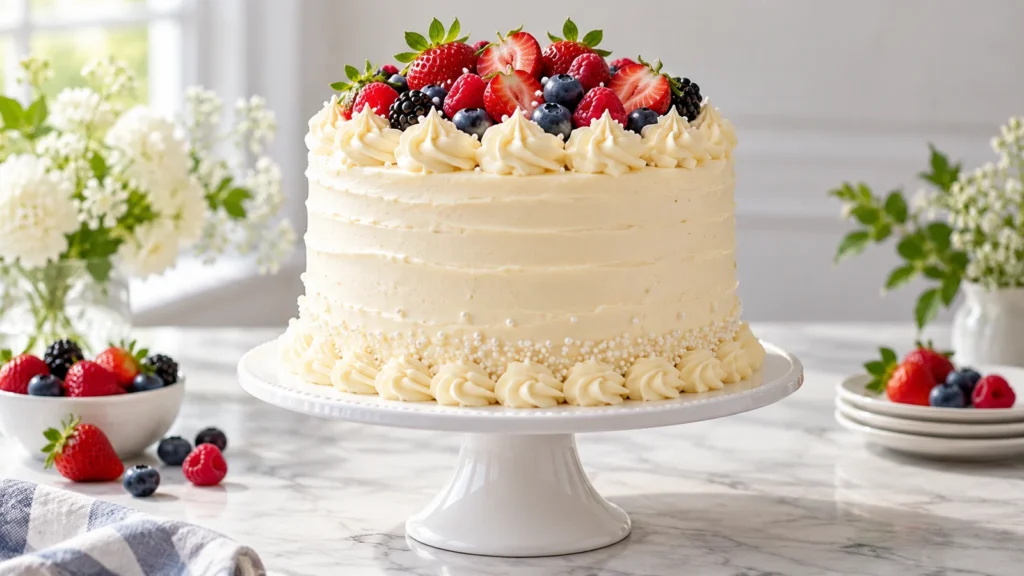
This recipe for fluffy vanilla cake produces two tender, evenly risen layers with a fine crumb and a clear vanilla flavor. Precise temperatures, measured mixing times, and simple visual cues make it dependable for birthdays, holidays, and everyday celebrations.
The cake is finished with a smooth vanilla buttercream, but the layers are versatile enough for fruit fillings, chocolate frosting, or a light dusting of confectioners’ sugar. Unlike a vanilla pound cake recipe, this cake relies on egg whites, cake flour, and careful creaming for an especially light texture.
Table of Contents
Why You’ll Love This Recipe
- Soft, fluffy texture: Cake flour and properly creamed butter create a delicate crumb.
- Dependable results: Gram measurements, mixer speeds, and doneness cues remove guesswork.
- Classic flavor: Pure vanilla extract provides a familiar flavor without tasting overly sweet.
- Versatile format: Make layers, cupcakes, or a 9×13-inch sheet cake from the same batter.
- Celebration-ready finish: The included vanilla icing recipe for cake creates enough buttercream for filling, covering, and simple piping.
Why This Recipe for Fluffy Vanilla Cake Works
Creaming softened butter with sugar traps tiny air pockets that expand in the oven. For a helpful comparison of creaming and other approaches, review this guide to common cake mixing methods.
Cake flour limits gluten development, while sour cream supplies moisture and richness. Alternating the dry ingredients with milk keeps the batter emulsified and helps prevent a dense or gummy center.
Egg whites provide structure without weighing down the crumb with extra yolk fat. The balanced combination of baking powder, creamed air, and controlled mixing is what makes this recipe for fluffy vanilla cake rise evenly while remaining moist.
Ingredients
- 2 3/4 cups (315 g) cake flour, spooned and leveled
- 2 1/2 teaspoons baking powder
- 1/2 teaspoon fine salt
- 3/4 cup (170 g) unsalted butter, softened to 65–68°F (18–20°C)
- 1 3/4 cups (350 g) granulated sugar
- 4 large egg whites (120 g), at 68–72°F (20–22°C)
- 1 tablespoon pure vanilla extract
- 1/2 cup (120 g) full-fat sour cream, at room temperature
- 1 cup (240 ml) whole milk, at room temperature
- For the icing: 1 cup (226 g) unsalted butter, softened; 4 cups (480 g) confectioners’ sugar; 2 teaspoons vanilla extract; 3–4 tablespoons (45–60 ml) heavy cream; 1/4 teaspoon salt
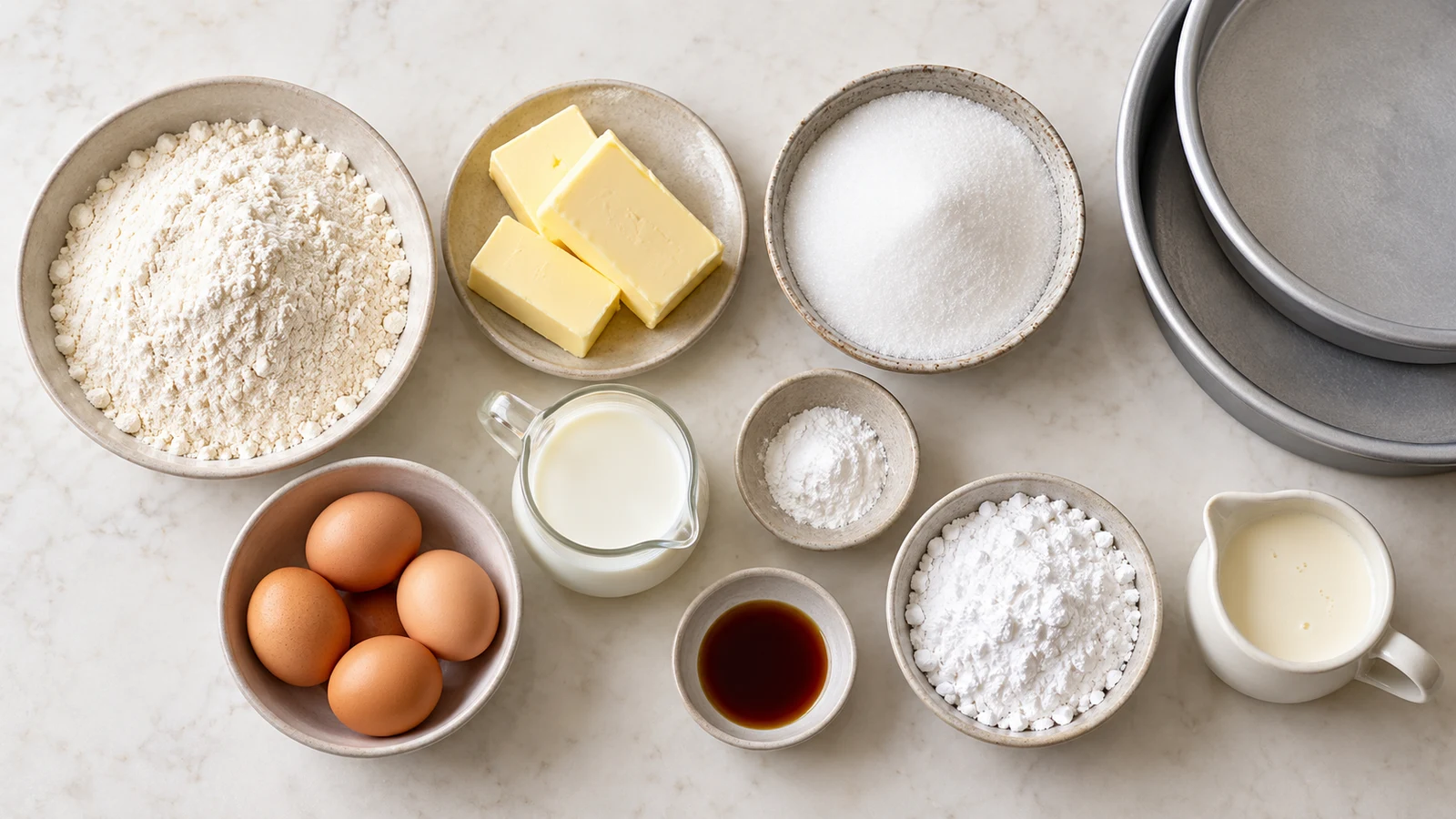
Understanding the Key Ingredients
Cake flour: Its lower protein content helps produce the fine, soft crumb expected from a recipe for fluffy vanilla cake. Measure it by weight for the most consistent result because flour can compact considerably in a measuring cup.
Softened butter: Butter at 65–68°F (18–20°C) should accept a light fingertip impression while retaining its shape. Butter that is cold cannot trap enough air, while greasy or partially melted butter cannot hold the air created during creaming.
Room-temperature liquids: Egg whites, sour cream, and milk blend more readily with creamed butter when they are not cold. This helps the batter remain smooth and evenly emulsified rather than curdled or separated.
Pure vanilla extract: One tablespoon flavors the layers, while another two teaspoons season the frosting. Good vanilla should be noticeable but balanced, allowing this recipe for fluffy vanilla cake to pair easily with fruit, chocolate, or caramel.
Equipment and Pan-Size Guide
Use two light-colored 8-inch round pans that are at least 2 inches deep. A hand mixer works in place of a stand mixer, although creaming may take an extra minute; a sturdy whisk can combine the dry ingredients, but hand-creaming the butter is not recommended.
A kitchen scale, parchment paper, cooling rack, and instant-read thermometer are useful. Dark pans brown faster, so begin checking several minutes early. Two 9-inch pans also work, producing thinner layers that bake in approximately 22–27 minutes.
A flexible spatula helps scrape the bowl thoroughly between additions. If your oven tends to bake unevenly, rotate the pans only after the centers have set, near the end of the baking window.
How to Make This Recipe for Fluffy Vanilla Cake
- Prepare the oven and pans: Heat the oven to 350°F (175°C). Grease two 8-inch pans, line their bottoms with parchment, and lightly grease the paper.
- Combine the dry ingredients: Whisk the cake flour, baking powder, and salt for 30 seconds. Flour should not be eaten raw; see the FDA’s guidance about raw flour safety.
- Cream the butter and sugar: Beat them with a paddle attachment on medium speed for 3–4 minutes. Stop once to scrape the bowl. The mixture should look pale, increased in volume, and slightly fluffy rather than greasy.
- Add the egg whites: Set the mixer to medium-low and add the whites in three additions, mixing for about 20 seconds after each. Beat in the vanilla and sour cream until smooth.
- Finish the batter: On low speed, add one-third of the flour mixture, half the milk, another third of flour, the remaining milk, and the final flour. Mix only until the last dry streak disappears, then fold the batter two or three times by hand. Overmixing develops gluten and can make the cake firm or rubbery.
- Fill the pans: Divide approximately 760 g of batter into each pan. Smooth the tops and tap each pan once against the counter to release large air pockets.
- Bake: Bake for 27–33 minutes. The cakes are ready when their tops spring back lightly, the edges just pull from the pans, and a center tester has a few moist crumbs but no wet batter. The internal temperature should be about 205–210°F (96–99°C).
- Cool: Leave the layers in their pans for 10 minutes, turn them onto a rack, remove the parchment, and cool completely before frosting.
- Make the icing: Beat the butter on medium speed for 2 minutes. Add the confectioners’ sugar gradually on low, then add vanilla, salt, and 3 tablespoons cream. Beat on medium-high for 2 minutes, adding the remaining cream if needed.
- Assemble: Place one layer on a plate, spread about 1 cup of icing over it, add the second layer, and cover the top and sides with the remaining icing.
Vanilla Icing Recipe for Cake Layers
This simple vanilla icing recipe for cake makes enough buttercream to fill and cover two 8-inch layers. For a tangier option with cream cheese, use this cream cheese cake frosting instead.
Pure extract gives the smoothest classic flavor. Vanilla paste adds visible seeds and a rounder aroma; substitute it in equal measure. Clear imitation vanilla is useful when keeping the frosting bright white, but its flavor is less nuanced.
For clean layers, make sure the cakes are completely cool before decorating. If the vanilla icing recipe for cake feels stiff, add the remaining cream gradually. If it becomes too soft, let it stand in a cool room briefly before spreading it.
Expert Tips for the Best Results
- Plan for room-temperature ingredients: Set out the butter, egg whites, sour cream, and milk before mixing. Do not melt or microwave the butter until greasy.
- Weigh the flour: Scooping directly from the container can add too much flour and create a dry cake. If cups are necessary, spoon flour into the cup and level it without packing.
- Cream by appearance and time: Three to four minutes is a useful guide, but the butter mixture should also look pale and aerated. Scraping the bowl prevents dense streaks.
- Add egg whites gradually: Small additions are easier for the butter mixture to absorb. This preserves the emulsion that supports the light crumb in this recipe for fluffy vanilla cake.
- Mix gently after adding flour: Keep the mixer on low and stop when the batter is uniform. Finish with two or three folds to incorporate batter from the bottom.
- Divide accurately: Placing each prepared pan on a scale helps create equally thick layers that finish baking at the same time.
- Leave room around the pans: Position them on the center rack with space between them so hot air can circulate evenly.
- Use all the doneness cues: Check the springy surface, separating edges, tester, and temperature instead of relying on only one signal.
- Cool before decorating: Even slightly warm layers can melt a vanilla icing recipe for cake and cause the layers to slide.
- Create flatter layers: Use damp cake strips if desired; avoid pressing or trimming the cakes while they are warm.
Variations and Substitutions
All-Purpose Flour Substitute
If cake flour is unavailable, measure 2 3/4 cups all-purpose flour, remove 5 1/2 tablespoons, and replace them with 5 1/2 tablespoons cornstarch. Sift twice. The crumb will be slightly less delicate but still tender.
Sour Cream and Dairy Substitutions
Plain full-fat Greek yogurt can replace sour cream by weight. For a dairy-free cake, use plant-based baking sticks, unsweetened soy milk, dairy-free yogurt, and dairy-free icing ingredients. The recipe contains wheat, dairy, and eggs as written.
Flavor Variations
Add a thin layer of lemon curd, berry preserves, or chocolate ganache between the cooled layers before frosting. Keep the filling modest so it does not squeeze out when the second layer is placed on top.
For a warmer vanilla profile, replace the pure extract with vanilla paste in equal measure. A small portion of the finished buttercream can also be tinted for borders or decorations without changing the cake itself.
Layer Cake, Pound Cake, or Sheet Cake
A vanilla pound cake recipe produces a tighter, richer crumb and is best when you want sturdy slices. This layer cake is softer and more aerated. A vanilla sheet cake recipe uses the same batter in a rectangular pan and is convenient for casual gatherings.
High-Altitude Adjustment
At elevations above 3,500 feet, reduce baking powder to 2 teaspoons, decrease sugar by 2 tablespoons, add 2 tablespoons milk, and raise the oven to 365°F (185°C). Begin checking early because altitude adjustments vary by location and oven.
Troubleshooting Common Cake Problems
Why Is the Cake Dense?
The butter may have been too cold, the creaming stage too brief, or the batter overmixed after the flour was added. Accurate flour measurement also matters. Following the stated temperatures and mixing cues helps this recipe for fluffy vanilla cake retain its aerated structure.
Why Is the Cake Dry or Crumbly?
Too much flour or excess baking is the likely cause. Weigh ingredients and begin checking at 27 minutes. Remove the layers when a tester has a few moist crumbs rather than waiting until it is completely dry.
Why Did the Center Sink?
A sunken center can result from opening the oven early, inactive baking powder, or insufficient baking. Keep the door closed until the structure has set, verify the leavener is fresh, and use the listed doneness cues.
Why Are the Layers Domed?
An oven that runs hot can set the edges before the middle finishes rising. Confirm the temperature with an oven thermometer and use light-colored pans or damp cake strips.
Why Does the Batter Look Curdled?
Cold ingredients or additions made too quickly can break the emulsion. Continue with the recipe; adding the first flour portion usually brings it together. The finished crumb may still be good if the batter is not overmixed.
Why Did the Frosting Turn Grainy or Loose?
Sift lumpy confectioners’ sugar and begin with only 3 tablespoons cream. Butter that is overly warm can make the vanilla icing recipe for cake loose, so let it cool slightly before beating again.
Cupcake and Sheet-Cake Conversions
For cupcakes, fill lined wells two-thirds full and bake at 350°F (175°C) for 17–21 minutes. The batter yields about 24 cupcakes. For a quick single serving, try this vanilla mug cake recipe.
For a vanilla sheet cake recipe, spread the batter in a greased, parchment-lined 9×13-inch pan that is at least 2 inches deep. Bake at 350°F (175°C) for 32–40 minutes, using the same visual doneness cues.
The vanilla sheet cake recipe format is easier to transport because it can be decorated and served in the pan. Let it cool completely before spreading the buttercream, and cut it with a clean knife for neat portions.
A vanilla mug cake recipe is a different preparation designed for speed and one portion, so do not place this full batter in a mug. Use the linked version when you want a small dessert without heating the oven.
Make-Ahead Instructions
Bake the layers one or two days before decorating. Once completely cool, wrap each layer tightly and refrigerate it. Chilled cake is easier to level, fill, and cover because it releases fewer crumbs into the frosting.
The vanilla icing recipe for cake can also be prepared in advance and refrigerated in a covered container. Before decorating, bring it toward room temperature and beat it briefly until smooth and spreadable.
For longer preparation, freeze the wrapped layers for up to three months. Thaw them overnight in the refrigerator while still wrapped, which helps limit condensation on the cake surface.
Serving Ideas
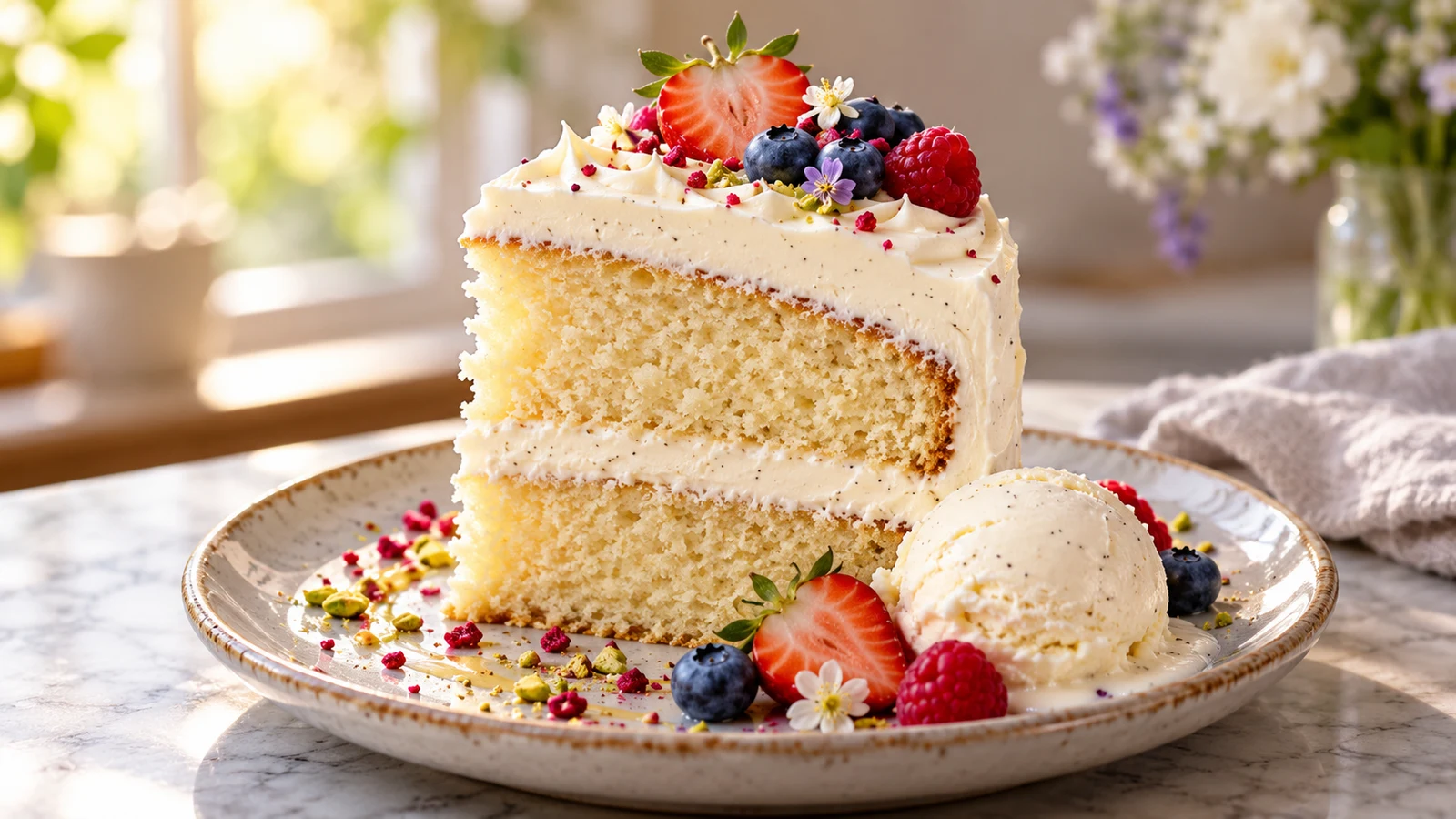
Serve slices with fresh berries, lemon curd, chocolate sauce, or lightly sweetened whipped cream. Tart raspberries and strawberries balance the sweet buttercream particularly well.
For a richer, tighter-crumbed alternative, this vanilla pound cake recipe is well suited to toasted slices and fruit toppings. Choose it when you prefer a dense, buttery cake rather than light layers.
For birthdays, add simple buttercream swirls and colorful decorations. At a dinner party, serve smaller slices with berries and coffee. The mild flavor of this recipe for fluffy vanilla cake also makes it a useful base for seasonal fillings.
How to Store and Serve Leftovers
Keep the frosted cake covered at cool room temperature for up to one day or refrigerate it for up to four days. Refrigeration guidance varies by ingredient, so consult the federal cold food storage charts when using perishable fillings.
Bring refrigerated slices to room temperature for 30–45 minutes before serving; reheating is unnecessary. Allowing the butter and buttercream to soften restores the most tender texture and fullest vanilla flavor.
To freeze, wrap unfrosted, fully cooled layers twice in plastic and once in foil for up to three months. Thaw them, still wrapped, overnight in the refrigerator. Individual frosted slices may be chilled until firm and then wrapped carefully, although freshly applied frosting has the best finish.
Frequently Asked Questions
Can I Make This Recipe for Fluffy Vanilla Cake Ahead?
Yes. Bake and cool the layers, wrap them tightly, and refrigerate for up to two days or freeze for up to three months. Slightly chilled layers are easier to frost.
Can I Use Whole Eggs Instead of Egg Whites?
You can use three large whole eggs, but the cake will have a yellower color, a richer flavor, and a slightly firmer crumb. Egg whites are preferable when the light color and texture of the original recipe for fluffy vanilla cake are the priority.
Why Did My Cake Stick to the Pan?
Grease the pans and line the bottoms with parchment. Let the layers cool for 10 minutes, then loosen the edges gently before turning them out. Leaving them in the pans much longer may encourage sticking as they cool.
Can I Halve the Recipe?
Yes. Halve every ingredient by weight and bake in one 8-inch pan for about 27–33 minutes. Use an egg white weighing approximately 30 g plus half of another.
Can I Turn It Into a Vanilla Sheet Cake Recipe?
Yes. The vanilla sheet cake recipe conversion uses a greased, parchment-lined 9×13-inch pan and bakes for 32–40 minutes at 350°F (175°C). Check for a springy center and moist crumbs.
How Is This Different From a Vanilla Pound Cake Recipe?
A vanilla pound cake recipe generally has a denser, more buttery crumb intended for sturdy slices. This cake uses cake flour, egg whites, sour cream, and milk to create lighter layers suited to filling and frosting.
When Should I Use a Vanilla Mug Cake Recipe Instead?
Choose a vanilla mug cake recipe when you need one quick portion rather than a full celebration cake. It is designed for a mug and a short cooking time, while this layer cake requires conventional pans and oven baking.
Can I Use the Vanilla Icing Recipe for Cake on Cupcakes?
Yes. The vanilla icing recipe for cake is also suitable for spreading or piping onto the approximately 24 cupcakes produced by this batter. Make sure the cupcakes are completely cool first.
Can I Bake the Layers in 9-Inch Pans?
Yes. Divide the batter evenly between two 9-inch pans. Because the layers will be thinner, begin checking at 22 minutes; they generally require approximately 22–27 minutes.
How Do I Know When the Cake Is Fully Baked?
Look for several signs together: the surface springs back lightly, the edges begin to pull from the pans, and a tester shows moist crumbs without wet batter. An internal temperature of about 205–210°F (96–99°C) provides additional confirmation.
Printable Recipe Card
Yield: One two-layer 8-inch cake, 12–14 servings
Preparation time: 30 minutes
Baking time: 27–33 minutes
Cooling and decorating: 90 minutes
Total time: About 2 hours 30 minutes
Oven: 350°F (175°C)
Pan size: Two 8×2-inch round pans
Method: Follow the ingredient quantities and numbered instructions above.
Nutrition: Approximately 610 calories per serving when divided into 14 frosted slices; values vary with brands and serving size.
Notes: Use room-temperature ingredients, weigh flour, and stop mixing once the batter is combined. This recipe for fluffy vanilla cake may be baked and frozen before decorating.
A Reliable Vanilla Cake for Any Occasion
With careful creaming, gentle final mixing, and an accurate baking time, this recipe for fluffy vanilla cake turns out soft, level, and easy to decorate. Let the finished cake lose its refrigerator chill before slicing for the best flavor and texture.
Use the layer cake for celebrations, the vanilla sheet cake recipe conversion for convenient serving, or the vanilla mug cake recipe when only one portion is needed. For a denser alternative, choose the vanilla pound cake recipe; for these airy layers, finish with the included vanilla icing recipe for cake.
Reviews
Reader reviews are managed separately (outside this build).