Cake
Amazing Chocolate Brownie Cake Recipe: Fudgy Perfection
Try this chocolate brownie cake recipe for a crackly top, fudgy center, gram measurements, doneness cues, pan conversions, and storage expert tips.
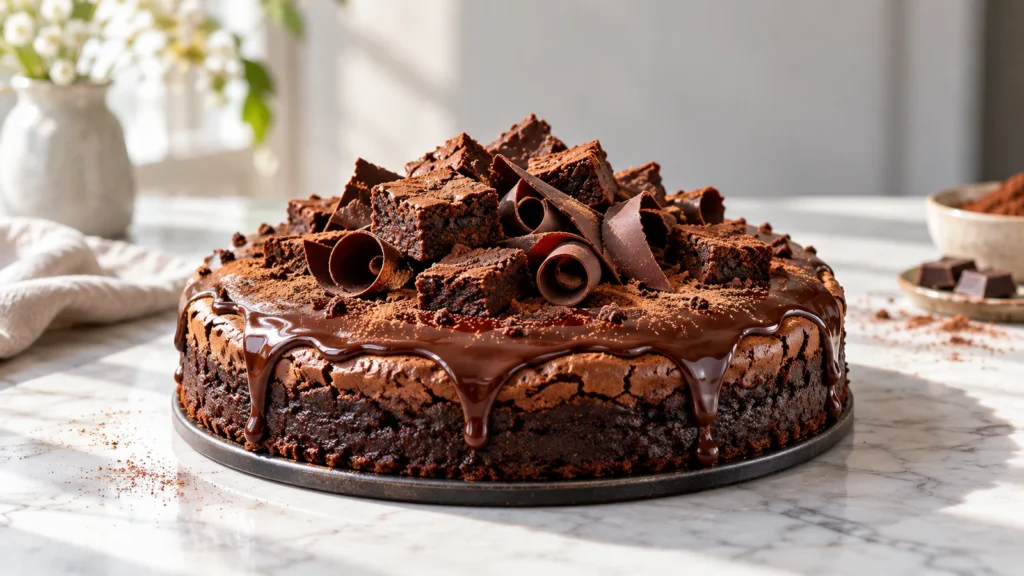
This chocolate brownie cake recipe combines a crackly brownie top, moist crumb, and deeply fudgy center in one celebration-worthy dessert. It is rich enough for chocolate lovers yet simple enough to make without a mixer. With clear mixing, baking, and cooling guidance, this chocolate brownie cake recipe is approachable even if you rarely bake from scratch.
Table of Contents
Why You’ll Love This Chocolate Brownie Cake Recipe
- Fudgy, not raw: Clear doneness cues help you keep the center moist without underbaking it.
- Reliable texture: Melted chocolate, cocoa powder, and carefully measured flour create a balanced crumb.
- Flexible: Choose from several pan sizes and tested dietary substitutions.
- Make-ahead friendly: The cake stores and freezes well.
- Easy to serve: The rich flavor works with simple toppings, so elaborate decorating is unnecessary.
What Is a Chocolate Brownie Cake?
A brownie cake falls between a dense brownie and a tender chocolate cake. It has more structure than a pan of brownies but remains richer and fudgier than most layer cakes. Fat, sugar, flour, and mixing technique all affect that balance; this guide to fudgy versus cakey brownies offers useful background.
This scratch-made version gives you greater control over chocolate flavor and texture than a boxed mix. Unlike a typical Bundt cake, it does not depend on a tall, airy crumb or an intricately shaped pan. A traditional chocolate bundt cake recipe generally produces a lighter, taller result, while this dessert stays deliberately dense and moist.
The chocolate brownie cake recipe also differs from a chocolate pound cake recipe because it uses melted chocolate and a brownie-style mixing method to create its glossy crust. Pound cake usually emphasizes a close, buttery crumb that holds a precise shape when sliced.
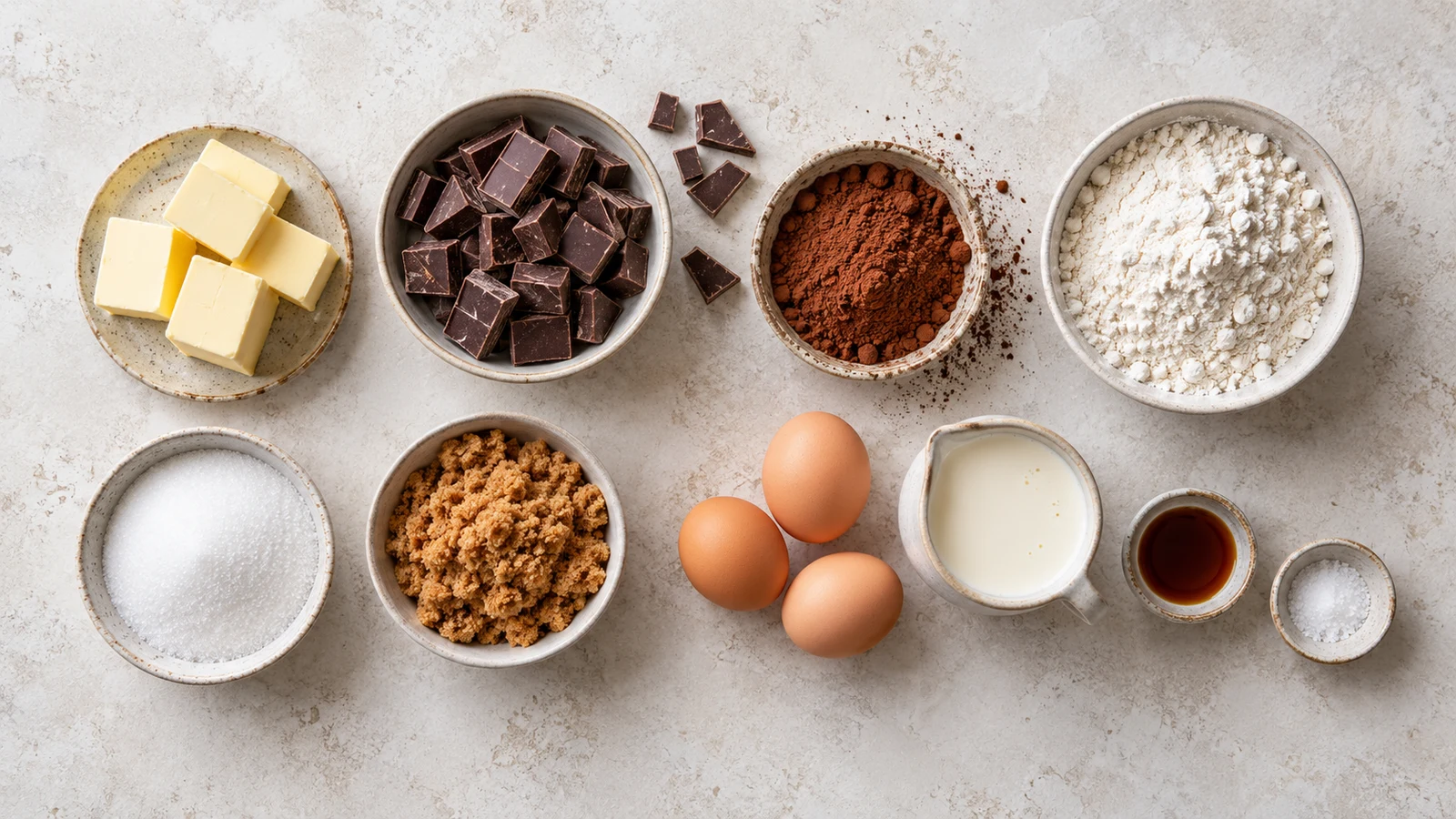
Ingredients
- 10 tablespoons unsalted butter (142 g), plus more for the pan
- 6 ounces semi-sweet chocolate (170 g), finely chopped
- 1 cup granulated sugar (200 g)
- 1/2 cup packed light brown sugar (100 g)
- 3 large eggs (about 150 g without shells), at room temperature
- 2 teaspoons vanilla extract
- 3/4 cup all-purpose flour (90 g)
- 1/2 cup unsweetened cocoa powder (45 g)
- 1 teaspoon instant espresso powder, optional
- 1/2 teaspoon fine salt
- 1/4 teaspoon baking powder
- For the chocolate ganache: 4 ounces semi-sweet chocolate (113 g) and 1/2 cup heavy cream (120 ml)
Understanding the Key Ingredients
Butter and Chocolate
Butter supplies richness and helps the cake remain tender after cooling. Semi-sweet chocolate brings cocoa solids, sugar, and cocoa butter, giving the center a smooth texture that cocoa powder alone cannot provide. Chop the chocolate finely so it melts evenly without needing excessive heat.
Two Types of Sugar
Granulated sugar supports the thin, crackly top, while light brown sugar contributes moisture and a subtle caramel note. Use the listed amounts for the intended texture. A major sugar reduction can change browning, moisture, spread, and the delicate surface crust.
Flour and Cocoa
The modest quantity of flour gives this chocolate brownie cake recipe enough structure to slice without making it bready. Unsweetened cocoa deepens the chocolate flavor and absorbs moisture, which is why accurate measurement matters. Spoon flour and cocoa into measuring cups and level them, or use the gram weights.
Eggs and Baking Powder
Eggs bind the batter, add moisture, and trap a small amount of air during whisking. The limited baking powder provides gentle lift without turning the dessert into a standard layer cake. Room-temperature eggs combine more readily with the melted chocolate mixture.
Equipment
- 8-inch (20-cm) round cake pan
- Parchment paper
- Heatproof bowl and saucepan or microwave
- Whisk, flexible spatula, and fine-mesh sieve
- Digital scale or dry measuring cups
- Instant-read thermometer, optional
A 9-inch (23-cm) round pan also works. If you do not have a sieve, whisk the dry ingredients thoroughly before adding them. A light-colored metal pan gives the most predictable baking. Glass and dark metal can alter how quickly the edges set, so begin checking early if those are your only options.
How to Make This Chocolate Brownie Cake Recipe
- Prepare the pan: Heat the oven to 350°F (175°C). Grease an 8-inch round pan, line the bottom with parchment, and grease the parchment.
- Melt the chocolate: Gently melt the butter and 6 ounces chocolate together, stirring until smooth. Let the mixture cool for 5 minutes so it will not scramble the eggs.
- Build the crackly top: Whisk the granulated sugar, brown sugar, and room-temperature eggs vigorously for 2 minutes, until slightly thickened and glossy. Thoroughly dissolving and dispersing the sugar helps form the delicate crust.
- Combine: Whisk in the vanilla and melted chocolate mixture. Sift in the flour, cocoa powder, espresso powder, salt, and baking powder.
- Fold carefully: Use a spatula to fold only until no dry streaks remain. Overmixing develops gluten and can make the cake tough or dry.
- Bake: Spread the batter evenly in the pan. Bake for 27 to 33 minutes, rotating once near the end.
- Cool: Cool in the pan for 20 minutes, loosen the edge with a thin knife, and invert onto a rack. Remove the parchment and cool completely.
Texture and Doneness Cues
The top should look shiny and crackled, the edges should appear set, and the center should no longer wobble like liquid. A toothpick inserted about 1 inch from the edge should emerge with moist crumbs, not wet batter. The center should register approximately 200°F to 205°F (93°C to 96°C).
Do not wait for a completely clean toothpick; that usually produces a dry cake. Residual heat finishes setting the center as it cools, giving the fudgy brownie cake a moist but sliceable interior. Because ovens and pans vary, treat the time range as a guide and let the physical cues determine when the chocolate brownie cake recipe is finished.
Chocolate Ganache
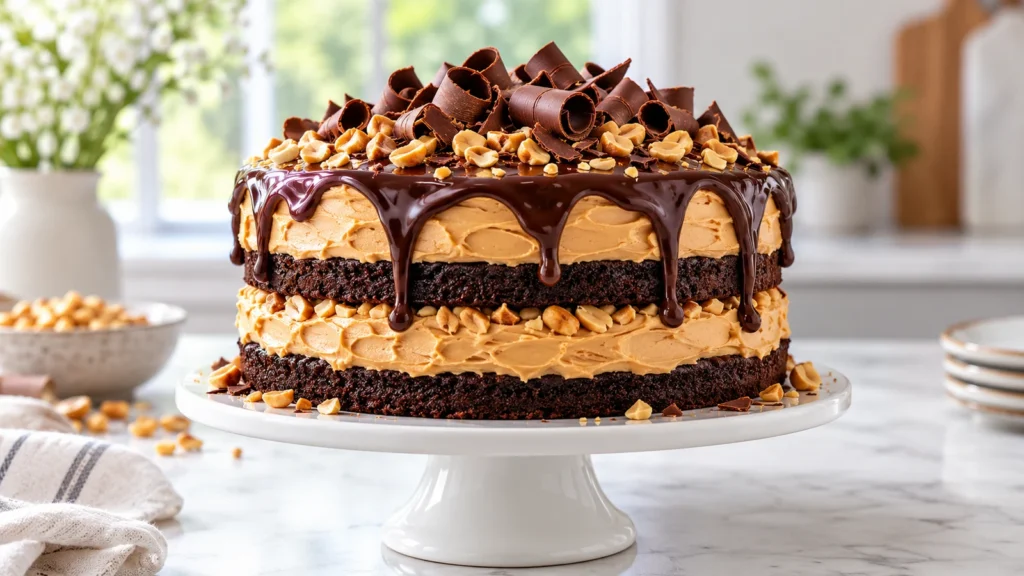
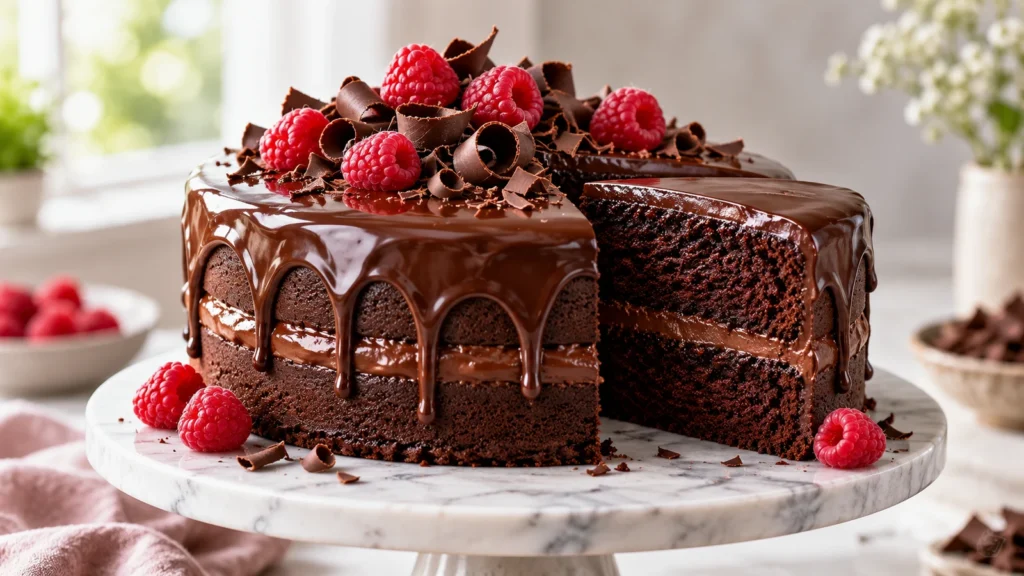
Place 4 ounces chopped chocolate in a heatproof bowl. Heat the cream until steaming but not boiling, pour it over the chocolate, and wait 3 minutes. Stir from the center outward until glossy, then cool for 10 to 15 minutes before spreading over the cake.
If the ganache seems runny, allow it to cool a little longer. If it becomes too firm to spread, warm it very gently until workable. Apply it only after the cake has cooled completely; warmth can make the topping slide toward the edges.
Expert Tips for the Best Results
- Measure by weight: Weigh the flour and cocoa when possible. Too much of either can dry the crumb.
- Warm the eggs: Bring eggs to room temperature for 30 minutes, or place them in warm water for 5 minutes.
- Choose baking chocolate: Use chopped baking chocolate rather than chocolate chips for smoother melting.
- Protect the texture: Do not sharply reduce the sugar, because it contributes moisture and the crackly brownie top. Review these effects of reducing sugar in bars before experimenting.
- Fold from the bottom: Scrape around the bowl and lift the batter over itself so hidden pockets of cocoa and flour are incorporated without prolonged mixing.
- Level the batter: Spread it into the corners of the pan and smooth the top so the center and edges bake as evenly as possible.
- Allow complete cooling: Cutting early releases steam and can make the center appear underdone. Cooling gives this chocolate brownie cake recipe its cleanest slices.
- Adjust at altitude: For high altitude above 3,500 feet, add 1 tablespoon flour, reduce each sugar by 1 tablespoon, and begin checking 3 minutes early.
Pan Options and Conversions
In a 9-inch round pan, bake for 23 to 28 minutes. An 8-inch square pan needs about 25 to 31 minutes. For a 9-by-5-inch loaf pan, bake at 325°F (165°C) for 42 to 52 minutes. Cupcakes take approximately 18 to 22 minutes and yield 12 portions.
Do not use a full-size Bundt pan for this quantity; the cake will be too shallow. For a taller ring-shaped dessert, choose a dedicated chocolate bundt cake recipe. A chocolate pound cake recipe is also a better choice when you want firm, buttery slices rather than a fudgy center.
Changing the pan changes the depth of the batter and therefore the baking time. A wider pan produces thinner pieces and more edge area, while a loaf pan creates a deeper center that needs gentler, longer baking. Keep the ingredient quantities unchanged and use the specific timing for your chosen pan.
Variations and Substitutions
- Darker chocolate: Replace the semi-sweet chocolate with 60% to 70% bittersweet chocolate.
- Espresso: Increase the espresso powder to 2 teaspoons for a noticeable coffee note.
- Dairy-free: Use vegan block butter, dairy-free chocolate, and full-fat coconut milk in the ganache. Butter and shortening behave differently, as explained in this baking-fat comparison.
- Gluten-free: Replace the flour by weight with a cup-for-cup blend containing xanthan gum. For another tested option, see this gluten free chocolate cake recipe.
This recipe contains eggs, dairy, and wheat; chocolate may also contain soy. Check every package when cooking for someone with allergies. A gluten free chocolate cake recipe may be preferable if cross-contact or ingredient suitability is a concern, because it is designed around gluten-free flour from the beginning.
Flavor Variations
For a simple contrast, serve the finished cake with fresh raspberries or strawberries. Orange zest can be grated over individual servings, and a light pinch of flaky salt may be added to the ganache after spreading. These accents complement the chocolate without changing the batter or the dependable structure of the chocolate brownie cake recipe.
Choosing a Different Style of Chocolate Cake
Choose a baker’s german chocolate cake recipe when coconut-pecan filling is the main attraction. Select a chocolate bundt cake recipe for a tall molded centerpiece, or a chocolate pound cake recipe for sturdy slices with a buttery crumb. Those desserts satisfy different preferences and should not be expected to match this cake’s brownie-like center.
Troubleshooting This Chocolate Brownie Cake Recipe
- Dry cake: Too much flour, overmixing, or overbaking is usually responsible.
- Sunken center: The cake was likely underbaked, the oven door opened too early, or the batter was over-aerated.
- Greasy texture: The chocolate mixture may have been too hot, or the batter was not fully emulsified before adding dry ingredients.
- Stuck cake: Use both grease and parchment, cool for 20 minutes, and loosen the edge before turning it out.
- No crackly top: Use granulated sugar, whisk the eggs and sugars well, and bake immediately after mixing.
Why Did the Chocolate Seize?
Chocolate may become thick and grainy if a small amount of water or steam enters the bowl. Begin with dry utensils and melt it gently with the butter. If using a double boiler, keep the bowl above the water rather than letting its base touch the water.
Why Are the Edges Hard?
Hard edges usually indicate overbaking or a pan that conducts heat very aggressively. Confirm the oven temperature, begin checking at the earliest stated time, and remove the cake when the center reaches the specified temperature. Letting the chocolate brownie cake recipe cool in the pan for only the directed 20 minutes also limits continued edge cooking.
Why Is the Batter Lumpy?
Small bubbles are normal, but dry lumps suggest the flour and cocoa were not sifted or evenly folded. Break up cocoa clumps before they enter the batter. Once the dry ingredients are added, fold gently and scrape the bottom of the bowl until no visible streaks remain.
Serving Ideas
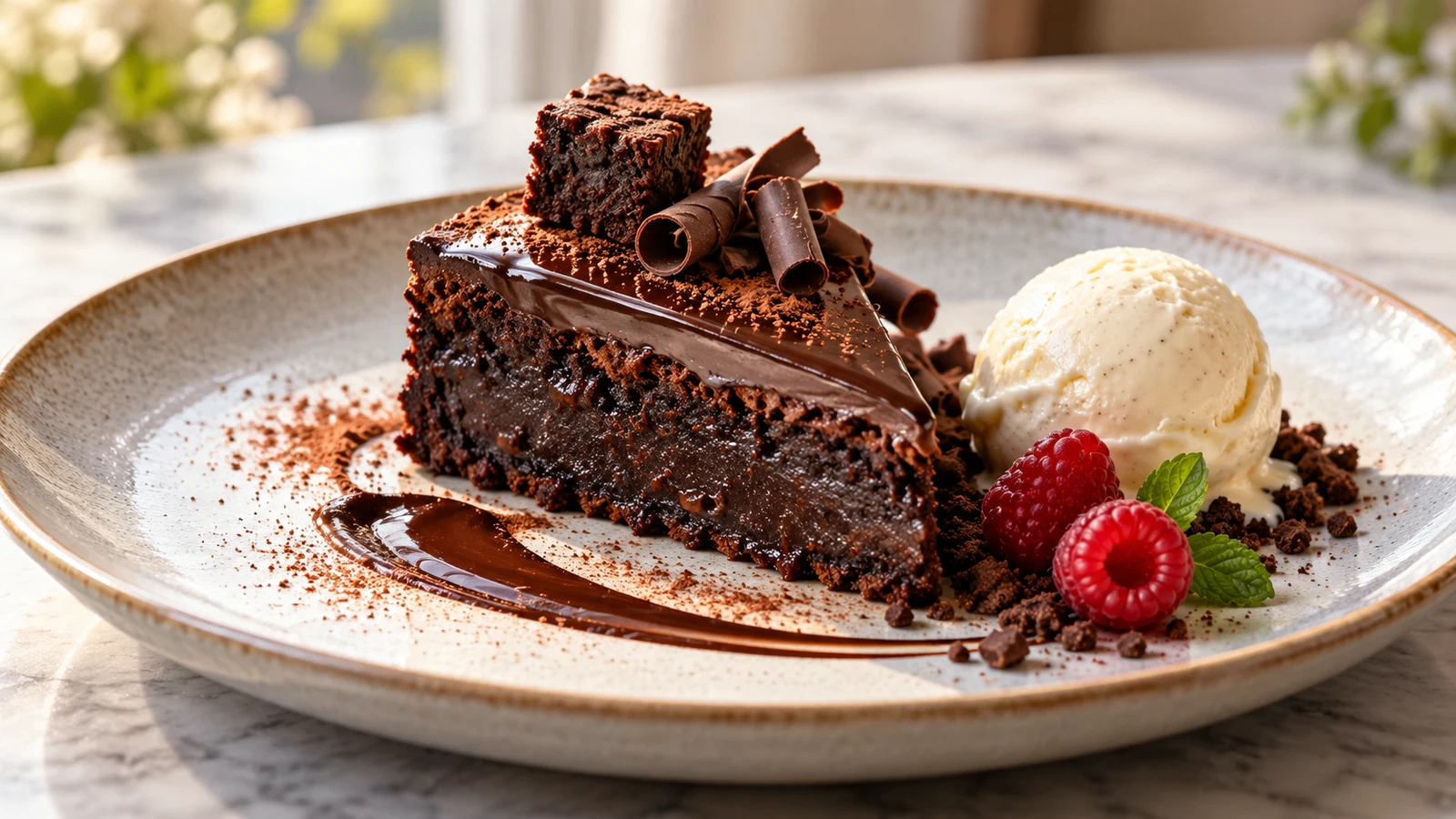
Serve thin wedges at room temperature with berries, whipped cream, or vanilla ice cream. For a softer texture, warm individual slices briefly before serving. Fans of extra-moist cakes may also enjoy chocolate cake made with mayonnaise.
For a dinner party, add a spoonful of softly whipped cream and a few berries to each plate. For a casual gathering, cut the cake into smaller wedges and let guests choose between ganache, ice cream, or a plain slice. Coffee, espresso, and cold milk all balance the dessert’s richness.
This chocolate brownie cake recipe is particularly good for birthdays when the guest of honor prefers brownies to fluffy layer cake. For another celebration style, a baker’s german chocolate cake recipe supplies a sweeter, textured filling, while a chocolate bundt cake recipe creates a more sculptural presentation.
Make-Ahead, Storage, Freezing, and Reheating
Keep the uncut cake covered at room temperature for up to 2 days or refrigerate it for up to 5 days. Let refrigerated slices stand at room temperature for 20 minutes, or microwave one slice for 8 to 12 seconds.
To freeze, wrap the cooled, unglazed cake or individual slices tightly and place them in a freezer-safe container for up to 3 months. Thaw overnight in the refrigerator. You can bake the cake two days ahead and add ganache up to one day before serving.
How to Make the Cake Ahead
After the cake has cooled completely, leave it whole and cover it well to prevent exposed edges from drying. If preparing it two days ahead, wait to cut it until serving time. Make the ganache separately or spread it up to one day before serving, then protect the surface without pressing the covering into the topping.
How to Freeze Individual Slices
Freezing individual portions makes it easy to thaw only what you need. Wrap each cooled slice tightly before placing it in the freezer-safe container. Thaw wrapped slices overnight in the refrigerator so condensation forms on the wrapping instead of directly on the cake.
How to Restore the Best Texture
Cold temperatures make butter and chocolate feel firmer, so refrigerated cake tastes fudgier after it has stood at room temperature. Use the recommended 20-minute rest for a balanced texture. If warming a slice, heat it only for the stated 8 to 12 seconds to avoid melting the ganache or drying the edges.
Frequently Asked Questions
Can I use a boxed brownie mix?
You can bake boxed batter in a round pan, but the texture and timing will depend on the brand. This scratch chocolate brownie cake recipe offers more predictable thickness, sweetness, and doneness cues.
Can I make this chocolate brownie cake recipe without ganache?
Yes. Dust the cooled cake with cocoa or confectioners’ sugar, or serve it plain to highlight the crackly top. Fresh berries or lightly whipped cream also provide contrast without covering the brownie texture.
Why is my brownie cake raw in the center?
A wet, flowing center indicates underbaking. Confirm your oven temperature, use a metal pan, and rely on both visual cues and an internal temperature reading. Let the finished cake cool completely before judging its final texture.
Can I double the recipe for layers?
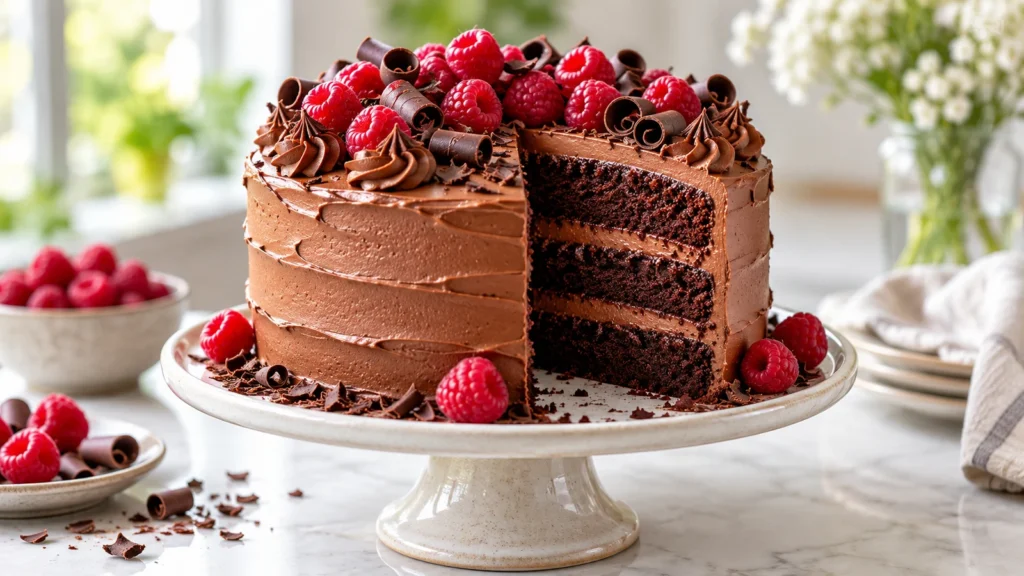
Yes. Divide a double batch between two 8-inch pans and check them after 27 minutes. Chill the layers before assembling because their fudgy crumb is delicate.
Can I turn this into a chocolate bundt cake recipe?
A full-size Bundt pan is too large for this quantity, and the brownie-like batter is not designed for a tall molded crumb. Use a dedicated chocolate bundt cake recipe when you want the height and definition of a Bundt cake.
Is this the same as a chocolate pound cake recipe?
No. A chocolate pound cake recipe is usually firmer, more buttery, and easier to cut into sturdy slices. This dessert has a crackly surface and a softer, fudgier middle inspired by brownies.
Can I use this as a gluten free chocolate cake recipe?
You can replace the flour by weight with a cup-for-cup blend containing xanthan gum. However, a dedicated gluten free chocolate cake recipe is the stronger choice when you want a recipe developed specifically for a traditional gluten-free cake crumb.
How does this differ from a baker’s german chocolate cake recipe?
A baker’s german chocolate cake recipe typically focuses on chocolate cake layers paired with coconut-pecan filling. This cake is denser, needs no layer assembly, and uses optional chocolate ganache instead of the traditional textured filling.
Can I omit the espresso powder?
Yes. The espresso powder is optional and can be left out without changing the ingredient quantities or method. It strengthens the impression of chocolate but is not required for the structure of the chocolate brownie cake recipe.
When should I slice the cake?
Wait until it is completely cool. The center continues to set after leaving the oven, and premature cutting can compress the crumb or make a properly baked center look wet. Use a clean sharp knife and wipe it between cuts for tidy wedges.
Should the cake be served warm or at room temperature?
Room temperature gives the best balance of a fudgy center and neat slicing. If you prefer a softer dessert, warm an individual slice for 8 to 12 seconds rather than reheating the whole cake.
Related Chocolate Cake Recipes
A baker’s german chocolate cake recipe is ideal when you want coconut-pecan filling, while Hershey’s-style chocolate cake delivers a lighter, classic layer-cake crumb. These are related chocolate desserts, not direct substitutes for this brownie cake.
For dietary needs, consider a gluten free chocolate cake recipe created around an alternative flour blend. If shape is your priority, a chocolate bundt cake recipe is built to fill a decorative ring pan. When you prefer dense but firm slices, a chocolate pound cake recipe offers a more traditional loaf-style texture.
Chocolate Brownie Cake Recipe Card
- Yield: 10 slices
- Preparation time: 20 minutes
- Baking time: 27 to 33 minutes
- Cooling and finishing: 60 minutes
- Oven temperature: 350°F (175°C)
Method: Prepare the lined pan, melt the butter and chocolate, whisk the eggs with both sugars, combine the mixtures, fold in the sifted dry ingredients, and bake until the edges are set and the center reaches 200°F to 205°F (93°C to 96°C). Cool before adding ganache.
Approximate nutrition per slice: 470 calories, 29 g fat, 51 g carbohydrate, 5 g protein, 38 g sugar, and 150 mg sodium. Values vary with brands and serving size.
Notes: Measure flour carefully, avoid overmixing, and remove the cake while moist crumbs still cling to a tester. Ganache is optional, and nutrition includes it.
A Fudgy Chocolate Dessert Worth Repeating
This chocolate brownie cake recipe delivers the best qualities of brownies and chocolate cake without complicated decorating. Follow the doneness cues closely, let it cool fully, and every wedge will have a moist crumb and satisfyingly fudgy center.
Whether you serve it plainly or finish it with glossy ganache, the chocolate brownie cake recipe is a practical choice for celebrations and make-ahead desserts. Save the baker’s german chocolate cake recipe, chocolate bundt cake recipe, chocolate pound cake recipe, and gluten free chocolate cake recipe for occasions when their distinct fillings, shapes, textures, or dietary features better suit your table.
Reviews
Reader reviews are managed separately (outside this build).