Cake
cake with chocolate ganache recipe: Luscious & Foolproof
Try this cake with chocolate ganache recipe for moist, rich cake and glossy, foolproof ganache, plus easy tips for best results every time at home.
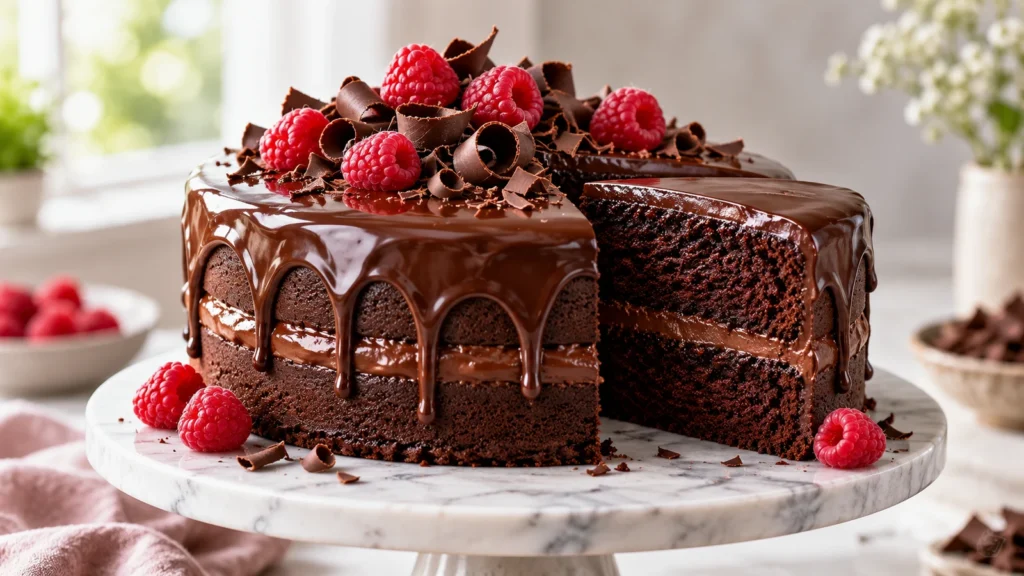
This cake with chocolate ganache recipe pairs a deeply flavored, moist chocolate cake with a smooth, glossy ganache frosting. Careful temperature cues and weighed measurements make both components dependable, even if this is your first layered cake.
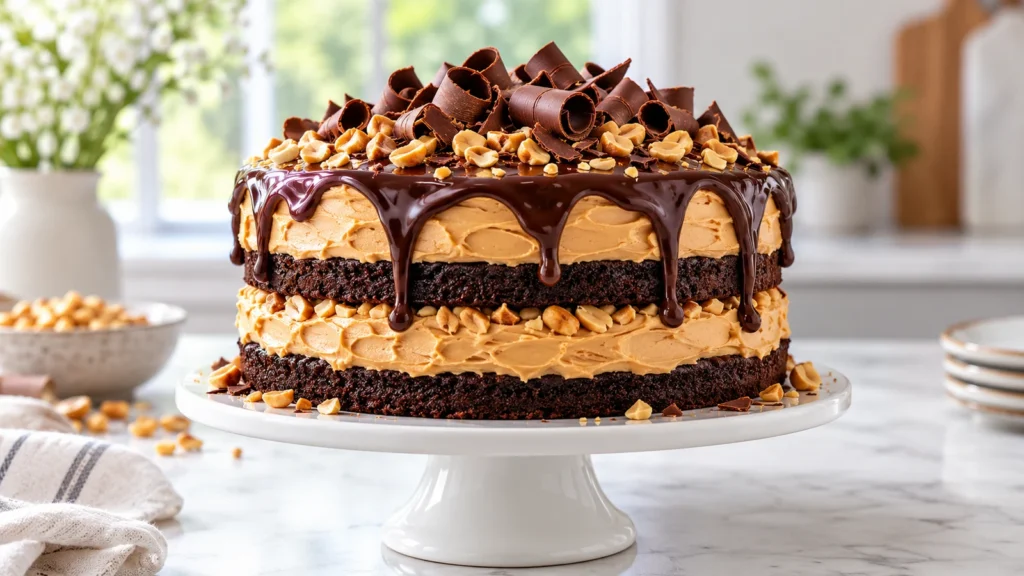
Unlike a chocolate bundt cake recipe or a dense chocolate pound cake recipe, this layer cake has a light, tender crumb that supports a generous coating. The ganache changes naturally from pourable to spreadable as it cools, so you can choose a polished chocolate drip or softly swirled finish.
This cake with chocolate ganache recipe is elegant enough for birthdays and celebrations but practical enough for a weekend baking project. Serve it with raspberries, strawberries, coffee, or vanilla ice cream.
Table of Contents
Why You’ll Love This Cake with Chocolate Ganache Recipe
- Reliable texture: Oil, buttermilk, and hot coffee keep the crumb tender and moist.
- Flexible finish: Use the ganache for pouring, spreading, or whipping.
- Clear cues: Weight, temperature, doneness, and cooling guidance remove guesswork.
- Make-ahead friendly: The cake layers and ganache can be prepared separately.
- Easy to adapt: The decorating ideas can also inspire a chocolate bundt cake recipe, chocolate pound cake recipe, or gluten free chocolate cake recipe.
Ingredients
- 1 3/4 cups (210 g) all-purpose flour
- 3/4 cup (64 g) natural unsweetened cocoa powder
- 1 3/4 cups (350 g) granulated sugar
- 2 teaspoons baking soda
- 1 teaspoon baking powder
- 1 teaspoon fine salt
- 2 large eggs, at room temperature
- 1 cup (240 ml) buttermilk, at room temperature
- 1/2 cup (120 ml) neutral oil
- 2 teaspoons vanilla extract
- 1 cup (240 ml) hot coffee, about 180°F (82°C)
- 12 ounces (340 g) semisweet chocolate, 55% to 65% cacao, finely chopped
- 1 1/2 cups (360 ml) heavy cream
- 1 tablespoon (14 g) unsalted butter, softened
- Pinch of salt
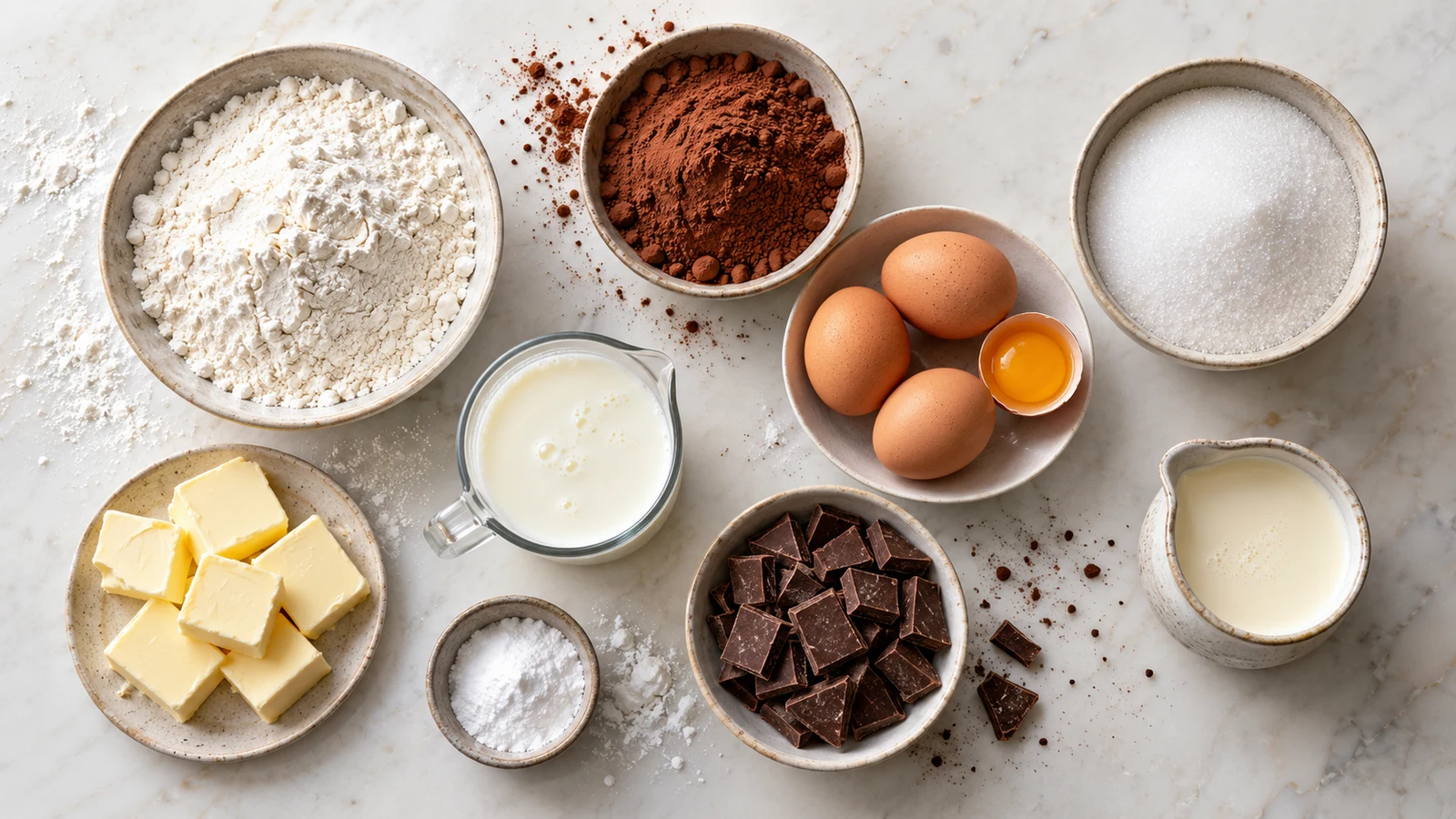
Chocolate between 55% and 65% gives a balanced ganache; a higher percentage produces a firmer, less-sweet result. For dependable conversions, consult this ingredient weight chart.
Choosing Cocoa and Chocolate
Natural unsweetened cocoa works with the baking soda in this cake with chocolate ganache recipe and provides a classic cocoa flavor. Do not replace it with sweetened cocoa drink mix. Dutch-process cocoa has different acidity, so use the natural cocoa specified for the most predictable rise.
For the coating, choose a semisweet baking bar that you enjoy eating. Finely chopped chocolate melts more evenly than large chunks. Avoid candy coating because it does not deliver the same flavor or creamy texture as real chocolate combined with heavy cream.
Equipment
Use two 8-inch round pans, parchment, mixing bowls, a whisk, and a wire rack. A digital scale and instant-read thermometer are helpful but optional. If you lack a mixer, the batter can be whisked by hand and the cooled ganache can be whipped with a sturdy balloon whisk.
Two matching pans help the layers bake at the same rate. If your pans differ in color or material, check each layer separately. A small offset spatula is useful for filling the cake, while a larger straight spatula or bench scraper helps smooth the outside.
How to Make This Cake with Chocolate Ganache Recipe
- Prepare the pans: Heat the oven to 350°F (175°C). Grease two 8-inch round pans, line their bottoms with parchment, and lightly grease the paper.
- Combine the dry ingredients: Whisk the flour, cocoa, sugar, baking soda, baking powder, and salt until evenly blended. Break apart any cocoa lumps.
- Add the wet ingredients: Whisk in the room-temperature eggs, buttermilk, oil, and vanilla. Slowly add the hot coffee. The batter will be thin; this is expected.
- Bake: Divide the batter evenly between the pans. Bake for 28 to 34 minutes, until the centers spring back lightly and a toothpick has a few moist crumbs but no wet batter. The center should register approximately 205°F to 210°F (96°C to 99°C).
- Cool completely: Rest the cakes in their pans for 10 minutes, loosen the edges, and invert onto a rack. Remove the parchment and cool for at least 90 minutes. Warm layers can melt ganache and cause sliding.
- Prepare the ganache: Put the chopped chocolate in a dry, heatproof bowl. Heat the cream until steaming and just beginning to bubble around the edge, about 180°F (82°C); do not boil. Pour it over the chocolate and leave undisturbed for 3 minutes.
- Emulsify: Stir slowly from the center outward until glossy, then mix in the butter and salt. This recipe uses roughly a 1:1 cream-to-chocolate ratio by weight, producing a versatile ganache. For additional technique guidance, see this ganache preparation guide.
- Choose the consistency: At about 90°F (32°C), ganache is fluid enough for pouring and a chocolate drip. At 75°F to 80°F (24°C to 27°C), it becomes spreadable. For whipped chocolate ganache, cool it until thick but soft, then beat briefly until lighter; overbeating can make it grainy.
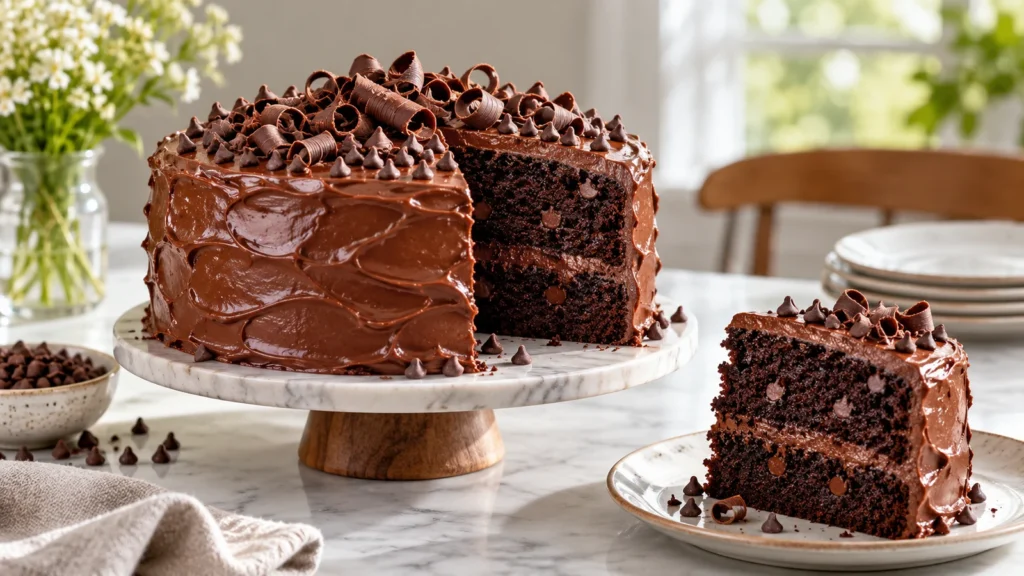
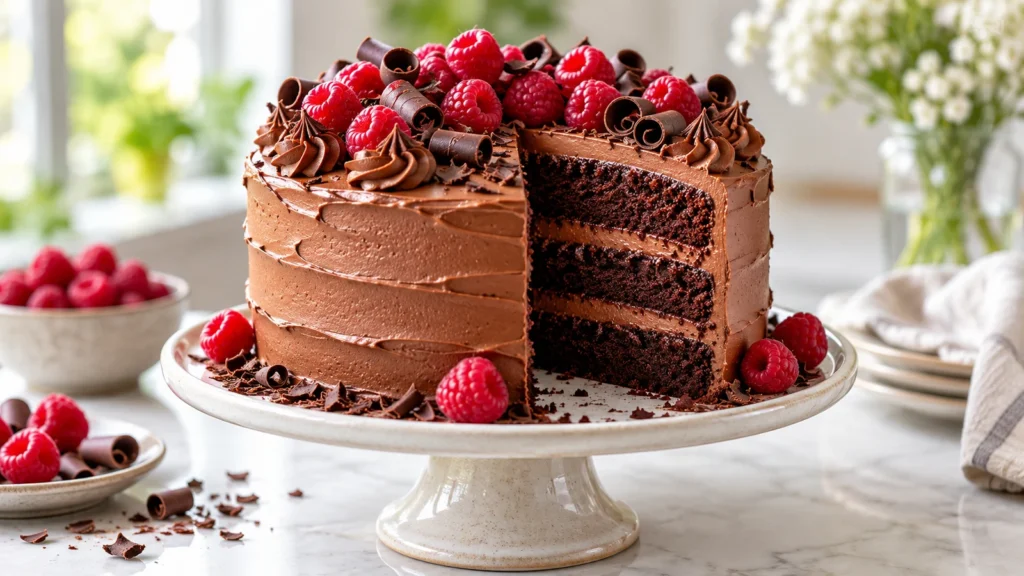
- Assemble: Level the cooled layers if needed. Spread about 3/4 cup ganache over the first layer, add the second, and coat the top and sides. For neat slices, chill the finished cake for 20 minutes, then cut it with a hot, dry knife, wiping the blade between cuts.
Expert Tips for the Best Results
- Measure by weight: A scale prevents excess flour from making this cake with chocolate ganache recipe dry or heavy.
- Use room-temperature dairy and eggs: They blend smoothly into the batter and encourage an even crumb.
- Add coffee gradually: Slow pouring keeps hot liquid from splashing and makes the thin batter easier to control.
- Divide the batter evenly: Weigh the filled pans if you want layers of matching height.
- Rotate only when necessary: Opening the oven too early can interrupt the rise. Rotate pans late in baking only if your oven has a noticeable hot spot.
- Cool fully: Even slightly warm layers can soften the filling and make the upper layer slide.
- Chop chocolate uniformly: Large pieces may remain solid after the cream has cooled.
- Watch the ganache: Judge it by texture as well as temperature because chocolate percentage and room temperature affect thickening.
- Do not overbake: Begin checking early because dark pans and convection ovens can shorten baking time.
- Try another tender crumb: Compare this method with a mayonnaise chocolate cake method.
How to Create a Smooth Ganache Finish
Apply a thin crumb coat first, then chill the cake briefly before adding the final layer. Keep the spatula at a shallow angle and use long, gentle strokes. If the ganache pulls at the crumbs, it is probably too firm; warm the spatula, dry it thoroughly, and smooth the surface again.
For a drip finish, test one spoonful on the back of the cake. A drip that races to the bottom is too warm, while one that stops immediately is too cool. This simple test helps the cake with chocolate ganache recipe look polished without requiring professional equipment.
Troubleshooting the Cake and Ganache
Why Is the Ganache Too Runny?
Freshly mixed ganache is naturally fluid. Cool it for 10-minute intervals, stirring between checks, before changing the ratio. If it stays thin after cooling, stir in a small amount of additional melted chocolate and let it rest again.
Why Is the Ganache Too Stiff?
Warm it briefly over barely simmering water and stir gently. If necessary, add warm cream 1 tablespoon at a time. Make small adjustments because too much cream can quickly turn a spreadable coating into a sauce.
How Do I Fix Split or Grainy Ganache?
If the mixture looks oily, whisk in 1 tablespoon of warm cream from the center outward. If it looks grainy, warm it gently and stir slowly. Avoid aggressive beating, which can incorporate excess air or cause a cooled ganache to separate.
Why Are There Unmelted Chocolate Pieces?
The chocolate may have been chopped too coarsely or the cream may not have been hot enough. Set the bowl over warm water and stir without allowing steam or water droplets to enter. Water can seize chocolate, so keep the bowl and utensils dry.
Why Did the Cake Sink?
Opening the oven early, underbaking the center, expired leavening, or inaccurate liquid measurements can cause sinking. Check the center rather than the edges, and confirm that no wet batter clings to the tester before removing the pans.
Why Is the Cake Dry?
Too much flour and overbaking are the most common causes. Spoon-and-level measuring is better than scooping if you do not own a scale. Begin checking at 28 minutes, particularly when using dark metal pans or a convection setting.
This illustrated ganache tutorial offers another useful reference for recognizing the finished texture.
Variations and Substitutions
Dairy-Free Variation
Replace the buttermilk with unsweetened soy milk mixed with 1 tablespoon vinegar. Use full-fat coconut milk and dairy-free chocolate for the topping. Coconut milk may produce a slightly softer coating, so allow extra cooling time before assembling the cake.
Gluten-Free Variation
For a tested gluten free chocolate cake recipe, follow this gluten-free chocolate cake guide rather than making an untested one-to-one flour swap. A successful gluten free chocolate cake recipe needs the right flour blend and moisture balance, but it can still be finished with this glossy ganache.
Bundt Cake Variation
For a chocolate bundt cake recipe variation, bake the batter in a thoroughly greased 10- to 12-cup Bundt pan for 42 to 52 minutes. Pour warm ganache over the fully cooled cake. Because a chocolate bundt cake recipe has more decorative edges, grease every groove carefully to ensure a clean release.
Pound Cake Variation
For a chocolate pound cake recipe style, use a butter-rich pound-cake batter rather than this thin oil batter, then finish it with half a batch of ganache. The tighter crumb of a chocolate pound cake recipe pairs especially well with a thin, pourable coating rather than a thick layer of frosting.
German Chocolate Variation
To create a German-chocolate variation, use 48% to 55% chocolate in the ganache and add coconut-pecan filling between the layers. For traditional proportions and assembly, use this baker’s German chocolate cake recipe.
A baker’s german chocolate cake recipe usually emphasizes sweet baking chocolate and coconut-pecan filling, while this cake with chocolate ganache recipe centers on dark cocoa and a creamy chocolate coating. Both make appealing celebration cakes, but their flavors and finishes are distinct.
Alternative Pan Sizes
For a 9-by-13-inch cake, bake for 32 to 38 minutes. For two 9-inch rounds, begin checking at 25 minutes. Two 9-by-5-inch loaves require about 45 to 55 minutes; fill pans no more than two-thirds full.
High-Altitude Notes
Above 3,500 feet (1,067 m), reduce the sugar by 2 tablespoons, reduce the baking soda to 1 1/2 teaspoons, and add 2 tablespoons flour. Increase the oven to 365°F (185°C) and begin checking 5 minutes early. Because elevation and climate vary, adjust one factor at a time.
Serving Ideas
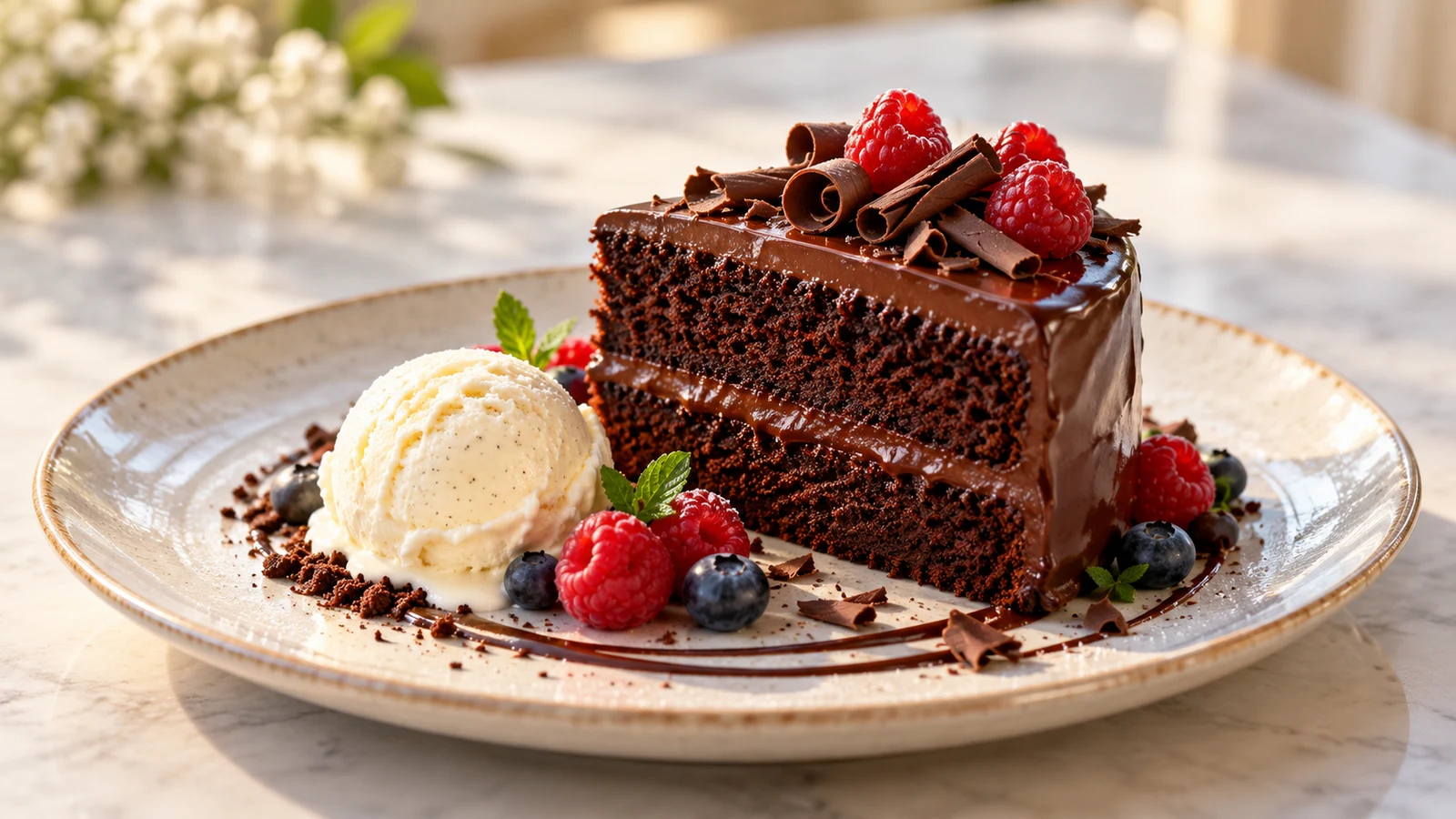
Balance the rich chocolate with tart raspberries, sliced strawberries, or lightly sweetened whipped cream. Vanilla ice cream creates a classic contrast, while espresso or black tea complements the cocoa. Let refrigerated cake stand at room temperature for 30 minutes before serving for the softest ganache consistency.
For a birthday, add candles, chocolate curls, or colorful sprinkles after the ganache has begun to set. For a dinner party, serve narrow slices with fresh berries and a small spoonful of whipped cream. A pinch of flaky salt on each plate can sharpen the chocolate flavor.
The same accompaniments work with a chocolate bundt cake recipe or chocolate pound cake recipe. A baker’s german chocolate cake recipe is already rich with coconut and pecans, so it often needs only coffee or unsweetened tea alongside it.
Make-Ahead Instructions
Bake the layers one day ahead, cool them completely, and wrap each layer tightly. Keep them at cool room temperature overnight or refrigerate them if the kitchen is warm. Wrapped layers are often easier to level because the crumb has had time to settle.
Prepare the ganache up to 3 days ahead and refrigerate it covered. Let it soften at room temperature, then warm it gently in short intervals and stir until smooth. Assemble this cake with chocolate ganache recipe only when the layers are cool and the ganache is spreadable.
You can also assemble the entire cake one day before serving. Refrigerate it in a covered container, then bring it toward room temperature before slicing. Add fresh fruit close to serving time so it remains bright and does not release juice onto the ganache.
How to Store and Freeze
Store the covered cake at cool room temperature for up to 2 days or refrigerate it for up to 5 days. Ganache-covered slices do not need reheating; bring them to room temperature before serving. If desired, microwave an individual slice for only 5 to 8 seconds.
Freeze unfrosted layers, wrapped twice, for up to 2 months. Freeze finished slices until firm, then wrap and store for up to 1 month. Thaw wrapped cake overnight in the refrigerator. Keeping the wrapping in place during thawing helps prevent condensation from settling directly on the cake.
These storage principles also apply to a chocolate bundt cake recipe covered with ganache. A chocolate pound cake recipe may stay moist slightly longer because of its dense, butter-rich crumb, while a gluten free chocolate cake recipe should be wrapped especially well to limit drying.
Frequently Asked Questions
Can I Use Chocolate Chips in This Cake with Chocolate Ganache Recipe?
Yes, but chopped baking bars usually melt more smoothly because chips contain ingredients that help them retain their shape. Choose good-quality semisweet chips if that is what you have, and give them enough time to soften beneath the hot cream before stirring.
Can I Make This Cake with Chocolate Ganache Recipe Without Coffee?
Yes. Replace the coffee with the same quantity of hot water. Coffee deepens the cocoa flavor without making the finished cake taste strongly of coffee, but hot water will still bloom the cocoa and preserve the batter’s intended consistency.
Can I Whip the Ganache?
Yes. Cool it until thickened but still soft, then whip on medium speed for 30 to 60 seconds. Stop as soon as it becomes fluffy because excessive whipping can produce a grainy texture. Whipped ganache becomes lighter in color and volume.
How Far Ahead Can I Make the Ganache?
Prepare it up to 3 days ahead and refrigerate it covered. Let it soften at room temperature, then warm it gently in short intervals and stir until smooth. Avoid overheating because excessive heat can make the emulsion oily.
Can I Turn This into a Chocolate Bundt Cake Recipe?
Yes. Use a thoroughly greased 10- to 12-cup pan and bake for 42 to 52 minutes. Let the cake cool before releasing it, then pour over warm ganache. This chocolate bundt cake recipe variation offers easier decorating while preserving the moist crumb.
Is This the Same as a Chocolate Pound Cake Recipe?
No. This batter relies on oil and has a lighter, softer crumb. A chocolate pound cake recipe traditionally uses a higher proportion of butter and produces a tighter texture. You can still use the ganache from this recipe to finish either style.
Can I Convert It into a Gluten Free Chocolate Cake Recipe?
Use a tested gluten free chocolate cake recipe instead of replacing the all-purpose flour casually. Gluten-free blends absorb liquid differently and may require binders. Once the gluten-free layers are baked and cooled, this ganache can be used as written.
How Does It Differ from a Baker’s German Chocolate Cake Recipe?
A baker’s german chocolate cake recipe traditionally features sweet chocolate cake and coconut-pecan filling. This recipe uses natural cocoa, coffee, and semisweet ganache for a darker chocolate profile. Choose between them according to whether you prefer creamy ganache or a nutty coconut filling.
Why Does the Ganache Turn Dull in the Refrigerator?
Cold temperatures and surface condensation can temporarily reduce its shine. Store the cake covered and let it warm gradually before serving. Its appearance and soft texture will improve as it approaches room temperature.
How Do I Cut Clean Slices?
Chill the finished cake for 20 minutes, then dip a sharp knife in hot water and dry it completely. Cut one slice and wipe the blade before repeating. This keeps ganache from dragging through the crumb.
Printable Recipe Card
Yield: One 8-inch two-layer cake, 12 servings
Prep time: 30 minutes
Bake time: 28 to 34 minutes
Cooling and decorating: About 2 hours
Total time: About 3 hours
Instructions: Heat the oven to 350°F (175°C) and prepare two 8-inch pans. Whisk the dry ingredients, add the eggs, buttermilk, oil, and vanilla, then blend in the hot coffee. Bake for 28 to 34 minutes and cool completely. Pour hot cream over chopped chocolate, rest 3 minutes, stir smooth, and add butter and salt. Cool to a spreadable consistency, assemble the layers, and finish the cake.
Estimated nutrition per serving: 610 calories, 38 g fat, 65 g carbohydrate, 6 g protein, 410 mg sodium. Values vary with ingredients and serving size.
A Dependable Chocolate Celebration Cake
With careful cooling and a few simple temperature cues, this cake with chocolate ganache recipe is easy to assemble and adapt. Choose a glossy drip, smooth coating, or whipped finish to suit the occasion.
Once you are comfortable with the technique, try the ganache on a chocolate bundt cake recipe, chocolate pound cake recipe, or gluten free chocolate cake recipe. For a sweeter coconut-pecan alternative, a baker’s german chocolate cake recipe offers a distinctly different classic finish.
Reviews
Reader reviews are managed separately (outside this build).