Beef
Tender beef brisket recipe oven: Foolproof Results
Try this beef brisket recipe oven for tender, foolproof results, using simple seasoning, temperature, timing, doneness, resting, and slicing guide.
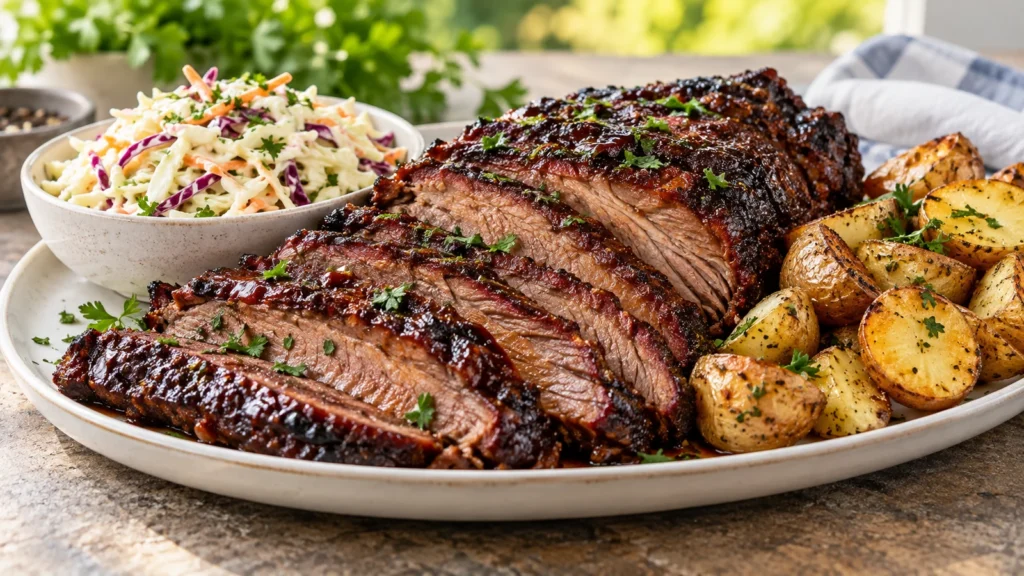
This beef brisket recipe oven method turns a fresh, well-marbled brisket into tender slices with a savory crust and rich pan sauce. Slow roasting it tightly covered at 325°F (163°C), then glazing and resting it, gives reliable results without a smoker.
The recipe serves 8 to 10 people and uses a 5-pound brisket after trimming. Allow about 30 minutes for preparation, 4 to 5 hours for cooking, and at least 30 minutes for resting. Unlike a smoked beef brisket recipe, this approach requires no outdoor equipment or fire management.
A dependable beef brisket recipe oven technique is useful for holidays, Sunday dinners, and make-ahead entertaining. The gentle heat gradually softens connective tissue, while the covered pan captures flavorful juices for serving and reheating.
Table of Contents
Why You’ll Love This Recipe
- Most of the cooking time is hands-off.
- A covered roasting pan helps the meat retain moisture.
- The seasoning works with either beef broth or BBQ sauce.
- The brisket can be cooked ahead and reheated in its juices.
- Leftovers are excellent in sandwiches, tacos, hash, and baked potatoes.
- This beef brisket recipe oven method works in ordinary home kitchen equipment.
Brisket Buying Guide
The flat is leaner, evenly shaped, and easy to slice, while the point is thicker, fattier, and especially rich. A whole packer brisket includes both muscles but may be too large for a standard roasting pan. For this recipe, choose a 5-pound flat or compact point with visible marbling.
The listed weight is after trimming. If buying an untrimmed brisket, select one weighing about 5 1/2 to 6 pounds. Leave an even 1/4-inch fat layer; too much can make the sauce greasy, while removing all of it increases the chance of dry meat.
Look for meat that bends slightly in its packaging rather than feeling rigid. Fine streaks of fat within the muscle are helpful because they add richness as the brisket cooks. A brisket with relatively even thickness will also cook more predictably than one with an extremely thin end.
Ingredients
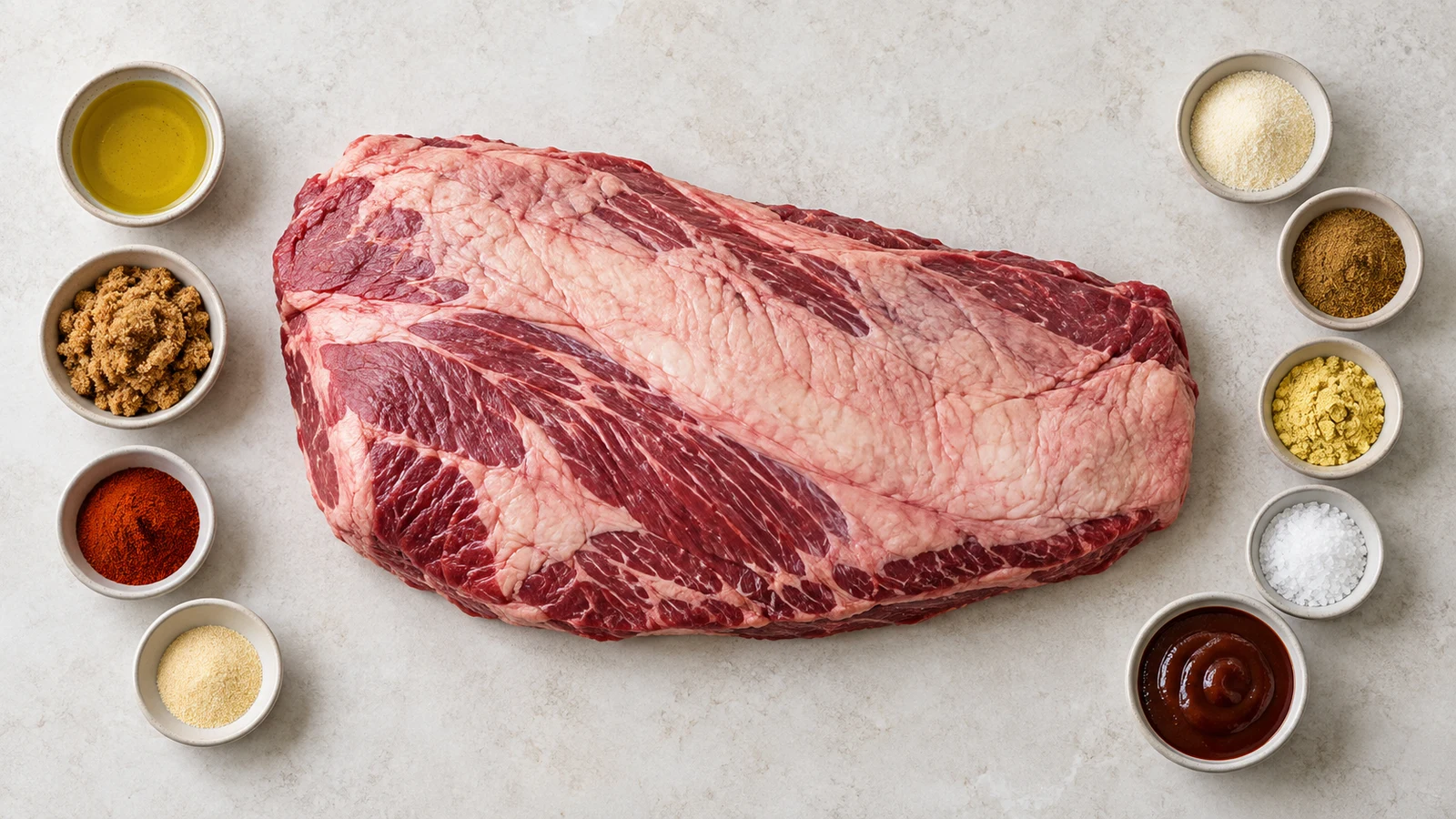
- 1 trimmed beef brisket, 5 pounds (2.27 kg)
- 1 tablespoon olive oil
- 2 tablespoons packed brown sugar
- 1 tablespoon smoked paprika
- 2 teaspoons garlic powder
- 2 teaspoons onion powder
- 1 teaspoon ground cumin
- 1 teaspoon mustard powder
- 2 teaspoons kosher salt
- 1/2 teaspoon ground black pepper
- 1 1/2 cups low-sodium beef broth, divided
- 3/4 cup BBQ sauce
- 2 tablespoons chopped parsley or sliced scallions, for garnish
Equipment and Preparation
Use a roasting pan or Dutch oven that holds the brisket without crowding, heavy-duty foil or a tight lid, a small bowl, tongs, and an instant-read thermometer. Before seasoning, note the direction of the long muscle fibers. Cut a small notch across the grain at one corner so you can find the correct slicing direction after the crust forms.
Place a flat cut fat-side up so the rendering fat runs over its surface. For a point cut with a heavy fat layer and little clearance beneath the lid, fat-side down can shield the meat from the hot pan. Either orientation works, but consistent trimming and a tight cover matter more.
Choose a pan that leaves enough room for broth around the meat but is not dramatically larger than the brisket. Excess empty space encourages liquid to evaporate faster. If using foil, overlap two sheets when necessary and crimp them firmly around every edge of the pan.
How to Make This Beef Brisket Recipe Oven Method
- Heat the oven: Preheat to 325°F (163°C). Pat the brisket dry and trim hard surface fat, leaving an even 1/4-inch layer.
- Season the meat: Combine the brown sugar, smoked paprika, garlic powder, onion powder, cumin, mustard powder, salt, and pepper. Rub the brisket with olive oil, then coat all sides with the seasoning.
- Prepare the pan: Put the brisket in the roasting pan, generally fat-side up. Pour 1 cup broth around it rather than over the crust. Cover the pan very tightly with foil or its lid.
- Roast gently: Cook for 3 1/2 hours without repeatedly opening the oven. Begin checking tenderness, then continue cooking for 30 to 90 minutes as needed.
- Test doneness: Insert a thermometer or thin skewer into the thickest part. The brisket is ready when it slides in with almost no resistance, similar to softened butter. This commonly occurs around 195–205°F (91–96°C), but tenderness is more important than a single temperature.
- Glaze: Mix the BBQ sauce with 1/2 cup broth. Uncover, brush the brisket generously, and roast for 15 to 20 minutes until the glaze is tacky and lightly caramelized.
- Rest: Transfer the brisket to a board, loosely cover it, and rest for 30 to 45 minutes. Reserve the pan juices.
- Slice: Find the notch made earlier and cut perpendicular to the visible fibers. Use a sharp knife to make 1/4-inch slices, turning the meat if the grain changes direction.
Estimated Cooking Time by Weight
- 3 pounds: about 3 to 3 1/2 hours covered
- 4 pounds: about 3 1/2 to 4 hours covered
- 5 pounds: about 4 to 5 hours covered
- 6 pounds: about 5 to 6 hours covered
- 7 pounds: about 5 1/2 to 7 hours covered
Shape, thickness, marbling, and oven accuracy affect these estimates, so time per pound is only a planning guide. Start checking early, but do not stop cooking merely because the thermometer reaches a familiar number. Probe-tender texture is the best doneness test.
The thin end may become tender before the thick center. Test several areas without repeatedly uncovering the pan. When the probe meets resistance in the center, reseal the pan and give the connective tissue more time to soften.
Expert Tips for Tender Oven Brisket
Season Every Surface
Patting the beef dry helps the oil and seasoning adhere evenly. Press the rub onto the top, bottom, and sides instead of sprinkling it loosely. If time permits, season the brisket in advance and keep it covered in the refrigerator, then take it out while the oven preheats.
Protect the Cooking Liquid
The broth creates a moist roasting environment and later becomes the base of the pan sauce. Pour it beside the meat so the seasoning remains in place. Check the liquid only when you begin testing tenderness, and add a small amount of broth if the pan is becoming dry.
Use Texture as the Final Test
A thermometer shows where the meat is in the cooking process, but it cannot measure tenderness directly. In a successful beef brisket recipe oven preparation, a probe should enter the thickest portion with very little resistance. Tough meat generally needs more covered cooking, not a higher oven temperature.
Rest Before Slicing
The 30-to-45-minute rest allows hot juices to settle and makes clean slices easier. Keep the brisket loosely covered rather than sealing it tightly enough to soften the glazed surface. Reserve all liquid released during resting and combine it with the pan juices.
Tips for the Best Results
- Keep the pan tightly sealed during the long roast so steam cannot escape.
- Do not raise the heat to hurry a tough brisket; collagen needs time to soften.
- If the brisket is tough, cover it again and cook for another 30 minutes before retesting.
- If it seems dry, slice it slightly thicker and spoon warm, defatted juices over it.
- If the pan sauce is greasy, skim the fat or chill it until the fat solidifies.
- If the sauce is thin, simmer it in a saucepan for 5 to 10 minutes after removing the meat.
- Plan for about 6 to 8 ounces of cooked brisket per adult.
- Use an oven thermometer if your oven tends to run hot or cool.
Variations and Substitutions
For a less sweet finish, omit the brown sugar and use broth instead of BBQ sauce, adding Worcestershire sauce if desired. For more heat, add 1/2 teaspoon cayenne or chipotle powder. Vegetable broth can replace beef broth, though its flavor will be lighter.
A beef brisket recipe slow cooker produces softer meat with less surface browning, while a smoked beef brisket recipe develops a pronounced smoke ring and bark. A beef brisket instant pot recipe cooks much faster but has a pot-roasted texture. Fresh brisket is plain raw beef; corned beef has been salt-cured and should not be substituted without changing the seasoning.
Savory Herb Variation
For a more savory profile, omit the brown sugar and BBQ sauce as described above and use broth for the finish. Rosemary or thyme can complement the beef, but keep the original salt quantity unchanged. This variation retains the covered roasting technique that makes the beef brisket recipe oven method dependable.
Spicier BBQ Variation
Add the optional 1/2 teaspoon cayenne or chipotle powder to the existing rub. Choose a BBQ sauce whose heat level suits your guests. The spicy seasoning changes the flavor, but it does not alter the roasting temperature, timing guide, tenderness test, or resting period.
Choosing Another Cooking Method
Use a beef brisket recipe slow cooker when hands-off countertop cooking is the priority. Choose a smoked beef brisket recipe when you want outdoor smoke flavor and a firm bark. Select a beef brisket instant pot recipe when speed matters most. Each technique produces a distinct surface and texture, so its directions should be followed rather than combined with this recipe.
Fresh Brisket Versus Corned Beef
Fresh brisket and corned beef come from the same general cut, but curing changes the salt level and flavor. That is why corned beef brisket in a crock pot recipes use different seasonings and cooking liquids. Do not apply this dry rub unchanged to cured meat.
Common Mistakes to Avoid
Do not slice immediately, cut with the grain, or rely only on cooking time. Avoid trimming away every bit of fat, and never let the pan cook completely dry. For safe handling, keep raw beef separate from ready-to-eat foods and follow the USDA’s recommended food safety steps.
Another common mistake is repeatedly lifting the lid or foil. Every opening releases heat and steam, which can extend cooking and dry the exposed surface. Wait until the first recommended tenderness check before opening the tightly sealed pan.
Troubleshooting Your Brisket
The Brisket Is Tough
Toughness usually means the connective tissue has not softened yet. Add a little broth if necessary, reseal the pan, and continue cooking for another 30 minutes before testing again. A tough brisket is not fixed by slicing it immediately or turning the oven much hotter.
The Meat Seems Dry
Lean flat cuts can appear dry if overcooked, sliced too thinly, or cut with the grain. Cut the meat across the grain into slightly thicker slices and serve it with warm, defatted pan juices. When reheating, keep the slices covered with some of those juices.
The Pan Is Nearly Dry
Add a small amount of broth around the brisket and reseal the pan securely. Confirm that the foil has no gaps and that the pan is not excessively large. Continue roasting at the stated temperature rather than increasing the heat.
The Sauce Is Too Greasy or Thin
For greasy sauce, skim the surface or chill the liquid until the fat becomes easy to lift away. For thin sauce, simmer it separately for 5 to 10 minutes after removing the meat. Taste before adding anything because reduction concentrates both flavor and salt.
The Glaze Is Not Caramelizing
Make sure the brisket is uncovered during the final 15 to 20 minutes and brush the glaze over the exposed surface. It should become tacky and lightly caramelized. Watch it near the end because sauces with sugar can darken quickly.
Serving Suggestions
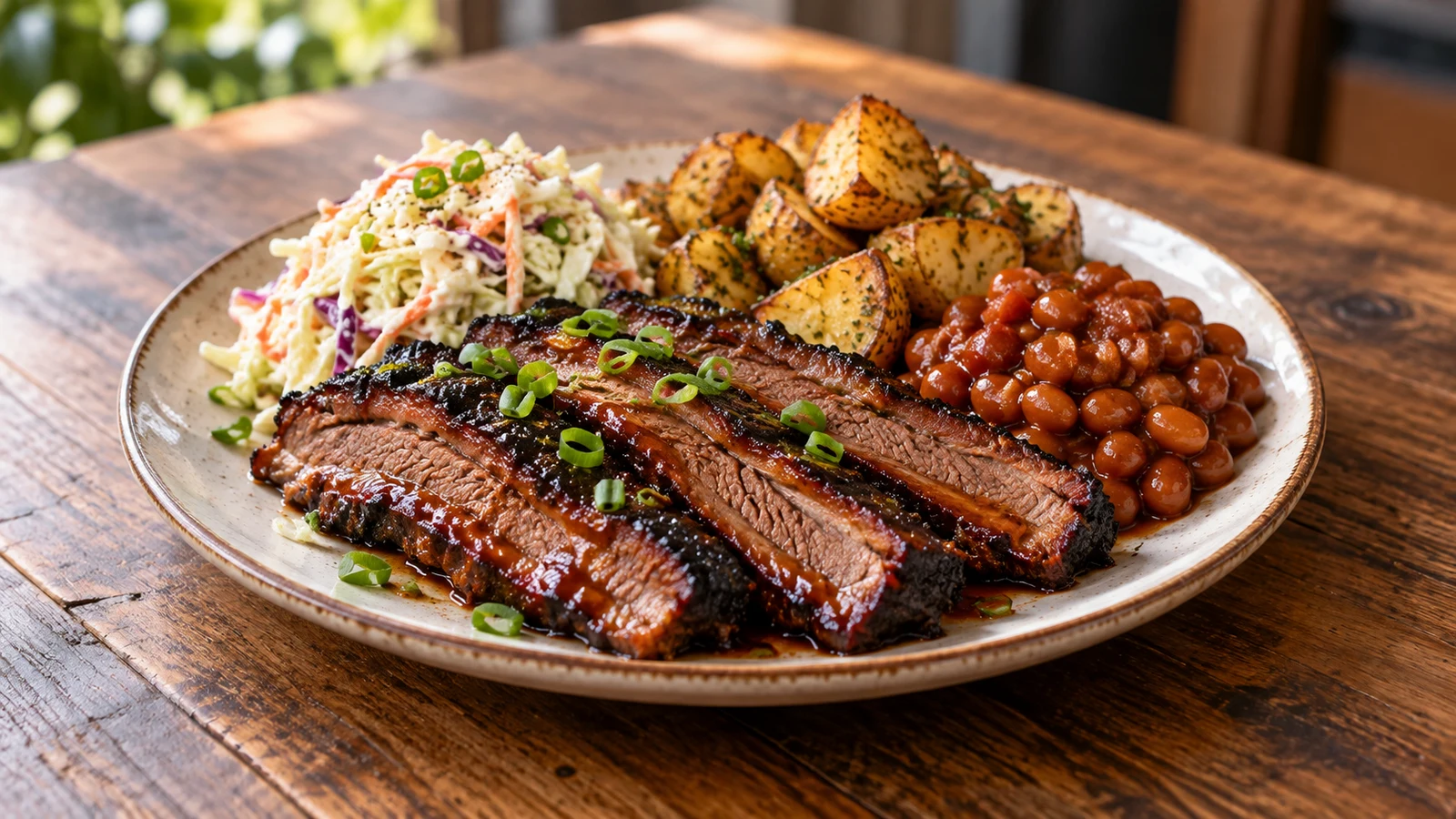
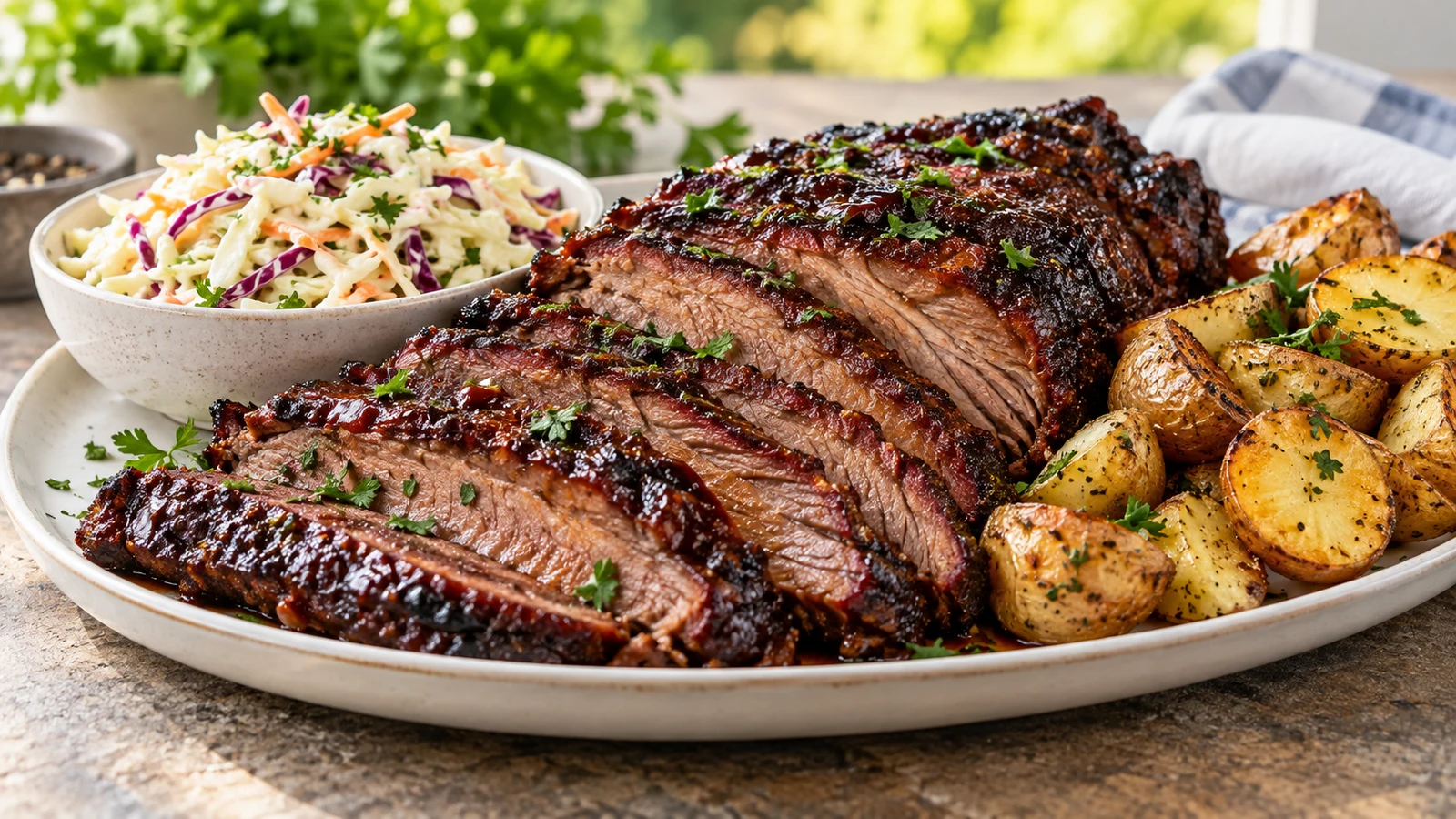
Serve the brisket with coleslaw, roasted potatoes, baked beans, or soft rolls. Garnish it with parsley or scallions and offer the warm pan sauce at the table. A typical serving supplies substantial protein, although calories, sodium, and fat vary with the cut, trimming, sauce, and portion size.
For a family-style meal, arrange overlapping slices on a warm platter and spoon over just enough defatted juice to keep them glossy. Place extra sauce nearby so guests can add it themselves without softening the entire glazed surface.
Leftovers from this beef brisket recipe oven preparation work well in sandwiches with crisp slaw, tacos with fresh toppings, breakfast hash, or split baked potatoes. Warm only the amount needed so the remaining brisket is not repeatedly cooled and reheated.
Make-Ahead, Storage, and Reheating
For make-ahead brisket, cool it in its juices, refrigerate it whole, and slice it cold the next day. Follow the FSIS guidance for cooking and handling holiday meats, including checking temperatures with a food thermometer.
Cooking a day ahead can make serving easier. Chilled brisket is firm and simple to slice evenly, while solidified fat can be removed from the juices. Arrange the cold slices in a covered baking dish with the defatted liquid before reheating.
Refrigerate brisket in a shallow airtight container with its juices for up to 4 days, or freeze it for up to 3 months. Keep perishable food out of the 40–140°F food-safety danger zone by chilling leftovers promptly.
For freezing, package meal-size portions with enough juice to coat the slices. Removing excess air helps protect texture and flavor. Label each package with the date so it can be used within the recommended 3-month period.
Thaw frozen brisket overnight in the refrigerator. Place slices and juices in a covered baking dish and heat at 300°F (149°C) for 20 to 30 minutes, until hot throughout. The covered, low-temperature method preserves more moisture than microwaving uncovered.
A beef brisket recipe slow cooker may hold moisture differently, and a beef brisket instant pot recipe usually creates more braising liquid. Regardless of the original method, storing sliced beef with some cooking juice helps protect it during reheating.
Frequently Asked Questions
Can I use corned beef for this recipe?
No. Corned beef is cured and much saltier than fresh brisket. Use this oven-baked corned beef guide for the cured cut.
How does oven brisket differ from crock-pot corned beef?
Oven brisket uses fresh beef, a dry seasoning rub, and a caramelized glaze. Corned beef is cured and generally cooked with liquid; these corned beef brisket in a crock pot recipes explain that slower, moist method.
Can I pressure-cook corned beef instead?
Yes, but it is a different preparation with distinct seasoning and timing. Follow this corned beef Instant Pot recipe rather than adapting the fresh-brisket instructions.
Why is my brisket still tough?
It is usually undercooked, even if it has reached a safe minimum temperature. Add a little broth, seal the pan tightly, and continue roasting in 30-minute increments until a probe enters with almost no resistance.
Can I prepare this beef brisket recipe oven method the day before?
Yes. Cook and cool the brisket in its juices, refrigerate it whole, and slice it while cold the next day. Reheat the slices with juices in a covered baking dish at 300°F (149°C) for 20 to 30 minutes, until hot throughout.
Is a beef brisket recipe slow cooker interchangeable with these directions?
No. A beef brisket recipe slow cooker uses a different appliance and creates less surface browning. Follow instructions designed for that appliance instead of transferring the oven timing directly. The finished meat will usually be softer and have less caramelized crust.
Does a smoked beef brisket recipe taste the same as oven brisket?
No. A smoked beef brisket recipe gains outdoor smoke flavor, bark, and often a smoke ring. Oven brisket develops its savory exterior from the spice rub and final glaze, while the covered pan creates a moist environment that is easier to manage indoors.
When should I choose a beef brisket instant pot recipe?
A beef brisket instant pot recipe is useful when cooking time is limited and a pot-roasted texture is welcome. Pressure cooking does not create the same glazed exterior as this oven method, so use directions written specifically for the pressure cooker.
Are corned beef brisket in a crock pot recipes suitable for fresh brisket?
Not without adjustments. Corned beef brisket in a crock pot recipes are written for salt-cured beef, which already has a distinctive seasoning profile. Fresh brisket needs its own salt, spice rub, and method, so the two preparations should not be treated as direct substitutes.
Should I sear the brisket first?
Searing is not required for this recipe. The rub and uncovered glazing stage produce a flavorful, caramelized surface without an extra skillet step. Keeping the listed method also avoids disturbing the seasoning before the long covered roast.
Should brisket cook fat-side up or down?
A flat cut generally cooks fat-side up so rendering fat moves across the surface. A point cut with heavy fat and limited space beneath the lid may be placed fat-side down to shield it from the pan. Trimming evenly and sealing the pan matter more than orientation.
How do I slice brisket across the grain?
Before seasoning, identify the direction of the long muscle fibers and cut a small notch across them at one corner. After resting, use that notch as a guide and slice perpendicular to the fibers. Turn the meat if the grain changes direction.
Recipe Card
Yield: 8 to 10 servings. Prep time: 30 minutes. Cook time: 4 to 5 hours. Rest time: 30 to 45 minutes. Oven: 325°F (163°C).
Method: Season a trimmed 5-pound brisket, place it over 1 cup beef broth, and roast tightly covered until probe-tender. Brush with 3/4 cup BBQ sauce mixed with 1/2 cup broth, uncover for 15 to 20 minutes, rest, and slice across the grain. Serve with reserved juices and garnish.
Final Notes
With patient roasting, a tight seal, and a proper rest, this beef brisket recipe oven method produces tender meat that remains sliceable. Let texture determine when it is finished, then cut across the grain and serve it with plenty of warm pan juices.
Whether you later explore a beef brisket recipe slow cooker, smoked beef brisket recipe, or beef brisket instant pot recipe, remember that each method manages heat and moisture differently. For classic indoor roasting with a glazed exterior and useful pan sauce, this oven technique is a practical place to begin.
Reviews
Reader reviews are managed separately (outside this build).