Beef
Boneless Beef Chuck Roast Explained
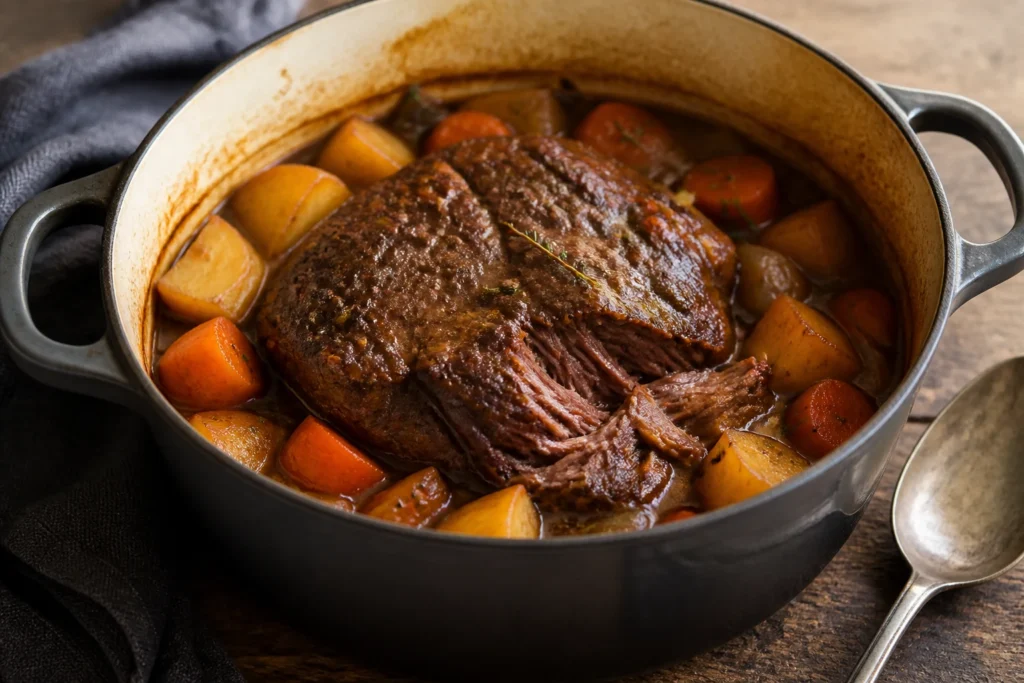
boneless beef chuck roast turns an affordable chuck roast into a deeply flavored meal with a tender texture and plenty of useful cooking juices. A low oven and a snug Dutch oven transform this economical, richly marbled cut into a fork-tender roast surrounded by vegetables and savory gravy.
This guide explains the details that make boneless beef chuck roast reliable: how to select a well-marbled roast, build a browned flavor base, use the right amount of liquid, judge tenderness, and rest or shred the beef without losing moisture.
You will find exact ingredients, step-by-step directions, a timing chart, serving ideas, variations, storage advice, troubleshooting, and six common questions. Follow the method once and boneless beef chuck roast can become a dependable part of your dinner rotation.
Table of Contents
Key Takeaways for boneless beef chuck roast
- Choose a well-marbled chuck roast with an even shape.
- Brown the beef for deeper flavor before the long cook.
- Use moist, gentle heat until a fork twists easily.
- Judge chuck roast by tenderness, not time alone.
- Rest the beef and save its juices for serving and storage.
Why This boneless beef chuck roast Recipe Works
Chuck comes from the hardworking shoulder, so it contains collagen as well as rich beef flavor. Long cooking at moderate heat changes that collagen into gelatin. The result is the soft, succulent texture people expect from boneless beef chuck roast, while the marbling protects the meat from drying out.
Browning creates a roasted crust, and the onion, garlic, broth, tomato paste, herbs, and Worcestershire collect those flavors in the cooking liquid. The liquid should come partway up the meat rather than cover it completely. This lets boneless beef chuck roast braise instead of boil.
The recipe is also practical. Most of the cooking is unattended, leftovers reheat well, and the beef works in sandwiches, tacos, bowls, noodles, or a traditional meat-and-potatoes dinner. That flexibility makes boneless beef chuck roast especially useful for meal planning.
boneless beef chuck roast at a Glance
| Detail | Value |
|---|---|
| Prep time | 25 minutes |
| Cook time | 3½ to 4½ hours |
| Method | Dutch oven braise |
| Cooking setting | 300°F (150°C) |
| Yield | 8 servings |
Ingredients for boneless beef chuck roast
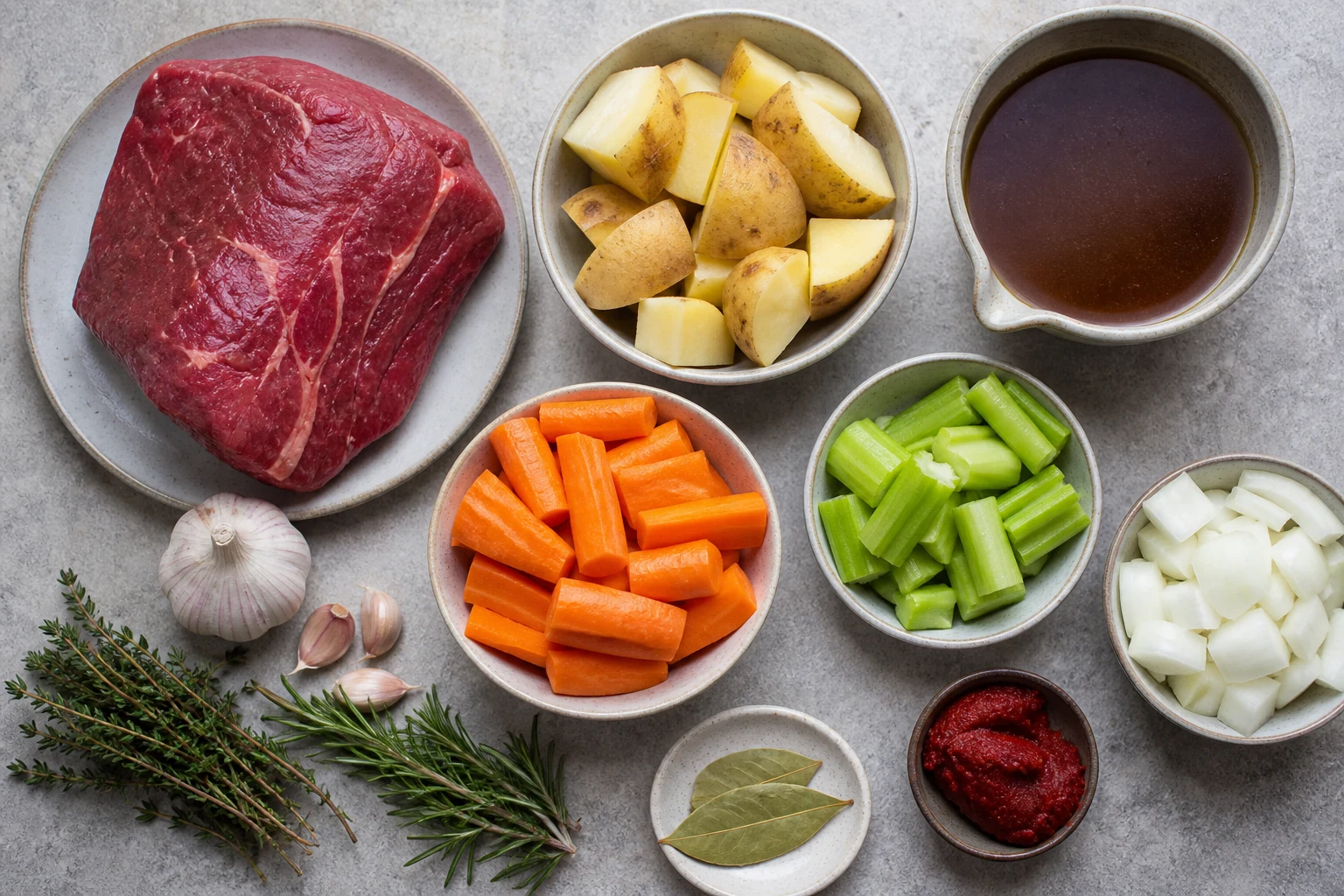
The ingredient list is intentionally straightforward. Use low-sodium broth so you can adjust the finished sauce, and choose a roast with visible white marbling for the best boneless beef chuck roast.
| Ingredient | Amount | Why it matters |
|---|---|---|
| Boneless beef chuck roast | 4 pounds | Look for fine white marbling throughout. |
| Kosher salt | 1½ teaspoons | Season on all sides. |
| Black pepper | 1 teaspoon | Adds balanced heat. |
| Olive oil | 1 tablespoon | Helps the crust form. |
| Yellow onion, chopped | 1 large | Sweetens the braising base. |
| Celery, cut in chunks | 3 stalks | Adds aromatic depth. |
| Carrots, cut in chunks | 4 | Become tender beside the beef. |
| Garlic, minced | 4 cloves | Builds savory flavor. |
| Tomato paste | 2 tablespoons | Adds color and umami. |
| Low-sodium beef broth | 2½ cups | Provides moist heat. |
| Baby potatoes | 1 pound | Add during the second half. |
| Thyme and bay leaf | 4 sprigs and 1 leaf | Classic braising herbs. |
How to Choose a Chuck Roast
Look for fine marbling distributed through the meat rather than one thick exterior fat cap. An evenly shaped roast cooks more consistently. Boneless chuck is convenient, while a bone-in roast can add flavor but may require a larger pot. Avoid very lean packages for boneless beef chuck roast; some fat is useful during a long cook.
Seasoning Without Oversalting
Broth, Worcestershire, and packaged sauces can contain significant sodium. Start with low-sodium broth and a measured amount of kosher salt. Taste the reduced liquid only after cooking, because its saltiness increases as water evaporates. This keeps boneless beef chuck roast rich but balanced.
How to Make boneless beef chuck roast Step by Step
Set out all the ingredients and dry the beef thoroughly. A dry surface browns instead of steaming, giving the finished boneless beef chuck roast a stronger savory foundation.
- Heat the oven to 300°F. Dry and season the roast while a large Dutch oven heats on the stove.
- Sear the beef in oil until deeply browned on every side, then move it to a plate.
- Cook onion, celery, and carrots for 6 minutes. Add garlic and tomato paste, then pour in broth and scrape up the browned bits.
- Return the beef, add thyme and bay, cover, and braise for two hours. Add the potatoes and continue until the roast is fork-tender.
- Rest the meat, discard the herbs, skim excess fat, and serve the roast in pieces with vegetables and reduced gravy.
How to Know the Beef Is Tender
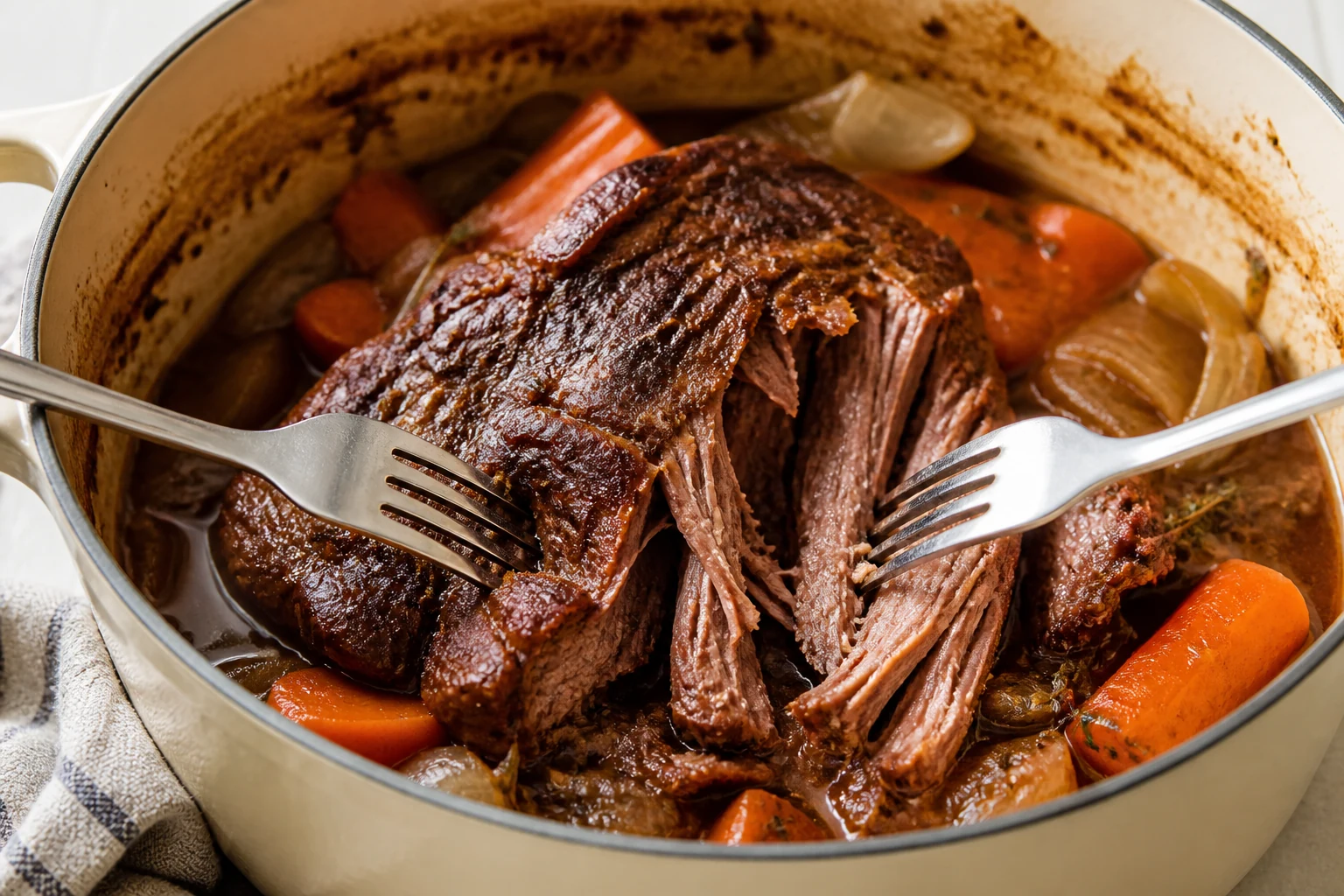
Food safety and tenderness are different checkpoints. Whole beef is safe at a lower temperature than the point where chuck becomes pull-apart tender. For this style of boneless beef chuck roast, a fork should slide in easily and twist with little resistance. Many chuck roasts feel tender near 195 to 205°F, but texture is the final test.
Safe Handling
Thaw the roast in the refrigerator, keep raw beef separate from ready-to-eat food, and refrigerate cooked portions promptly. For current guidance, see the USDA beef safety recommendations.
boneless beef chuck roast Timing Guide
Time is a window because roast shape, weight, marbling, appliance temperature, and starting temperature all vary. Begin testing at the early end, then continue until the chuck is truly tender.
| Method or size | Approximate time | Best practice |
|---|---|---|
| 3-pound roast at 300°F | 3–3½ hours | Check after three hours. |
| 4-pound roast at 300°F | 3½–4½ hours | The standard range for this recipe. |
| 5-pound roast at 300°F | 4½–5½ hours | Allow extra liquid and space. |
| Vegetables | Final 1½–2 hours | Prevents potatoes from becoming mushy. |
Why Chuck Roast Can Take Longer
A thick compact roast usually takes longer than a flat one of the same weight. Opening a slow cooker or oven repeatedly releases heat, and an overfilled vessel cooks less evenly. If boneless beef chuck roast is safe but tough, it normally needs more covered cooking, not more aggressive heat.
Best Tips for Tender boneless beef chuck roast
- Dry the meat before seasoning and searing.
- Brown in batches if the roast is cut into pieces.
- Deglaze the pan so the flavorful browned bits join the sauce.
- Keep the lid closed during the long cook.
- Turn the roast once if part of it sits above the liquid.
- Rest before slicing or shredding.
- Store leftovers with cooking liquid to protect moisture.
These details are small, but together they make boneless beef chuck roast taste full and remain juicy. The most important habit is patience: chuck becomes tender only after its connective tissue has had enough time to soften.
Easy boneless beef chuck roast Variations
- Add pearl onions and mushrooms for a bistro-style braise.
- Use parsnips in place of half the carrots.
- Stir horseradish into the finished gravy.
- Season with smoked paprika and cumin for a warmer profile.
Keep the basic ratio of meat to liquid stable when changing flavors. Add concentrated ingredients gradually and taste the sauce after reducing it. That preserves the texture of boneless beef chuck roast while allowing the recipe to fit different meals.
What to Serve with boneless beef chuck roast
- The braised carrots and potatoes
- Creamy polenta
- Buttered noodles
- Crusty bread for the gravy
Build a Balanced Plate
Pair rich beef with a starch that catches the juices and a vegetable or acidic garnish that refreshes the palate. Mashed potatoes and green beans feel traditional; tortillas, lime, and radishes make the same boneless beef chuck roast feel bright and casual.
boneless beef chuck roast Troubleshooting Guide
Most chuck roast problems have a simple cause. Use this table before changing the entire recipe.
| Problem | Likely cause | Fix |
|---|---|---|
| Roast is chewy | Collagen has not fully softened. | Continue braising in 30-minute intervals. |
| Vegetables are mushy | They were added at the beginning. | Add dense vegetables halfway through next time. |
| Braising liquid is bitter | The fond or tomato paste burned. | Sear over medium-high heat and stir the paste constantly. |
| Gravy is greasy | The chuck released abundant fat. | Skim the surface before reducing. |
If the Sauce Is Too Thin
Move the beef to a warm plate and skim excess fat. Simmer the liquid uncovered until it tastes concentrated. For a gravy texture, whisk one tablespoon cornstarch with one tablespoon cold water and add it gradually. Return the boneless beef chuck roast only after the sauce is balanced.
If the Beef Is Still Tough
Tough chuck is usually undercooked. Add a small amount of warm broth if the pot looks dry, cover tightly, and continue in 30-minute intervals. Do not raise the heat sharply, because the exterior of boneless beef chuck roast can dry before the collagen softens.
How to Store and Reheat boneless beef chuck roast
Cool leftovers promptly and refrigerate boneless beef chuck roast in shallow covered containers with some cooking liquid. Use refrigerated beef within four days. For longer storage, freeze meal-size portions with juice for up to three months.
Refrigerator Reheating
Warm the beef gently in a covered skillet with a splash of broth, or cover and reheat in a 325°F oven. Smaller portions can be microwaved at reduced power in short intervals. Gentle heat prevents the strands or slices from becoming dry.
Freezer and Make-Ahead Notes
Thaw frozen portions overnight in the refrigerator. If making boneless beef chuck roast ahead, chill the beef in its juices. The fat will firm on the surface and can be removed easily before reheating, leaving a cleaner, richer sauce.
Using the Leftovers
- Pile beef onto toasted rolls with pickles.
- Fold it into tortillas with salsa and avocado.
- Serve it over rice with roasted vegetables.
- Add it to soup, hash, noodles, or baked potatoes.
Frequently Asked Questions About boneless beef chuck roast
What is a boneless beef chuck roast?
It is a shoulder cut with rich beef flavor, marbling, and connective tissue that benefits from slow, moist cooking.
Do I need to tie the roast?
Only if it is uneven or has loose sections; tying helps it cook and slice more evenly.
What temperature makes chuck tender?
The meat becomes tender well beyond food-safe temperature, generally near 195–205°F, when collagen has softened.
Can I cook it without a Dutch oven?
Use a deep covered roasting pan or another heavy oven-safe pot with a snug lid.
When should I add potatoes?
Add them during the final 90 minutes to two hours so they hold their shape.
Can leftovers be frozen?
Yes. Freeze portions with gravy for up to three months and thaw overnight in the refrigerator.
More Chuck Roast Recipes to Try
These related chuck roast guides use the same affordable cut in different ways. The anchor text and destinations match the connected recipe plan:
Use these links to compare methods and meal ideas. Start with boneless beef chuck roast, then choose another chuck roast approach when you want a different texture, cooking schedule, or serving style.
Final Thoughts on boneless beef chuck roast
boneless beef chuck roast succeeds when the roast is well marbled, properly browned, covered with a modest amount of flavorful liquid, and cooked until a fork meets almost no resistance. The clock helps with planning, but tenderness tells you when it is done.
Once you have made boneless beef chuck roast successfully, the same method becomes a foundation for sandwiches, tacos, bowls, traditional roast dinners, and freezer meals. Save the cooking juices, reheat gently, and enjoy a practical beef recipe that becomes even more useful the next day.
There are no reviews yet. Be the first one to write one.
Reviews
Reader reviews are managed separately (outside this build).