Beef
Perfect boneless beef ribs recipe: Easy, Tender Oven BBQ
Try this boneless beef ribs recipe: season, cover, and slow-bake in the oven, then broil with BBQ sauce for a tender, caramelized glaze every time.
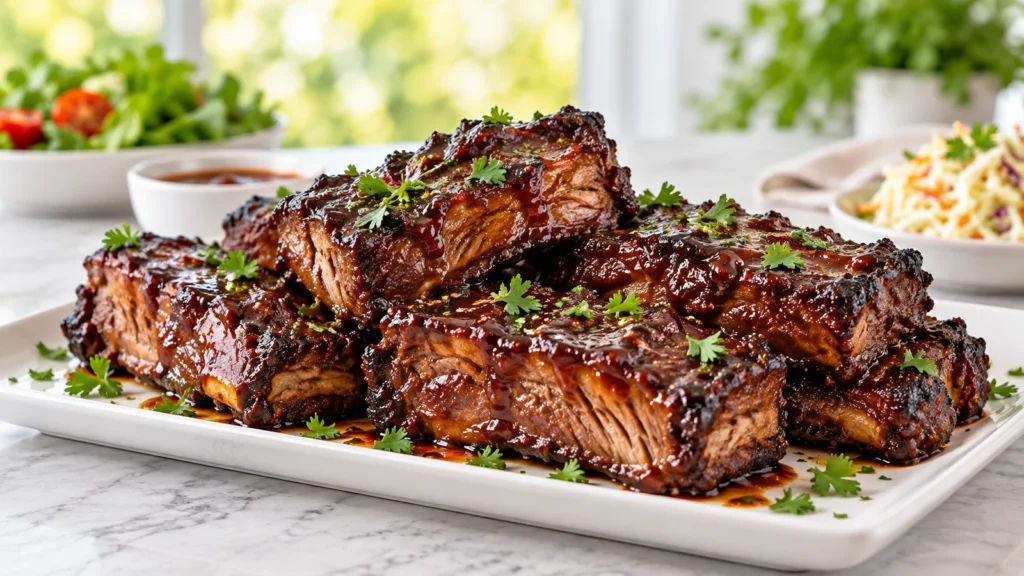
This boneless beef ribs recipe bakes at 300°F (150°C) for about 2 1/2 to 3 1/2 hours, depending on the cut and thickness. The ribs cook covered with a little liquid until fork-tender, then receive BBQ sauce and a brief broil for a caramelized glaze.
The gentle oven heat gives collagen-rich beef time to soften without drying out. Most of the cooking is hands-off, making this beef ribs recipe a practical choice for a relaxed dinner with rich barbecue flavor.
If you are comparing a beef short ribs recipe with a boneless beef short ribs recipe, remember that thickness and marbling matter more than the name on the package. This method includes clear tenderness cues so you can adjust the baking time confidently.
Table of Contents
Choosing the Right Cut
Boneless country-style beef ribs are usually strips cut from the chuck or shoulder. They are meaty, well marbled, and particularly suited to low-and-slow cooking.
Boneless short ribs come from the chuck or plate and often have more distinct marbling and connective tissue. Either cut works, but lean, thin strips cook faster than thick boneless short ribs. For more cut-specific guidance, see this boneless beef short ribs recipe.
Look for pieces with fine streaks of fat running through the meat rather than a single heavy cap on the outside. Marbling melts gradually and helps the ribs stay succulent. Choose similarly sized pieces whenever possible so they reach tenderness at roughly the same time.
Avoid packages containing several very thin strips mixed with thick blocks. If that is your only option, check the thinner pieces early and remove them when tender. The thick pieces can remain covered in the oven until a fork enters easily.
Why You’ll Love This Recipe
- Covered baking produces tender, juicy meat with minimal attention.
- A quick broil creates sticky, caramelized edges.
- Cooking times are easy to adjust for different rib thicknesses.
- The seasonings and sauce can be adapted to suit your pantry.
- The ribs can be cooked ahead and reheated without losing flavor.
This boneless beef ribs recipe is also convenient for entertaining because the slow bake finishes before the last-minute broil. You can prepare side dishes while the beef cooks, then glaze it shortly before everyone sits down.
Ingredients
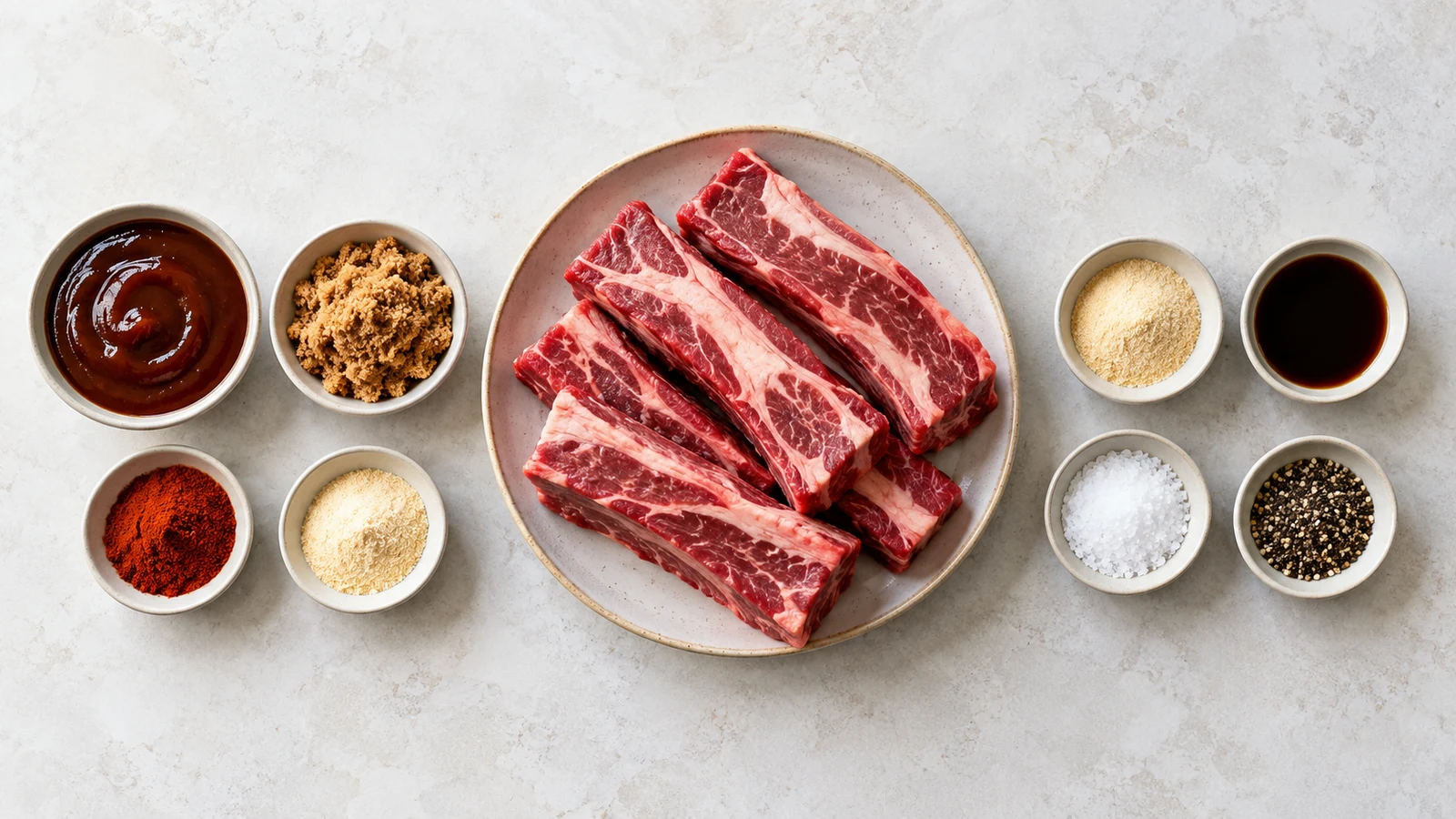
- 3 pounds (1.36 kg) boneless country-style beef ribs or boneless short ribs, ideally 1 1/2 to 2 inches thick
- 1 tablespoon olive oil
- 2 teaspoons kosher salt
- 1 teaspoon smoked paprika
- 1 teaspoon garlic powder
- 1 teaspoon onion powder
- 1/2 teaspoon ground black pepper
- 1/4 teaspoon cayenne pepper, optional
- 1/2 cup (120 ml) low-sodium beef broth
- 1 teaspoon Worcestershire sauce
- 1 cup (240 ml) BBQ sauce, divided
Understanding the Ingredients
Olive oil helps the dry seasonings adhere and encourages browning during the final broil. Smoked paprika supplies barbecue-style aroma without making the meat spicy, while garlic powder and onion powder distribute more evenly than fresh aromatics.
Beef broth creates the moist environment needed for slow cooking. Worcestershire sauce adds savory depth, and BBQ sauce supplies the final sweet, tangy glaze. Using low-sodium broth gives you better control because the seasoning blend and sauce already contain salt.
The optional cayenne adds background warmth rather than intense heat. You can leave it out without changing the cooking method. For the best glaze, choose a BBQ sauce that you enjoy on its own because its flavor becomes more concentrated under the broiler.
Equipment
- 9-by-13-inch baking dish or covered Dutch oven
- Aluminum foil or a tight-fitting lid
- Instant-read thermometer
- Tongs and a pastry brush
- Rimmed baking sheet, optional for broiling
A Dutch oven retains moisture especially well, while a foil-covered baking dish works just as reliably. For additional equipment and preparation options, consult this guide to cooking boneless beef ribs.
Choose a dish that holds the meat in a snug single layer. A very large pan allows the broth to evaporate faster, while an overcrowded pan can make the ribs cook unevenly. If the foil is narrow, overlap two sheets and crimp them firmly around the rim.
How to Make This Boneless Beef Ribs Recipe
- Heat the oven: Preheat the oven to 300°F (150°C). Pat the ribs dry so the seasoning adheres evenly.
- Season the meat: Rub the ribs with olive oil. Combine the salt, paprika, garlic powder, onion powder, black pepper, and optional cayenne, then coat every side.
- Arrange the ribs: Place them in a single snug layer in the baking dish. Stir the Worcestershire sauce into the broth and pour it around, rather than over, the meat so the seasoning remains in place.
- Cover and bake: Seal the dish tightly with foil or its lid. Bake until a fork slides into the thickest rib with little resistance, using the timing guide below.
- Check and rest: Remove the covered dish from the oven and let the ribs rest for 10 minutes. Transfer them to a foil-lined baking sheet or drain excess liquid from the baking dish.
- Glaze: Brush the ribs with 3/4 cup BBQ sauce. Broil 4 to 6 inches from the heating element for 3 to 5 minutes, watching continuously. Turn, brush with the remaining sauce, and broil for another 2 to 4 minutes.
- Finish: Rest for 5 to 10 minutes before slicing or serving. This allows the juices to settle and the glaze to set.
The covered stage is the foundation of this beef short ribs oven baked recipe. Resist opening the dish repeatedly, because every check releases steam and lowers the temperature. Begin testing only when the shortest suggested cooking time has nearly elapsed.
Cooking Time and Tenderness Cues
- About 1 inch thick: Begin checking after 2 hours; most pieces need 2 to 2 1/2 hours.
- About 1 1/2 inches thick: Allow approximately 2 1/2 to 3 hours.
- About 2 inches thick: Allow approximately 3 to 3 1/2 hours.
Time is only a guide. Beef steaks and roasts have a safe minimum temperature plus a resting requirement, as described by the federal safe minimum temperature chart, but safety and tenderness are separate considerations. Collagen-rich ribs commonly become fork-tender around 195°F to 205°F (91°C to 96°C).
Insert the thermometer into the thickest part without touching the pan. The best final test is texture: a fork should enter and twist easily, but the meat should not be so soft that it turns stringy.
When adapting any beef short ribs recipe, check several pieces instead of relying on one temperature reading. Natural variations in fat and connective tissue mean one rib may soften before another. Return firmer pieces to the covered pan and continue cooking them.
Expert Tips for a Dependable Beef Ribs Recipe
- Keep the pan tightly covered: Trapped steam and a small amount of broth protect the meat during the long bake.
- Do not drown the ribs: The liquid should cover only the bottom of the dish, not submerge the beef.
- Add sauce near the end: Many BBQ sauces contain sugar and can scorch during a long bake.
- Broil attentively: The glaze can change from caramelized to burned in seconds.
- Cook until tender: If the ribs are tough, cover them again and bake for 20 to 30 minutes before retesting.
- Rest twice: A short rest before glazing makes the meat easier to handle, and the final rest preserves moisture.
Searing is optional. Browning the seasoned ribs in a hot skillet for 2 minutes per side adds roasted flavor, but the broiled glaze already provides good color. The general handling recommendations in the USDA beef safety guidance are useful when preparing raw beef.
Season Evenly
Patting the beef dry is important because surface moisture dilutes the oil and seasonings. Mix the spices before applying them so salt and cayenne do not collect on one piece. Season the narrow ends lightly because they have more surface area relative to their weight.
Protect the Cooking Liquid
Pour broth down the side of the dish instead of washing seasoning from the meat. Check once during cooking only if your pan or foil does not seal well. If the bottom looks dry, add a small splash of hot broth and reseal immediately.
Glaze in Thin Layers
Two light coats cling better than one heavy coat. Let the first layer bubble and darken slightly before turning the ribs. This technique gives the boneless beef ribs recipe glossy edges without leaving a thick, uncooked layer of sauce.
Variations and Substitutions
Replace classic BBQ sauce with a mustard barbecue sauce, peppery tomato sauce, Korean-style gochujang glaze, or balsamic-onion glaze. For a lower-sugar version, choose an unsweetened sauce and add sweetness to taste. For gluten-free ribs, verify that the BBQ sauce, broth, spices, and Worcestershire sauce are certified gluten-free.
For a grill finish, cook the ribs covered in the oven, then glaze and grill over medium-high heat for 2 to 3 minutes per side. In a smoker, cook at 250°F (120°C) until tender, wrapping with a small splash of broth if the surface begins drying.
For a slow cooker variation, omit the broth unless the cooker runs dry, then cook on low for 7 to 8 hours or on high for 4 to 5 hours. Glaze and broil afterward. If you prefer bone-in meat, this beef short ribs oven baked recipe provides a closely related method.
Smoky and Spicy Variation
Keep the ingredient quantities unchanged and use the optional cayenne. Choose a smoky BBQ sauce for the glaze. This variation makes the boneless beef short ribs recipe taste bolder while preserving the same cooking time and tender texture.
Tangy Mustard Variation
A mustard barbecue sauce balances the richness of well-marbled beef with extra acidity. It is particularly effective when serving the ribs with creamy potatoes or macaroni and cheese. Apply it during the same final broiling stage.
Grill-Finished Variation
The oven provides controlled tenderness, while a hot grill adds char. Transfer the cooked ribs carefully because they will be soft. This hybrid approach gives a beef short ribs recipe outdoor flavor without requiring hours of temperature management on the grill.
Make-Ahead Plan
This boneless beef ribs recipe can be prepared through the covered baking stage up to two days before serving. Let the ribs cool briefly, transfer them with some pan liquid to a shallow covered container, and refrigerate promptly.
When ready to serve, arrange the ribs in a covered baking dish with 1 to 2 tablespoons of broth. Reheat at 300°F (150°C) for 20 to 30 minutes, or until hot throughout. Brush with BBQ sauce and broil according to the original directions.
You can also mix the dry seasonings several days in advance and keep them in an airtight container. Do not apply the seasoning or open the raw meat package until you are ready to prepare the ribs.
Troubleshooting Common Problems
- Tough ribs: They are usually undercooked. Add a splash of broth, cover tightly, and continue baking in 20- to 30-minute intervals.
- Dry ribs: The meat may have been too lean, cooked uncovered, or left beyond tenderness. Serve it sliced with warm sauce and some defatted pan juices.
- Watery ribs: Remove the meat and simmer the pan liquid separately until reduced. Drain the dish before glazing so the sauce can cling.
- Burned sauce: Apply it only after the ribs are tender and keep the broiling time brief.
Why Are the Ribs Still Tough?
Reaching a safe temperature does not guarantee tenderness. A tough result usually means the connective tissue needs more time to soften. In this beef short ribs oven baked recipe, the solution is to add a little broth, reseal the pan, and continue at 300°F (150°C).
Why Did the Seasoning Slide Off?
The beef may have been wet before oil and spices were applied, or the broth may have been poured directly over it. Pat the surface thoroughly dry and add liquid around the ribs. Handle them gently with tongs when turning them for glazing.
Why Is the Glaze Not Caramelizing?
Excess pan liquid prevents the sauce from gripping the meat. Move the ribs to a dry, foil-lined baking sheet before glazing. Position them 4 to 6 inches below a fully heated broiler and watch them continuously.
Why Are Some Pieces Ready Earlier?
Uneven thickness, marbling, and position in the pan can change cooking speed. Remove tender pieces and keep them covered while thicker ribs continue baking. A successful beef ribs recipe follows texture rather than forcing every piece to cook for exactly the same duration.
Serving Ideas
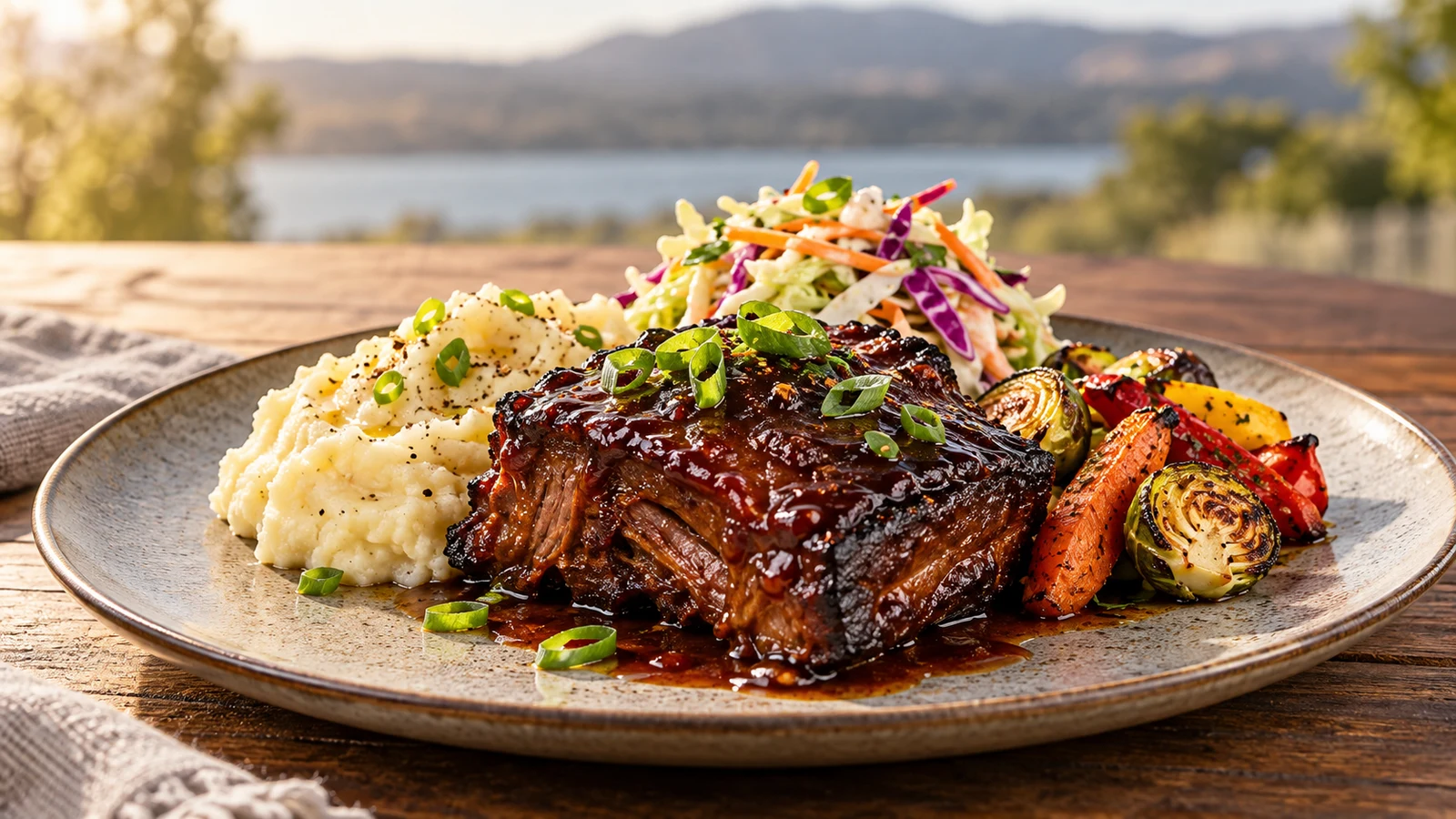
Serve these oven-baked ribs with mashed potatoes, macaroni and cheese, cornbread, coleslaw, baked beans, or roasted vegetables. A crisp cabbage salad or green beans provides a fresh contrast to the rich meat and sweet glaze.
For a classic barbecue plate, pair the boneless beef ribs recipe with coleslaw, baked beans, and cornbread. Add pickles or a vinegar-dressed salad to cut through the richness.
For a comforting dinner, spoon a little defatted pan juice around the ribs and serve them over mashed potatoes. Roasted carrots, green beans, or broccoli add color and keep the meal balanced.
Leftover meat can be sliced or gently shredded for sandwiches, baked potatoes, rice bowls, or tacos. Warm it with a small amount of reserved sauce so it remains moist, but avoid stirring aggressively because tender beef can break apart.
How to Store and Reheat
Cool leftovers promptly and refrigerate them in a shallow airtight container. The federal cold-storage chart gives a three- to four-day refrigerator window for cooked meat leftovers.
For longer storage, freeze the ribs with a little sauce or pan juice for up to three months. Thaw overnight in the refrigerator. Reheat covered at 300°F (150°C) with 1 to 2 tablespoons of broth for 20 to 30 minutes, or until hot throughout; uncover and glaze for the final few minutes.
To make them ahead, complete the covered baking stage, cool, and refrigerate for up to two days. Reheat gently, then sauce and broil just before serving.
Store large quantities in several shallow containers rather than one deep container so the beef cools more efficiently. Keep extra sauce separately if possible, since freshly applied sauce creates a better glaze when leftovers are reheated.
For individual portions, use a covered oven-safe dish and add a spoonful of broth or pan juice. Gentle reheating preserves the texture of this boneless beef short ribs recipe better than prolonged high heat.
Frequently Asked Questions
Should boneless beef ribs be covered while baking?
Yes. Covering the pan retains moisture while connective tissue softens. Uncover the ribs only when they are tender and ready for glazing.
Can I use boneless short ribs instead of country-style ribs?
Yes. A beef short ribs recipe may use chuck or plate meat with abundant marbling, while country-style ribs are generally cut from the chuck. Adjust the time according to thickness and rely on fork tenderness.
Can I grill the ribs from start to finish?
Yes, but use indirect heat around 275°F to 300°F (135°C to 150°C), keep the lid closed, and glaze only near the end. Thick ribs may require several hours.
Why do similar recipes have different cooking times?
The cut, thickness, marbling, oven accuracy, and pan material all affect timing. That is why a beef ribs recipe should pair an approximate time with temperature and tenderness cues. The same principle applies when adapting a boneless beef short ribs recipe.
Can I make this boneless beef ribs recipe without searing?
Yes. Searing is optional because the broiler caramelizes the sauce and browns the exterior at the end. Skipping the skillet also reduces preparation time and cleanup without changing the covered baking process.
What is the best temperature for a beef short ribs oven baked recipe?
Low heat at 300°F (150°C) gives connective tissue time to soften while the covered pan limits moisture loss. Higher temperatures can shorten the process, but the meat may cook less evenly and the liquid may evaporate faster.
How do I know when a boneless beef short ribs recipe is done?
Use temperature and texture together. The thickest section commonly reaches 195°F to 205°F (91°C to 96°C), and a fork should slide in and twist with little resistance. If the meat is still firm, cover it and continue baking.
Can I double this beef ribs recipe?
Yes, provided the ribs fit in snug single layers. Use two baking dishes rather than stacking the meat. Rotate the dishes if your oven heats unevenly and expect that opening the oven may add a little time.
Can I prepare the ribs the night before?
Yes. Complete the covered cooking stage, cool the ribs promptly, and refrigerate them with a little pan liquid. Reheat them covered the next day, then add sauce and broil immediately before serving.
Does this beef short ribs recipe need extra liquid during baking?
The listed 1/2 cup of broth is sufficient when the pan is tightly sealed. If steam escapes or the pan is unusually wide, check near the end and add a small splash of hot broth only if the bottom is dry.
Can I freeze the finished boneless beef ribs recipe?
Yes. Freeze cooled portions with a little sauce or pan juice for up to three months. Thaw them overnight in the refrigerator, then reheat gently while covered so the meat does not dry out.
Recipe Card
- Prep time: 15 minutes
- Cook time: 2 hours 40 minutes to 3 hours 40 minutes
- Resting time: 15 to 20 minutes
- Yield: 6 servings
- Oven temperature: 300°F (150°C), followed by broiling
- Nutrition: Approximately 520 calories, 42 g protein, 29 g fat, 22 g carbohydrate, and 850 mg sodium per serving; values vary by cut and sauce.
- Notes: Begin checking early if the ribs are thinner than 1 1/2 inches. For the most dependable result, keep the dish covered until the meat reaches roughly 195°F to 205°F (91°C to 96°C) and feels fork-tender.
Final Tips for Tender Oven-Baked Ribs
With patient, low-temperature baking and a last-minute glaze, this boneless beef ribs recipe produces deeply seasoned beef that is tender inside and caramelized around the edges. Use the thickness guide and fork test, and the timing becomes easy to adapt to the ribs available at your store.
The essential lessons apply to any beef short ribs recipe: choose well-marbled meat, seal the pan tightly, and wait for tenderness rather than relying only on the clock. Add the sauce near the end so its flavor remains bright and its sugars do not burn.
Whether you begin with country-style ribs or follow the method as a boneless beef short ribs recipe, the result should be moist, richly flavored, and easy to portion. A brief rest after broiling completes this dependable beef short ribs oven baked recipe.
Reviews
Reader reviews are managed separately (outside this build).