Cake
Joyful chocolate cake pop recipe: Foolproof Party Magic
Master this chocolate cake pop recipe with easy steps, the ideal frosting ratio, smooth dipping, decorating, storage tips, and fixes. Try it today!
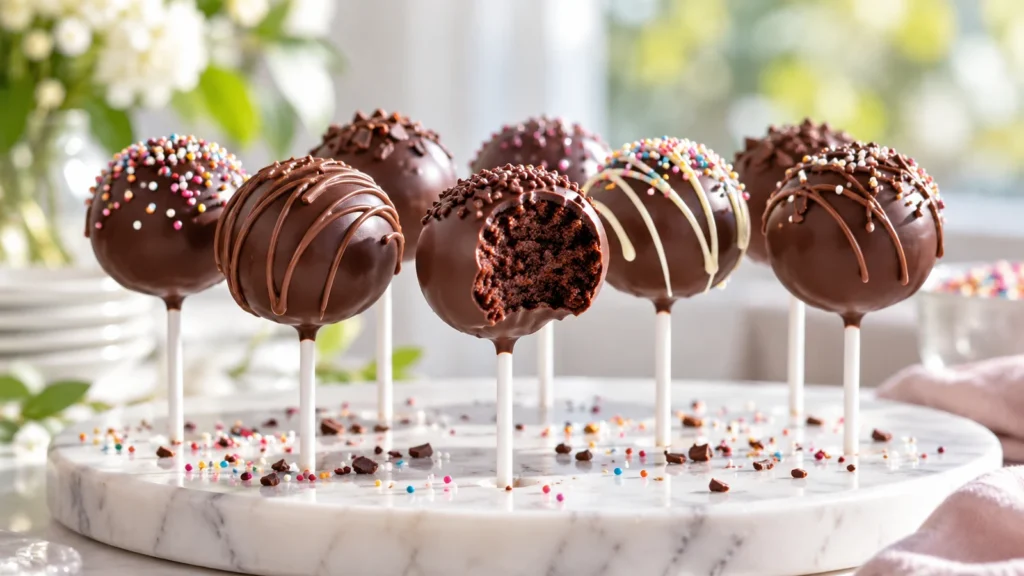
This chocolate cake pop recipe turns tender chocolate cake into neat, party-ready treats with a smooth candy shell. Careful weighing, chilling, and dipping make the process reliable, even if this is your first batch.
You can use a boxed mix or bake the simple cake below from scratch. The recipe makes about 36 cake pops and includes practical fixes for cracked coatings, greasy centers, flat bottoms, and pops that slip off their sticks. It is an approachable chocolate cake pop recipe for birthdays, showers, holidays, bake sales, and edible gifts.
Table of Contents
Why You’ll Love This Chocolate Cake Pop Recipe
- Party-friendly: The pops are easy to decorate, display, and serve without plates.
- Reliable texture: A precise cake-to-frosting ratio keeps the centers moist without becoming greasy.
- Flexible: Use homemade cake, boxed mix, or the dietary adaptations below.
- Make-ahead option: Prepare the cake balls in advance and coat them closer to serving.
- Easy to customize: Change the coating, drizzle, and toppings to match any celebration.
Ingredients
- 1 cup (125 g) all-purpose flour
- 1 cup (200 g) granulated sugar
- 1/3 cup (28 g) unsweetened cocoa powder
- 1 teaspoon baking powder
- 1/2 teaspoon baking soda
- 1/2 teaspoon fine salt
- 1 large egg, at room temperature
- 1/2 cup (120 ml) whole milk
- 1/4 cup (60 ml) neutral oil
- 1 teaspoon vanilla extract
- 1/2 cup (120 ml) hot water or hot coffee
- 1/3 cup (80 g) prepared chocolate frosting, divided
- 24 ounces (680 g) chocolate candy melts or confectionery coating
- 1 to 2 teaspoons vegetable shortening, only if needed
- Sprinkles, chopped nuts, or contrasting candy drizzle
- 36 cake-pop sticks
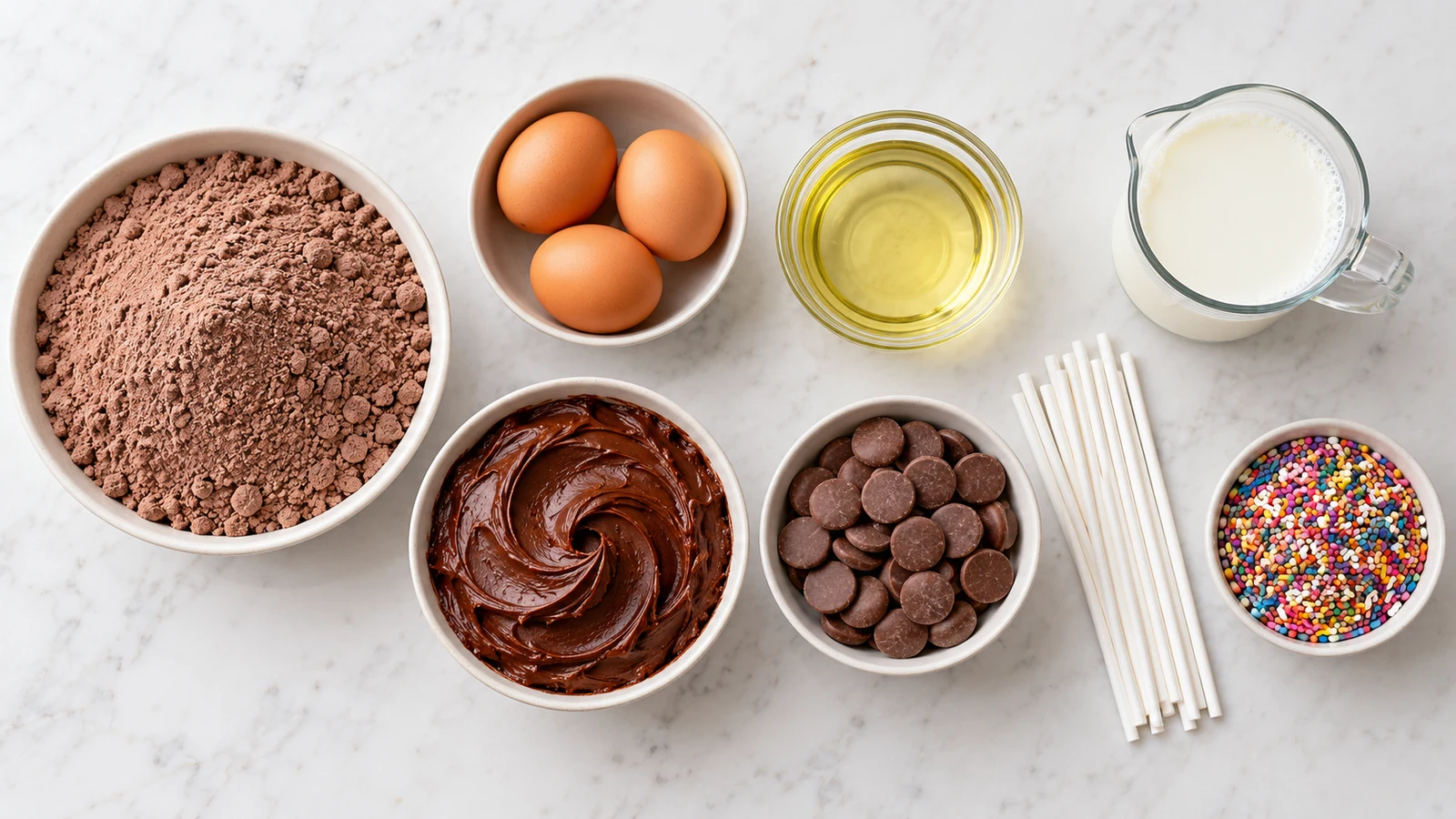
Ingredient Notes
Natural unsweetened cocoa gives the cake a familiar chocolate flavor, while hot coffee can deepen that flavor without making the finished pops taste like coffee. Hot water is equally suitable if you prefer it. Use a neutral oil so the cake stays tender after chilling.
Prepared frosting binds the crumbs, but it should be added gradually. The cake already contains moisture and oil, so it may need much less frosting than expected. That restraint is one reason this chocolate cake pop recipe produces centers that are soft yet sturdy enough to remain on their sticks.
Candy melts or confectionery coating are designed to set without tempering. Choose fresh wafers that melt smoothly, and keep all bowls and utensils completely dry. Shortening is optional and should be used only when the melted coating is too thick to flow in a continuous ribbon.
Equipment
- 8-inch (20 cm) square baking pan
- Digital kitchen scale and measuring cups
- Large mixing bowl and whisk
- Rimmed baking sheet and parchment paper
- 1-tablespoon cookie scoop
- Deep, microwave-safe cup or double-boiler bowl
- Foam block or cake-pop stand
A scale gives the most consistent results because equal portions chill and coat at the same rate. A deep, narrow dipping cup also uses the coating efficiently and lets you submerge each ball without rolling it around.
How to Make This Chocolate Cake Pop Recipe
- Bake the cake: Heat the oven to 350°F (175°C). Grease and line the pan. Whisk the flour, sugar, cocoa, baking powder, baking soda, and salt. Add the egg, milk, oil, and vanilla, then whisk in the hot water or coffee. Bake for 25 to 30 minutes, until a toothpick comes out with a few moist crumbs.
- Cool completely: Let the cake cool in the pan for 15 minutes, then transfer it to a rack. Wait until it is completely cool, about 1 hour. Warm cake can melt the frosting and create oily centers.
- Crumble: Remove firm or browned edges if desired. Crumble 16 ounces (454 g) of cake into a bowl until it resembles fine, even sand, with no pieces larger than a pea.
- Bind carefully: Add 2 tablespoons (30 g) frosting and mix by hand. Squeeze a small portion; it should hold together cleanly without leaving grease on your palm. Add more frosting 1 teaspoon at a time, using no more than 1/3 cup (80 g). The ideal cake-to-frosting ratio is approximately 5 1/2 parts cake to 1 part frosting by weight.
- Portion and roll: Scoop 1 tablespoon or about 3/4 ounce (20 g) per pop. Compress each portion, then roll it into a smooth 1 1/4-inch (3 cm) ball. Place the balls on the lined baking sheet.
- Chill: Refrigerate for 1 hour. The balls should feel firm but not frozen; overly cold centers are more likely to crack the warm coating.
- Attach the sticks: Melt 2 ounces (57 g) of coating. Dip one end of each stick about 1/2 inch (1.25 cm) into it, then insert the stick halfway into a cake ball. Chill for another 10 minutes to secure the sticks.
- Melt the coating: Microwave the remaining coating in a deep cup at 50% power for 30 seconds, stir, then continue in 15-second intervals. Alternatively, stir it in a dry bowl over barely simmering water. For additional technique guidance, see these candy-melt dipping instructions. The coating should flow from a spoon in a continuous ribbon; stir in shortening 1/2 teaspoon at a time if it is too thick.
- Dip: Lower one pop straight into the coating until the shell reaches the stick. Lift it straight out, then gently tap your wrist while rotating the pop so excess coating falls away. Avoid stirring the cake ball through the coating.
- Decorate and set: Add sprinkles immediately, before the shell firms. Stand each pop upright in a foam block for 15 to 20 minutes. For a useful comparison of the overall process, review Wilton’s homemade cake-pop method.
Expert Tips for a Reliable Chocolate Cake Pop Recipe
Cool and crumble the cake thoroughly
Do not rush the cooling stage. Warm crumbs release steam, soften the frosting, and make the mixture difficult to judge. Crumble the cake finely before adding frosting so each portion has an even texture. Large cake pieces create weak spots that may split during dipping.
Test the mixture before adding more frosting
Press a spoonful firmly in your hand. It should keep its shape when released but should not coat your palm with grease. Roll one test ball and refrigerate it for 10 minutes. If it stays smooth and intact, the mixture is ready. This small test protects the entire chocolate cake pop recipe from excess frosting.
Keep every portion consistent
Weighing each ball at about 20 g prevents larger pops from falling off their sticks. Compress the crumbs before rolling, then use light pressure to smooth the surface. If a ball cracks while rolling, knead that portion briefly and roll it again.
Control the coating temperature
The coating should be warm and fluid, not piping hot. Very hot coating expands a cold center quickly and can produce cracks as the shell sets. If the balls feel extremely cold, leave a few at room temperature for 5 to 10 minutes while keeping the rest refrigerated.
Dip once and lift straight up
Submerge each pop in one motion, making sure the coating touches the candy anchor around the stick. Lift straight up and let gravity remove the excess. Twisting or stirring a cake ball in the cup can loosen it, while forceful tapping can break the seal around the stick.
Decorate in small batches
Sprinkles adhere only while the shell is wet. Dip and decorate one pop at a time, or ask a helper to add toppings immediately. For a drizzle, let the base shell set first so the contrasting lines remain raised and distinct.
Variations and Substitutions
Boxed cake shortcut
For a shortcut, bake one standard chocolate boxed mix according to its package directions, cool it, and weigh out 16 ounces (454 g). Explore these chocolate cake mix ideas when you want other easy bases. Follow the same texture test rather than automatically adding all the frosting.
Using a Bundt cake
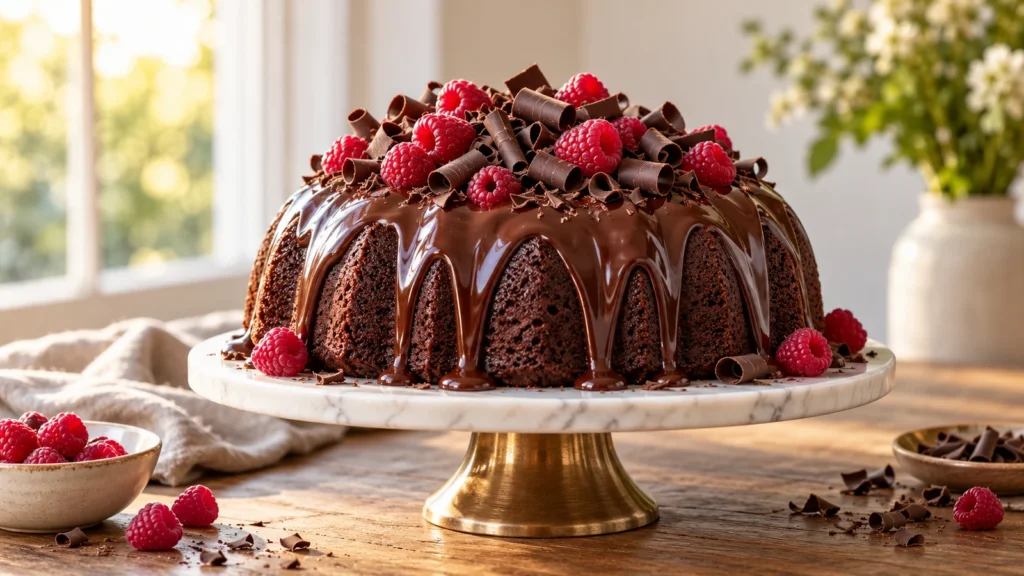
A chocolate bundt cake recipe can supply excellent crumbs for cake pops, especially when you have an undecorated cake left over. Because a chocolate bundt cake recipe often contains generous amounts of fat and moisture, begin with less frosting and add it only by the teaspoon.
Remove any glaze before crumbling a cake made from a chocolate bundt cake recipe. A thick glaze changes the balance of the center and can make it overly sweet or soft. Weigh 16 ounces (454 g) of plain cake before following the rolling and chilling instructions.
Using a pound cake
A chocolate pound cake recipe creates a dense, rich center with a truffle-like bite. Crumbs from a chocolate pound cake recipe may bind with very little frosting, so test them after adding the initial 2 tablespoons (30 g) and stop as soon as they hold together.
If your chocolate pound cake recipe has a firm outer crust, trim that crust before crumbling. The softer interior blends more evenly and gives the finished pops a smoother surface. Keep the same 20 g portion size so the heavier centers remain secure.
German chocolate inspiration
For a coconut-pecan variation inspired by a baker’s German chocolate cake recipe, use chocolate frosting in the center and finely chopped toasted pecans outside. Avoid chunky filling because it can weaken the balls and make clean rolling difficult.
The coconut-pecan flavor associated with a baker’s German chocolate cake recipe works best as a finely textured garnish. Add toasted coconut and pecans while the shell is wet. This gives the chocolate cake pop recipe the familiar flavor contrast without changing its dependable structure.
If you already baked a baker’s German chocolate cake recipe, use only cake layers without their chunky filling. Weigh the plain crumbs and add frosting cautiously. Save the characteristic coconut and pecans for the outside, where they add flavor without causing the pops to split.
Gluten-free option
For gluten-free pops, replace the cake with a dependable gluten free chocolate cake recipe and confirm that the frosting, coating, decorations, and sticks meet your needs. King Arthur Baking also provides a helpful gluten-free cake-pop reference.
Let a gluten free chocolate cake recipe cool fully before judging its crumb texture. Some gluten-free cakes become more stable as they cool. Add the frosting gradually, just as you would for the standard chocolate cake pop recipe, because an overly soft mixture is harder to dip.
When preparing a gluten free chocolate cake recipe for someone with celiac disease, prevent cross-contact by using clean bowls, tools, baking surfaces, and storage containers. Check every packaged ingredient label rather than assuming that decorations or confectionery coating are gluten-free.
Dairy-free and decorating variations
For dairy-free pops, use plant-based milk, dairy-free frosting, and a coating specifically labeled dairy-free. Decorate with crushed peppermint, toasted coconut, mini chocolate chips, finely chopped nuts, or a contrasting candy-melt drizzle. Choose toppings small enough to cling to the wet shell without weighing it down.
Make-Ahead Plan
To divide the work, bake the cake one day ahead. Cool it completely, wrap it well, and keep it at cool room temperature overnight. Crumble, bind, and shape the balls the next day. This schedule makes the chocolate cake pop recipe manageable when you are also preparing other party food.
You can shape the uncoated balls up to 2 days before dipping. Arrange them in a single layer in an airtight container and refrigerate them. Wait to insert the sticks until the coating is ready, unless you have enough refrigerator space to store them securely without bending or crowding.
For longer preparation, freeze the uncoated balls for up to 6 weeks. Freeze them on a lined sheet until firm, then transfer them to an airtight container with parchment between layers. Thaw overnight in the refrigerator and never dip them while frozen.
How to Store and Reheat
Store finished cake pops in a single layer in an airtight container at cool room temperature for up to 2 days or refrigerate for up to 1 week. Let refrigerated pops warm gradually inside the closed container to reduce condensation. Reheating is neither needed nor recommended because it can soften the shell.
Uncoated cake balls can be refrigerated for 2 days or frozen for up to 6 weeks. Freeze them until firm, transfer them to an airtight container, and thaw overnight in the refrigerator before attaching sticks and dipping. These steps preserve the texture of the chocolate cake pop recipe without exposing the coating to freezer moisture.
For transport, place upright pops in a snug foam block inside a tall box, keeping them away from heat and direct sunlight. If individually wrapping them, wait until every shell and drizzle is fully set so the wrapping does not smudge the decoration.
Display the pops for no more than 2 hours at room temperature, or 1 hour when the temperature exceeds 90°F (32°C). If using perishable fillings, keep them refrigerated until shortly before serving.
Troubleshooting Cake Pops
Why are the centers greasy?
Too much frosting is usually responsible. Mix in additional dry cake crumbs, then test the mixture in your palm again. Greasy crumbs also result when warm cake melts the frosting, so allow the baked layer to cool completely before crumbling it.
Why did the coating crack?
A large temperature difference between the cake ball and coating causes rapid expansion and contraction. Let very cold balls stand for 5 to 10 minutes before dipping, and do not overheat the coating. Small hairline cracks can be covered with a decorative drizzle after the shell sets.
Why is the coating too thick?
Rewarm it briefly and stir thoroughly before adding shortening. If needed, add shortening 1/2 teaspoon at a time. Never add water, milk, or watery flavoring because even a small amount can make candy melts seize and become grainy.
Why do the balls fall off the sticks?
Keep each ball near 20 g, anchor the stick with melted coating, and insert it only halfway. Dip with one smooth downward motion. Balls may also fall when the mixture contains too much frosting or when excess coating is removed with hard tapping.
Why does the shell have bubbles or streaks?
Stir slowly to avoid trapping air, then let the melted coating rest briefly before dipping. Tap gently to release visible bubbles while the surface is wet. Streaks may indicate overheating or incomplete stirring, so melt at reduced power in short intervals.
Why do my cake pops have flat bottoms?
Dry the pops upright in a foam block or cake-pop stand. If you prefer to set them on parchment, expect a flat base and present them stick-side up. Both styles taste the same, but upright drying gives this chocolate cake pop recipe its classic round appearance.
Serving and Presentation Ideas
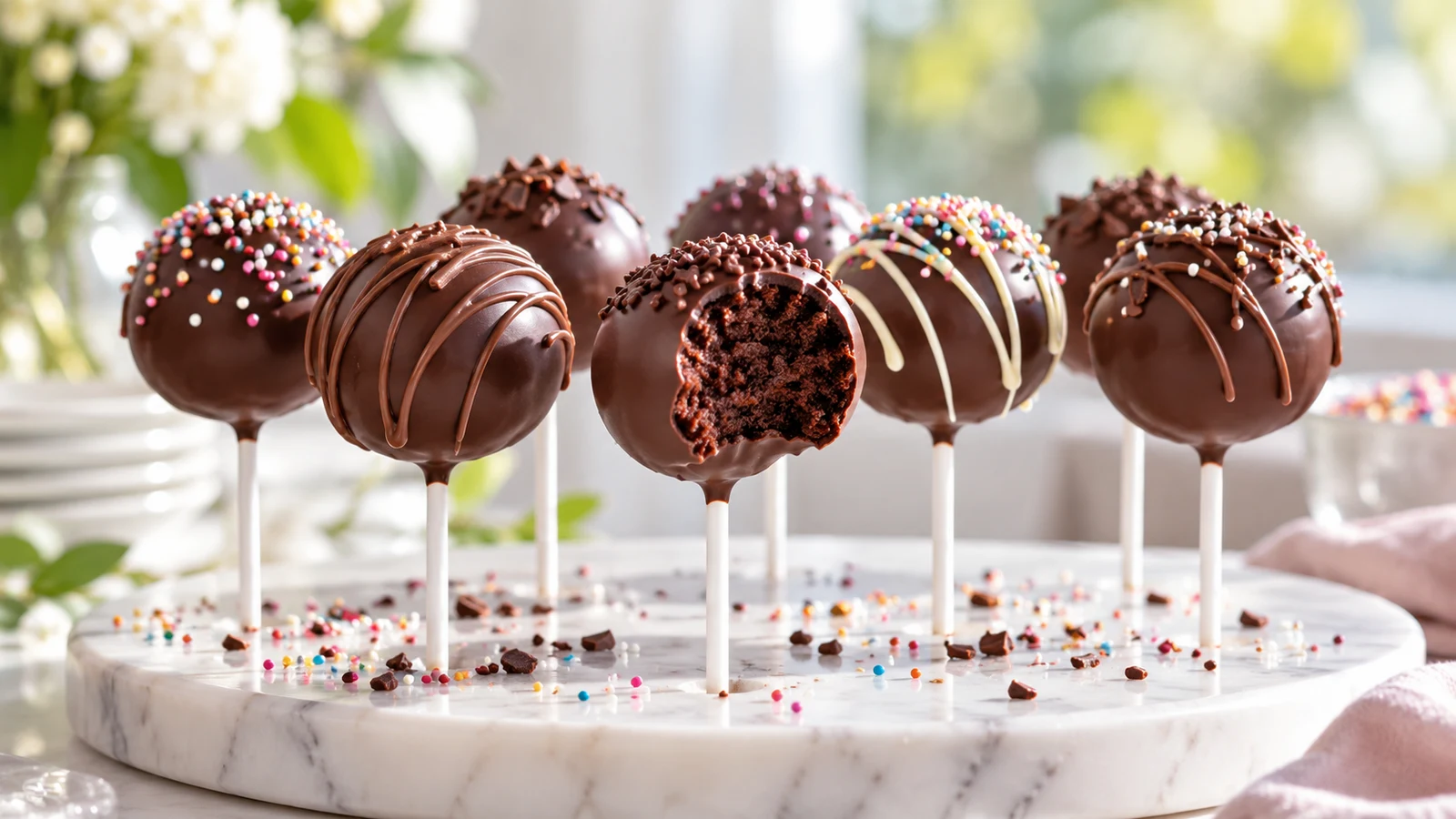
Arrange the pops upright in a decorative stand, clean foam block, or sturdy container filled with food-safe support material. Group colors in rows for a polished dessert table, or mix toppings for a playful display. Keep the stand stable and place it away from sunny windows.
For birthdays, coordinate the coating and sprinkles with the party colors. For holidays, use seasonal drizzles or finely crushed candy. A baker’s German chocolate cake recipe theme pairs naturally with toasted coconut and pecans, while a simple dark coating looks elegant for showers and dinner parties.
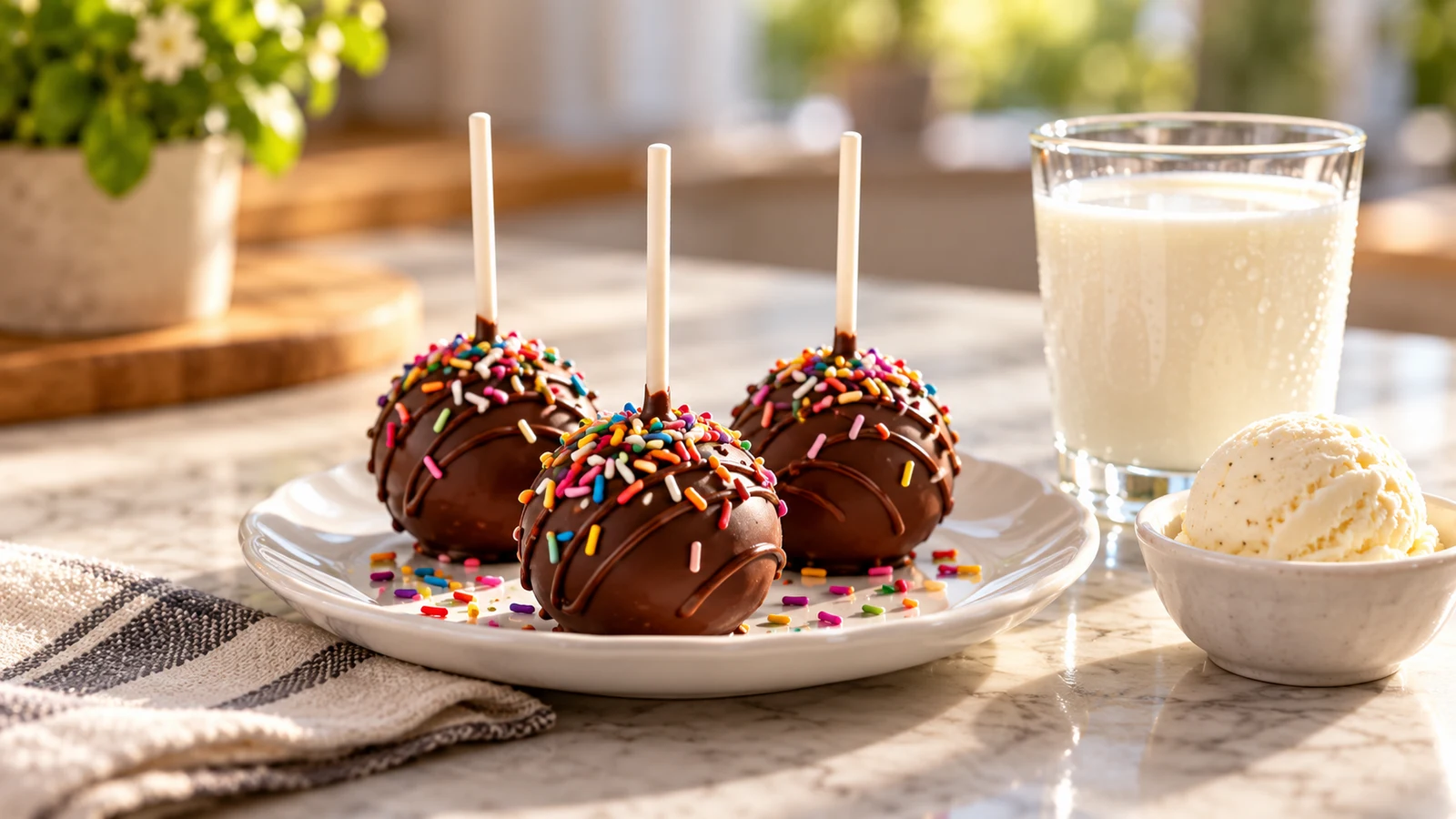
Serve cake pops with cold milk, coffee, or vanilla ice cream. One pop is the listed serving size, making portions easy to plan. For edible gifts, place fully set pops in individual food-safe bags and tie them loosely so the coating remains protected.
Frequently Asked Questions
Why is my cake-pop mixture mushy?
It probably contains too much frosting or the cake was still warm. Add dry cake crumbs gradually and chill the mixture until it is firm enough to roll. For the best chocolate cake pop recipe texture, the mixture should hold together without feeling wet or leaving grease behind.
Can I use regular chocolate instead of candy melts?
Yes, but tempered chocolate gives the best snap and stability. Untempered chocolate may remain soft or develop streaks, while candy melts are easier for beginners. Keep chocolate completely dry and follow proper tempering guidance if you choose that option.
How far ahead can I make this chocolate cake pop recipe?
Make and refrigerate the uncoated balls up to 2 days ahead. Finished pops are best within 2 to 3 days, although they can be refrigerated for up to 1 week. Keep them covered so they do not absorb refrigerator odors.
How do I keep the coating smooth while dipping cake pops?
Use a deep, narrow cup, stir frequently, and maintain a fluid ribbon-like consistency. Reheat for only a few seconds at a time so the coating does not scorch or thicken. Replace the coating if crumbs contaminate it and prevent a clean finish.
Can I use a chocolate bundt cake recipe for cake pops?
Yes. Use 16 ounces (454 g) of unglazed cake from your chocolate bundt cake recipe, crumble it finely, and begin with the stated 2 tablespoons (30 g) of frosting. The moist crumb may not require the entire frosting allowance.
Will a chocolate pound cake recipe make the pops too dense?
No, but a chocolate pound cake recipe produces a richer and firmer center. Keep the portions at about 20 g and use minimal frosting. Small, consistent balls balance the dense texture and make dipping easier.
Can I adapt a baker’s German chocolate cake recipe?
Yes, provided you use plain cake rather than a layer already mixed with chunky coconut-pecan filling. A baker’s German chocolate cake recipe works especially well when the traditional coconut and pecans are added as finely chopped toppings.
Does a gluten free chocolate cake recipe need extra frosting?
Not necessarily. The moisture level of a gluten free chocolate cake recipe varies, so start with the same small amount and perform the squeeze test. Add more only when the crumbs will not remain together after firm pressure.
Can I make the cake balls without sticks?
Yes. Dip the chilled balls with a fork or candy-dipping tool and set them on parchment. They will have a flat base and resemble cake truffles, but the ingredients and measured portions remain unchanged.
Recipe Card
Chocolate Cake Pop Recipe
- Prep time: 45 minutes
- Cook time: 25 to 30 minutes
- Cooling and chill time: 2 hours 10 minutes
- Total time: About 3 hours 25 minutes
- Yield: 36 cake pops
- Serving size: 1 cake pop
- Equipment: 8-inch pan, scale, scoop, deep dipping cup, and cake-pop stand
- Estimated nutrition per pop: 155 calories, 22 g carbohydrate, 7 g fat, 2 g protein, and 15 g sugar; values vary by coating and decorations.
Bake and cool the chocolate cake, crumble 16 ounces (454 g), and bind it with 2 tablespoons (30 g) frosting, adding only as needed. Roll into 36 balls, chill, secure the sticks with melted coating, dip, decorate, and let the shells set upright.
With measured portions, restrained frosting, and properly thinned coating, this chocolate cake pop recipe produces cheerful treats that hold their shape and travel well. Prepare them ahead, decorate them to match the occasion, and serve them at your next birthday, shower, or holiday gathering.
Reviews
Reader reviews are managed separately (outside this build).