Cake
Best Key Lime Pound Cake Recipe: Bright & Foolproof
Bake a key lime pound cake recipe with a moist, dense crumb, bright citrus flavor, silky glaze, and foolproof tips for perfect results.
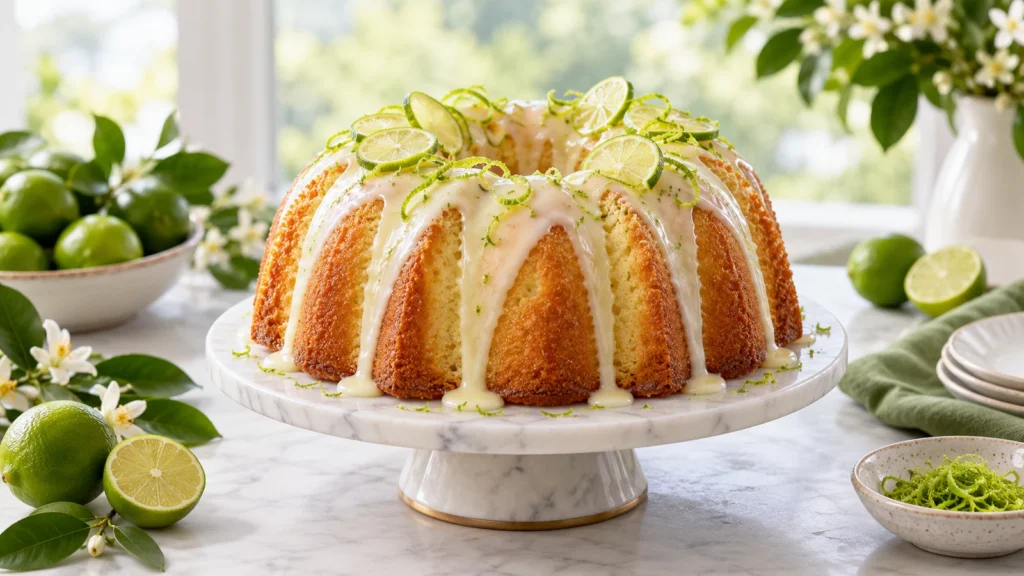
This key lime pound cake recipe makes a tender, buttery cake with fragrant citrus zest and a smooth, tangy glaze. Sour cream keeps the crumb moist, while careful mixing produces the fine texture expected from a classic pound cake.
Unlike a typical 7up recipes pound cake, this cake gets its citrus character from fresh juice and zest rather than lemon-lime soda. It also offers a bright alternative to a chocolate pound cake recipe while retaining the rich texture that makes pound cake so satisfying.
The recipe fits a 10- to 12-cup Bundt pan and includes weights, visual doneness cues, loaf-pan instructions, and solutions for common baking problems. Fresh Key limes provide the brightest flavor, but regular Persian limes work well too.
Table of Contents
Why You’ll Love This Key Lime Pound Cake Recipe
- Bright but balanced: Zest supplies concentrated lime aroma without adding excessive acidity.
- Reliably moist: Butter, sour cream, and a moderate oven temperature protect the crumb from dryness.
- Clear instructions: Exact mixing times, cooling directions, and doneness cues remove guesswork.
- Make-ahead friendly: The cake keeps well and can be frozen with or without glaze.
- Beautiful presentation: The shaped Bundt cake and pale citrus glaze look polished without complicated decorating.
This key lime pound cake recipe is especially useful when you want a dessert that can be prepared before a party. Its dense but tender crumb slices neatly, travels well, and remains flavorful after a day of rest.
Ingredients
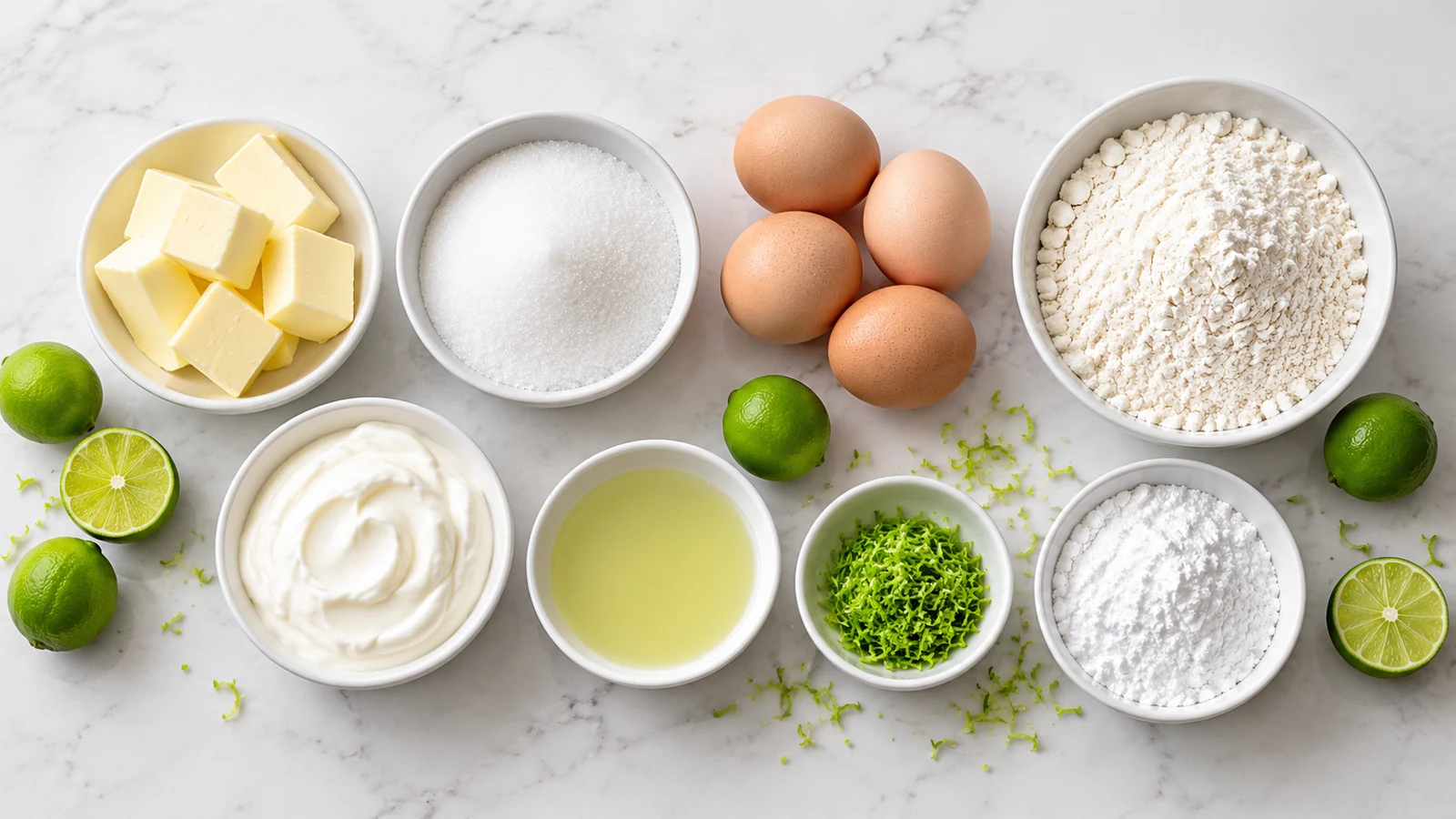
- Unsalted butter: 1 cup (227 g), softened to 65–68°F (18–20°C), plus more for the pan
- Granulated sugar: 2 1/2 cups (500 g)
- Large eggs: 5 (about 250 g without shells), at room temperature
- All-purpose flour: 3 cups (360 g), spooned and leveled
- Baking powder: 1 teaspoon
- Fine salt: 3/4 teaspoon
- Full-fat sour cream: 1 cup (240 g), at room temperature
- Key lime zest: 2 packed tablespoons
- Key lime juice: 1/4 cup (60 ml), preferably freshly squeezed
- Vanilla extract: 2 teaspoons
- For the glaze: 2 cups (240 g) confectioners’ sugar, 3 tablespoons Key lime juice, 1 teaspoon zest, and a pinch of salt
What the Main Ingredients Do
Butter contributes flavor and creates tiny air pockets when beaten with sugar. Those air pockets help the cake rise evenly. Properly softened butter should yield gently to pressure but should not look shiny, greasy, or partially melted.
Sour cream supplies fat, moisture, and mild acidity. It is the ingredient that gives this bake the plush quality associated with a dependable sour cream pound cake recipe. Full-fat sour cream provides the most consistent texture and should be stirred before measuring if liquid has separated on top.
Eggs give the cake structure and richness. Adding them individually allows each egg to combine with the butter mixture before the next one goes in. Flour provides structure, while the small amount of baking powder supports the air incorporated during creaming.
Lime zest contains fragrant citrus oils, so it delivers flavor without thinning the batter. Juice reinforces the tartness and balances the sugar. Vanilla softens the sharp edges of the citrus, and salt keeps the finished cake from tasting one-dimensional.
Key Limes Versus Regular Limes
Key limes are smaller, seedier, and more aromatic than common Persian limes. Their juice is distinctly tart with a lightly floral character, but the difference becomes subtler after baking. Persian lime juice and zest may be substituted in equal amounts.
Fresh juice gives the glaze its cleanest flavor. Bottled Key lime juice is acceptable in the batter, although it may taste sharper; use fresh zest even when using bottled juice. For stronger lime flavor, add more zest rather than extra juice, which can disturb the batter’s acidity and consistency.
When zesting fruit for this key lime pound cake recipe, remove only the green outer layer. The white pith underneath is bitter. Zest the limes before squeezing them, then measure the juice so the quantity remains exact.
Equipment and Pan Capacity
Use a light-colored metal Bundt pan with a 10- to 12-cup capacity. The unbaked batter should fill no more than three-quarters of the pan. A stand mixer or hand mixer, fine grater, citrus juicer, cooling rack, and instant-read thermometer are useful.
A dark pan can brown the exterior more quickly, while a silicone pan may provide less support and definition. If your pan has an elaborate pattern, use a pastry brush to push softened butter into every detail before dusting it with flour.
For another example of citrus Bundt technique, see this glazed lemon Bundt cake method.
How to Make This Key Lime Pound Cake Recipe
- Prepare the oven and pan. Heat the oven to 325°F (165°C). Thoroughly grease every ridge of the Bundt pan, dust it with flour, and tap out the excess.
- Combine the dry ingredients. Whisk the flour, baking powder, and salt for about 30 seconds.
- Cream the butter and sugar. Beat the softened butter for 30 seconds, then gradually add the sugar. Beat on medium speed for 4–5 minutes, scraping the bowl twice, until pale, fluffy, and visibly increased in volume.
- Add the eggs. Beat in one egg at a time on medium-low speed, mixing for about 20 seconds after each addition. Scrape the bowl frequently. If the mixture looks slightly curdled, add 1 tablespoon of the measured flour.
- Finish the batter. Stir together the sour cream, juice, zest, and vanilla. On low speed, add the flour mixture in three additions, alternating with the sour cream mixture in two additions. Stop as soon as the last flour streak disappears.
- Fill the pan. Spoon in the batter and smooth the top. Tap the pan gently on a towel-covered counter two or three times to release large air pockets.
- Bake. Bake for 65–75 minutes. The cake is done when it is deeply golden, begins pulling from the pan’s edges, springs back when lightly pressed, and a tester has a few moist crumbs but no wet batter. The center should register about 205–210°F (96–99°C).
- Cool and unmold. Cool in the pan for exactly 15 minutes. Loosen the accessible edges with a thin flexible spatula, place a rack over the pan, and invert confidently. Let the cake cool completely for about 2 hours before glazing.
Key Lime Glaze
Whisk the confectioners’ sugar, 3 tablespoons juice, zest, and salt until smooth. For a thicker white coating, add more sugar; for a thinner drizzle, add juice 1 teaspoon at a time. Spoon it over the completely cooled cake and let it set for 20–30 minutes.
The glaze should fall from the whisk in a slow ribbon and remain visible on the cake instead of disappearing into it. If it becomes too thin, whisk in a little more confectioners’ sugar. Glazing a warm cake will make the coating runny and translucent.
Expert Tips for the Best Results
- Control ingredient temperature: Bring the butter, eggs, and sour cream to room temperature so the batter emulsifies smoothly.
- Weigh the flour: Measure by weight when possible. Excess flour is a leading cause of dry pound cake.
- Cream patiently: Do not shorten the creaming time. The mixture should become visibly lighter before the eggs are added.
- Mix gently at the end: Overmixing after adding flour can develop too much gluten and form tunnels.
- Scrape the bowl: Reach the bottom and sides so dense streaks of butter do not remain in the batter.
- Protect the rise: Keep the oven closed for at least 55 minutes. Early temperature loss can contribute to a sunken center.
- Check accurately: Use the visual cues and internal temperature together rather than relying only on the timer.
- Adjust cautiously at altitude: Above 3,500 feet, begin by reducing sugar by 1–2 tablespoons, adding 1–2 tablespoons flour, and raising the oven temperature to 340°F (170°C). Check early because local conditions differ.
The alternating mixing technique also appears in many tender cakes, including this lemon poppy seed cake recipe. In this sour cream pound cake recipe variation, alternating wet and dry ingredients helps the thick batter combine without excessive mixing.
Variations and Substitutions
Greek Yogurt or Buttermilk
Plain full-fat Greek yogurt can replace sour cream measure for measure. For a buttermilk version, use 3/4 cup (180 ml) buttermilk and reduce the lime juice in the batter to 3 tablespoons. The crumb will be a little lighter than a traditional sour cream pound cake recipe.
Loaf-Pan Version
To bake two 9-by-5-inch loaves, divide the batter evenly and bake at 325°F (165°C) for 55–70 minutes. Start checking at 50 minutes. The same doneness cues apply, including a springy center and a tester with moist crumbs but no wet batter.
Different Citrus Flavors
For a different citrus profile, use the tested instructions in this orange pound cake recipe. Fruit lovers may prefer a blueberry pound cake recipe, which accounts for the extra moisture and weight of berries.
Comparing Other Pound Cake Styles
Many 7up recipes pound cake versions rely on lemon-lime soda for sweetness, liquid, and carbonation. Because this formula uses sour cream and fresh lime juice, replacing either with soda would change its carefully balanced moisture, sugar, and acidity.
A chocolate pound cake recipe requires cocoa and its own moisture adjustments, so cocoa should not simply be added to this lime batter. If you want chocolate flavor, serve a slice with a small drizzle of chocolate sauce instead of changing the cake formula.
A reader searching for an afroman lemon pound cake recipe can follow this Afroman lemon pound cake guide. That option emphasizes lemon, while this key lime pound cake recipe delivers a more floral, sharply tart citrus finish.
Make-Ahead Plan
Bake the cake one day before serving for an easy make-ahead dessert. Once it is completely cool, keep it tightly covered at room temperature. Resting overnight allows the moisture to distribute evenly and gives the zest time to perfume the crumb.
For the neatest presentation, prepare the glaze several hours before serving. Let it set uncovered for 20–30 minutes, then cover the cake without pressing wrapping against the surface. Add any fresh accompaniments only when the cake is served.
You may also measure the dry ingredients and zest the limes in advance. Refrigerate the zest in an airtight container and bring the eggs and sour cream to room temperature before mixing. Do not combine the wet and dry mixtures until you are ready to bake.
Troubleshooting Common Problems
Why the Cake Sticks
Coat every crevice immediately before filling the pan, and unmold after 15 minutes rather than while piping hot or fully cold. Flour should cover the greased surface in a thin, even layer without thick clumps.
Why Tunnels Form
Large holes usually indicate vigorous mixing after the flour was added or too much trapped air. Keep the mixer on low, stop when the last streak disappears, and tap the filled pan gently as directed.
Why Pound Cake Turns Out Dry
Too much flour and excess baking time are the most common causes. Weigh the flour, begin testing at 65 minutes, and remove the cake when the tester still carries a few moist crumbs. A good sour cream pound cake recipe should be fully baked but not left in the oven until the tester is completely dry.
Why the Batter Looks Curdled
Cold ingredients or eggs added too quickly can break the butter emulsion. Use room-temperature ingredients and add the eggs gradually. Mild curdling usually resolves when the flour is incorporated and does not mean the batter must be discarded.
Why the Center Sinks
Confirm the oven is fully preheated, avoid opening the door early, and bake until the center springs back. A cake removed before its structure sets may collapse as it cools. Excessively vigorous creaming can also create air pockets too large to remain stable.
Why the Crust Becomes Too Dark
A dark pan or inaccurate oven can brown the exterior before the middle is finished. Check the oven with a separate thermometer if this happens repeatedly. Place the pan on the center rack and begin checking at the earliest stated time.
Why the Lime Flavor Seems Weak
Use freshly grated zest and avoid the bitter white pith. Zest provides more aroma than extra juice, so do not pour additional liquid into the batter. The glaze also reinforces the citrus flavor once the key lime pound cake recipe is assembled.
Serving Ideas
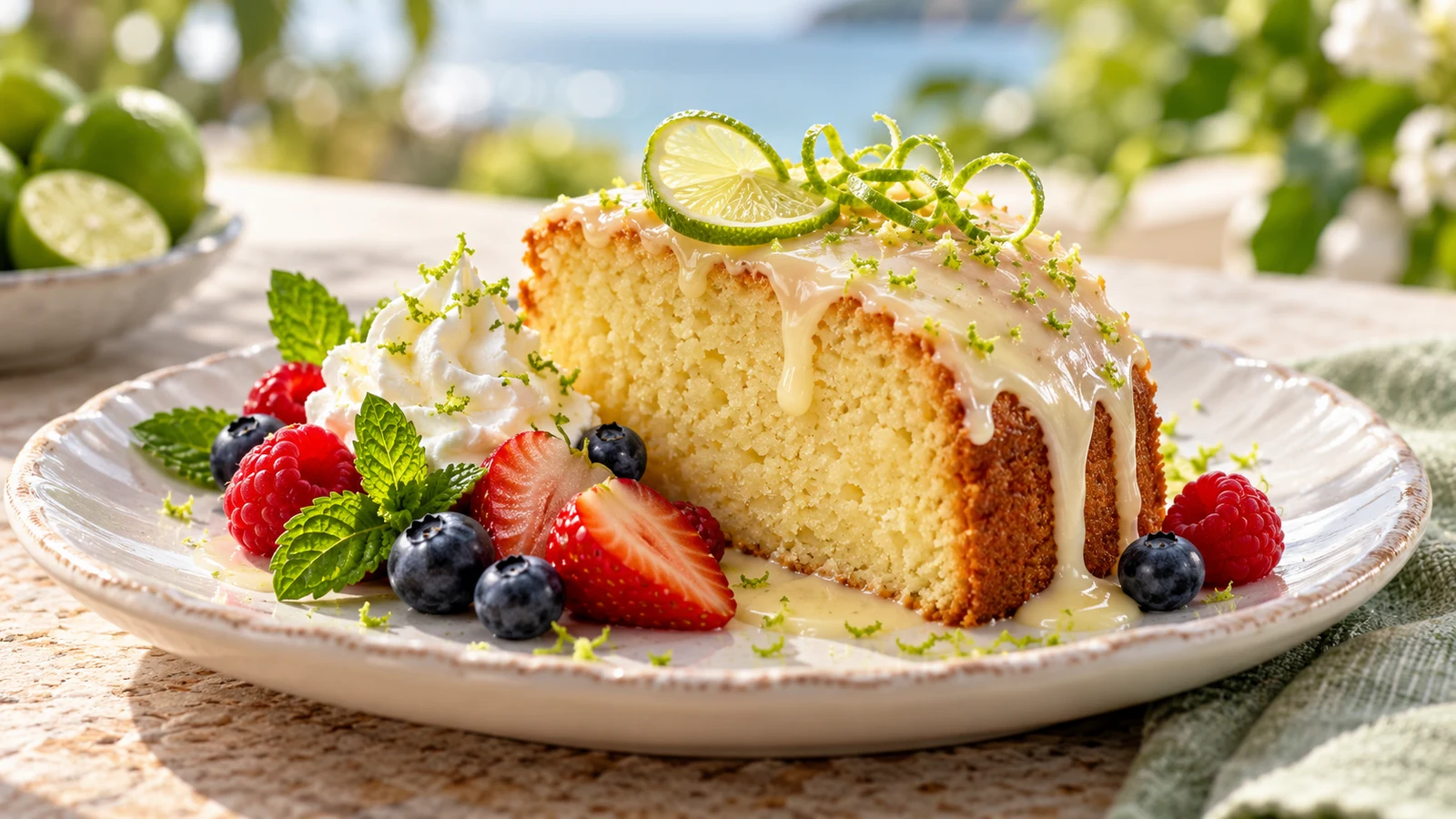
Serve the cake at room temperature so its butter-rich crumb stays soft. It pairs nicely with berries, lightly sweetened whipped cream, or plain yogurt. Thin slices also work well alongside coffee or black tea.
For a dinner-party plate, place a slice beside fresh raspberries or strawberries and add a small spoonful of whipped cream. The berries soften the tartness without overwhelming the lime. A little extra grated zest can add color immediately before serving.
This key lime pound cake recipe is also suited to brunches, showers, picnics, and holiday dessert tables. For transport, leave the cake whole and carry it in a covered container. Slice it at the destination to retain moisture and protect the glaze.
How to Store and Reheat
Once the glaze has set, keep the cake in an airtight container at room temperature for up to 3 days or refrigerate it for up to 5 days. Bring chilled slices to room temperature before serving, or warm an unglazed slice in the microwave for 8–10 seconds.
Freeze the cooled, unglazed cake or individual slices tightly wrapped for up to 3 months. Thaw overnight in the refrigerator, then bring to room temperature and glaze. Freezing slices separately makes it easy to thaw only the amount you need.
To protect the crumb from freezer odors and drying, wrap the cake closely before placing it in an airtight container. Label the package with the date. Avoid reheating glazed slices because the confectioners’ sugar coating can melt into the cake.
This gluten-free Bundt cake example is useful for bakers exploring a separate, tested gluten-free formula. A direct flour swap has not been built into this key lime pound cake recipe.
Nutrition
One of 16 glazed slices contains approximately 460 calories, 20 g fat, 67 g carbohydrate, 5 g protein, and 220 mg sodium. Values are estimates and vary with brands and serving size.
Frequently Asked Questions
Can I use regular limes in this key lime pound cake recipe?
Yes. Substitute Persian lime juice and zest in equal amounts. The cake will still taste fresh and citrusy, though slightly less floral. Measure both ingredients as written so the batter retains the intended consistency.
Why did my cake stick to the Bundt pan?
The pan may have had an uncoated crevice, or the cake may have cooled too long before inversion. Grease and flour carefully, then unmold after 15 minutes.
Can I make the glaze less tart?
Replace 1 tablespoon of lime juice with milk or cream. Add liquid gradually so the glaze remains thick enough to cling to the cake.
How do I know the cake is fully baked?
Look for a golden surface, slightly released edges, a springy center, and moist crumbs on a tester. An internal temperature of 205–210°F (96–99°C) provides extra confirmation.
Can I turn this into a 7up recipes pound cake?
No direct substitution is recommended. A 7up recipes pound cake has a different balance of sugar, liquid, carbonation, and acidity. Use a formula specifically developed for soda rather than adding it to this batter.
Can I add cocoa to make a chocolate pound cake recipe?
Cocoa absorbs moisture and changes the structure, so adding it directly may produce a dry cake. Follow a tested chocolate pound cake recipe when you want a deeply chocolate-flavored result.
How does this compare with an afroman lemon pound cake recipe?
An afroman lemon pound cake recipe centers on lemon flavor, while this cake uses the tart, lightly floral character of Key limes. Both suit bakers who enjoy rich citrus cakes, but the ingredients should not be exchanged without accounting for their different formulas.
Can I use low-fat sour cream?
Full-fat sour cream is recommended because it supports a moist, rich crumb. Lower-fat products may contain more water and stabilizers, which can change the texture. Greek yogurt is the preferred measure-for-measure alternative.
Can I glaze the cake while it is warm?
Wait until it has cooled completely, about 2 hours. Warm cake melts the glaze, causing it to soak in or run onto the plate rather than form a smooth coating.
Does this sour cream pound cake recipe need refrigeration?
The finished cake can remain in an airtight container at room temperature for up to 3 days. Refrigerate it for storage up to 5 days, especially in a warm kitchen, and let slices return to room temperature before serving.
Can I prepare this key lime pound cake recipe without a Bundt pan?
Yes. Divide the batter between two 9-by-5-inch loaf pans and bake at 325°F (165°C) for 55–70 minutes, checking from 50 minutes onward. Do not put the entire batch into one loaf pan.
A Bright Citrus Cake Worth Making Ahead
With room-temperature ingredients, patient creaming, and careful doneness checks, this key lime pound cake recipe delivers a moist crumb and clear lime flavor. Let it cool fully before adding the glaze for neat slices and the best finish.
It offers the richness of a sour cream pound cake recipe with fresher citrus flavor than many 7up recipes pound cake versions. Whether served simply or dressed with berries and cream, it is a practical make-ahead dessert for gatherings and everyday baking.
Reviews
Reader reviews are managed separately (outside this build).