Beef
Jewish Beef Brisket Recipe: Beloved Holiday Classic
Make this jewish beef brisket recipe with fork-tender beef and a sweet-savory oven-braised sauce, plus make-ahead, slicing, and reheating tips.
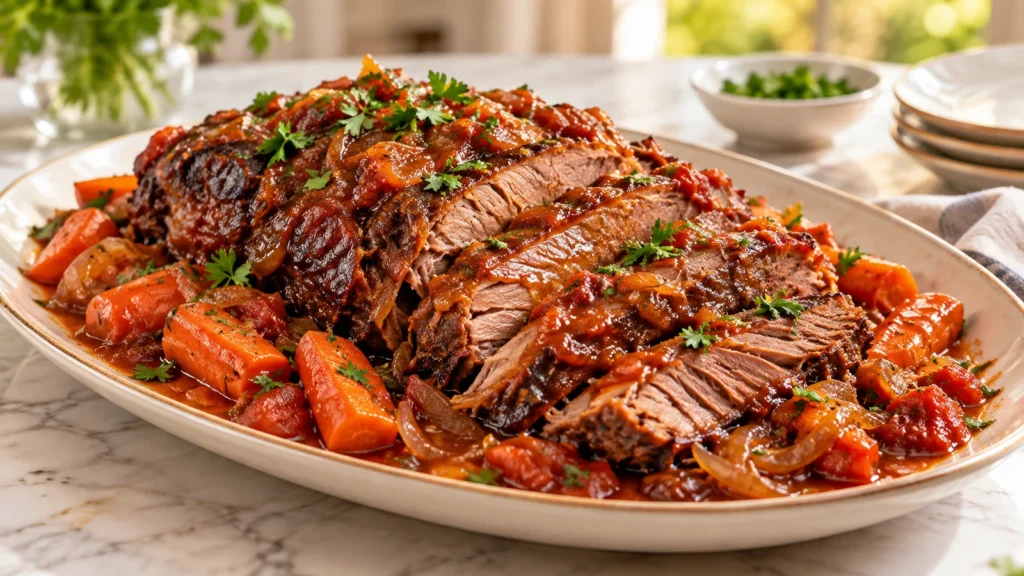
This jewish beef brisket recipe turns a firm, economical cut into fork-tender slices surrounded by a rich sweet-savory brisket sauce. It is especially suited to Rosh Hashanah, Passover, Hanukkah, and family gatherings because it tastes even better when prepared a day ahead.
Unlike a smoked beef brisket recipe, this traditional braise cooks gently in a covered pan, where onions, tomatoes, broth, and wine build a spoonable sauce. The method is straightforward: sear the meat, soften the aromatics, add the braising liquid, and cook everything slowly in the oven.
Chilling overnight makes the brisket easier to slice and gives you time to remove excess fat before reheating. Although this is primarily a beef brisket recipe oven method, a carefully tested slow-cooker variation is included below.
Table of Contents
Why You’ll Love This Jewish Beef Brisket Recipe
- Convenient: A tested make-ahead schedule keeps holiday cooking manageable.
- Flavorful: Onions, tomatoes, garlic, and a little sweetness create a balanced sauce.
- Reliable: Visual doneness cues are more dependable than cooking time alone.
- Flexible: Oven, slow-cooker, alcohol-free, lower-sugar, and Passover options are included.
- Excellent for a crowd: The brisket yields 8 to 10 servings and can be sliced before guests arrive.
- Comforting: Tender beef and glossy sauce pair naturally with familiar holiday side dishes.
Ingredients
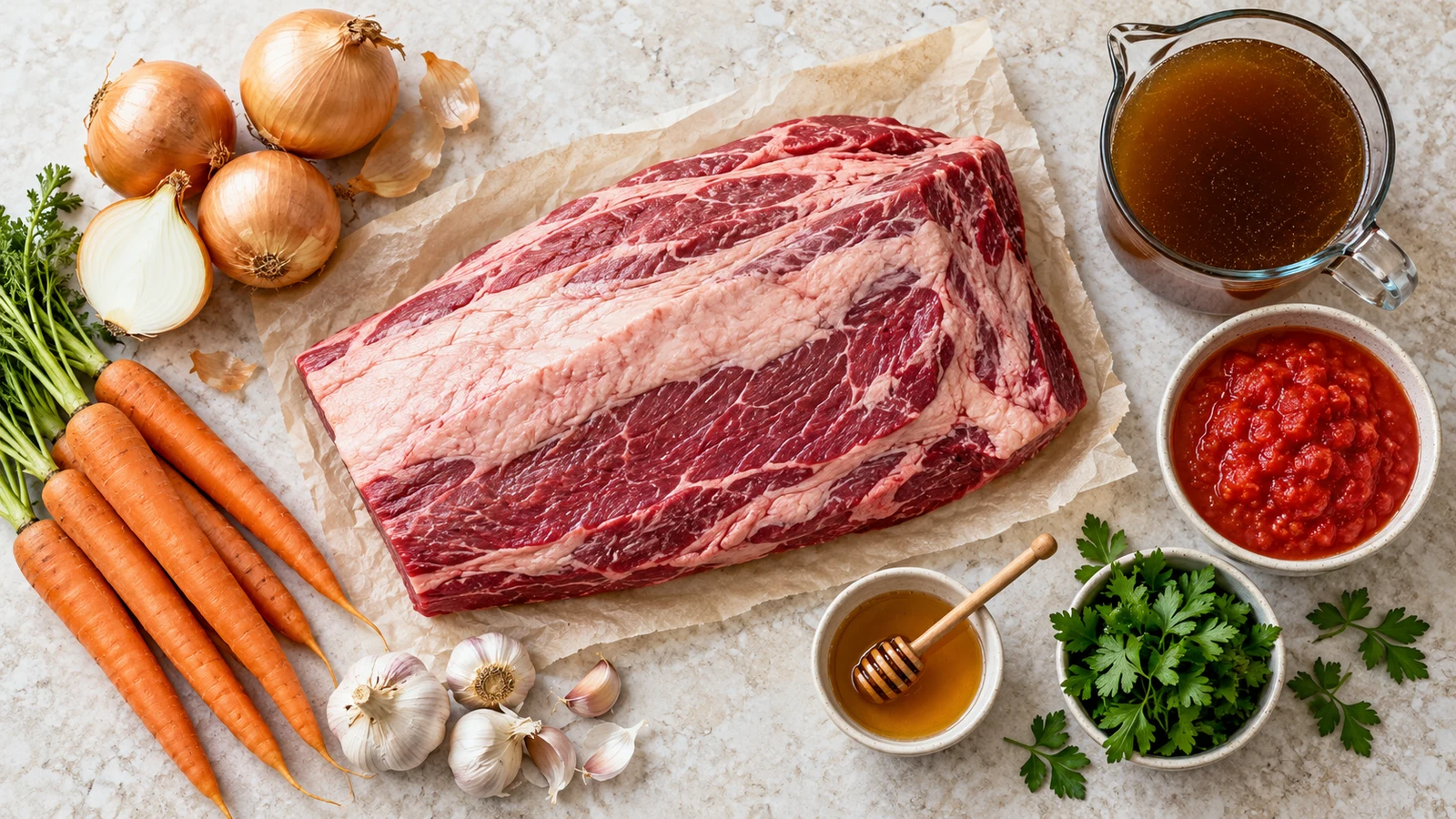
- 1 first-cut beef brisket, 5 pounds (2.27 kg), with a 1/4-inch fat cap
- 2 teaspoons kosher salt, plus more as needed
- 1 teaspoon freshly ground black pepper
- 2 tablespoons neutral oil
- 3 large yellow onions, thinly sliced
- 4 medium carrots, cut into 1-inch pieces
- 5 garlic cloves, minced
- 2 tablespoons tomato paste
- 1 cup dry red wine or additional beef broth
- 2 cups low-sodium beef broth
- 1 can crushed tomatoes, 14 ounces (397 g)
- 2 tablespoons honey or brown sugar
- 1 tablespoon paprika
- 1 teaspoon dried thyme
- 2 bay leaves
- 1 tablespoon red wine vinegar
Choosing the Right Cut of Brisket
First-cut, also called the flat, is leaner, evenly shaped, and easiest to slice for a holiday table. Point-cut contains more internal fat and becomes exceptionally tender but produces richer, less uniform portions. Allow about 1/2 pound raw brisket per adult, or slightly more for generous leftovers.
Look for a brisket with a fairly even thickness so the narrow end does not finish far ahead of the center. A thin, continuous fat cap helps protect the meat during braising. Avoid aggressively trimming it before cooking; the chilled fat is much easier to remove from the finished sauce.
If the brisket is too large for the pan, ask the butcher to trim it to fit or divide it into two large pieces. Do not stack the pieces tightly. Arrange them in one layer whenever possible so this jewish beef brisket recipe cooks evenly and remains surrounded by flavorful liquid.
Ingredient Notes for Better Flavor
Yellow onions are central to the sauce. Their natural sugars deepen as they soften, balancing the acidity of the tomatoes and vinegar. Slice them thinly enough to become silky during the long cook, but they do not need to be perfectly uniform.
Low-sodium broth gives you control over seasoning because the liquid concentrates in the oven. Dry red wine adds complexity, but additional broth works well when avoiding alcohol. Tomato paste should cook briefly with the garlic so its raw edge disappears before the pan is deglazed.
Honey or brown sugar supplies gentle sweetness rather than a dessert-like flavor. Paprika and thyme add warmth without overwhelming the beef. The final vinegar keeps the sauce lively, an important detail in a rich beef brisket recipe oven preparation.
For Passover brisket, check that the broth, spices, tomato products, wine, and sweetener carry certification appropriate to your observance. For additional traditional context, see this Jewish brisket preparation guide.
How to Make This Jewish Beef Brisket Recipe in the Oven
- Prepare the oven and meat. Heat the oven to 325°F (165°C). Pat the brisket dry and season it on both sides with salt and pepper. A large Dutch oven or deep roasting pan with a tight-fitting lid works best.
- Sear the brisket. Heat the oil over medium-high heat. Brown the brisket for 5 to 7 minutes per side, working carefully to develop a dark crust. Transfer it to a platter.
- Cook the aromatics. Reduce the heat to medium. Add the onions and carrots and cook for 10 minutes, stirring occasionally. Add the garlic and tomato paste; cook for 1 minute.
- Deglaze. Pour in the wine and scrape the browned bits from the bottom. Simmer for 3 minutes. Add the broth, tomatoes, honey, paprika, thyme, bay leaves, and vinegar.
- Braise. Return the brisket to the pan with the fat cap facing up, so the rendered fat bastes the surface. The liquid should reach roughly halfway up the meat, not completely cover it. Cover tightly and bake for 3 1/2 to 4 1/2 hours.
- Check doneness. The brisket is ready when a fork or thin knife slides into the thickest section with little resistance and the meat bends without falling apart. If it still feels tight, cover and continue cooking in 20-minute increments. For more technique detail, consult this oven-braised beef brisket guide.
- Chill overnight. Let the brisket cool briefly, then refrigerate it in its sauce within two hours. The next day, lift off the solidified fat.
- Slice and reheat. Remove the cold brisket and identify the direction of the muscle fibers. Slice against the grain into 1/4-inch pieces, return them to the sauce, cover, and heat at 325°F (165°C) for 35 to 45 minutes.
Expert Tips for a Jewish Beef Brisket Recipe
Build a Deep Brown Crust
Dry meat browns more effectively than damp meat, so blot every surface before seasoning. Let the pan become hot before adding the brisket, and avoid shifting it repeatedly. A strong sear creates browned bits that dissolve into the sauce when you add the wine.
Keep the Braising Pan Covered
A tight lid traps steam and maintains the moist environment required to soften connective tissue. If your roasting pan lacks a close-fitting lid, cover it securely before placing it in the oven. Escaping moisture can make the lean flat seem dry while it is still tough.
Use Tenderness as the Final Test
Cooking time is a guide because briskets vary in shape, thickness, and connective tissue. The meat commonly becomes tender around 195–205°F (91–96°C), but temperature alone cannot confirm texture. A fork or thin knife should enter the thickest section with little resistance.
Slice Only After Chilling
Warm brisket is delicate and can shred under the knife. Chilled meat becomes firm enough to cut into neat 1/4-inch slices. The slices absorb sauce as they reheat, which is one reason a make-ahead jewish beef brisket recipe often tastes better the next day.
Always Cut Against the Grain
Before slicing, look for the long parallel muscle fibers and cut across them, not in the same direction. Shortening those fibers makes every bite easier to chew. If the grain is difficult to see after cooking, inspect the underside or note its direction before braising.
Protect the Lean End
If one end is noticeably thinner, check it first when testing for tenderness. Keep every portion nestled in sauce during reheating. This simple precaution is especially helpful with a large beef brisket recipe oven batch intended for a holiday crowd.
Variations and Substitutions
Alcohol-Free Brisket
Replace the wine with beef broth and add one extra teaspoon of vinegar. Deglaze the pan with the broth exactly as you would with wine, scraping up every browned bit. The finished sauce will be slightly less complex but still savory and balanced.
Lower-Sugar Brisket
Omit the honey or use just 1 tablespoon. The onions and carrots contribute natural sweetness as they cook, so the sauce will still soften the sharpness of the tomatoes. Do not increase the vinegar unless you taste the finished sauce and find that it needs brightness.
Beef Brisket Recipe Slow Cooker Method
For a beef brisket recipe slow cooker variation, sear the meat and cook the aromatics as directed, then transfer everything to a 6- to 8-quart cooker. Cook on low for 8 to 10 hours or high for 5 to 6 hours, keeping the fat cap up and checking for effortless fork penetration.
A beef brisket recipe slow cooker preparation may produce more liquid because very little moisture evaporates. If the sauce seems thin, move the finished meat to a platter and reduce the sauce separately before chilling. Keep the stated ingredients and quantities unchanged.
Fresh, Corned, and Smoked Brisket
Traditional Jewish brisket is fresh beef slowly braised with aromatics. It differs from corned beef brisket in a crock pot recipes, which begin with salt-cured meat. Substituting corned beef here would substantially change the salt level, texture, and character of the dish.
Readers comparing corned beef brisket in a crock pot recipes should rinse and cook cured meat according to a dedicated corned beef method. This oven-baked corned beef method explains the distinct preparation and helps prevent an overly salty result.
A smoked beef brisket recipe also requires a different approach. Smoking develops bark and wood-smoke flavor through dry heat, while this braise relies on covered, moist cooking. Choose a smoked beef brisket recipe when you want outdoor barbecue rather than a sauce-rich holiday centerpiece.
Make-Ahead Schedule for Stress-Free Serving
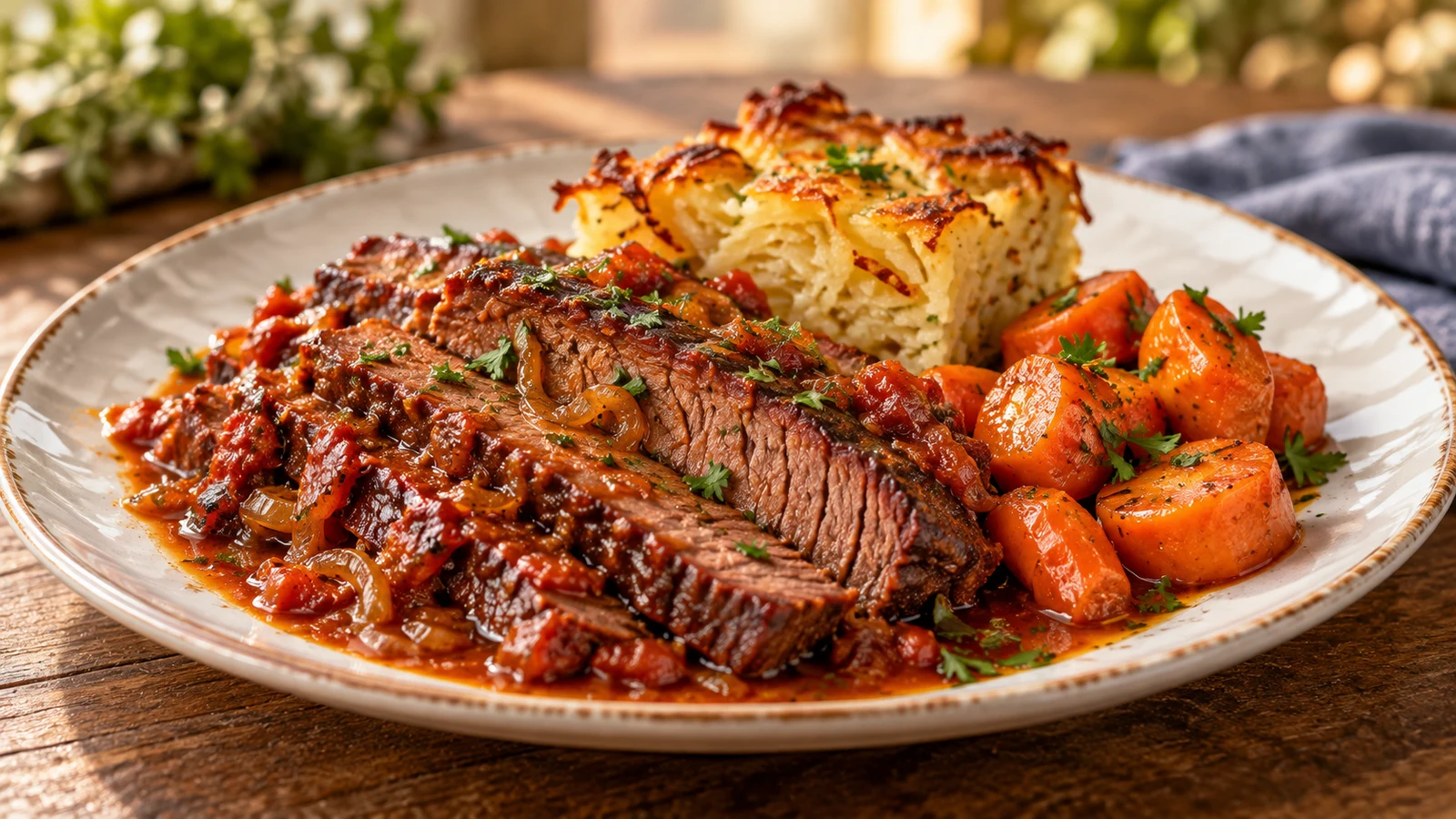
For the easiest schedule, prepare this jewish beef brisket recipe two days before the meal. Braise it completely, let it cool briefly, and refrigerate it in its sauce within two hours. Keeping the meat in the sauce protects it and allows the flavors to meld overnight.
The next day, remove the hardened fat and slice the cold brisket against the grain. Arrange the slices in the sauce, cover, and refrigerate again. On serving day, reheat at 325°F (165°C) for 35 to 45 minutes, allowing enough time for the center to reach 165°F (74°C).
If you need to cook and serve on the same day, let the meat rest briefly before slicing and use a very sharp knife. The portions may be less tidy than chilled slices, but the flavor remains excellent. Keep the cut meat covered with sauce so it does not dry out.
The same planning principle works for a beef brisket recipe slow cooker version. Cook it fully before chilling rather than stopping partway through. Partial cooking complicates safe cooling and makes the final tenderness harder to predict.
How to Store, Freeze, and Reheat
Refrigerate brisket and sauce in shallow airtight containers for up to four days. Divide a large batch between containers so it cools efficiently. Store the slices submerged or well coated in sauce to protect their surface from drying.
For freezing, cover sliced meat completely with sauce and freeze for up to three months. Smaller meal-size portions thaw more evenly and let you reheat only what you need. Label each container with the date before placing it in the freezer.
Thaw frozen brisket overnight in the refrigerator. Reheat it covered at 325°F (165°C) until the center reaches 165°F (74°C), adding a splash of broth if necessary. Avoid prolonged uncovered heating, which can reduce the sauce too far and toughen exposed edges.
Guidance on make-ahead Passover cooking is also available in this Passover brisket resource. Advance preparation is particularly useful when several holiday dishes must share limited oven space.
Troubleshooting This Jewish Beef Brisket Recipe
The Brisket Is Still Tough
Tough brisket usually needs more covered cooking time. Check that the pan still contains liquid, add a little hot broth if it is dry, and continue braising in 20-minute increments. Connective tissue must soften before the meat becomes tender, even when it has already reached a safe temperature.
The Meat Seems Dry
Lean brisket can seem dry if it is undercooked, sliced with the grain, or reheated without enough sauce. Return the slices to the liquid, cover the pan, and warm them gently. Confirm that each slice runs across the visible muscle fibers.
The Sauce Is Greasy
Chill the covered pan until the rendered fat solidifies on top, then lift it away with a spoon. This is easier and more thorough than trying to skim hot sauce. Leave the sauce underneath, including the soft onions and carrots that provide body and flavor.
The Sauce Is Too Thin
Remove the brisket and simmer the uncovered sauce for 10 to 20 minutes. Stir occasionally and watch it closely as it concentrates. You may also blend some cooked onions into the liquid for extra body without adding flour.
The Sauce Is Too Thick
Stir in a small splash of beef broth before reheating. Add only enough to make the sauce spoonable because the brisket will release a little moisture as it warms. Keep the pan covered once the consistency is corrected.
The Sauce Tastes Flat
First check the salt, since low-sodium broth and a large piece of beef may require a small adjustment. The vinegar in the stated recipe should provide balance. Taste only after the sauce has reduced, because reduction concentrates both salt and acidity.
Serving Ideas
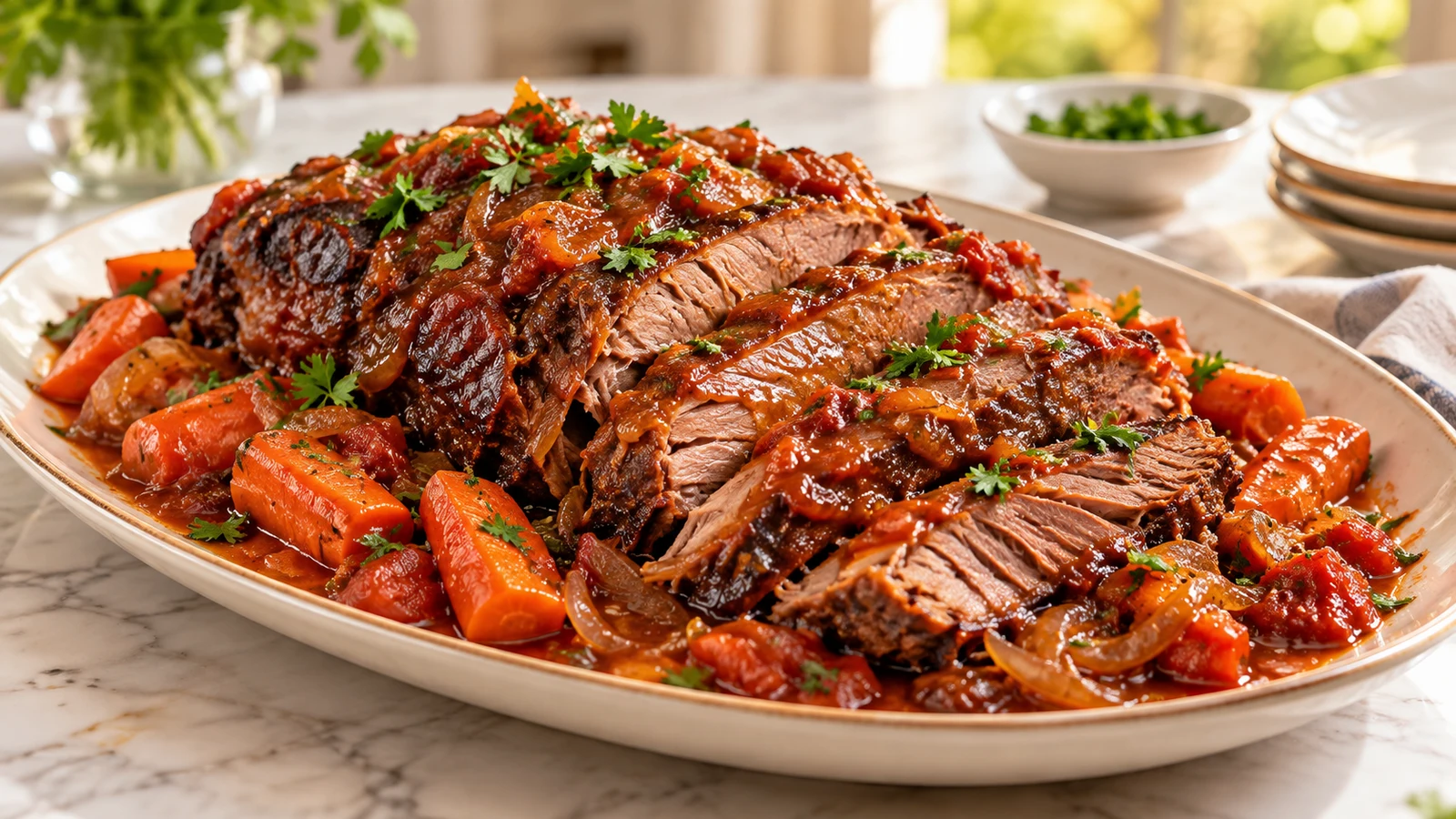
Serve the brisket hot on a warmed platter, overlapping the slices slightly and spooning sauce over the top. Place the remaining sauce nearby so guests can add more. The carrots and onions from the pan should be served with the meat rather than discarded.
Mashed potatoes are ideal for catching the tomato-rich sauce. Potato kugel, matzo farfel, roasted potatoes, or a simple rice dish also work well. For vegetables, choose green beans, roasted carrots, braised greens, or a crisp salad that offsets the richness.
At Rosh Hashanah, round out the plate with seasonal vegetables and other gently sweet dishes. For Passover, select accompaniments appropriate to your observance. Hanukkah meals can pair the brisket with latkes and a fresh vegetable side.
This jewish beef brisket recipe also makes satisfying leftovers. Warm the slices in sauce and serve them with the same side dishes, or place a modest portion on a plate with roasted vegetables. Gentle reheating preserves the texture better than searing individual slices.
Another helpful holiday approach appears in this holiday brisket resource. Whatever you serve alongside it, keep the brisket and sauce hot until everyone is ready to eat.
Frequently Asked Questions
Why is my jewish beef brisket recipe tough?
It usually needs more covered cooking time. Add a little hot broth if the pan is dry and continue braising until a fork slides in easily. A tough result does not necessarily mean the meat is overcooked; brisket often remains firm until its connective tissue has had enough time to soften.
Can I make this beef brisket recipe oven method a day ahead?
Yes. In fact, this beef brisket recipe oven method is especially convenient when cooked ahead. Chilling firms the meat for cleaner slicing, allows the fat to solidify for easy removal, and gives the sauce time to develop a deeper flavor.
Can I use a slow cooker instead of the oven?
Yes. Follow the beef brisket recipe slow cooker instructions above, including searing the brisket and cooking the aromatics first. Use a 6- to 8-quart cooker and test the thickest part for tenderness rather than relying only on elapsed time.
Is this the same as corned beef brisket in a crock pot recipes?
No. Corned beef brisket in a crock pot recipes use beef that has been cured in a seasoned brine. This recipe begins with fresh brisket and creates its flavor through searing, aromatics, tomatoes, broth, wine, and slow braising.
How is this different from a smoked beef brisket recipe?
A smoked beef brisket recipe cooks with smoke and dry heat to create a seasoned bark. This dish braises beneath a tight cover in flavorful liquid, producing tender slices and abundant sauce. The methods are not interchangeable without changing the result.
Do I need to sear the brisket first?
Searing is strongly recommended because it develops a browned crust and flavorful fond in the pan. The meat can still become tender without it, but the sauce will lack some roasted depth. Take time to dry the surface so it browns rather than steams.
Should the braising liquid cover the meat?
No. The liquid should reach roughly halfway up the brisket. The covered pan traps steam while the exposed fat cap bastes the surface. Completely submerging the meat would produce a different cooking environment and could dilute the sauce.
Should brisket rest before slicing?
If serving it the same day, let it rest briefly before cutting. For the neatest slices, cool and refrigerate the brisket in its sauce overnight. Slice it cold against the grain, return it to the sauce, and reheat it covered.
How can I fix dry or greasy brisket?
Return dry slices to warm sauce and reheat them gently. For greasy sauce, chill it and remove the hardened fat rather than skimming while hot. Keeping a thin fat cap during cooking helps protect the meat, but most rendered fat can be removed before serving.
How do I thicken a thin sauce?
Remove the brisket and simmer the uncovered sauce for 10 to 20 minutes. Blend some onions into it for extra body without flour. Reduce the sauce only until it coats a spoon, remembering that it will thicken slightly as it cools.
Can I freeze this jewish beef brisket recipe?
Yes. Freeze sliced brisket completely covered with sauce for up to three months. Thaw it overnight in the refrigerator, then reheat it covered at 325°F (165°C) until its center reaches 165°F (74°C).
What are the recipe timing and nutrition details?
Prep time: 30 minutes. Cooking time: 4 to 5 hours, plus overnight chilling. Yield: 8 to 10 servings. Estimated nutrition: About 520 calories, 42 g protein, 29 g fat, and 16 g carbohydrate per serving; values vary by trimming and portion size.
A Reliable Holiday Centerpiece
This jewish beef brisket recipe rewards patience with tender slices and a deeply savory sauce. Careful browning, a tightly covered braise, overnight chilling, and slicing against the grain are the details that make the method dependable.
Whether you follow the original beef brisket recipe oven directions or use the beef brisket recipe slow cooker variation, judge the meat by tenderness and keep every slice surrounded by sauce. Serve it hot with simple holiday sides and plenty of sauce spooned over each portion.
Reviews
Reader reviews are managed separately (outside this build).