Beef
Foolproof Smoked Beef Brisket Recipe for Juicy Bark
Master this smoked beef brisket recipe with simple steps for juicy meat, rich bark, ideal wood smoke, wrapping, resting, and slicing. Try it today.
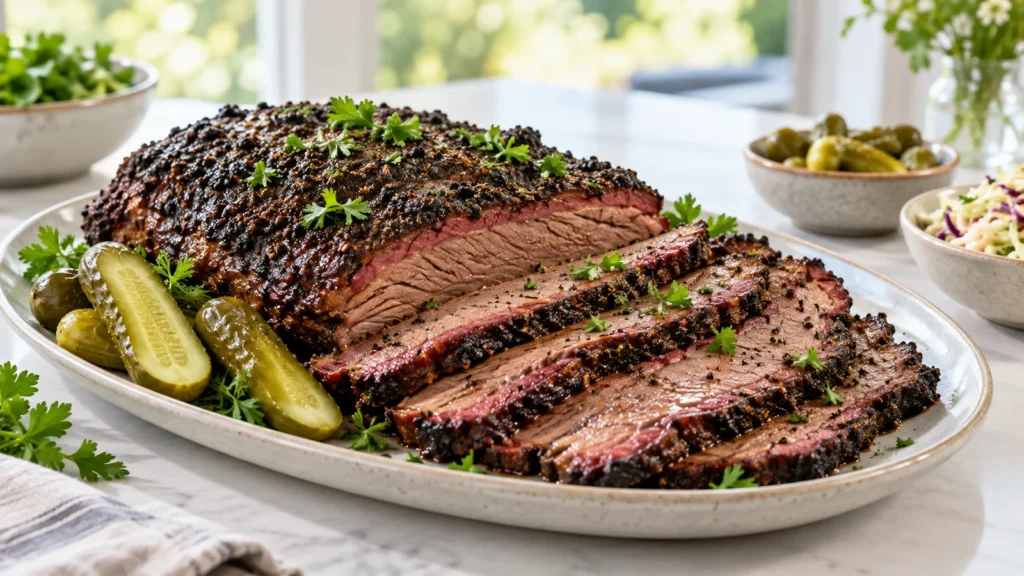
This smoked beef brisket recipe produces tender slices, a juicy flat, and a deeply seasoned bark with a straightforward method any patient home cook can follow. The keys are steady heat, wrapping only after the bark has set, and using probe tenderness—not temperature alone—to judge doneness.
Unlike a beef brisket recipe oven method or a beef brisket recipe slow cooker, this approach builds a distinctive smoke ring and dry, savory crust. The detailed timeline makes the smoked beef brisket recipe manageable even if you are cooking a whole packer for the first time.
Jump to the complete recipe card
Recipe snapshot: Choose a 10- to 14-pound whole packer brisket, smoke it at 250°F (121°C), allow roughly 60 to 75 minutes per pound, and reserve at least 2 hours for resting. One pound of raw brisket generally provides two generous servings after trimming and cooking.
Table of Contents
Why You’ll Love This Smoked Beef Brisket Recipe
- Simple seasoning lets the beef and wood smoke shine.
- A clear temperature timeline takes the guesswork out of the stall and wrap.
- Flexible instructions work with pellet, offset, charcoal, and electric smokers.
- Detailed troubleshooting helps prevent dry meat, weak bark, and harsh smoke flavor.
- A generous resting window makes it easier to serve brisket on time.
Selecting and Trimming the Brisket
Look for a whole packer brisket with both the flat and point attached. USDA Choice offers a good balance of price and marbling, while Prime is more forgiving because its extra intramuscular fat helps protect the flat. A brisket that bends easily in its package and has a flat at least 1 inch thick is a strong choice.
Trim the cold brisket with a sharp boning knife. Remove hard surface fat, thin ragged edges, and silver skin, then reduce the fat cap to an even 1/4 inch (6 mm). Round sharp corners so they do not burn. Expect a 12-pound brisket to lose 2 to 3 pounds during trimming.
Keep the brisket cold while trimming because firm fat is easier to remove cleanly. Avoid digging into the soft seam fat between the point and flat. That seam helps protect the meat during the long cook and can be separated more easily after resting.
Ingredients
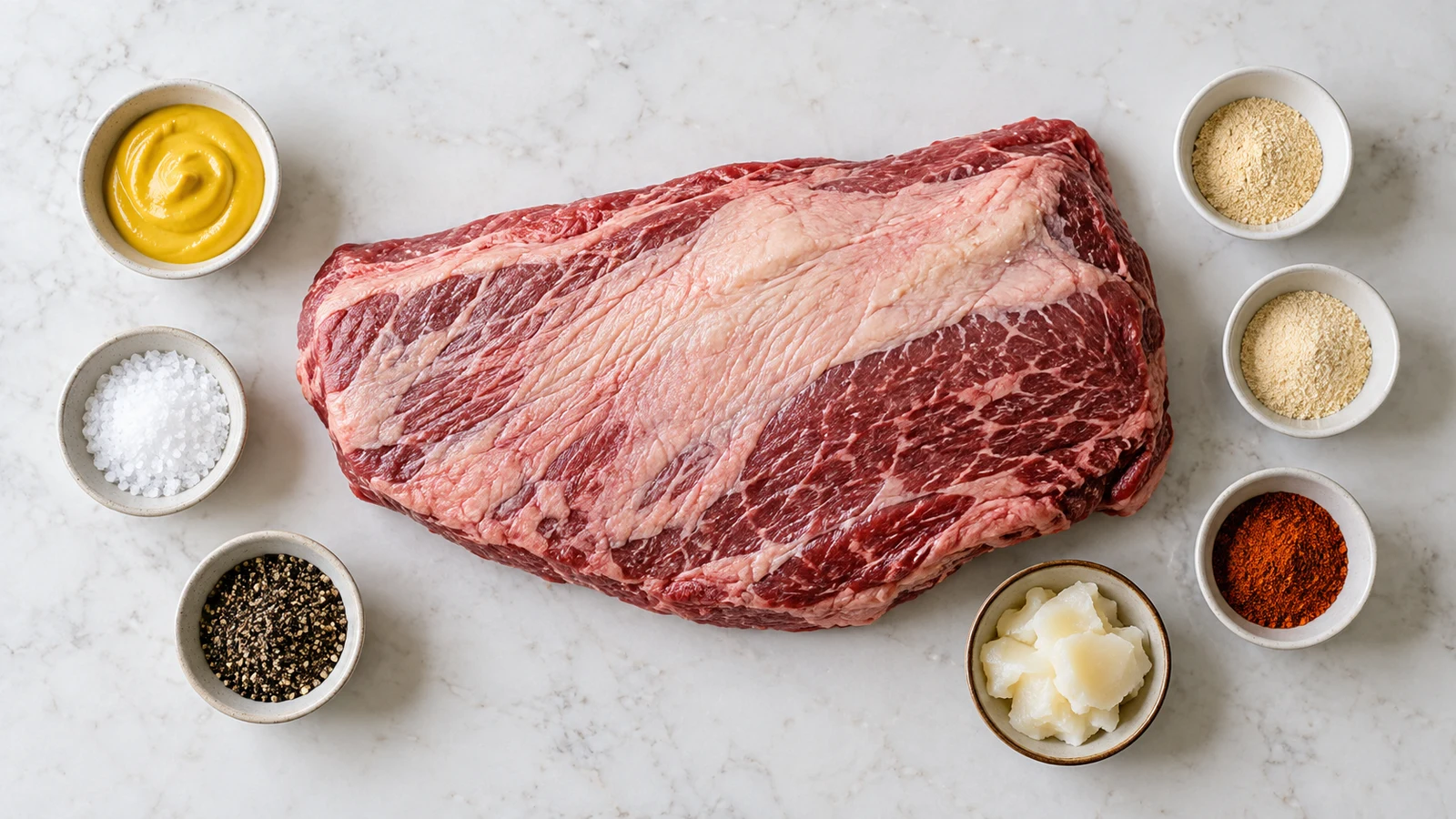
- 1 whole packer beef brisket, 10 to 14 pounds (4.5 to 6.4 kg)
- 2 tablespoons yellow mustard or neutral oil
- 1/4 cup coarse kosher salt
- 1/4 cup coarse-ground black pepper
- 1 tablespoon granulated garlic
- 1 teaspoon onion powder
- 1 cup unsalted beef stock, divided, for wrapping and reheating
Equipment and Wood Choice
You will need a smoker, fuel, heat-resistant gloves, a sharp trimming knife, an instant-read thermometer, and a leave-in temperature probe. Pink butcher paper promotes a firmer brisket bark, while heavy-duty aluminum foil speeds cooking and retains more moisture.
Oak is the most versatile wood for smoking brisket. Hickory gives a stronger traditional flavor, while pecan is slightly sweeter. Use mesquite sparingly because prolonged exposure can taste bitter. Clean, nearly invisible blue smoke is preferable to thick white smoke; this smoked brisket guide offers another useful perspective on smoker preparation.
Before starting this smoked beef brisket recipe, confirm that the thermometer reads accurately in ice water and boiling water. Place the smoker probe near the cooking grate rather than relying only on the lid gauge, since grate-level temperature can differ significantly.
How to Make Smoked Beef Brisket
- Season: Pat the trimmed brisket dry. Apply a thin layer of mustard or oil, then mix the salt, pepper, garlic, and onion powder and coat every surface evenly. Refrigerate uncovered for 4 to 12 hours if time permits.
- Preheat: Stabilize the smoker at 250°F (121°C). In an offset smoker, point the thicker end toward the firebox. On a pellet grill with heat below, position the fat cap down; with indirect heat flowing from above, place it up.
- Begin smoking: Insert a probe into the thickest part of the flat and place the brisket in the smoker. Cook undisturbed for the first 3 hours. Afterward, spritz only dry-looking edges with water or diluted beef stock every 60 to 90 minutes.
- Set the bark: Continue cooking until the surface is dark mahogany, dry to the touch, and does not rub off when lightly scraped. This usually occurs around 165°F to 175°F (74°C to 79°C), but appearance matters more than the number.
- Wrap: Wrap tightly in two wide sheets of unwaxed butcher paper, adding about 1/4 cup beef stock. Return the brisket to the smoker with the seam down.
- Finish: Cook until a probe slides into several areas of the flat with almost no resistance, similar to softened butter. Begin checking near 195°F (91°C); most briskets finish between 198°F and 205°F (92°C and 96°C).
- Rest: Vent the wrap for 5 to 10 minutes to stop carryover cooking, close it again, and rest the brisket in an insulated cooler or 150°F to 170°F (66°C to 77°C) oven for 2 to 4 hours.
- Slice: Separate the point from the flat if desired. Slice the flat across the grain into pencil-thick pieces, then rotate the point because its grain runs in a different direction.
Temperature-and-Stage Timeline
- 0 to 4 hours: Smoke at 250°F (121°C); the surface dries and begins forming bark.
- 4 to 7 hours: Around 150°F to 170°F (66°C to 77°C), evaporation may cause the stall.
- 6 to 9 hours: Wrap only after the bark is dark, dry, and firmly attached.
- 9 to 14 hours: Start checking tenderness near 195°F (91°C).
- After cooking: Rest at least 2 hours before slicing.
The stall happens when evaporative cooling offsets the smoker’s heat, causing the internal temperature to plateau. It is normal. Foil shortens this phase and preserves juices but softens the bark; butcher paper breathes, so it better balances moisture and texture. For another established approach, compare this method with Texas-style brisket guidance.
Use the timeline as a planning guide, not a deadline. Two briskets of equal weight can finish hours apart because thickness, marbling, airflow, and moisture loss vary. The smoked beef brisket recipe is ready for its rest only when the flat feels tender in several places.
Expert Tips for This Smoked Beef Brisket Recipe
- Start earlier than necessary: A finished brisket holds better than an undercooked brisket rushes. Build at least 3 extra hours into the schedule.
- Season from a steady height: Holding the shaker 10 to 12 inches above the meat produces a more even crust without salty patches.
- Protect thin edges: Tuck narrow sections underneath before smoking or shield them with a small piece of foil if they darken too quickly.
- Watch the exhaust: Keep the vent sufficiently open so smoke remains clean. Restricting airflow can coat the bark with bitter soot.
- Probe the flat: The point becomes tender sooner because it contains more fat. Judge doneness in the thickest and leanest areas of the flat.
- Preserve the juices: Open the wrap over a rimmed pan after resting. Save the liquid and spoon it over the slices immediately before serving.
A leave-in probe is valuable for tracking progress, but repeated checks with an instant-read thermometer provide a better picture near the end. Insert it from the side so the tip passes through the center of the flat, and avoid pockets of fat that can give misleading readings.
More Tips for the Best Results
- Plan backward from serving time and finish early; a wrapped brisket holds well for several hours.
- Do not wrap based solely on internal temperature. If seasoning wipes away easily, the bark needs more time.
- Keep the lid closed. Frequent checking creates temperature swings and lengthens the cook.
- Use probe tenderness as the final test. A brisket can reach 203°F (95°C) and still be tough.
- If the flat seems dry, slice only what you will serve and spoon reserved juices over it.
- If the bark is weak, unwrap for the final 20 to 30 minutes. If smoke tastes harsh, improve airflow and use less wood.
Variations and Substitutions
Replace the mustard with hot sauce or Worcestershire sauce; the binder’s flavor will be subtle. Add smoked paprika or ground chile to the brisket rub for color and gentle warmth. Low-sodium beef broth can replace unsalted stock, but reduce the salt slightly.
Oven, Slow Cooker, and Pressure Cooker Alternatives
Without a smoker, try this beef brisket recipe oven method. A beef brisket recipe oven variation develops roasted flavor and can be a practical choice in bad weather, although it will not create the same natural wood-smoke character.
For hands-off braising, use a beef brisket recipe slow cooker. The beef brisket recipe slow cooker approach is best for a smaller piece that fits without crowding. It yields soft, moist meat but not the firm bark produced by a smoker.
Readers researching corned beef brisket in a crock pot recipes should use this dedicated corned brisket guide, since cured brisket requires different seasoning and handling. Corned beef brisket in a crock pot recipes typically begin with cured beef, so they should not use this salty dry rub.
A beef brisket instant pot recipe is faster but produces braised meat rather than smoke-set bark. If time is the main concern, a beef brisket instant pot recipe can be useful, but the texture and flavor should not be expected to match slowly smoked meat.
Flavor Variations
For a pepper-forward Texas variation, omit the onion powder and keep the coarse salt, pepper, and garlic. For gentle heat, add ground chile to the existing seasoning mixture. Make only one adjustment at a time so the smoke and beef remain the dominant flavors.
You can also switch from oak to pecan for a slightly sweeter profile or combine oak with a small amount of hickory. Whatever variation you choose, keep the cooking temperature and tenderness tests in this smoked beef brisket recipe unchanged.
Troubleshooting Smoked Brisket
Why Is My Brisket Tough?
Tough brisket usually needs more cooking. Collagen has not fully softened even if the thermometer displays a familiar finishing number. Rewrap the meat, return it to steady heat, and continue checking until the probe enters the flat with little resistance.
Why Is the Flat Dry?
Dry flat can result from inadequate marbling, aggressive trimming, excessive heat, overcooking, or slicing too soon. Resting allows rendered liquid to settle, while cutting only the portions you need limits moisture loss. Serve reserved juices with dry slices rather than covering them with heavy sauce.
Why Is the Bark Soft or Patchy?
Too much spritzing, wrapping before the crust sets, and excess liquid inside the wrap can soften bark. Leave the surface undisturbed during the first 3 hours. If necessary, unwrap the finished brisket for 20 to 30 minutes in the smoker before resting.
What If the Brisket Is Running Late?
Wrap it tightly in foil and raise the smoker to 275°F (135°C). The foil reduces evaporative cooling and helps the meat move through the stall. Do not skip the rest after using higher heat, because resting remains essential for clean, juicy slices.
What If the Brisket Finishes Early?
Vent it for 5 to 10 minutes, close the wrap, and hold it at 150°F to 170°F (66°C to 77°C). A controlled hold of 2 to 4 hours can improve tenderness and is safer than trying to time the smoked beef brisket recipe to the exact minute.
Serving Ideas
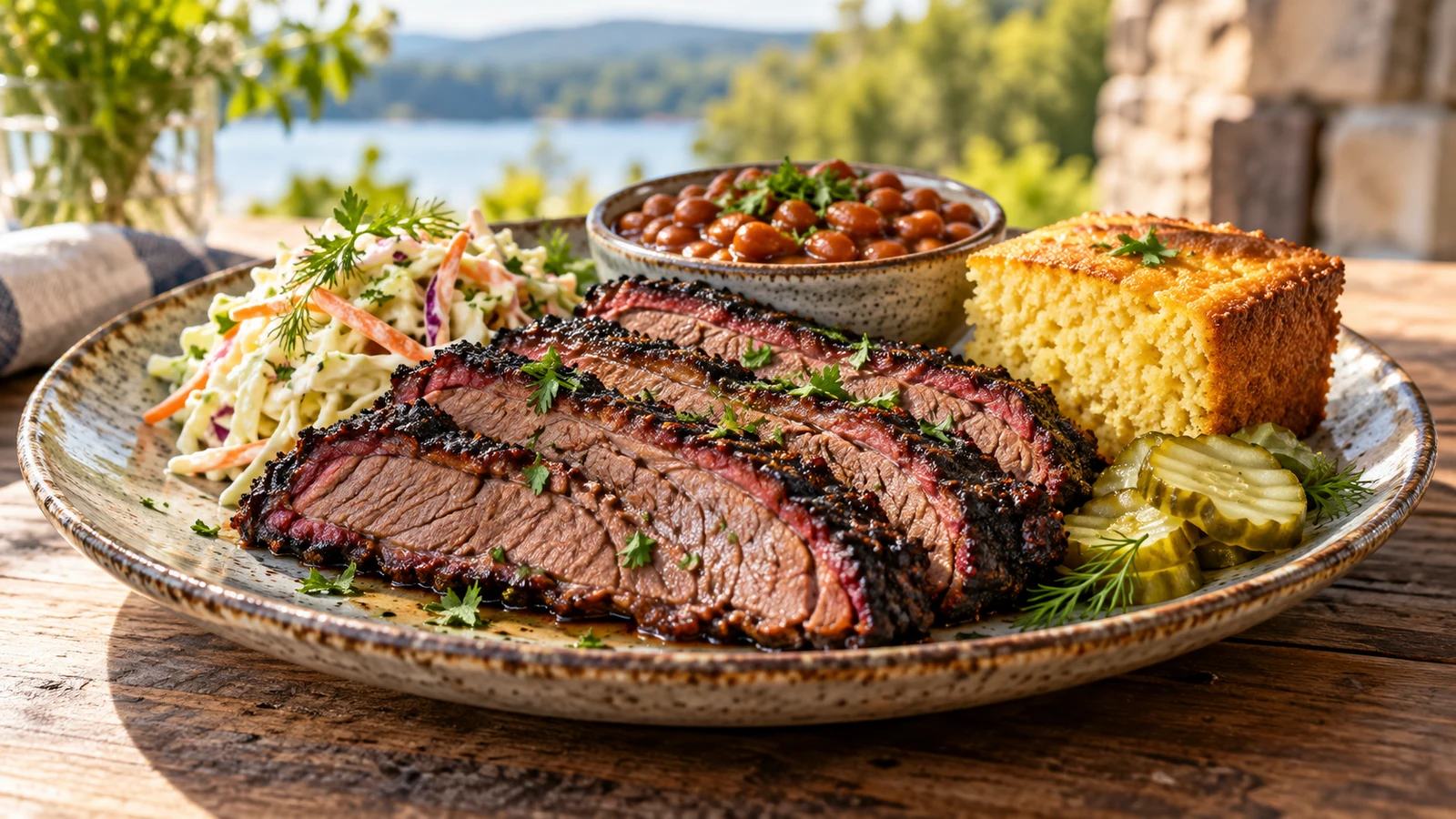
Serve brisket with pickles, sliced onions, bread, beans, slaw, or roasted vegetables. These bright, crisp, or lightly sweet sides balance the richness without hiding the bark. This brisket cooking reference provides additional serving inspiration.
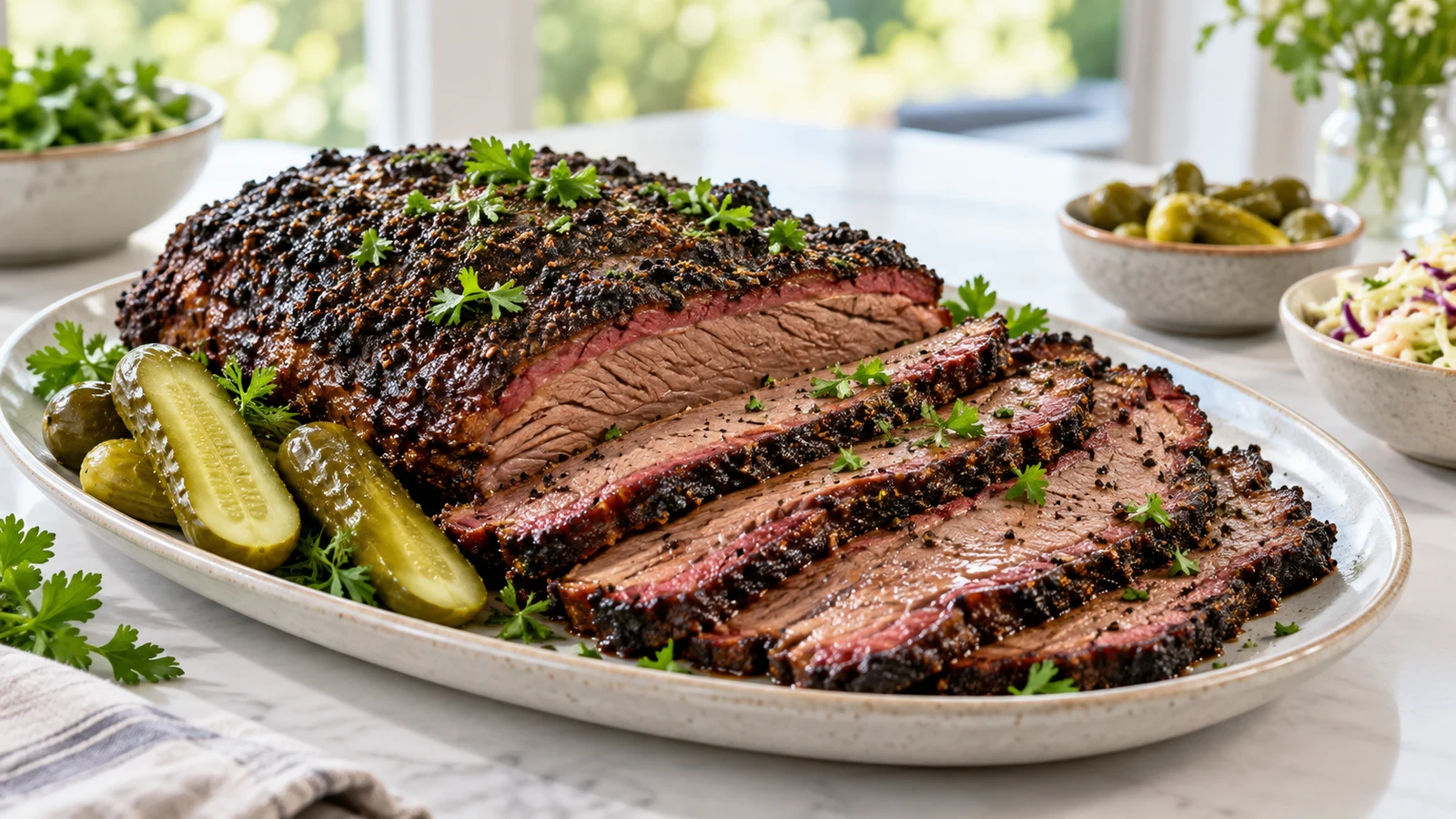
For a buffet, arrange overlapping slices on a warmed platter and keep extra juices nearby. Offer barbecue sauce on the side so guests can taste the smoke and seasoning first. Plan smaller portions when serving several sides and more generous portions when brisket is the main attraction.
Burnt ends can be made by cubing the point, seasoning it with sauce and extra rub, and returning it to the smoker until caramelized. Leftover smoked beef is also excellent in tacos, breakfast hash, chili, sandwiches, quesadillas, and loaded baked potatoes.
Make-Ahead, Storage, and Reheating
Making Brisket Ahead
For a same-day meal, finish early and use the warm holding period as scheduling insurance. For next-day service, refrigerate the rested brisket whole with its juices. Cold brisket is easier to slice neatly, and whole meat loses less moisture than slices during storage.
If you prepare this smoked beef brisket recipe ahead, save all liquid from the wrap. Remove and discard any hardened surface fat after chilling, then add the concentrated juices to the pan before reheating.
Refrigerating and Freezing
Refrigerate sliced or whole brisket with its juices in an airtight container within 2 hours of serving and use it within 4 days. Divide large amounts into shallow containers so they cool efficiently.
Freeze tightly wrapped portions with a spoonful of stock or cooking juices for up to 3 months. Remove excess air to reduce freezer burn, label each portion with the date, and thaw it overnight in the refrigerator.
Reheating Without Drying It Out
Place covered brisket and a splash of stock in a 275°F (135°C) oven until it reaches 165°F (74°C), usually 25 to 40 minutes. Reheat only the amount you plan to serve. Thin slices warm faster than a whole piece, so begin checking them early.
The gentle covered-oven method also works for leftovers from a beef brisket recipe slow cooker or beef brisket recipe oven preparation. Add only enough liquid to create moisture in the pan; submerging the meat can wash away its seasoning and soften its texture.
Frequently Asked Questions
How long does this smoked beef brisket recipe take?
At 250°F (121°C), estimate 60 to 75 minutes per pound after trimming, plus 2 to 4 hours of resting. Weather, meat thickness, smoker performance, and the length of the stall can change the schedule considerably. Always plan a generous holding window.
Should the fat cap face up or down?
Face the fat toward the strongest heat source. Use fat-side down when heat rises from beneath the grate; use fat-side up when heat primarily rolls across the top. The fat cap acts as a partial heat shield rather than soaking deeply into the meat.
Can I smoke brisket overnight?
Yes, provided your smoker can safely maintain a steady temperature and you use reliable high- and low-temperature alarms. Fill the fuel supply, position the smoker away from combustible materials, and never operate it in an enclosed space.
Why did my bark turn soft?
Wrapping too early, adding too much liquid, or trapping steam in foil can soften bark. Wait until the crust is firmly set, use butcher paper, and vent the brisket briefly before its holding rest.
Can I use only the brisket flat?
Yes, but the lean flat can dry out more easily than a whole packer. Choose a well-marbled piece, leave an even fat cap, and begin checking tenderness sooner. Its shorter cooking time means the schedule for this smoked beef brisket recipe must be adjusted.
Is a beef brisket recipe oven method the same as smoking?
No. A beef brisket recipe oven method offers stable heat and excellent tenderness, but it does not naturally create the same wood-smoke flavor. Use the oven guide when outdoor smoking is unavailable rather than adding excessive liquid smoke.
Can I adapt this into a beef brisket recipe slow cooker?
A beef brisket recipe slow cooker needs a smaller cut and braising-style instructions, so it is better to follow the dedicated slow-cooker method. A slow cooker retains moisture well but cannot reproduce dry smoke-set bark.
Are corned beef brisket in a crock pot recipes interchangeable with this recipe?
No. Corned beef brisket in a crock pot recipes use cured, already salted meat and often include a seasoning packet. Fresh whole packer brisket is required here. Substituting corned beef would make the final dish overly salty and fundamentally different.
Can a beef brisket instant pot recipe create bark?
A beef brisket instant pot recipe cooks with pressurized steam, so it cannot create traditional smoker bark during pressure cooking. Browning before or after cooking adds color, but the result remains closer to braised brisket.
How do I know which direction the grain runs?
Inspect the flat before seasoning and note the direction of its visible muscle fibers. Cut a small corner across that direction as a marker if helpful. After resting, slice perpendicular to those fibers, then rotate the point because its grain runs differently.
Do I need to spritz the brisket?
No. Spritzing is useful only when exposed edges look dry or begin darkening too quickly. Opening the smoker frequently slows cooking, and too much liquid can prevent the bark from setting. Use a light mist rather than soaking the surface.
Smoked Beef Brisket Recipe Card
Prep time: 45 minutes
Cook time: 10 to 14 hours
Rest time: 2 to 4 hours
Yield: 12 to 16 servings
Smoker temperature: 250°F (121°C)
Typical finishing range: 198°F to 205°F (92°C to 96°C)
Nutrition estimate per serving: 520 calories, 38 g fat, 41 g protein, 2 g carbohydrates, and 780 mg sodium. Values vary with trimming, serving size, and retained fat.
Instructions: Trim the fat cap to 1/4 inch, season evenly, and smoke at 250°F (121°C). When the bark is set and the center is about 165°F to 175°F (74°C to 79°C), wrap tightly. Continue cooking until the flat is probe-tender, then rest for at least 2 hours and slice against the grain.
Notes: Cooking time is an estimate, so build in a generous holding window. Clean smoke, a firmly set bark, and probe tenderness are more reliable than cooking by the clock.
With steady heat, patient resting, and careful slicing, this smoked beef brisket recipe delivers moist beef and a flavorful crust without complicated techniques. Give yourself extra time, trust the tenderness test, and serve each slice while its juices are still warm.
Reviews
Reader reviews are managed separately (outside this build).