Beef
Delicious teriyaki beef jerky recipe: Proven Method
Make a sweet-savory teriyaki beef jerky recipe with safe dehydrating steps, clear doneness cues, storage tips, and bold homemade flavor.
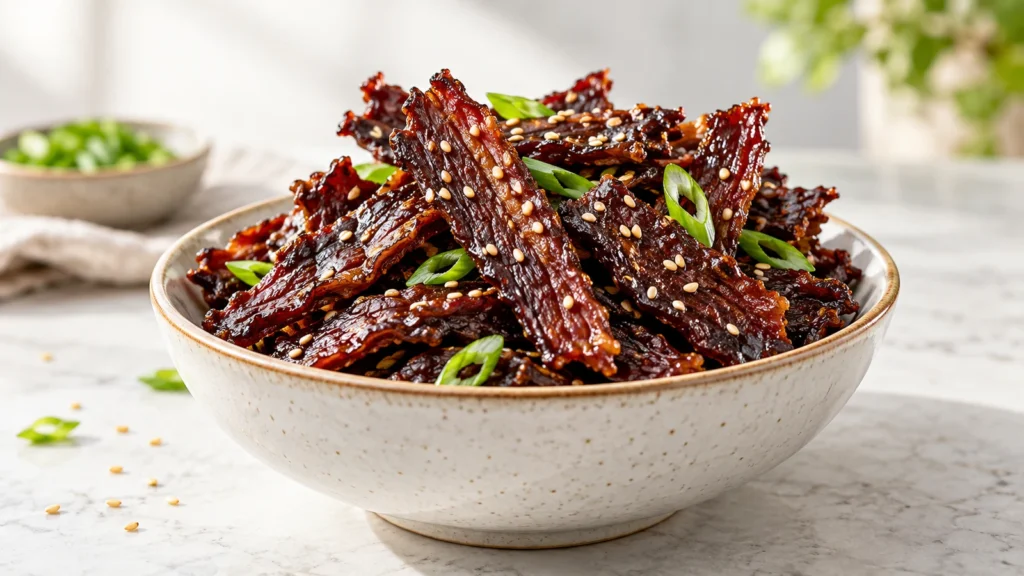
This teriyaki beef jerky recipe turns lean eye of round into savory-sweet strips with plenty of garlic and ginger. A 12–24-hour marinade builds flavor, while slow dehydration creates a chewy texture that is easy to customize.
Unlike a basic beef jerky recipe, this version balances soy sauce, mirin, brown sugar, Worcestershire sauce, and aromatics. The method includes precise slicing, safe heating guidance, dehydrator spacing, oven and smoker alternatives, and practical fixes for common jerky problems. The yield is about 8 ounces, depending on the beef’s moisture content.
Table of Contents
Why You’ll Love This Teriyaki Beef Jerky Recipe
- Balanced flavor: Soy sauce, mirin, and brown sugar create a sweet, salty glaze without masking the beef.
- Reliable texture: Exact slicing and doneness tests help prevent brittle or underdried jerky.
- Flexible method: Prepare this beef jerky recipe in a dehydrator, oven, or smoker.
- Easy to adjust: Control the sodium, sweetness, heat, and chewiness without changing the essential technique.
- Convenient portions: The finished strips pack easily for lunches, road trips, hikes, and protein-rich snacks.
Best Beef Cuts and Slicing Guidance
Eye of round is especially suitable for homemade teriyaki jerky because it is lean, affordable, and easy to slice uniformly. Top round is slightly more tender, bottom round has a stronger beef flavor but more connective tissue, and sirloin is tender but usually costs more. Trim away all visible exterior and internal fat because fat can become rancid during storage.
Chill the beef in the freezer for 45–60 minutes, until firm but not frozen solid, then slice it 1/8–1/4 inch (3–6 mm) thick. Cut against the grain for a tender bite or with the grain for a firmer, traditional chew. Whichever direction you choose, consistent thickness matters more than perfect shape in any beef jerky recipe.
A sharp slicing knife gives you better control than forcing a dull blade through soft meat. If the roast has an uneven shape, divide it into manageable sections before slicing. Lay questionable pieces beside one another to compare thickness, then trim especially thick areas so the batch dries at a similar rate.
Ingredients
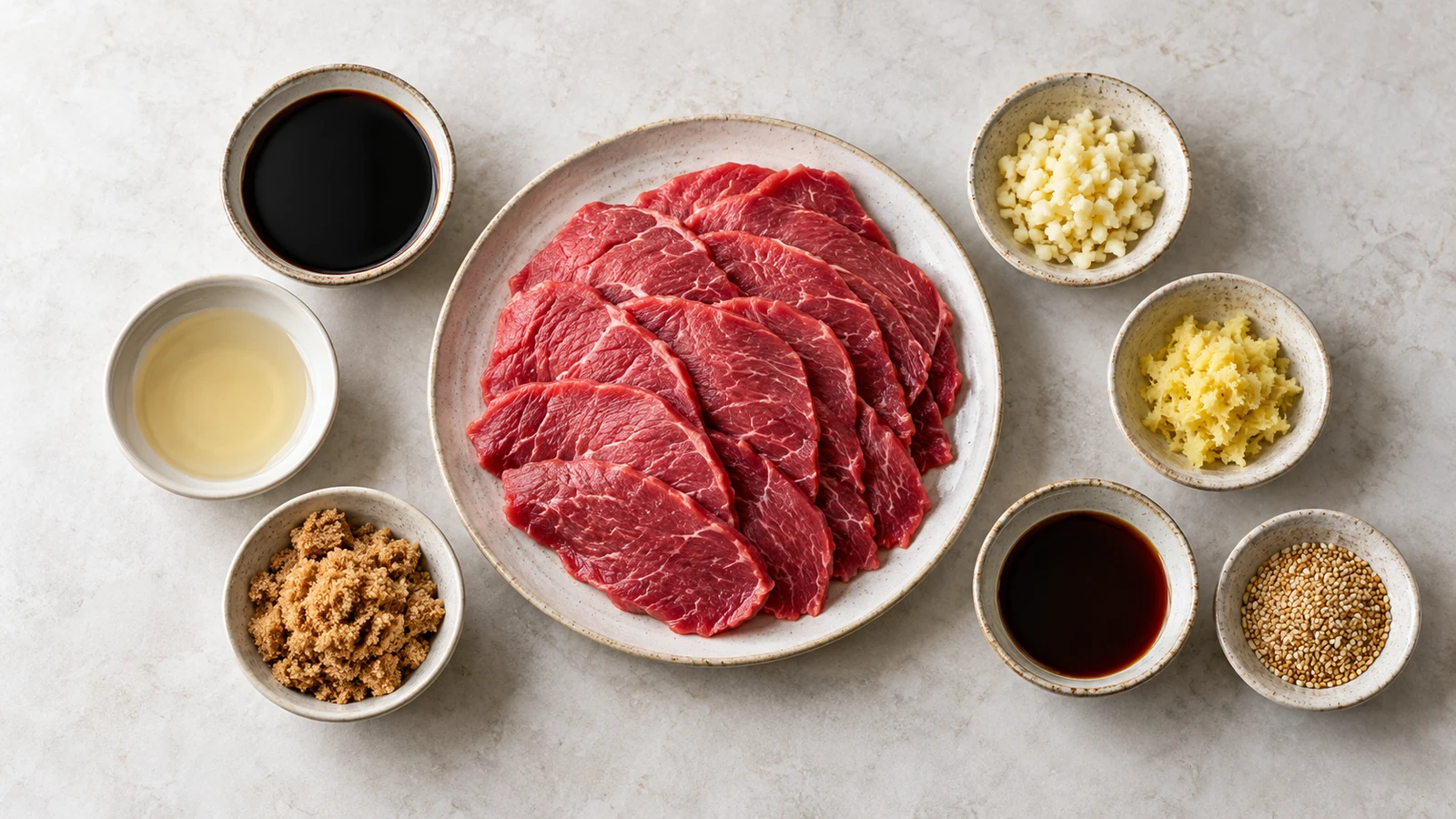
- 2 pounds (907 g) eye of round beef, well trimmed
- 3/4 cup (180 ml) regular soy sauce
- 1/2 cup (120 ml) mirin
- 1/3 cup (67 g) packed light brown sugar
- 4 garlic cloves, finely grated
- 1 tablespoon finely grated fresh ginger
- 2 tablespoons Worcestershire sauce
- 1 tablespoon sesame seeds
Understanding the Beef Jerky Marinade Recipe
Each ingredient in this beef jerky marinade recipe has a specific job. Soy sauce supplies salt and savory depth, mirin adds gentle sweetness, and brown sugar supports the glossy teriyaki finish. Worcestershire sauce reinforces the beef flavor, while grated garlic and ginger bring freshness that bottled teriyaki sauce may lack.
The marinade should coat the meat, but the beef does not need to float in liquid. Turn the strips thoroughly and press excess air from the bag if you use one. Redistributing the pieces midway through marinating helps the teriyaki beef jerky recipe season evenly, especially when thin slices stick together.
Do not reuse marinade that has contacted raw beef as a dipping sauce. Also avoid adding extra liquid merely to cover the meat; doing so dilutes the seasoning ratio. This measured beef jerky marinade recipe is formulated for 2 pounds of trimmed beef.
Equipment and Food Safety
You will need a sharp knife, nonreactive bowl or zip-top bag, measuring tools, paper towels, and a dehydrator with adjustable heat. An instant-read thermometer and kitchen scale are strongly recommended. Review the USDA’s safe handling guidance for beef, and keep raw meat refrigerated throughout preparation.
Dehydration alone may not destroy every harmful microorganism. For a safety-focused process, follow the USDA’s jerky preparation recommendations, including heating the meat to 160°F (71°C) before or promptly after drying. The steps below use a post-drying oven treatment to avoid cooking away the marinade before dehydration.
Wash the knife, cutting board, bowl, tongs, and your hands after they contact raw meat. Use clean utensils for finished jerky. Accurate appliance temperatures matter in beef jerky in dehydrator recipes, so check an unfamiliar dehydrator with a reliable thermometer rather than relying only on its dial.
How to Make This Teriyaki Beef Jerky Recipe
- Prepare the beef: Trim every visible pocket of fat. Partially freeze the meat, then cut uniform 1/8–1/4-inch slices with or against the grain according to your preferred texture.
- Mix the marinade: Whisk the soy sauce, mirin, brown sugar, garlic, ginger, Worcestershire sauce, and sesame seeds until most of the sugar dissolves. For deeper marinade guidance, see this beef jerky marinade recipe.
- Marinate: Add the beef and turn until every surface is coated. Cover and refrigerate for 12–24 hours, mixing once midway. Do not marinate at room temperature.
- Drain and arrange: Remove the strips and blot off excess liquid with paper towels. Arrange them in one layer on dehydrator trays, leaving at least 1/4 inch between pieces. Nothing should overlap or fold.
- Dehydrate: Dry at 160°F (71°C) for 4–6 hours. Rotate trays every 90 minutes if the machine dries unevenly, and begin checking thin strips after 3 1/2 hours. More technique-specific advice is available in these beef jerky in dehydrator recipes.
- Test for doneness: Cool one strip for 5 minutes, then bend it. Properly dried jerky bends and develops small surface cracks without snapping. A soft, damp-looking center is underdone; a strip that breaks cleanly or crumbles is overdried.
- Apply the safety finish: Place the dried strips on a clean baking sheet without overlapping. Heat in a preheated 275°F (135°C) oven for 10 minutes, confirming that the thickest piece reaches 160°F (71°C).
- Cool: Transfer the jerky to a clean rack and cool completely for 1–2 hours before packaging. Trapped warmth creates condensation and shortens storage life.
Expert Tips for a Consistent Beef Jerky Recipe
- Trim carefully: Remove seams of fat as well as the obvious outer layer. Lean meat gives this teriyaki beef jerky recipe a cleaner taste and better storage quality.
- Slice uniformly: A difference of only a few millimeters can make one piece brittle while another remains moist.
- Blot thoroughly: Excess beef jerky marinade recipe liquid creates sticky patches, extends drying time, and may drip inside the appliance.
- Preserve airflow: Leave open space around every strip so warm air reaches both sides. Never stack meat to fit more on a tray.
- Rotate strategically: Move trays from top to bottom and turn them front to back if your appliance has noticeable hot or cool areas.
- Remove pieces individually: Thin strips may finish before thick ones. Taking them out promptly protects the tender chew of this beef jerky recipe.
- Judge cooled jerky: Warm strips feel softer than they will after cooling, so rest each test piece for 5 minutes before checking it.
Record the cut, thickness, marinating duration, drying time, and tray positions after your first batch. Those notes make future beef jerky in dehydrator recipes much easier to reproduce because appliances, room humidity, and meat moisture vary.
Oven and Smoker Methods
For an oven, place the strips on wire racks over lined baking sheets. Dry at the oven’s lowest setting, ideally 160–175°F (71–79°C), with the door slightly open only if the manufacturer permits it. Rotate the pans every hour and expect approximately 4–7 hours.
An oven can have wider temperature swings than a dehydrator. Check thinner strips early and change pan positions for even drying. The same bend test and safety finish apply, making the oven a practical alternative when you want this teriyaki beef jerky recipe without a dedicated appliance.
For a smoker, maintain 160–175°F (71–79°C) and use a restrained amount of mild wood such as apple or cherry. Smoke until the jerky passes the bend test, generally 4–6 hours, then verify the safe internal temperature. Detailed preservation recommendations are available from the National Center for Home Food Preservation.
Heavy smoke can overpower the ginger, garlic, and teriyaki flavors. Start with a small amount of wood and maintain clean, light smoke. Arrange strips with space between them just as you would for beef jerky in dehydrator recipes.
Variations and Substitutions
Lower-Sodium and Gluten-Free Options
For lower sodium, replace regular soy sauce with reduced-sodium soy sauce; the finished flavor will be milder. For gluten-free jerky, use certified gluten-free tamari and a gluten-free Worcestershire sauce. These substitutions preserve the basic balance of the beef jerky marinade recipe, although brands vary in saltiness and sweetness.
Spicy or Less-Sweet Jerky
Add 1/2–1 teaspoon crushed red pepper for heat, or reduce the brown sugar to 1/4 cup for less sweetness. Mix either adjustment into the marinade so it reaches every strip. Avoid coating finished jerky with a wet sauce because added moisture can reduce its storage life.
Pineapple Variation
Pineapple juice tenderizes beef rapidly because it contains active enzymes. If substituting it for part of the mirin, use no more than 1/4 cup and limit marinating to 6–8 hours, or the exterior may become mushy. This shorter timing is important when adapting the teriyaki beef jerky recipe.
Whole-Muscle Versus Ground Beef
This technique is designed for sliced whole-muscle beef. A ground beef jerky recipe requires a jerky gun, a cohesive seasoned mixture, and a different drying process. Do not substitute loose ground meat directly into these instructions.
A ground beef jerky recipe can produce a softer, more uniform bite, but the handling and safety details differ from sliced jerky. Curing salt is not automatically interchangeable with table salt; use it only in a tested formulation and measure it precisely according to its label.
Make-Ahead and Storage Details
You can trim and partially freeze the beef in advance, but slice it while it has the correct firm texture. The marinade can be mixed and refrigerated separately for up to 2 days before raw meat is added. Stir it well because the sugar and sesame seeds may settle.
Once the beef enters the marinade, keep it covered and refrigerated for the stated 12–24 hours. Plan backward from your desired drying day: starting the beef jerky marinade recipe in the evening usually makes the strips ready for the dehydrator the next morning or afternoon.
Condition the cooled jerky by loosely packing it in a clean container for 24 hours and checking for condensation. If moisture appears, return the strips to the dehydrator until dry, repeat the safety heating step, and cool again. Discard jerky that develops mold, an off odor, or unusual moisture.
For conservative home storage, refrigerate this teriyaki beef jerky recipe airtight for up to 2 weeks. Divide a large batch into small packages so opening one does not expose all the jerky to warm, humid air. Label each package with the preparation date.
Freeze portioned jerky for up to 3 months, pressing excess air from freezer bags before sealing. Jerky needs no reheating; thaw it in the refrigerator and let a serving sit briefly at room temperature for a softer chew. Never taste jerky that shows spoilage to decide whether it is safe.
Troubleshooting Homemade Jerky
Why Is My Jerky Still Wet Inside?
The slices may be too thick, crowded, or insufficiently blotted. Separate the pieces, continue drying, and test a cooled strip again. Many problems with beef jerky in dehydrator recipes come from judging texture while the meat is still warm.
Why Did the Jerky Become Brittle?
It dried too long, was sliced too thinly, or sat in a hotter area of the appliance. Shorten the next drying cycle and remove thin pieces as soon as they pass the bend test. Cutting closer to 1/4 inch also creates a chewier beef jerky recipe.
Why Is the Batch Drying Unevenly?
Inconsistent slice thickness, overlapping strips, crowded trays, and uneven appliance heat are common causes. Rotate trays every 90 minutes and keep space around each piece. If one tray consistently finishes first, note its position for your next teriyaki beef jerky recipe.
Why Is My Jerky Sticky After Cooling?
It may have retained surface marinade or internal moisture. Refrigerate it immediately, then dry it longer in a single layer and complete the oven safety finish again before cooling. Blotting the beef jerky marinade recipe from the surface more thoroughly helps prevent this problem.
Why Does the Jerky Taste Bland?
The slices may have been too thick, the marinade may have been diluted, or the meat may have marinated for too little time. Extend marinating toward 24 hours or slice slightly thinner next time. Do not simply sprinkle salt onto the finished jerky.
Serving Ideas
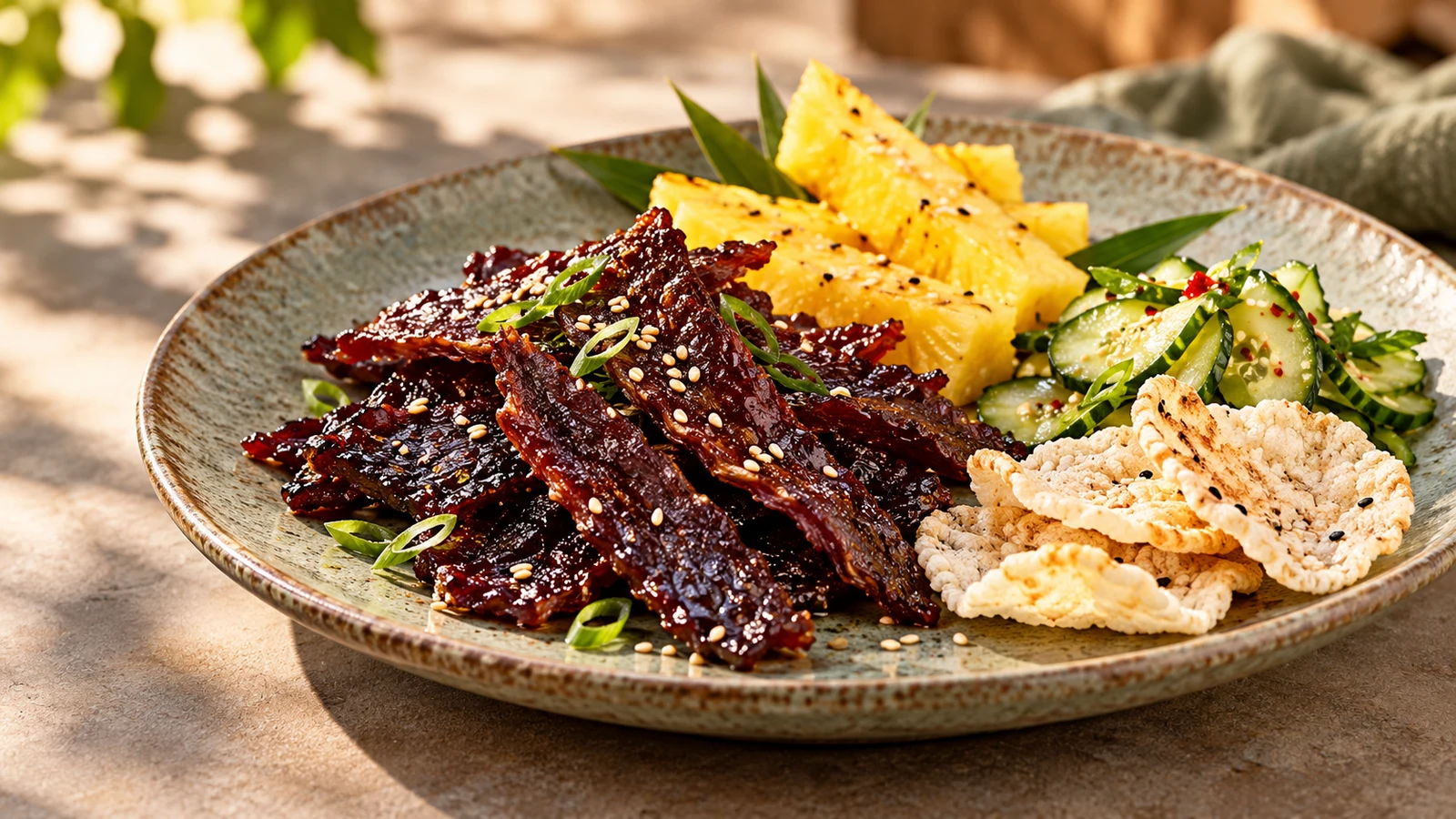
Serve the jerky as a high-protein snack with cucumber slices, fresh pineapple, rice crackers, or a crisp cabbage salad. The sweet-savory flavor also pairs well with unsalted nuts, which balance the sodium in this teriyaki beef jerky recipe.
For travel, divide the finished beef jerky recipe into small refrigerated portions and transfer only what you expect to eat. At home, cut the strips into bite-size pieces for snack boards or lunch boxes. Keep serving utensils and containers dry to avoid introducing moisture.
Jerky can also add concentrated flavor to casual meals. Chop a small amount over rice bowls, noodle salads, or scrambled eggs shortly before serving. It is chewy rather than tender, so thin cuts are easier to eat when used as a topping.
Nutrition Estimate
Based on eight 1-ounce servings, each serving provides approximately 150 calories, 20 grams protein, 4 grams fat, 8 grams carbohydrate, and 850 milligrams sodium. Values vary with the cut, ingredient brands, marinade absorption, and final moisture level.
Frequently Asked Questions
How long should beef marinate for this teriyaki beef jerky recipe?
Allow 12 hours for balanced flavor or up to 24 hours for a stronger marinade. Keep it covered and refrigerated the entire time. Turn the strips midway so the beef jerky marinade recipe reaches pieces that may have settled together.
How can I tell when a beef jerky recipe is properly dried?
Cool a test strip for 5 minutes before bending it. Underdone jerky feels soft or wet inside, properly dried jerky bends with fine cracks, and overdried jerky snaps or crumbles. Check several pieces because thickness can vary.
Can I increase the teriyaki beef jerky recipe?
Yes. Maintain the same marinade-to-meat ratio and avoid crowding the trays. A larger batch may require additional tray rotation, but individual strips should not need substantially longer. Work in separate dehydrator loads if airflow becomes restricted.
Can I shorten the marinating time?
You can, but the flavor will be lighter. Twelve hours provides a reliable balance for the stated slice thickness. A very short soak does not give this beef jerky marinade recipe enough time to season the center of thicker strips.
Can frozen beef be used?
Yes, provided it was stored safely and is thawed in the refrigerator. Once partially thawed but still firm, it may be easier to slice. Do not marinate completely frozen meat because the beef jerky recipe will not absorb seasoning evenly.
Do I need curing salt?
Not for the method as written. This process relies on refrigeration, controlled drying, the specified oven safety finish, and cold storage. Do not add curing salt casually to this or other beef jerky in dehydrator recipes; use it only in a tested formulation.
Can I make this as a ground beef jerky recipe?
Not with a direct one-for-one substitution. Ground meat needs a properly mixed seasoning blend, careful temperature control, and shaping with a jerky gun or similar tool. Follow a dedicated ground beef jerky recipe instead of placing loose ground beef on the trays.
Why must the jerky cool before packaging?
Warm jerky releases moisture that can condense inside a closed container. Complete cooling protects texture and storage quality. Spread the strips on a clean rack for 1–2 hours, then package the teriyaki beef jerky recipe only when every piece is cool.
Which direction should I slice the beef?
Slice against the grain for a more tender bite or with the grain for a firmer, traditional chew. Both work well. Uniform thickness has a greater effect on drying consistency than grain direction in this beef jerky recipe.
Can I dry jerky at a lower temperature?
Follow the stated temperature and safety process. Low, uncontrolled heat can keep meat too long in an unsafe temperature range. Reliable temperature control is essential for beef jerky in dehydrator recipes, so verify your appliance rather than guessing.
Printable Recipe Card
Yield: About 8 ounces | Prep: 25 minutes | Marinate: 12–24 hours | Dry: 4–6 hours | Temperature: 160°F (71°C)
Summary: Slice 2 pounds of trimmed eye of round 1/8–1/4 inch thick. Marinate it with soy sauce, mirin, brown sugar, garlic, ginger, Worcestershire sauce, and sesame seeds for 12–24 hours. Blot, space on trays, and dehydrate at 160°F (71°C) for 4–6 hours. Finish at 275°F (135°C) for 10 minutes, verify 160°F (71°C), and cool completely.
Final Notes
This carefully timed teriyaki beef jerky recipe delivers savory-sweet flavor and an adaptable chew. Uniform slices, uncrowded trays, a reliable doneness test, safe finishing heat, and complete cooling are the keys to a consistent batch.
Once you understand the slicing and drying cues, this beef jerky recipe is easy to repeat. Keep notes on your appliance and preferred thickness, follow safe handling practices, and adjust only the optional flavor variations to make each batch your own.
Reviews
Reader reviews are managed separately (outside this build).