Beef
Best Beef Jerky Marinade Recipe: Oven or Dehydrator
Master this beef jerky marinade recipe with tested ratios, ideal cuts, safe drying, and oven or dehydrator tips. Get tender, flavorful jerky today.
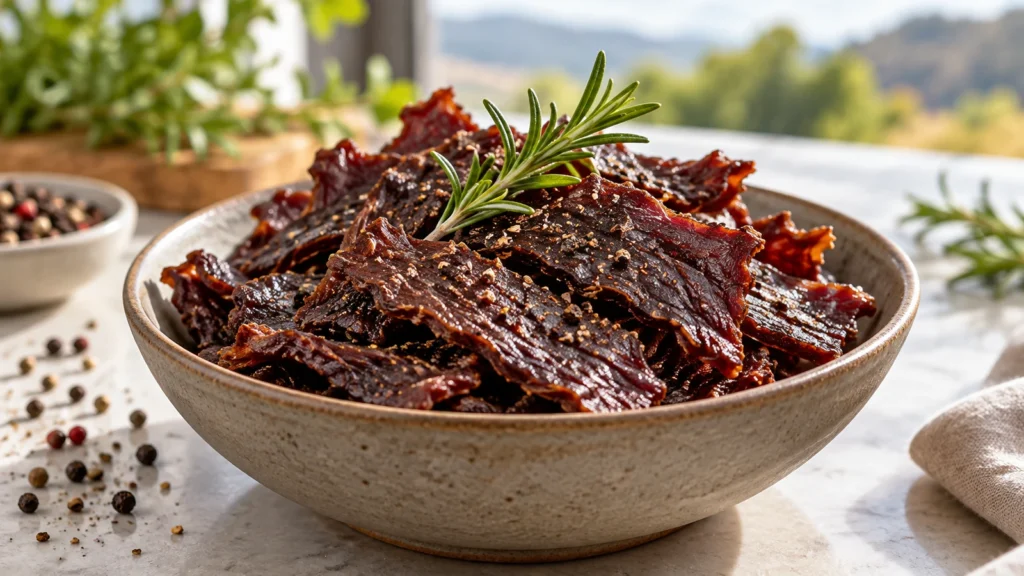
This beef jerky marinade recipe delivers savory, chewy homemade jerky in either an oven or dehydrator. The balanced mixture seasons the meat deeply without masking its beefy flavor, making it a dependable beef jerky recipe for beginners and experienced home cooks alike.
Freezer-assisted slicing, measured marinade ratios, and clear doneness tests take the guesswork out of the process. Allow 12 to 24 hours for marinating, then choose the drying method that fits your equipment. Unlike many beef jerky in dehydrator recipes, these instructions also include an oven option, food-safety guidance, storage advice, and practical fixes for common texture problems.
Table of Contents
Why You’ll Love This Beef Jerky Recipe
- Includes tested marinade amounts for every pound of beef.
- Provides separate oven and dehydrator instructions.
- Explains slicing direction, safe preparation, and precise doneness cues.
- Offers lower-sodium, gluten-free, spicy, smoky, and lower-sugar options.
- Uses familiar pantry seasonings and readily available lean beef.
- Produces portable, protein-rich snacks that can be prepared ahead.
Ingredients
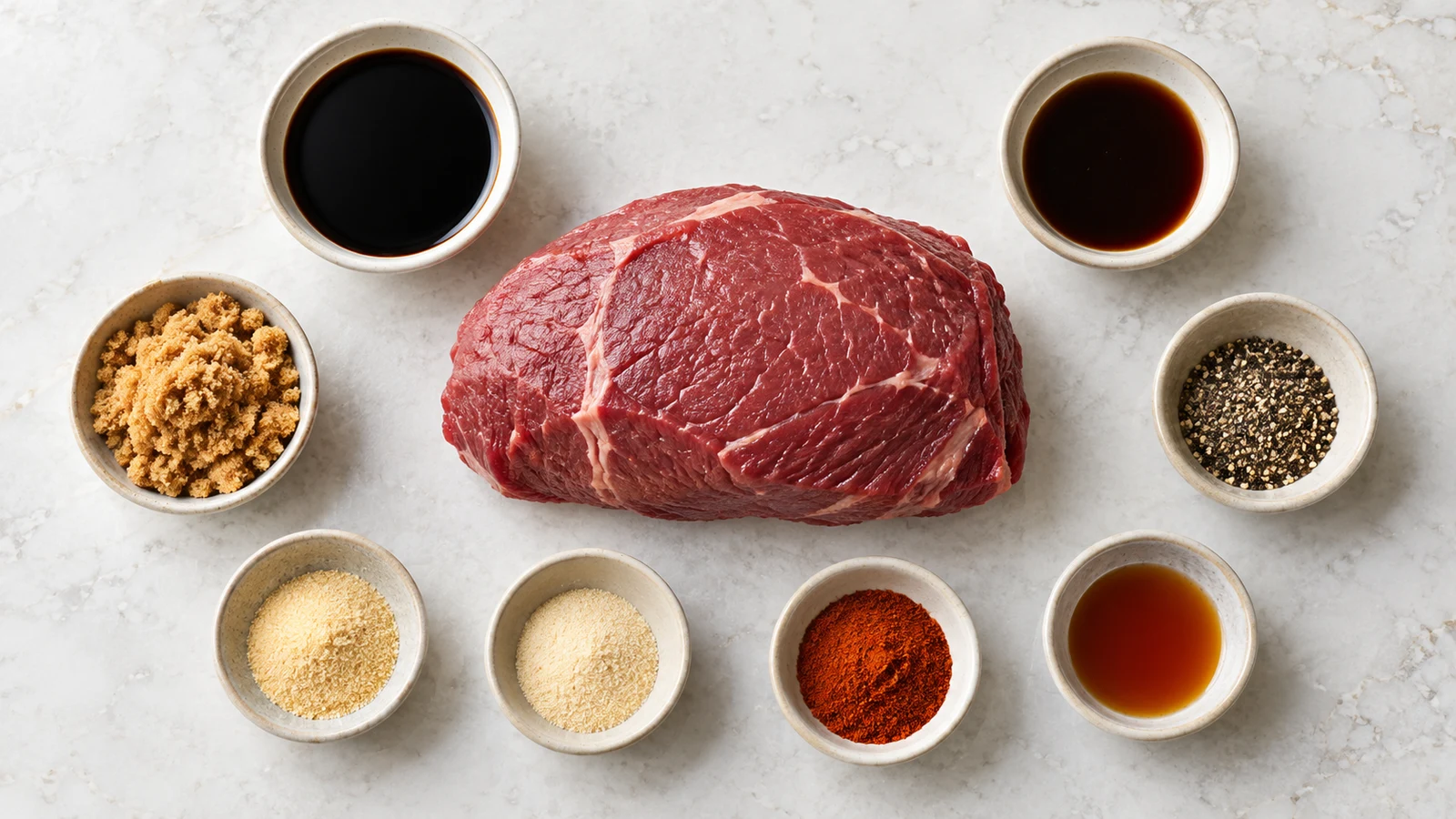
- 2 pounds (907 g) lean beef: Eye of round is especially lean and easy to slice. Top round, bottom round, sirloin tip, and trimmed flank steak also work well.
- 1/2 cup (120 ml) low-sodium soy sauce: Supplies salt and savory depth.
- 1/4 cup (60 ml) Worcestershire sauce: Adds tangy, concentrated umami flavor.
- 2 tablespoons packed brown sugar: Balances the salt and encourages a rich color.
- 2 teaspoons coarsely ground black pepper: Provides mild heat.
- 2 teaspoons smoked paprika: Adds color and smoke flavor.
- 1 teaspoon garlic powder: Distributes evenly through the marinade.
- 1 teaspoon onion powder: Rounds out the savory seasoning.
- 1/2 teaspoon red pepper flakes: Optional, for extra heat.
- 1/2 teaspoon liquid smoke: Optional, especially for oven-dried jerky.
Best Beef Cuts and Marinade Ratios
Choose a lean cut because fat does not dry like muscle and can become greasy or rancid during storage. Trim away the exterior fat and visible seams before slicing. Eye of round offers the most uniform pieces, while flank steak has a slightly more pronounced grain and chew. A lean, evenly shaped roast also makes this beef jerky recipe easier to portion and dry consistently.
For each 1 pound (454 g) of trimmed beef, use 1/4 cup (60 ml) low-sodium soy sauce, 2 tablespoons (30 ml) Worcestershire sauce, 1 tablespoon brown sugar, 1 teaspoon black pepper, 1 teaspoon smoked paprika, 1/2 teaspoon garlic powder, and 1/2 teaspoon onion powder. Double those amounts for 2 pounds, or multiply them proportionally for a larger batch.
Keep the ratio of meat to liquid steady when scaling the beef jerky marinade recipe. Too little marinade leaves some strips unevenly seasoned, while an excessive amount wastes ingredients without making the flavor penetrate more deeply. Use a container that holds the beef snugly so the liquid remains in contact with every piece.
How to Make This Beef Jerky Marinade Recipe
- Firm the beef: Place it in the freezer for 45 to 90 minutes, until firm around the edges but not frozen solid. This makes thin, even slicing much easier.
- Slice it: Cut the beef into strips about 1/8 to 1/4 inch (3 to 6 mm) thick. Slice against the grain for tender jerky or with the grain for a firmer, traditional chew. Keep the thickness consistent so the pieces finish together.
- Mix the marinade: Whisk the soy sauce, Worcestershire sauce, brown sugar, pepper, paprika, garlic powder, onion powder, pepper flakes, and liquid smoke in a nonreactive bowl.
- Marinate: Add the sliced beef and turn until every piece is coated. Cover and refrigerate for 12 to 24 hours, stirring once or twice. Do not leave the meat at room temperature.
- Drain and arrange: Remove the strips and discard the raw marinade. Pat the surfaces with paper towels, then arrange the beef in one layer without overlapping.
- Dry safely: Follow the dehydrator or oven directions below. The USDA recommends heating meat to 160°F (71°C) before or during dehydration; review its jerky safety guidance before choosing a home process.
Dehydrator Method
For reliable beef jerky in dehydrator recipes, heat the strips to 160°F (71°C) using a method supported by your appliance instructions, then dry at 145–160°F (63–71°C). Arrange strips with space for airflow and dry for 4 to 7 hours, beginning checks around hour four. Rotate trays every two hours unless the dehydrator circulates air evenly. For additional preparation methods, see these beef jerky dehydrator instructions.
Do not crowd the trays or let the strips fold over their edges. Open spaces allow warm air to reach both sides, which is essential in beef jerky in dehydrator recipes. If your machine has trays that dry at different rates, move the upper trays downward and turn each tray halfway around during rotation.
Drying time varies with strip thickness, meat moisture, room humidity, tray position, and the dehydrator model. Treat the clock as a guide rather than the final test. Begin removing finished pieces individually instead of waiting for every strip in the beef jerky recipe to reach the same texture.
Oven Method
Heat the oven to 175°F (80°C), or its lowest setting. Set wire racks over foil-lined rimmed baking sheets, arrange the strips separately, and dry for 3 to 6 hours. If safe for your oven, leave the door slightly ajar to release moisture; rotate the pans front to back and swap rack positions every 60 to 90 minutes. Guidance from the National Center for Home Food Preservation provides further detail on safely drying jerky.
A wire rack prevents the underside from sitting in liquid and lets heat circulate around each strip. If juices collect on the pan early in the process, carefully remove the pan and blot them without changing the stated oven temperature. Continue checking the thinnest pieces first as this beef jerky recipe nears the three-hour mark.
Expert Tips for Better Homemade Jerky
Slice the Beef as Evenly as Possible
Uniform thickness is one of the most important details in a successful beef jerky marinade recipe. A sharp slicing knife gives better control than a dull blade, and partially freezing the roast reduces slipping. If one end of the cut is narrower, separate those smaller strips on the tray so they can be checked and removed first.
Choose the Grain Direction Before Cutting
Look for the long muscle fibers running through the beef. Cutting across those fibers shortens them and produces a tender bite. Cutting parallel to them creates a stronger chew. You can divide the roast and use both directions in one beef jerky recipe to learn which texture your family prefers.
Remove Surface Marinade Before Drying
Patting the strips removes excess liquid but does not erase the flavor absorbed during marinating. A wet exterior lengthens drying and can leave sticky areas. Press gently with paper towels rather than squeezing the meat. This small step helps the beef jerky marinade recipe dry more evenly and develop a clean surface.
Judge Doneness Only After a Brief Cooling Test
Warm jerky is softer and more flexible than cooled jerky, so testing it directly from the tray can lead to over-drying. Remove one piece, let it cool for 5 minutes, and bend it. Fine cracks should appear, but the strip should remain leathery rather than breaking like a cracker.
Track Thickness and Drying Time
Write down the cut, average thickness, tray arrangement, and final drying time after each batch. Those notes make future beef jerky in dehydrator recipes much more predictable because you can adjust for your particular appliance. Seasonal humidity may still change the time, so continue using the bend test.
More Tips for the Best Results
- Check pieces individually: Thin strips finish first. Remove them while thicker pieces continue drying.
- Blot excess fat: Dab warm jerky with paper towels to improve storage quality.
- Condition the batch: Once fully cool, loosely pack the jerky in a container for one day and inspect for condensation. If moisture appears, return it to the oven or dehydrator.
- Never reuse raw marinade: Marinade that contacted uncooked beef may contain harmful bacteria. Discard it rather than using it as a sauce.
- Use a nonreactive container: Glass, food-safe plastic, or stainless steel will not react with the salty, acidic marinade.
- Separate stuck pieces: Turn and separate the strips during marinating so all surfaces receive seasoning.
Variations and Substitutions
Teriyaki Variation
For a teriyaki beef jerky recipe, replace the Worcestershire sauce with 1/4 cup (60 ml) pineapple juice, increase brown sugar to 3 tablespoons, and add 1 teaspoon grated ginger. The pineapple and ginger create a sweeter, brighter profile while the soy sauce retains the savory foundation.
Watch this teriyaki beef jerky recipe carefully near the end of drying because the additional sugar can make the surface seem tackier than the original version. Use the same cooling and bend tests, and do not mistake a glossy sugar coating for internal moisture.
Spicy and Smoky Options
For spicy jerky, add 1 to 2 teaspoons cayenne or 1 tablespoon hot sauce. For a smokier batch, use 1 teaspoon liquid smoke and an extra teaspoon of smoked paprika. Keep the other quantities unchanged so the salt balance and drying behavior of the beef jerky marinade recipe remain dependable.
Gluten-Free and Lower-Sodium Options
For gluten-free jerky, use certified gluten-free tamari and a gluten-free Worcestershire sauce. To reduce sodium, use low-sodium soy sauce, replace one-quarter of it with water, and marinate for 12 hours rather than 24. For lower-sugar jerky, reduce the brown sugar to 1 teaspoon per pound or omit it; expect a less glossy finish.
Why Ground Beef Needs a Different Method
Sliced jerky should not be prepared like a ground beef jerky recipe. Ground jerky requires a separate seasoned mixture, uniform shaping, and its own safety procedure; use this ground beef jerky guide instead. If you have extra lean ground meat, these healthy ground beef meal ideas offer additional ways to use it.
Do not simply pour this liquid marinade into a ground beef jerky recipe. Ground meat cannot be drained like sliced beef, so excess liquid may prevent it from binding and drying uniformly. Follow quantities developed specifically for ground meat and shape every strip to an even thickness.
Make-Ahead Planning
The beef can be trimmed and sliced several hours before mixing the marinade. Keep it covered and refrigerated until you are ready to combine everything. You can also whisk the marinade in advance and refrigerate it separately, then stir it again before adding the meat because spices may settle.
For convenient scheduling, assemble the beef jerky marinade recipe in the evening, refrigerate it overnight, and begin drying the next morning. A 12-hour soak provides balanced seasoning. If you plan to use the full 24 hours, start at the same time on consecutive days so the meat does not marinate longer than intended.
Allow enough time for drying, cooling, and conditioning before packing the batch for a trip or gathering. Jerky must cool completely before it enters an airtight container. Trapping warmth can create condensation, even when the strips seemed properly dried when they left the appliance.
Troubleshooting This Beef Jerky Recipe
- Brittle jerky: It dried too long or was sliced too thin. Shorten the next batch’s drying time and begin checking earlier.
- Greasy jerky: The beef contained too much fat. Trim more thoroughly, choose eye of round, and blot the finished strips.
- Overly salty jerky: Use reduced-sodium sauces, dilute part of the soy sauce with water, and limit marinating to 12 hours.
- Moist jerky: Return it to the dehydrator or oven and check every 20 to 30 minutes. Never package jerky that feels wet or shows condensation.
- Unevenly dried pieces: Sort the strips by thickness, leave more room between them, and rotate trays or pans during drying.
- Weak flavor: Make sure each strip is submerged or coated, stir during marinating, and allow the full 12 hours.
- Harsh smoke flavor: Measure liquid smoke carefully. Its concentrated flavor can dominate a beef jerky recipe when poured by eye.
- Sticky exterior: Pat the marinated meat more thoroughly and provide adequate airflow. Sweet variations naturally remain slightly glossier.
Why Did the Batch Finish at Different Times?
Uneven thickness is usually responsible, although crowded trays and inconsistent airflow can contribute. This happens in both oven batches and beef jerky in dehydrator recipes. Remove dry strips promptly and continue drying the others; leaving every piece in place until the thickest one finishes makes thin strips brittle.
What Should I Do if Condensation Appears?
Remove the jerky from its container and return it to the oven or dehydrator promptly. Dry it in short intervals, cool another test strip, and check again. Condensation means the batch still contains too much moisture for storage. Do not wipe the container and repack the same under-dried strips.
Serving Ideas
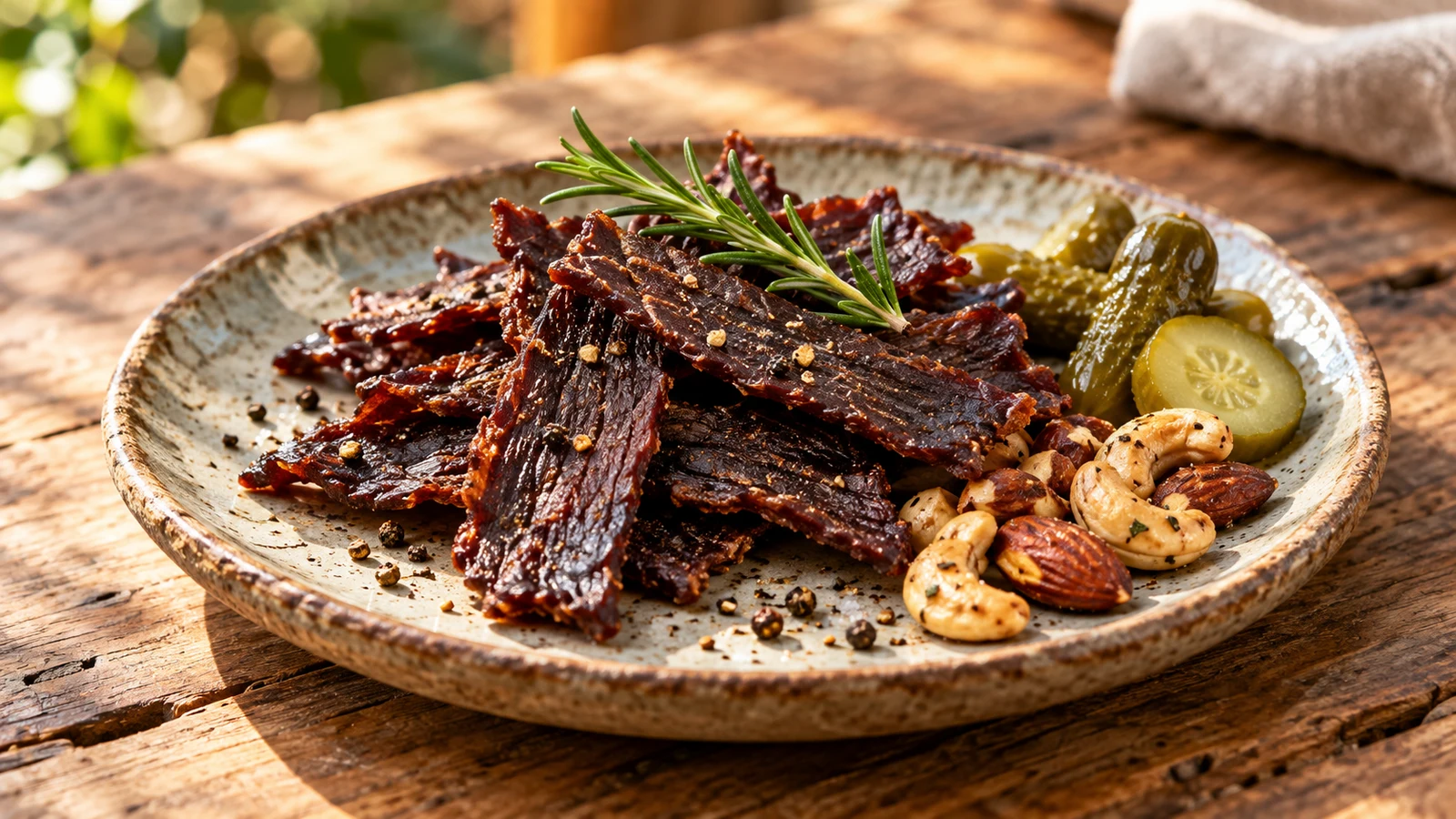
Serve the finished beef jerky recipe as a convenient snack for road trips, hikes, packed lunches, or busy afternoons. Pair a few strips with roasted nuts and fresh or dried fruit for contrasting textures. Pickles, crisp vegetables, and mild cheese also complement its concentrated savory flavor.
For a casual snack board, cut longer pieces into bite-size portions and arrange them with crackers, mustard, olives, and sliced vegetables. Keep the jerky separate from wet foods until serving so it does not absorb moisture and soften. Return unused jerky to refrigeration promptly.
Jerky can also add savory flavor to meals. Chop a small amount and scatter it over scrambled eggs, baked potatoes, or a crisp salad just before serving. Because this beef jerky marinade recipe is already well seasoned, taste the dish before adding more salt.
How to Store This Beef Jerky Marinade Recipe
Cool jerky completely before packing it in airtight containers. For conservative home storage, refrigerate it for up to 2 weeks or freeze it for up to 3 months; discard any jerky with mold, an unpleasant odor, or unusual moisture. Kansas State University’s home meat-drying safety guide explains why adequate heating and careful storage matter.
Divide a large batch into several small containers so you do not expose all of it to warm air and moisture each time you want a snack. Label each package with the preparation date and variation. This is especially useful when comparing a classic batch with a teriyaki beef jerky recipe.
For freezing, pack cooled strips in portions and press out as much air as practical before sealing. Thaw a portion in the refrigerator while it remains wrapped. Keeping it sealed during thawing helps condensation form on the packaging rather than directly on the jerky.
Jerky does not require reheating. If refrigerated pieces feel too firm, let the serving sit at room temperature for 10 minutes, keeping the remaining batch chilled. Do not microwave the jerky to soften it because brief, uneven heating can make thin edges tough.
Frequently Asked Questions
How long should beef marinate for this beef jerky marinade recipe?
Marinate thinly sliced beef in the refrigerator for 12 to 24 hours. Twelve hours gives balanced seasoning; 24 hours creates a stronger, saltier flavor. Turn the strips once or twice so the marinade reaches each surface evenly.
Can I marinate beef jerky for more than 24 hours?
It is usually unnecessary. Extended marinating can make thin strips overly salty and may soften their surface texture. Plan to begin drying within the stated 12-to-24-hour window for the most consistent beef jerky recipe.
How do I know when beef jerky is done?
Cool a test strip for 5 minutes, then bend it. Properly dried jerky is leathery, shows fine cracks, and contains no visible moisture, but it does not crumble or snap immediately. Test thick and thin strips separately.
Should I slice beef with or against the grain?
Slice against the grain for easier biting and a more tender texture. Slice with the grain when you prefer dense, chewy strips. The direction changes texture but does not change the marinade quantities or drying temperatures.
Can I use this marinade for a ground beef jerky recipe?
No. A ground beef jerky recipe needs seasonings and liquid amounts designed for minced meat, along with uniform shaping and specific handling instructions. This marinade is intended for sliced whole-muscle beef that can be drained and patted dry before dehydration.
Can I double this beef jerky recipe?
Yes. Double every ingredient proportionally and use enough trays or pans to keep all strips in a single, uncrowded layer. A larger batch may require drying in separate rounds if your appliance cannot maintain airflow around every piece.
Why is my teriyaki beef jerky recipe slightly sticky?
The additional brown sugar and pineapple juice create a glossier surface. Slight tackiness can be normal, but the cooled meat should not release liquid or feel wet inside. Continue drying if a bent test piece shows visible moisture.
Do beef jerky in dehydrator recipes need tray rotation?
It depends on the appliance. Models with strong horizontal airflow may dry evenly without rotation, while stacked round machines often benefit from moving trays every two hours. Follow the manufacturer’s directions and compare pieces from different tray positions.
Can I reuse the leftover marinade?
Do not reuse marinade that touched raw beef or serve it as a sauce. Discard it after removing the strips. Mixing a fresh separate portion is the safer choice if you want a similar flavor for another cooked dish.
Why must the jerky cool before storage?
Warm food releases vapor inside a sealed container. That vapor can condense into droplets and raise the surface moisture, reducing storage quality. Cooling and conditioning provide a final opportunity to identify pieces that require additional drying.
Which cut makes the most tender beef jerky recipe?
Eye of round sliced against the grain produces lean, relatively tender strips with a consistent shape. Flank steak can also be tender when cut across its pronounced grain, although careful trimming is necessary to remove visible fat.
Recipe Card
Recipe: Beef Jerky Marinade Recipe
Yield: About 12 ounces (340 g) jerky, 8 servings
Prep time: 25 minutes
Marinating time: 12–24 hours
Drying time: 3–7 hours
Temperature: Dehydrator 145–160°F (63–71°C); oven 175°F (80°C)
Equipment: Sharp knife, cutting board, bowl, measuring cups, paper towels, dehydrator or wire racks and sheet pans
Nutrition: Approximately 170 calories, 25 g protein, 5 g carbohydrate, 5 g fat, and 620 mg sodium per serving; values vary by cut and sauces.
Storage: Refrigerate airtight for up to 2 weeks or freeze for up to 3 months.
Final Notes
With lean beef, consistent slices, and patient drying, this beef jerky marinade recipe develops a satisfying chew and concentrated savory flavor. Check each strip rather than relying only on the clock, since thickness, humidity, and equipment determine the final drying time.
Once you master the basic beef jerky recipe, adjust the grain direction or choose one of the measured flavor variations. Whether you prefer classic seasoning, beef jerky in dehydrator recipes, a sweeter teriyaki beef jerky recipe, or a separate ground beef jerky recipe, careful heating, thorough drying, complete cooling, and refrigerated storage support dependable results.
Reviews
Reader reviews are managed separately (outside this build).