Beef
Tender Oven-Baked beef ribs recipe with Foolproof BBQ
Discover this beef ribs recipe for tender oven-baked ribs with savory dry rub, sticky BBQ glaze, and dependable low-and-slow instructions every time.
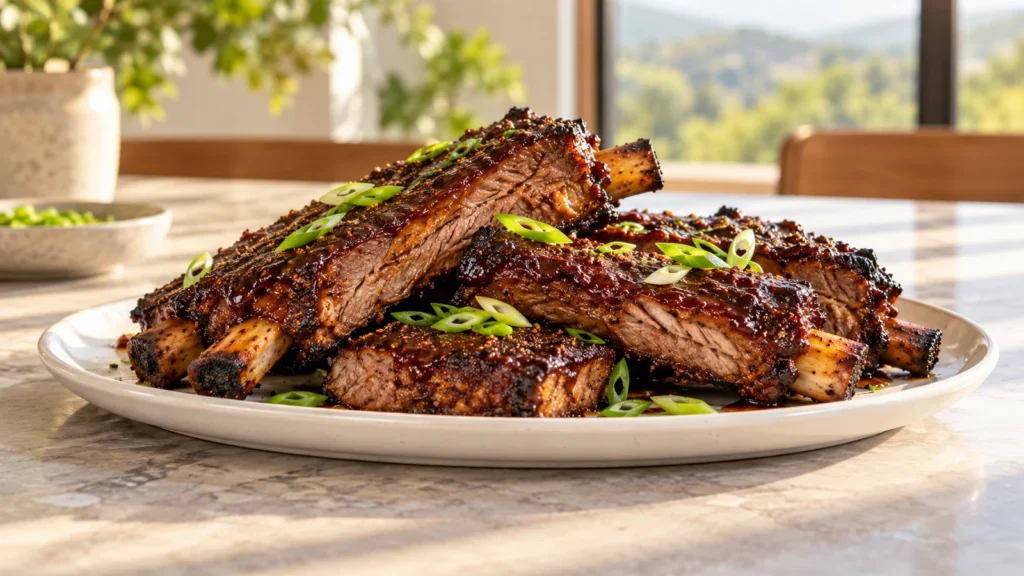
This beef ribs recipe turns a well-marbled rack into tender, richly seasoned ribs with a sticky BBQ finish. A tightly covered pan and low oven temperature make the method dependable, while a quick broil caramelizes the glaze. The same patient technique can also help when adapting a beef short ribs recipe for the oven.
Allow about 1 pound (454 g) of bone-in ribs per adult, or 1/2 pound (227 g) of boneless ribs. Most racks serve three to four people, depending on their size and the side dishes. Choosing evenly sized pieces helps this beef ribs recipe cook consistently from end to end.
Table of Contents
Beef Rib Cut Guide
Beef back ribs are cut near the rib roast. They have curved bones with flavorful meat between them and work especially well as a rack. Choose ribs with even marbling, moist red meat, and enough meat to cover the bones.
Short ribs are thicker and meatier. For more cut-specific guidance, see this beef short ribs recipe. The chuck short ribs guide also explains where that cut comes from.
Bone-in ribs develop deep flavor and usually need more time. Boneless ribs cook faster but can dry out, so the timing note below is important when adapting this as a boneless beef short ribs recipe. Buy pieces of similar thickness so they finish together.
How Back Ribs and Short Ribs Differ
Back ribs are usually cooked as a long rack, while short ribs may be sold as thick English-cut pieces or thinner cross-cut strips. This beef ribs recipe is written for back ribs, but its covered, low-temperature method suits thick short ribs better than thin cross-cut pieces. Keep the ingredient quantities unchanged and use the cut-specific timing guidance below.
If you are comparing this method with a beef short ribs oven baked recipe, remember that thickness matters more than the number of bones. Thick, compact pieces need enough time for collagen to soften. Thin pieces have less margin for error and should be checked earlier.
Why You’ll Love This Beef Ribs Recipe
- The covered pan traps moisture for reliably tender meat.
- A simple dry rub supplies flavor without an overnight marinade.
- The BBQ glaze becomes glossy and lightly charred under the broiler.
- The method works for back ribs and several short-rib cuts.
- The covered cooking stage can be completed ahead for easier entertaining.
Ingredients
- 3 to 4 pounds (1.36 to 1.81 kg) beef back ribs
- 1 tablespoon (15 ml) yellow mustard
- 2 teaspoons kosher salt
- 2 teaspoons smoked paprika
- 2 teaspoons packed brown sugar
- 1 teaspoon garlic powder
- 1 teaspoon onion powder
- 1 teaspoon ground black pepper
- 1/2 teaspoon ground cumin
- 1/4 teaspoon cayenne pepper, optional
- 1/2 cup (120 ml) water or unsalted beef broth
- 3/4 cup (180 ml) thick BBQ sauce
- 1 tablespoon (15 ml) apple cider vinegar
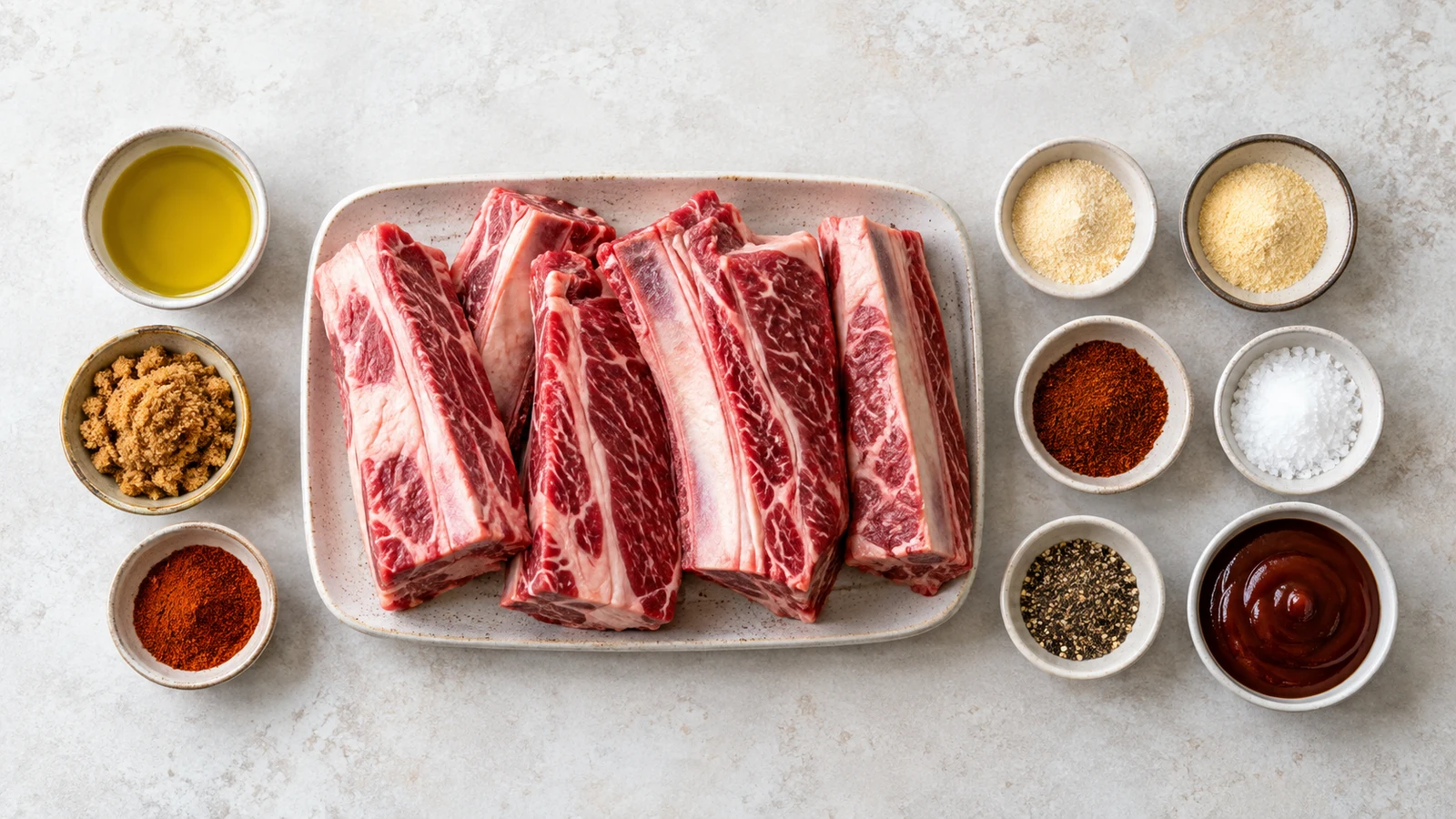
Mustard helps the seasoning adhere but does not make the ribs taste strongly of mustard. Replace it with oil if preferred. For a sugar-free rub, omit the brown sugar; for a less smoky blend, substitute sweet paprika for smoked paprika.
Choosing a BBQ Sauce
A thick sauce clings best and develops a glossy coating under the broiler. Very thin sauces may run into the pan before they caramelize. Taste the sauce before mixing in the vinegar; if it is already sharply acidic, add the vinegar gradually while keeping the listed amount available for the glaze.
Equipment
- Rimmed baking sheet or roasting pan
- Heavy-duty aluminum foil
- Small bowl and pastry brush
- Instant-read thermometer
- Thin knife and paper towel for membrane removal
Preparation and Membrane Guidance
Heat the oven to 275°F (135°C). Pat the ribs dry. If a tough, shiny membrane covers the bone side, loosen one corner with a thin knife, grip it through a paper towel, and pull it away. Score any stubborn section rather than removing excessive meat.
Some back-rib racks arrive with the membrane removed. Short ribs may have connective tissue that should remain because it softens during low-and-slow cooking. Trim only thick surface fat, leaving a thin layer for moisture and flavor.
Drying the surface gives the mustard and spices a firm base. Apply the rub to the edges as well as the broad meaty side, but avoid piling seasoning into thick patches. An even coating makes the finished beef ribs recipe taste balanced in every slice.
How to Make This Beef Ribs Recipe
- Mix the dry rub: Combine the salt, paprika, brown sugar, garlic powder, onion powder, pepper, cumin, and cayenne.
- Season: Rub the mustard over every meaty surface, then apply the seasoning evenly. Let the ribs stand for 20 minutes, or refrigerate them covered for up to 24 hours.
- Cover tightly: Place the ribs meat-side up in the pan. Pour the water or broth around, not over, the meat. Seal the pan tightly with foil so steam cannot readily escape.
- Bake slowly: Cook for 3 to 3 1/2 hours, checking at 3 hours. This tightly covered technique is what makes the beef short ribs oven baked recipe approach effective without a smoker.
- Glaze: Mix the BBQ sauce with the vinegar. Carefully uncover the pan, discard or reserve the juices, and brush the ribs with half the glaze.
- Broil: Set the oven to broil. Broil the ribs 6 inches (15 cm) from the heat for 2 to 4 minutes. Apply the remaining glaze and broil for another 1 to 2 minutes, watching constantly.
- Rest: Rest for 10 minutes before slicing between the bones.
Doneness and Timing by Cut
Tender ribs should have browned edges, exposed bone tips, and meat that yields when pierced without becoming mushy. A rack should bend readily when lifted with tongs, and the surface may crack slightly. For tender texture, ribs commonly reach 195°F to 205°F (91°C to 96°C), well above the minimum safe temperature.
- 2- to 3-pound back-rib rack: 2 1/2 to 3 hours at 275°F (135°C).
- 3- to 4-pound back-rib rack: 3 to 3 1/2 hours.
- Bone-in English-cut short ribs: 3 1/2 to 4 hours.
- Boneless short ribs, about 2 inches thick: 2 1/2 to 3 hours; begin checking early.
Use tenderness as the final test because thickness and marbling affect cooking time. The USDA provides a safe minimum temperature chart; avoid touching bone when taking a reading.
When adapting a boneless beef short ribs recipe, insert the thermometer through the side into the thickest center. Begin testing at the early end of the range because boneless pieces can move from firm to very soft more quickly than a rack.
Expert Tips for the Best Beef Ribs Recipe
- Seal the foil firmly: Escaping steam is a common cause of dry, tough ribs. Crimp two overlapping sheets if one sheet will not cover the pan completely.
- Keep the heat low: Do not raise the oven temperature to rush the connective tissue. Slow heating gives collagen time to soften while the covered pan limits moisture loss.
- Position the rack correctly: Keep the meaty side facing up so it does not sit directly in the cooking liquid.
- Protect the seasoning: Pour broth or water around the ribs rather than over them so the rub stays in place.
- Use tenderness, not only time: Racks of equal weight can differ in thickness, fat, and connective tissue.
- Glaze near the end: BBQ sauce contains sugar that can burn during a long bake.
- Watch the broiler: The surface of this beef ribs recipe can change from caramelized to scorched within seconds.
- Rest before slicing: Ten minutes lets the hot juices settle and helps the glaze adhere.
How to Keep the Ribs Moist
Use a pan that holds the rack without leaving an excessive amount of empty space. The 1/2 cup (120 ml) of liquid creates a moist cooking environment; it is not intended to submerge the meat. If the foil tears during baking, replace or patch it promptly to preserve steam.
How to Slice Clean Portions
Turn the rested rack bone-side up so the bones are easy to see, then cut between them with a sharp knife. This prevents accidental contact with bone and preserves more meat on each serving. Turn the portions glaze-side up before arranging them on a platter.
Troubleshooting This Beef Ribs Recipe
Why Are the Ribs Still Tough?
If the ribs are tough, they usually need more covered cooking rather than more sauce. Add a few tablespoons of liquid, reseal the pan, and bake for 20 to 30 minutes before testing again. High internal temperature alone does not guarantee tenderness if the connective tissue has not had sufficient time to soften.
Why Did the Meat Become Dry?
A loose foil seal, an unusually lean cut, or excess cooking time can cause dryness. Serve the ribs with defatted pan juices or extra warm sauce. When repeating the beef short ribs recipe with lean pieces, begin checking at the earliest suggested time and stop when a knife enters easily.
Why Is the Glaze Pale or Burned?
A pale glaze needs a little more broiling. If it slides off, the rib surface may be too wet; lightly blot excess moisture before brushing. A burned glaze generally means the rack was too close to the element or left unattended. Apply another thin layer of sauce only after removing any bitter, blackened spots.
Why Did the Meat Fall Apart?
Falling-apart meat indicates overcooking. It remains suitable for sandwiches, baked potatoes, or rice bowls, but shorten the covered stage next time. Check a smaller rack or a boneless beef short ribs recipe adaptation at least 30 minutes before the standard back-rib timing.
Oven Versus Smoker
The oven supplies steady heat and requires little attention. A smoker adds pronounced wood flavor and a darker exterior but requires fuel management; cook at about 250°F (121°C) until tender. For another slow-cooked beef project, try this Traeger beef brisket method.
A smoked prime rib roast beef recipe is a distinct preparation: prime rib is cooked to a rosy sliceable doneness, whereas ribs need more time to soften connective tissue. Do not apply prime-rib temperatures or timing to this recipe.
The distinction also matters when planning a menu. A smoked prime rib roast beef recipe produces uniform slices for carving, while this beef ribs recipe gives individual portions with a tender, pull-away texture and a sticky exterior.
Variations and Substitutions
Dry-Rub Beef Ribs
For a sauce-free version, double the dry rub and finish the ribs uncovered for 10 minutes instead of glazing. Watch the edges during the uncovered stage because the brown sugar can darken quickly.
Spicy BBQ Ribs
Add 1 teaspoon chipotle powder to the rub and hot sauce to the glaze. Chipotle contributes both heat and smoke, making this variation especially useful when the beef ribs recipe is cooked in an oven rather than a smoker.
Herb-Seasoned Ribs
Replace the cumin with 1 teaspoon dried thyme. This gives the ribs a savory herbal note without altering their cooking method, temperature, or timing.
Less-Sweet Ribs
Omit the brown sugar and use an unsweetened tomato-based finishing sauce. The glaze may caramelize less deeply, so rely on color and bubbling rather than expecting the same glossy sweetness.
Using Short Ribs
To turn the method into a beef short ribs recipe, use thick English-cut pieces and follow the listed 3 1/2- to 4-hour range. Arrange them in one layer with space between the pieces. For a boneless beef short ribs recipe, use pieces about 2 inches thick and start checking after 2 1/2 hours.
Serving Ideas for Beef Ribs
Serve the ribs with slaw, roasted vegetables, cornbread, or creamy sour cream mashed potatoes. Slice the rack just before serving and offer extra warmed BBQ sauce separately.
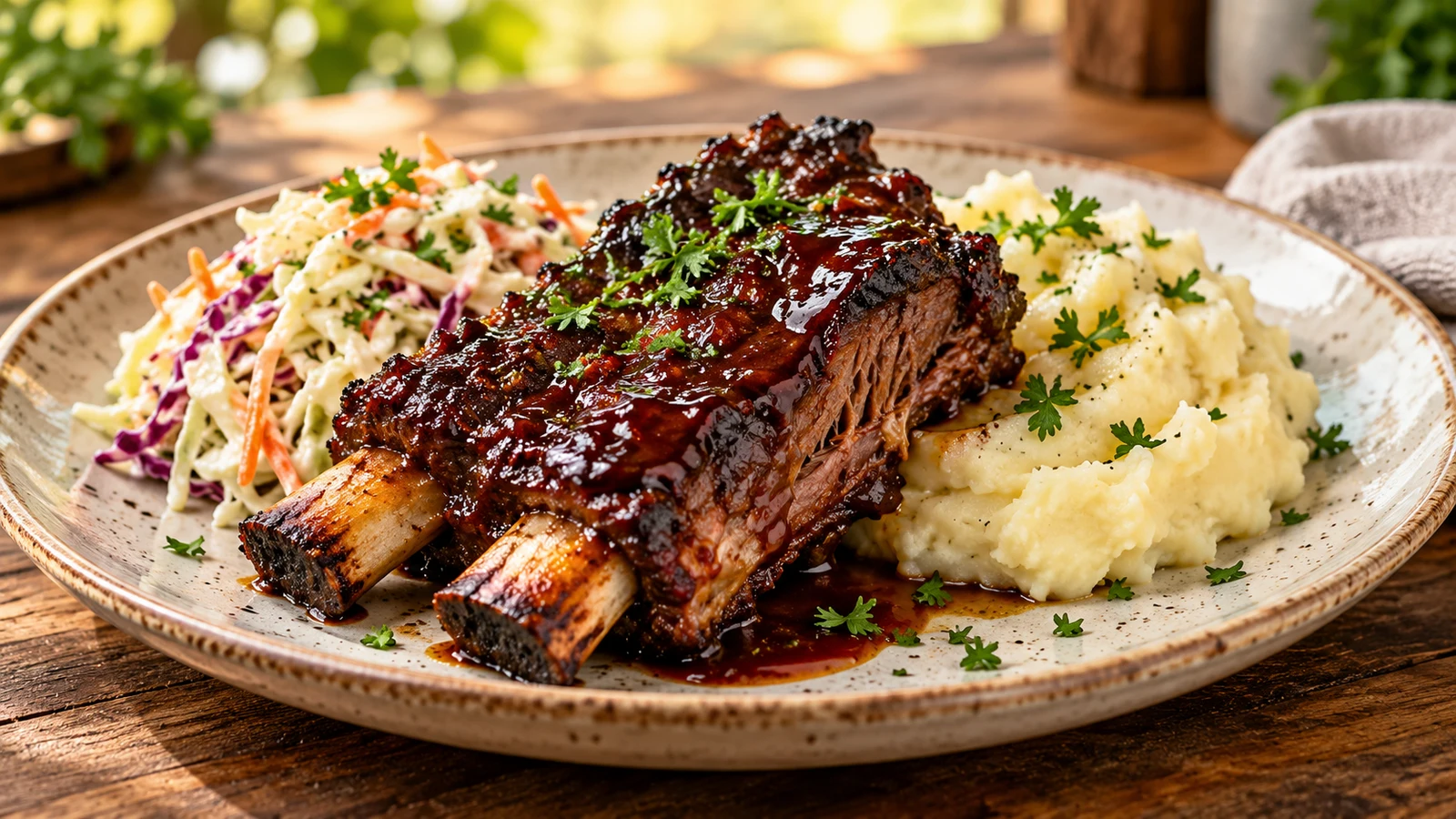
For a balanced plate, pair the rich ribs with one creamy side and one crisp or acidic side. Cabbage slaw, cucumber salad, green beans, or vinegar-dressed greens cut through the glaze. Mashed potatoes or cornbread catch the flavorful juices.
For a casual gathering, cut the rack into individual ribs and place them on a warmed platter. For a sit-down dinner, serve two or three ribs per person according to their size. This beef ribs recipe also works well with simple roasted vegetables because the bold sauce supplies the main seasoning.
Make-Ahead, Storage, and Reheating
Preparing the Ribs Ahead
Season the ribs up to 24 hours ahead and keep them covered in the refrigerator. For more advance preparation, complete the covered bake, cool the ribs promptly, and refrigerate them. Save the glaze and broiling stage for just before serving so the exterior remains sticky rather than soft.
A make-ahead beef short ribs oven baked recipe is particularly convenient for entertaining because the long cooking stage is finished before guests arrive. Reheat the covered meat gently, then glaze and broil it at the last moment.
Refrigerating and Freezing
Divide large amounts into shallow containers and refrigerate within two hours. Keep leftovers in an airtight container for up to four days. Store the ribs with a spoonful of defatted pan juice when possible to protect their texture.
Freeze portions for up to three months. Wrap or contain them securely, include a little pan juice, and label the package with the date. Thaw frozen ribs overnight in the refrigerator before reheating.
How to Reheat Without Drying
Reheat covered at 300°F (149°C) with a splash of broth for 20 to 30 minutes, or until the center reaches 165°F (74°C). Uncover, brush with sauce, and broil briefly to restore the sticky finish. This gentle method works for leftovers from either a beef ribs recipe or a beef short ribs recipe.
Frequently Asked Questions
Should beef ribs fall off the bone?
They should pull away easily while retaining enough structure to slice. Meat that completely collapses can be delicious, but it is technically past the ideal point for neat servings.
Can I cook the ribs at 350°F?
Yes, but the higher heat gives connective tissue less time to soften evenly. For the most forgiving beef ribs recipe, use 275°F (135°C) and plan for the longer cooking time.
Can I prepare the ribs the day before?
Yes. Season them up to 24 hours ahead, or complete the covered baking stage one day ahead. Refrigerate promptly, then reheat, glaze, and broil before serving.
Do I need to boil beef ribs first?
No. Boiling can dilute beef flavor and makes it harder for the dry rub to adhere. Covered oven cooking provides the moisture needed to tenderize the ribs.
Can I use this as a beef short ribs recipe?
Yes. Use thick, bone-in English-cut short ribs and extend the covered cooking range to 3 1/2 to 4 hours. Keep the oven at 275°F (135°C), retain the same ingredient quantities, and judge doneness by tenderness rather than time alone.
How does a boneless beef short ribs recipe change the timing?
Boneless pieces about 2 inches thick generally need 2 1/2 to 3 hours. Begin checking at the early end because size and marbling vary. Keep them covered until tender, then glaze and broil as directed.
What makes this a reliable beef short ribs oven baked recipe?
The tightly sealed pan holds steam around the meat while the low oven heat gradually softens connective tissue. The finishing glaze is added only after the ribs become tender, preventing its sugar from burning during the long covered bake.
Can I substitute the timing from a smoked prime rib roast beef recipe?
No. A smoked prime rib roast beef recipe targets a sliceable roast, often with a rosy center. Beef ribs require a higher final tenderness range and enough time for their connective tissue to soften, so the two preparations are not interchangeable.
Can I double this beef ribs recipe?
Yes, provided the ribs fit in one layer across two covered pans. Use the same oven temperature and begin checking at the stated time. Rotate the pans if the oven heats unevenly, and broil one pan at a time for better control.
Should I use broth or water?
Either works. Unsalted beef broth adds subtle savory flavor, while water lets the rub and BBQ sauce dominate. Avoid salty broth because the dry rub already contains kosher salt.
Why is the sauce mixed with apple cider vinegar?
The vinegar loosens a thick BBQ sauce and adds acidity that balances its sweetness and the richness of the beef. It also helps the glaze spread in a thin, even layer before broiling.
Nutrition Information
A serving of beef ribs supplies protein, iron, zinc, and vitamin B12, but the exact calories, fat, and sodium vary substantially by cut, trimming, and sauce. The USDA FoodData Central database can provide values for the specific beef cut and ingredients you use.
Recipe Card
Tender Oven-Baked BBQ Beef Ribs
- Yield: 4 servings
- Prep time: 20 minutes
- Cook time: 3 hours 35 minutes
- Total time: 4 hours 5 minutes, including resting
- Oven temperature: 275°F (135°C), followed by broiling
Ingredients: 3 to 4 pounds (1.36 to 1.81 kg) beef back ribs; 1 tablespoon (15 ml) mustard; 2 teaspoons kosher salt; 2 teaspoons smoked paprika; 2 teaspoons brown sugar; 1 teaspoon each garlic powder, onion powder, and black pepper; 1/2 teaspoon cumin; optional 1/4 teaspoon cayenne; 1/2 cup (120 ml) broth or water; 3/4 cup (180 ml) BBQ sauce; and 1 tablespoon (15 ml) apple cider vinegar.
Method: Remove the membrane when present, apply mustard and dry rub, and place the ribs meat-side up in a roasting pan with the liquid. Cover tightly and bake at 275°F (135°C) for 3 to 3 1/2 hours. Brush with the sauce-and-vinegar mixture, broil until caramelized, and rest for 10 minutes.
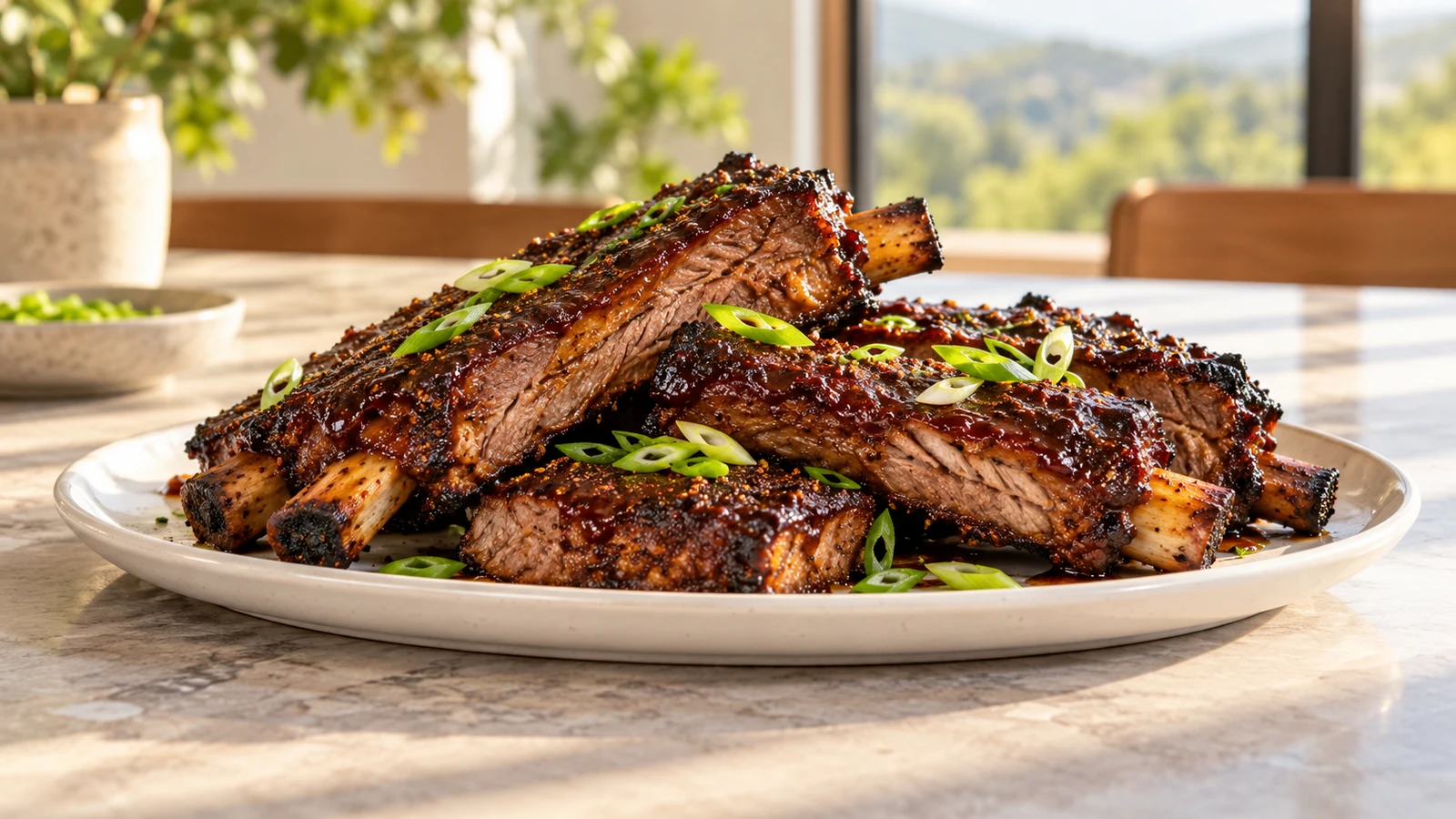
Notes: Begin checking smaller racks or boneless pieces early. The ribs are ready when easily pierced and approximately 195°F to 205°F (91°C to 96°C). For step photographs, capture membrane removal, the seasoned rack, the tightly sealed pan, the tenderness test, and the finished glaze using descriptive alt text such as “beef ribs recipe coated with caramelized BBQ glaze.”
This patient beef ribs recipe produces deeply seasoned, tender ribs without complicated equipment. Follow the texture cues, keep the pan tightly covered, glaze only at the end, and adjust the cooking time to the cut for a satisfying dinner every time.
Reviews
Reader reviews are managed separately (outside this build).