Beef
Ultimate Tender Traeger Beef Brisket Recipe Guide
Master the traeger beef brisket recipe with tips for trimming, seasoning, smoking, wrapping, resting, and slicing for tender, flavorful results.
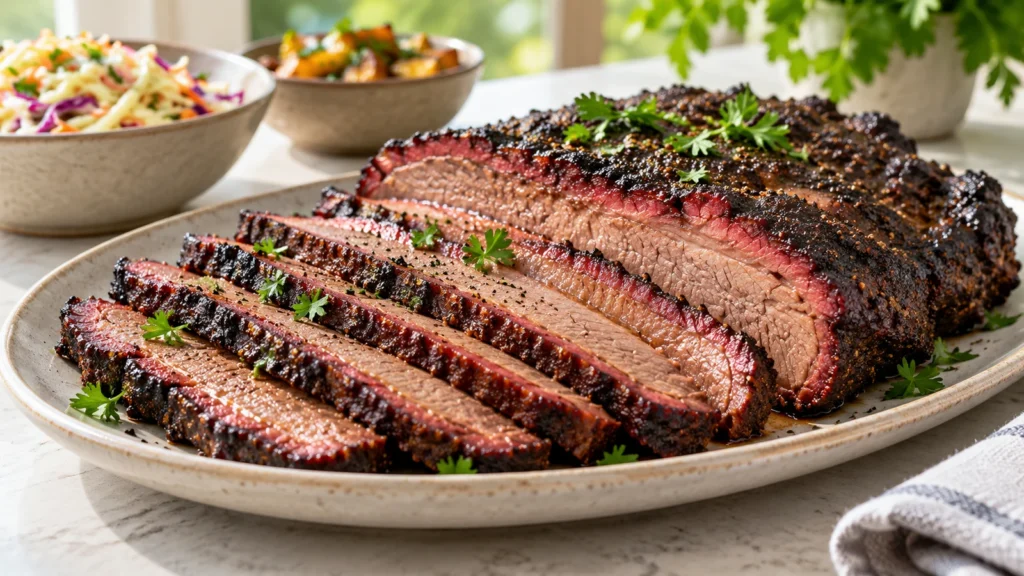
This traeger beef brisket recipe produces a dark, peppery bark, juicy slices, and tender meat with a gentle wood-smoke flavor. It follows the same fundamentals as a traditional smoked beef brisket recipe, with practical guidance tailored to a pellet grill.
Plan on roughly 12 to 18 hours for a whole packer brisket, followed by a proper rest. This traeger beef brisket recipe is best treated as a flexible method: cook to tenderness rather than relying only on time or a single final temperature.
Table of Contents
Why You’ll Love This Traeger Beef Brisket Recipe
- Simple salt-and-pepper seasoning lets the beef and smoke stand out.
- A weight-based schedule makes overnight planning easier.
- Clear instructions cover trimming, the stall, wrapping, resting, and slicing.
- The method works with several pellet flavors and brisket sizes.
- The finished brisket can be held warm for several hours, making serving time less stressful.
Brisket Selection and Size Guide
Choose a whole packer brisket weighing 10 to 16 pounds before trimming. It contains both the lean flat and the fattier point, giving you neat slices as well as richer pieces suitable for burnt ends.
Look for flexible meat, an evenly thick flat, and visible marbling. Allow about 1/2 pound of raw brisket per person because trimming and cooking substantially reduce its weight. A brisket with a very thin flat can still work, but that end will need extra protection from heat.
A Choice-grade brisket can produce excellent results when it has good marbling. Prime brisket generally offers a wider margin for error because its intramuscular fat helps the flat stay moist during a long cook. Shape and thickness are often more useful buying considerations than weight alone.
Ingredients
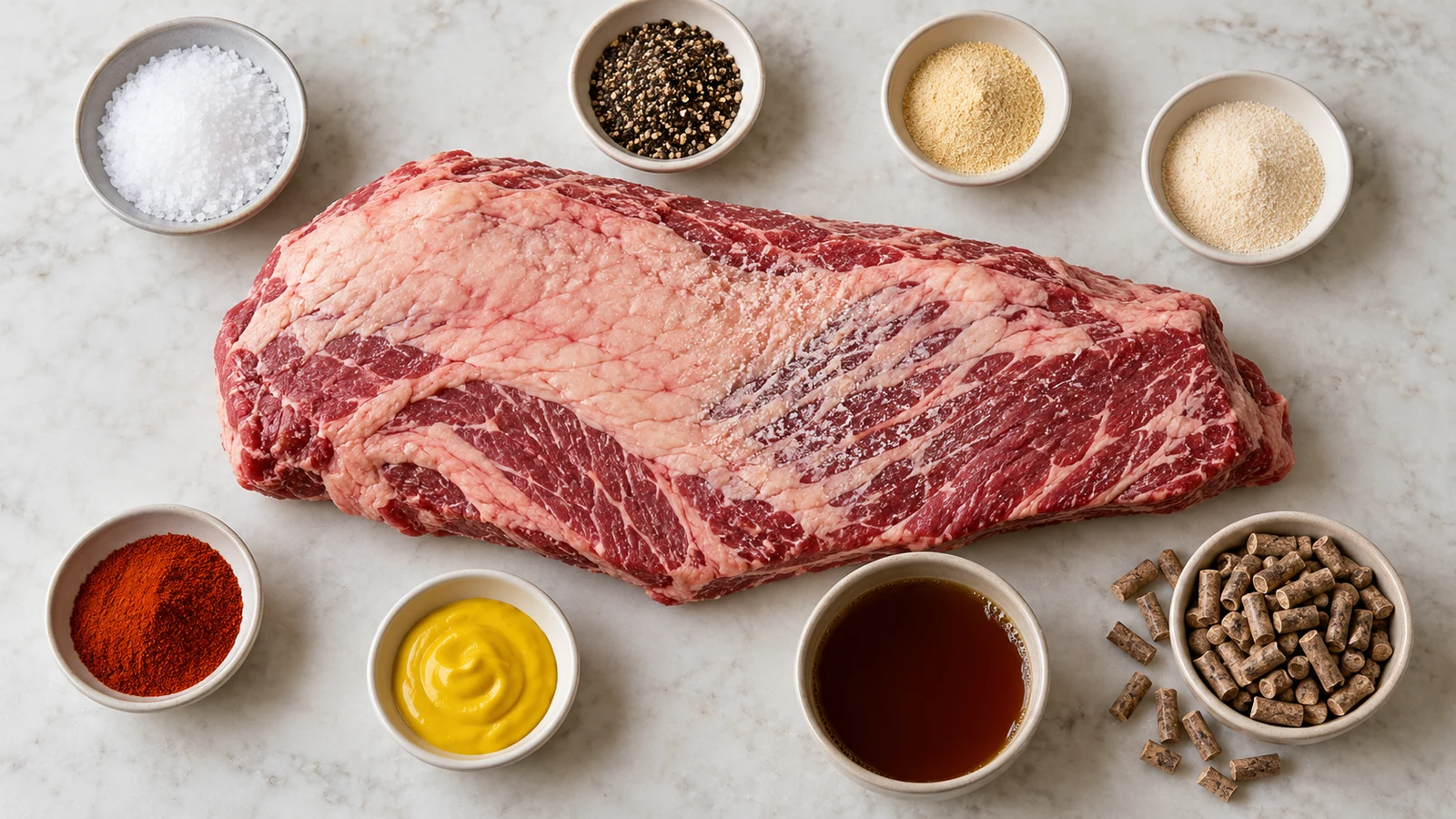
- 1 whole packer beef brisket, 12 to 14 pounds (5.4 to 6.4 kg)
- 2 tablespoons yellow mustard or neutral oil, optional binder
- 1/4 cup coarse kosher salt
- 1/4 cup coarse-ground black pepper
- 1 tablespoon granulated garlic, optional
- 1/2 cup low-sodium beef broth, only if needed during wrapping
How to Trim the Brisket
Trim the brisket while it is cold and firm. Place it fat-side down, remove the thin silver skin and hard surface fat from the meat side, then turn it over. Reduce the fat cap to an even 1/4 inch (6 mm), cutting away waxy lumps that will not render.
Round sharp corners and remove very thin flaps because they burn before the center becomes tender. Do not separate the point and flat; simply contour the thick seam of fat between them without digging deeply into the meat.
A smooth, aerodynamic shape helps smoke and heat flow around the meat evenly. Save clean, firm trimmings for rendering into beef tallow if desired, but discard glands, discolored pieces, and hard fat. Weigh the brisket after trimming when estimating the cooking window.
Equipment and Pellet Selection
- Traeger pellet grill with a full hopper
- Leave-in temperature probe and instant-read thermometer
- Large cutting board and sharp slicing knife
- Unwaxed pink butcher paper or heavy-duty foil
- Insulated cooler or warm oven for resting
Oak offers balanced smoke, hickory is stronger, and pecan is slightly nutty. Mesquite is bold and works best blended with oak, while cherry adds mild sweetness and deeper color. Use clean, dry food-grade pellets and begin with a full hopper for an overnight cook.
For a classic smoked beef brisket recipe, oak or an oak-hickory blend is an adaptable choice that complements pepper without overwhelming the beef. Pellet smoke is typically lighter than smoke from an offset cooker, so there is no need to choose the strongest available wood.
Seasoning and Overnight Preparation
Mix the salt, pepper, and garlic. Apply a very thin binder if desired, then season every surface evenly. Refrigerate uncovered on a rack for 8 to 12 hours; this dry brining helps the seasoning adhere and dries the surface for better bark.
Remove the brisket while the grill preheats, but do not leave raw meat at room temperature for an extended period. Review the USDA’s grilling and food-safety guidance before handling raw and cooked meat.
If an overnight dry brine does not fit your schedule, season the meat while the grill heats. The bark may begin slightly differently, but the traeger beef brisket recipe will still work. Apply the rub from high enough that the salt and pepper fall in an even layer rather than forming dense patches.
How to Make a Traeger Beef Brisket Recipe
- Preheat: Set the Traeger to 225°F (107°C) with the lid closed for about 15 minutes.
- Position the brisket: Place it on the grate with the point toward the hotter area and the fat cap facing the main heat source. On most Traeger grills, heat rises from beneath the drip tray, so fat-side down helps shield the flat. Follow your model’s actual heat pattern.
- Smoke: Insert the probe into the thickest part of the flat. Cook at 225°F (107°C) until the bark is dark, dry, and does not rub off, usually at 160 to 170°F (71 to 77°C) internally.
- Wrap: Wrap tightly in two overlapping sheets of butcher paper. Add only a small splash of broth if the surface appears unusually dry.
- Finish: Raise the grill to 250°F (121°C). Cook until the flat feels probe-tender, generally near 195 to 205°F (91 to 96°C).
- Rest: Vent the wrapping for 5 to 10 minutes to slow carryover cooking, rewrap, and rest for at least 1 hour, preferably 2 to 4 hours.
During the first stage of this traeger beef brisket recipe, resist opening the lid for routine checks. Stable heat and an undisturbed surface encourage consistent bark. Check the pellet level and grill temperature remotely when your equipment allows, especially during an overnight cook.
Weight-Based Time and Temperature Guide
- 8 to 10 pounds: Approximately 8 to 12 cooking hours.
- 10 to 12 pounds: Approximately 10 to 14 cooking hours.
- 12 to 14 pounds: Approximately 12 to 16 cooking hours.
- 14 to 16 pounds: Approximately 14 to 18 cooking hours.
These ranges assume a trimmed whole brisket cooked at 225°F to 250°F (107°C to 121°C). Thickness, marbling, weather, and each grill’s heat pattern matter more than weight alone. For an overnight schedule, start a 12- to 14-pound brisket around 8 p.m. and build in several hours for holding.
Finishing early is easier to manage than finishing late. A properly wrapped brisket can remain hot during a controlled hold, whereas an undercooked brisket cannot be rushed without sacrificing tenderness. Treat every projected finish time as a planning range rather than a deadline.
Managing the Stall and Choosing a Wrap
The stall commonly occurs around 150 to 175°F (66 to 79°C), when evaporative cooling slows the temperature rise. Keep the lid closed and wait until the bark is set before wrapping. A detailed Texas-style brisket technique provides additional background on the smoking process.
Butcher paper preserves a firmer bark while allowing limited moisture escape. Foil cooks faster and retains more liquid, but softens the bark and can give the exterior a pot-roasted texture. If timing is tight, foil is the more predictable choice.
The stall may last an hour or several hours, and some briskets barely appear to stall. Do not wrap simply because the thermometer reaches a chosen number. In this smoked beef brisket recipe, bark color and texture are the better signals: the surface should look dark, dry, and firmly attached.
Internal Temperature and Probe Tenderness
Begin checking around 195°F (91°C). The probe should slide into several areas of the flat with almost no resistance, similar to entering softened butter. The point usually becomes tender first, so judge doneness by the flat rather than chasing exactly 203°F.
Expect a few degrees of carryover cooking after removal. Temperature indicates when to start testing; texture determines when the brisket is finished.
Check more than one location because a probe can enter a pocket of fat and give a misleading impression. If the center of the flat still grips the probe, rewrap the brisket and cook for another 20 to 30 minutes before checking again.
Resting, Holding, and Slicing
After venting, hold the wrapped brisket in a 150°F to 170°F (66°C to 77°C) oven or an insulated cooler. Keep hot-held meat at 140°F (60°C) or warmer, consistent with these USDA smoking food-safety practices.
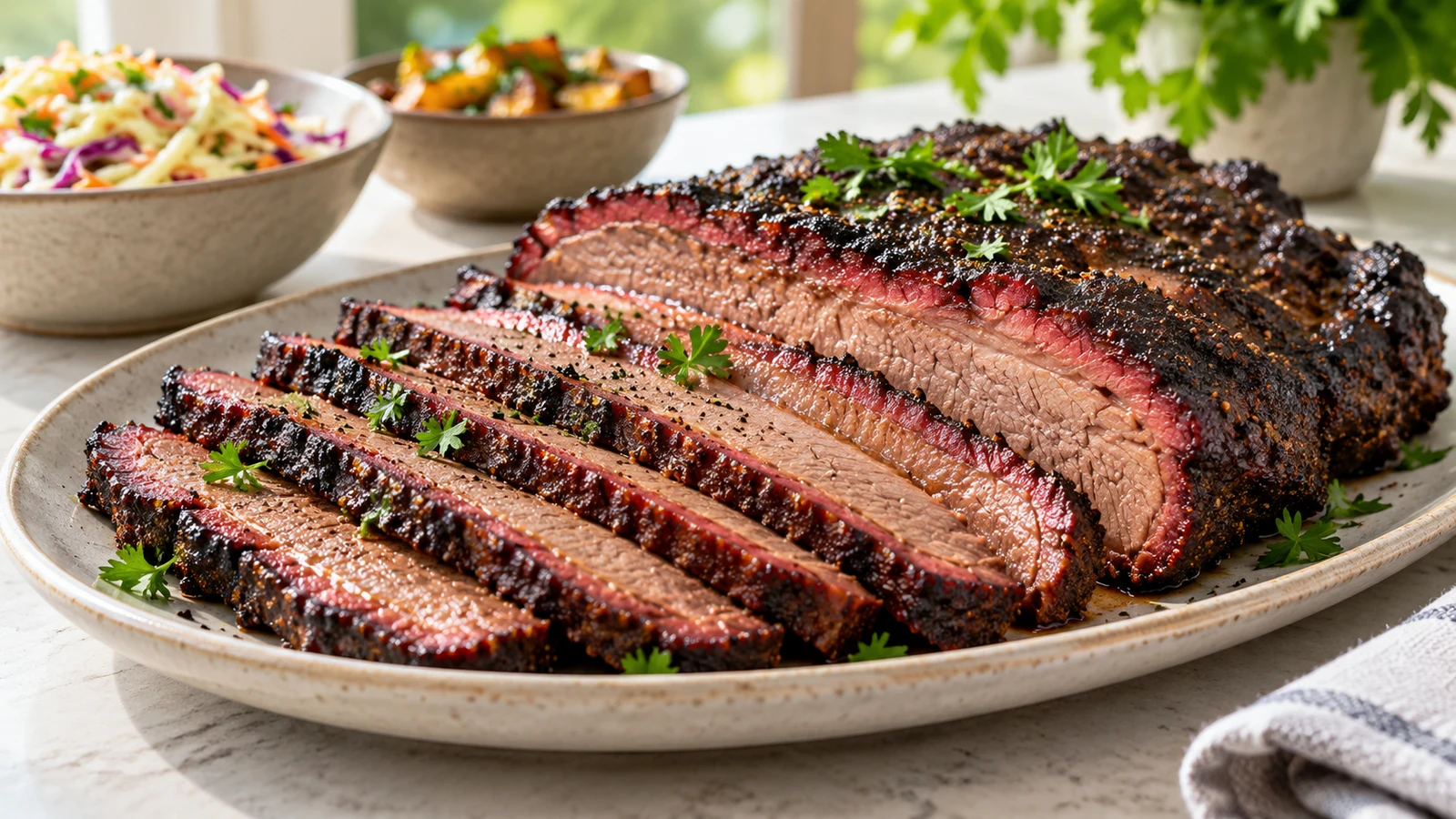
Before cooking, note the flat’s grain direction or cut a small corner as a marker. Slice the flat across the grain into pencil-thick pieces. When the grain changes at the point, rotate the brisket about 90 degrees and cut slightly thicker slices against that grain.
Resting is an essential part of the traeger beef brisket recipe, not unused time at the end. The pause allows the temperature to settle and makes the meat easier to slice without immediately losing as much juice. Keep the brisket wrapped during the main hold after the brief initial vent.
Use a long, sharp knife and smooth strokes rather than pressing down or sawing aggressively. Properly cooked flat slices should bend over a finger and pull apart with gentle pressure. If slices crumble, cut them a little thicker; if they seem chewy, confirm that you are cutting across the grain.
Expert Tips for the Best Results
- Keep the pellet hopper full and the grease system clean before an overnight cook.
- Place the temperature probe in meat, not in the fat seam between point and flat.
- Wrap only after the bark is set; wrapping too early makes it soft.
- Open the lid only when necessary because repeated checks extend cooking time.
- Slice only what you will serve so the remaining brisket retains its juices.
- Place a separate grate-level thermometer near the brisket if you want to compare the actual cooking zone with the grill’s display.
- Keep notes on trimmed weight, weather, pellet choice, wrapping time, and tenderness so the next cook is easier to schedule.
Consistency comes from controlling the variables you can measure. For this traeger beef brisket recipe, a clean grill, dry pellets, accurate probes, and a generous holding window matter more than frequent adjustments. Small temperature swings are normal, so avoid reacting to every brief change on the display.
Protect the Thin End of the Flat
If the flat tapers sharply, position that end away from the hottest area. A small piece of foil beneath or over the vulnerable tip can reduce direct heat after the bark has formed. Do not cover the whole brisket unless you are ready to wrap it.
Use Moisture Sparingly
A well-marbled brisket does not need frequent spritzing. Open the grill only if exposed edges look dry, then apply a light mist rather than soaking the bark. Too much surface moisture can wash away seasoning, cool the meat, and lengthen the cook.
Serving Ideas for Smoked Brisket
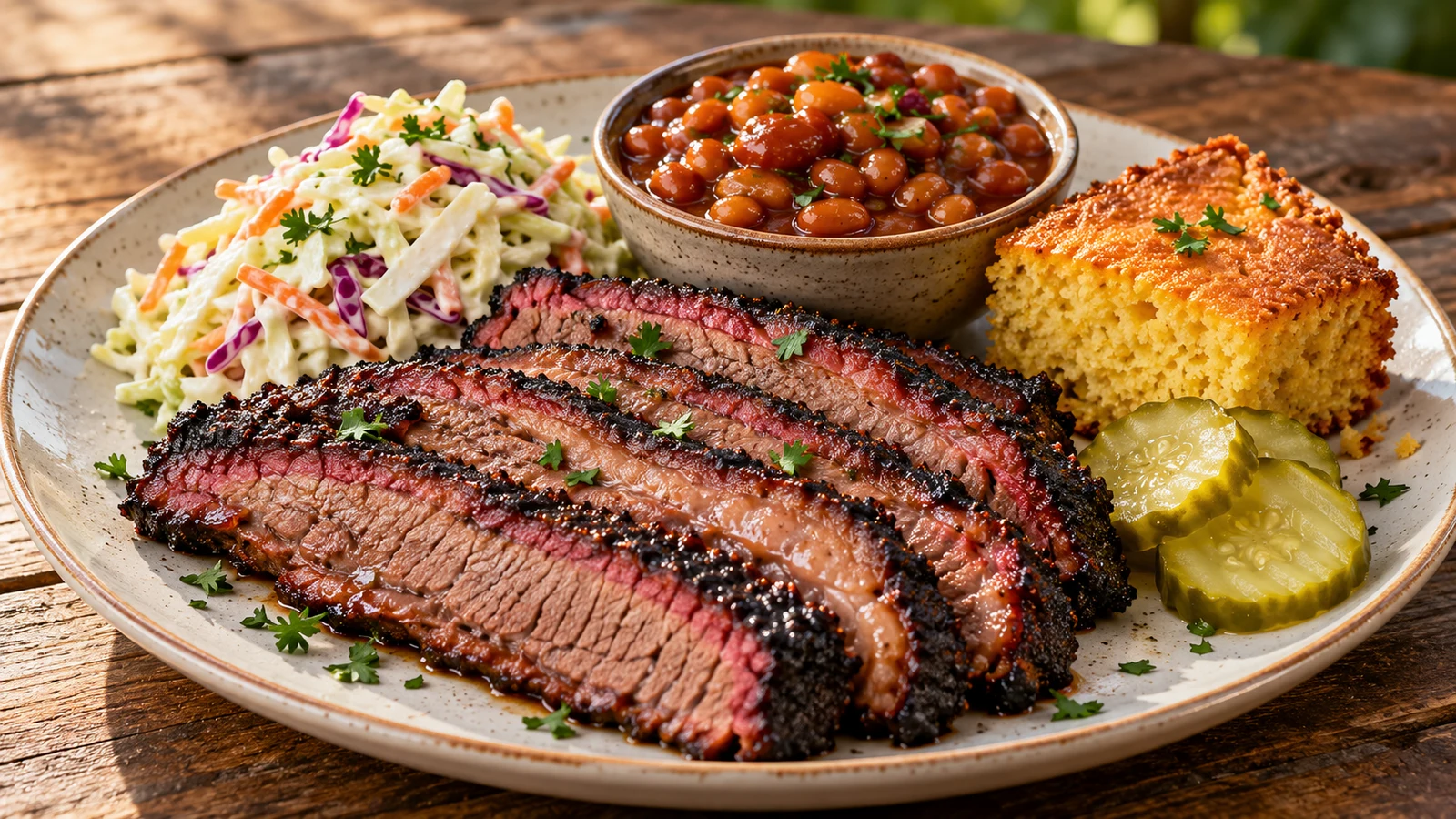
Serve the brisket with pickles, sliced onions, coleslaw, beans, potato salad, or soft rolls. Sauce is optional; offer it on the side so the bark stays intact. These simple accompaniments balance the richness without competing with the smoke.
For sandwiches, layer warm slices on sturdy rolls with pickles and a small amount of sauce. Chopped leftovers also work in tacos, baked potatoes, breakfast hash, or grilled cheese. A smoked beef brisket recipe can therefore provide several meals without making every serving feel identical.
Slice the meat shortly before guests eat and arrange the flat and point separately so diners can choose leaner or richer pieces. Spoon a little warm reserved juice over the cut surfaces, but avoid flooding the bark. Serve hot sides in separate dishes to keep the platter from becoming soggy.
Make-Ahead Planning
The safest scheduling strategy is to finish early and use a warm hold. Trim and season the brisket the evening before, confirm that the hopper is full, and prepare the paper or foil in advance. This keeps the critical cooking stages of the traeger beef brisket recipe calm and organized.
You may also cook the brisket a day ahead. Let it rest, cool it promptly, and refrigerate it whole or in large sections with any collected juices. Reheat it covered before slicing, since a whole piece retains moisture better than a tray of thin, cold slices.
If transporting the brisket, keep it wrapped and monitor its temperature during the trip. Use an insulated container for a short hot hold, then slice at the destination. Do not rely on an unmonitored cooler for an extended period if the meat could fall below a safe holding temperature.
How to Store and Reheat
Cool leftovers promptly in shallow portions and refrigerate within two hours. Store with reserved juices in an airtight container for up to four days. For longer storage, wrap portions tightly and freeze for up to three months.
Thaw frozen brisket overnight in the refrigerator. Reheat covered with a little reserved juice at 275°F (135°C) until the center reaches 165°F (74°C), or warm sealed portions gently in simmering water. Avoid repeatedly reheating the entire brisket.
Freeze meal-size portions so you can thaw only what you need. Separate slices with small pieces of suitable wrapping material if convenient, remove excess air, and label each package with the date. Chopped point meat and sliced flat can be stored separately because they reheat at slightly different rates.
Troubleshooting a Traeger Beef Brisket Recipe
- Dry flat: The brisket may have been overcooked, sliced too soon, or cut with the grain. Serve it with warm reserved juices.
- Tough slices: The collagen has not fully softened. Rewrap and continue cooking until the probe enters easily.
- Soft bark: Reduce added liquid, use butcher paper, or unwrap briefly near the end.
- Uneven cooking: Aim the thicker point toward the grill’s hotter zone and shield the thin flat with a small piece of foil if needed.
- Bitter exterior: Avoid dirty smoke, excessive mesquite, and a grease-laden grill. Use dry pellets and keep airflow unobstructed.
- Temperature stopped rising: This is usually the stall rather than an equipment failure. Verify the grill temperature and pellet supply before changing the cooking plan.
Why Did the Bark Rub Off?
The surface may have been too wet, handled before it set, or wrapped too early. Let the bark become dry and firmly attached before wrapping. Lift the brisket carefully with wide gloves or tools so you do not scrape its underside across the grate.
Why Is the Bottom Too Dark?
The cooking grate may be hotter than the displayed temperature, or the brisket may sit over a concentrated hot spot. Confirm the grate temperature, rotate the meat if necessary, and place the fat cap toward the heat source to protect the lean flat.
Variations and Substitutions
Oven Variation
For an indoor method, use this beef brisket recipe oven guide. It will not create the same wood-smoked bark, but slow roasting offers steady heat and easier scheduling. A beef brisket recipe oven method is also practical when weather makes outdoor smoking unreliable.
Do not expect a beef brisket recipe oven preparation to develop a natural smoke ring. You can still build a flavorful crust with careful seasoning and uncovered roasting before wrapping. Preserve the original temperature, time, and doneness guidance in the linked method rather than automatically copying pellet-grill timing.
Slow-Cooker Variation
For a hands-off braise, follow the beef brisket recipe slow cooker method. It creates tender, moist meat but not the dry bark associated with a pellet grill. Choose a piece that fits without being tightly compressed against the sides of the cooker.
A beef brisket recipe slow cooker approach relies on trapped moisture and gentle braising. Use the liquid and timing specified for that method, because transferring the smoking instructions directly would give a different result. Slice across the grain after resting for the most tender serving texture.
Corned Beef Clarification
Searches for corned beef brisket in a crock pot recipes refer to cured, salted corned beef, which is a separate preparation and should not be substituted without adjusting the recipe. Rinse and cook corned beef according to a recipe designed for that cured product.
Unlike this fresh smoked brisket, corned beef brisket in a crock pot recipes often include a seasoning packet and braising liquid. The curing process changes both flavor and salt content. For that reason, corned beef brisket in a crock pot recipes are not interchangeable with this salt-and-pepper barbecue method.
Seasoning Variations
For a stronger savory crust, include the optional granulated garlic already listed. For a bolder pepper profile, use a coarse grind that remains distinct during the long cook. Avoid rubs with large amounts of sugar at these cooking times because exposed areas can darken too quickly.
Frequently Asked Questions
Should brisket be fat-side up or down on a Traeger?
Face the fat toward the dominant heat source. Because most Traeger models heat from below, fat-side down generally protects the flat, although hot spots vary by model.
Do I need to spritz the brisket?
No. Spritz only dry-looking edges after the first three hours, using water or diluted broth. Wetting the surface repeatedly can delay bark formation.
Can I cook this traeger beef brisket recipe at 250°F from the beginning?
Yes. Cooking at 250°F (121°C) shortens the schedule and still produces excellent brisket, although 225°F (107°C) provides a longer early smoking period. Continue to judge wrapping by the bark and final doneness by probe tenderness.
Why is my brisket finished earlier than expected?
Every brisket cooks differently. Use the extra time for a warm hold; a properly controlled two- to four-hour rest often improves tenderness and serving flexibility.
Can I make a smoked beef brisket recipe without wrapping?
Yes, but an unwrapped smoked beef brisket recipe usually takes longer and may develop a drier, firmer exterior. Watch the thin end of the flat closely and allow extra time. Wrapping remains useful when you want to shorten the stall and protect moisture.
Is a beef brisket recipe slow cooker method faster?
Not necessarily, because the total time still depends on size and the appliance setting. A beef brisket recipe slow cooker method is more hands-off and produces braised meat, while pellet smoking develops a distinct bark and wood-smoke flavor.
Can I finish the brisket in the oven after wrapping?
Yes. Once the bark is set and the meat is tightly wrapped, the oven can provide steady heat because the brisket absorbs much less smoke at that stage. Keep the same finishing temperature and continue checking the flat for probe tenderness.
Does the smoke ring indicate doneness?
No. The pink smoke ring is a visual reaction near the surface, not proof of tenderness or adequate cooking. Use internal temperature to decide when to begin probing, then rely on the feel of the flat to determine doneness.
How much brisket should I prepare per person?
Allow about 1/2 pound of raw brisket per guest. Increase that amount for large appetites or if brisket is the only main dish. Trimming and rendering reduce the final weight, while substantial side dishes may reduce the portion each guest needs.
Are corned beef brisket in a crock pot recipes suitable for a pellet grill?
They are designed for cured meat and moist cooking, so they should not be treated as direct substitutes. Corned beef brisket in a crock pot recipes account for the product’s salt and curing seasonings, while this pellet-grill method starts with fresh beef brisket.
What is the main difference between this method and a beef brisket recipe oven method?
The primary difference is smoke exposure. A beef brisket recipe oven method offers controlled indoor heat, while a pellet grill adds wood-smoke flavor and helps form a barbecue-style bark. Both methods still benefit from patient cooking, proper resting, and slicing across the grain.
Printable Recipe Card
- Recipe: Traeger Beef Brisket
- Prep time: 30 minutes, plus 8 to 12 hours optional dry brining
- Cook time: 12 to 16 hours for a 12- to 14-pound brisket
- Rest time: 2 to 4 hours
- Yield: 12 to 16 servings
- Smoker temperature: 225°F (107°C), then 250°F (121°C) after wrapping
- Typical finish range: 195 to 205°F (91 to 96°C)
- Visual doneness cues: Dark set bark, rendered fat, and a probe that slides easily into the flat
- Estimated nutrition: About 520 calories, 43 grams protein, 38 grams fat, and 650 milligrams sodium per serving; values vary with trimming and portion size.
Final Thoughts
This traeger beef brisket recipe rewards patience with smoky bark, tender slices, and a dependable result. Let appearance and probe tenderness—not the clock alone—guide the cook, then protect the finished texture with a long rest and careful slicing.
Whether you prefer this pellet-grill approach, a beef brisket recipe oven method, or a beef brisket recipe slow cooker preparation, match the technique to the result you want. For true barbecue character, the traeger beef brisket recipe offers the strongest combination of bark, smoke, and sliceable tenderness.
Reviews
Reader reviews are managed separately (outside this build).