Cake
Moist vanilla pound cake recipe: Rich, Foolproof Results
Discover a moist vanilla pound cake recipe with sour cream, silky glaze, precise bake times, doneness cues, troubleshooting, and freezing tips.
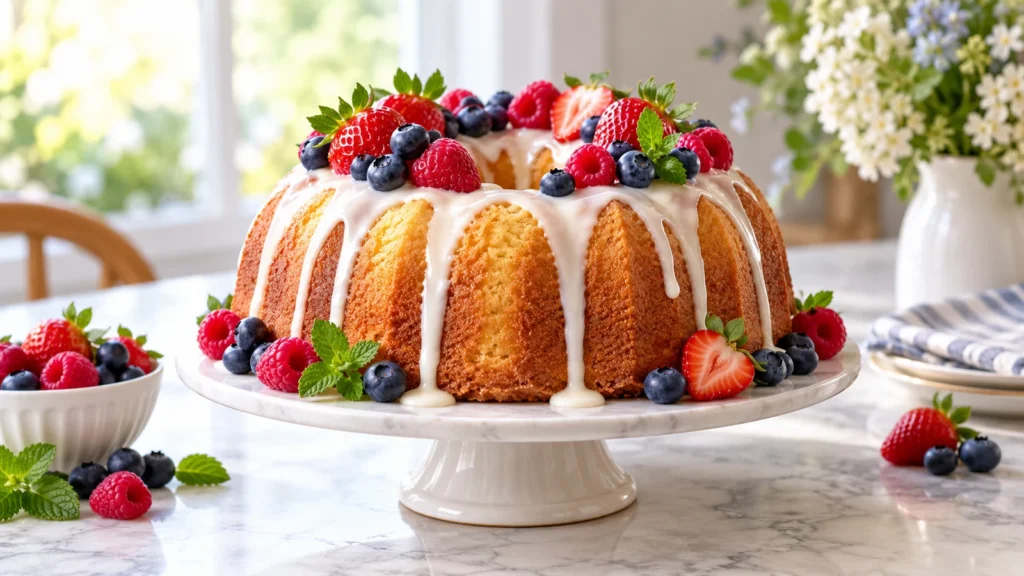
This vanilla pound cake recipe delivers a moist, buttery crumb, deep vanilla flavor, and a golden crust without complicated techniques. Careful creaming and room-temperature ingredients make the results dependable, whether you are baking for a holiday, celebration, or relaxed weekend dessert.
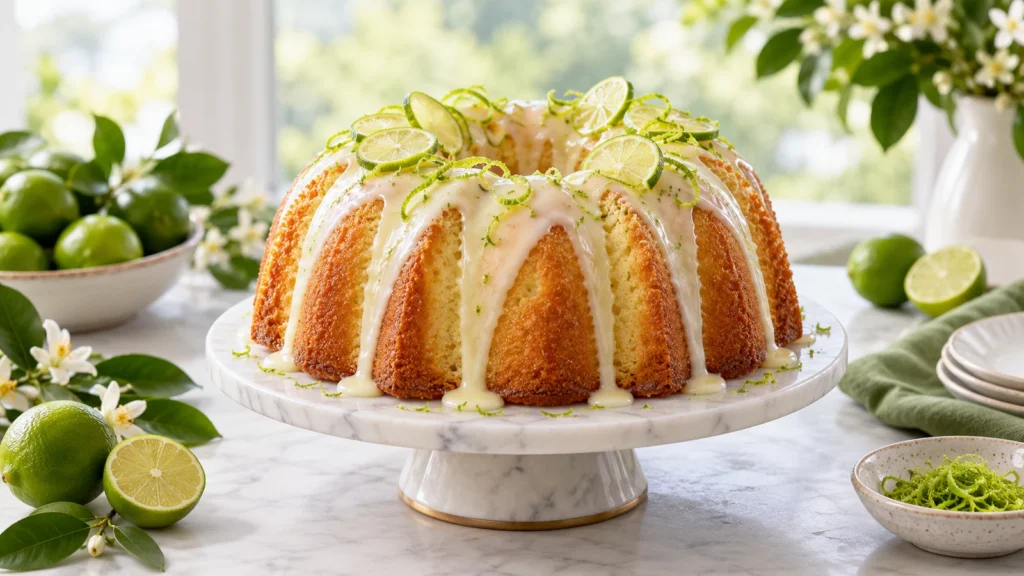
A simple vanilla glaze finishes the cake without overpowering it. Unlike a sour cream pound cake recipe with a pronounced tang or a chocolate pound cake recipe built around cocoa, this cake keeps classic vanilla at the center. The recipe includes weights, pan guidance, doneness cues, and practical fixes for common pound-cake problems.
Table of Contents
Why You’ll Love This Vanilla Pound Cake Recipe
- Moist but sturdy: Sour cream adds tenderness while preserving the classic pound-cake structure.
- Rich vanilla flavor: Vanilla extract flavors both the cake and glaze.
- Reliable method: Proper creaming creates a fine, even crumb without chemical leavening.
- Make-ahead friendly: The flavor and texture remain excellent for several days.
- Easy to serve: The sturdy crumb slices neatly and pairs well with fruit, cream, coffee, or ice cream.
The balanced texture makes this vanilla pound cake recipe useful for both simple snacks and dressed-up desserts. It is rich enough to serve plain but neutral enough to complement seasonal toppings.
Ingredients
- 1 cup unsalted butter (226 g), softened to 65–68°F (18–20°C)
- 2 1/2 cups granulated sugar (500 g)
- 5 large eggs, at room temperature
- 1 cup full-fat sour cream (240 g), at room temperature
- 1 tablespoon pure vanilla extract
- 3 cups all-purpose flour (360 g)
- 1 teaspoon fine salt
- For the glaze: 1 cup confectioners’ sugar (120 g), 2–3 tablespoons milk, 1 teaspoon vanilla extract, and a pinch of salt
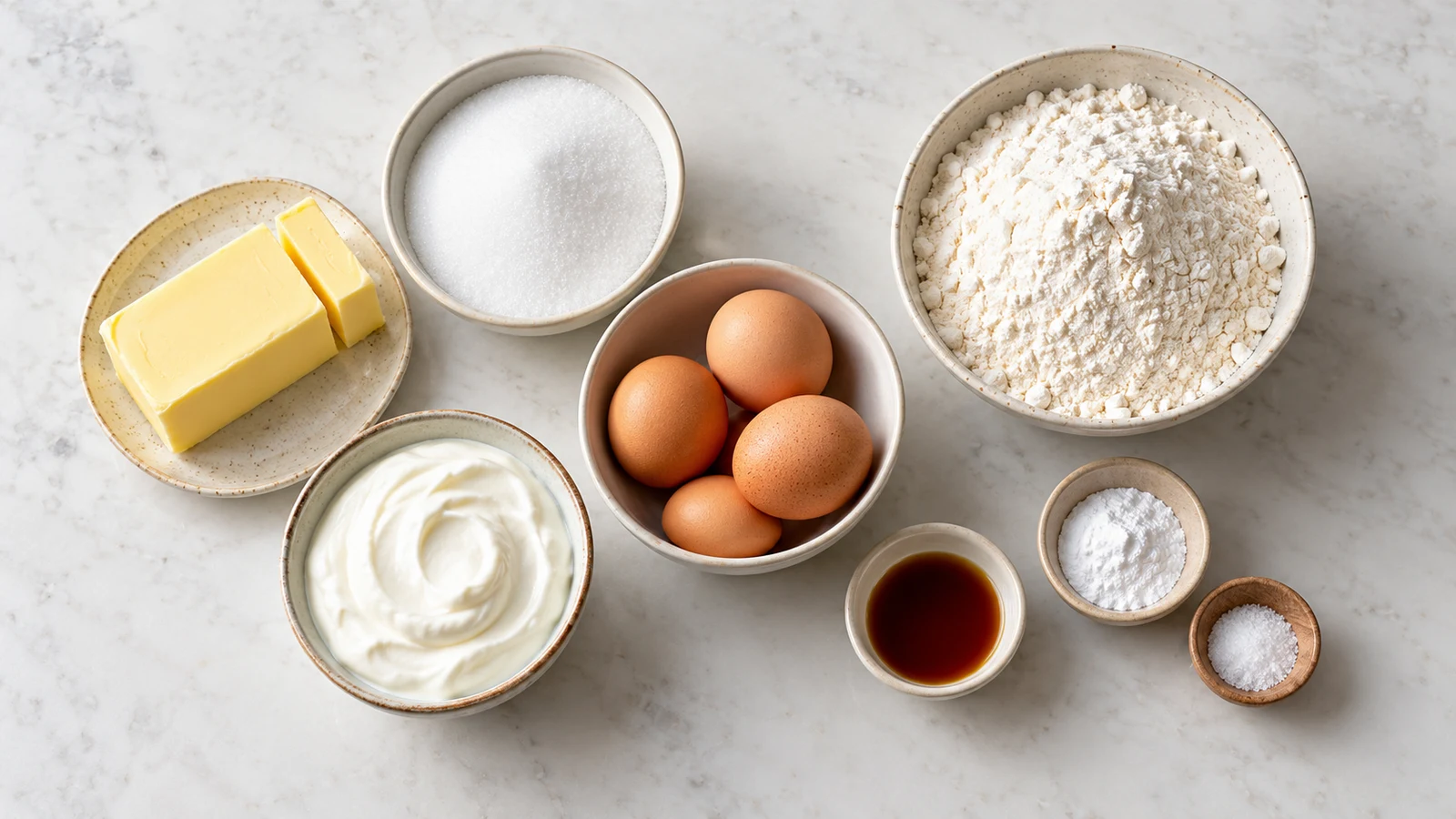
Full-fat sour cream supplies moisture and mild acidity, a technique also used in this sour cream pound cake recipe. Room-temperature eggs and sour cream blend into the butter more smoothly, reducing the chance of a curdled batter.
Why These Ingredients Matter
Butter provides flavor and structure, while granulated sugar sweetens the cake and helps aerate the butter during creaming. Eggs add richness, moisture, and enough protein to support the tall Bundt shape. All-purpose flour gives this vanilla pound cake recipe a substantial crumb without making it overly heavy.
Sour cream softens the crumb without thinning the batter. Salt balances the sweetness, and pure vanilla extract supplies the primary aroma. Because vanilla is the defining flavor, use an extract you enjoy rather than relying on imitation flavoring unless that is your preference.
Equipment and Pan Guidance
Use a 10- to 12-cup Bundt pan, a stand mixer or hand mixer, a kitchen scale, and an instant-read thermometer. Weighing flour is the most consistent approach; the ingredient weight chart from King Arthur Baking is a useful reference.
For two 9-by-5-inch loaf pans, divide the batter evenly and begin checking at 55 minutes. A 10-inch tube pan also works. Do not put all the batter in one standard loaf pan because it may overflow before the center sets.
A light-colored metal pan encourages even baking. Very dark pans may brown the crust sooner, so begin checking early without changing the stated temperature. Intricate Bundt pans require especially careful greasing because batter settles into every ridge.
How to Make This Vanilla Pound Cake Recipe
- Prepare the oven and pan. Heat a conventional oven to 325°F (165°C), or a convection oven to 300°F (150°C). Grease every groove of the Bundt pan with softened shortening or baking spray containing flour, then dust lightly with flour and tap out the excess.
- Combine the dry ingredients. Whisk the flour and salt together. If measuring by cups, spoon flour into the cup and level it rather than scooping directly from the bag.
- Cream the butter and sugar. Beat the softened butter for 30 seconds. Add the sugar gradually, then beat on medium speed for 4–5 minutes, scraping the bowl twice. The mixture should become pale and visibly fluffy; this traps the air that lifts the cake.
- Add the eggs. Beat in one egg at a time on medium-low speed, mixing just until each disappears. Scrape the bowl frequently. If the mixture looks curdled, add 1 tablespoon of the measured flour and continue at low speed.
- Add sour cream and vanilla. Mix them in on low speed until nearly smooth. Avoid high-speed mixing once the eggs are incorporated.
- Finish the batter. Add the flour mixture in three portions, mixing on low only until the last streaks vanish. Fold once or twice by hand to check the bottom of the bowl. Overmixing develops gluten, which can produce toughness and tunnels.
- Fill and bake. Spoon the batter evenly into the pan and smooth the top. Tap the pan gently on a folded towel once to settle large air pockets. Bake for 70–85 minutes.
- Check for doneness. The top should be deeply golden, a few moist crumbs should cling to a skewer, and the cake should spring back when lightly pressed. The center should register about 205–210°F (96–99°C); avoid touching the pan with the thermometer.
- Cool and release. Cool in the pan for 15 minutes. Loosen the edges gently with a thin flexible spatula, place a rack over the pan, and invert in one confident motion. Cool completely for about 2 hours before glazing.
Because this batter contains eggs, keep raw batter away from ready-to-eat foods and wash utensils and surfaces after contact. The USDA’s safe minimum internal temperature chart provides broader food-safety guidance.
Vanilla Glaze
Whisk the confectioners’ sugar, vanilla, salt, and 2 tablespoons milk until smooth. For a thicker, opaque glaze, add more sugar; for a thinner drizzle, add milk 1 teaspoon at a time. Pour it over the completely cooled cake and let it set for 20 minutes.
The cake must be cool before glazing. A warm surface melts the glaze and causes it to soak in rather than form a smooth finish. Set the cake on a rack over a tray or sheet of parchment to catch drips and make cleanup easier.
Expert Tips for a Dependable Vanilla Pound Cake Recipe
Use the Right Butter Temperature
Butter at 65–68°F (18–20°C) should accept a light fingertip impression while still holding its shape. Butter that is hard cannot trap enough air, while greasy or partially melted butter cannot maintain the air pockets needed for an even rise.
Cream by Appearance as Well as Time
The stated 4–5 minutes is a guide. Watch for a pale, fluffy mixture with noticeably increased volume. Scrape the bowl and beater so dense butter does not remain hidden. This aeration is especially important because the vanilla pound cake recipe does not use chemical leavening.
Add Eggs Gradually
Eggs blend more readily when they are at room temperature. Add each egg only after the previous one is incorporated, and keep the mixer at medium-low speed. Slow mixing helps preserve the butter emulsion and produces a finer crumb.
Measure Flour Accurately
For the most reliable result, use 360 g of flour. If using cups, stir the flour, spoon it into the measuring cup, and level the top. Scooping directly from the container can compact the flour and make the finished cake dry.
Mix Gently After Adding Flour
Once flour enters the batter, use low speed and stop when the last dry streaks disappear. Finish with a spatula so you can reach the base of the bowl. Excess mixing can create tunnels and make an otherwise tender vanilla pound cake recipe chewy.
Judge Doneness with Several Cues
Do not rely on color alone. Look for a golden surface, slight pulling from the pan edges, a springy center, and a skewer holding a few moist crumbs. The 205–210°F (96–99°C) temperature range offers an additional check without requiring guesswork.
More Tips for the Best Results
- Bring cold ingredients to room temperature for about 45–60 minutes, but do not melt the butter.
- Cream for the full 4–5 minutes. Too little aeration can create a dense or sunken cake.
- Stop mixing as soon as the flour is incorporated to prevent a tough crumb, gummy streaks, or long tunnels.
- If the cake sinks, check that the oven was fully preheated and avoid opening the door during the first 60 minutes.
- Dry cake usually indicates excess flour or overbaking. Weigh the flour and start checking early.
- For a clean release, coat every Bundt-pan detail and invert after 15 minutes; cooling completely in the pan encourages sticking.
- Above 3,500 feet, reduce sugar by 1–2 tablespoons, add 1–2 tablespoons liquid, and increase the oven temperature by 15–25°F. The exact changes depend on elevation; consult Colorado State University Extension’s high-altitude baking guidance.
Variations and Substitutions
Sour Cream and Yogurt Options
Replace up to half the sour cream with full-fat plain Greek yogurt. The result remains moist but may have a slightly more noticeable tang. For a version designed specifically around this ingredient, follow the tested sour cream pound cake recipe rather than altering all the dairy at once.
Salted butter can replace unsalted butter if you omit the added salt. Avoid low-fat spreads and whipped butter because their water and air content can change the structure. These swaps matter in a vanilla pound cake recipe where butter contributes much of the flavor.
Almond and Citrus Variations
For almond flavor, add 1/2 teaspoon almond extract while keeping the vanilla. For citrus flavor, add 1 tablespoon finely grated lemon zest and replace the glaze milk with lemon juice. This creates a bright variation inspired by searches for an afroman lemon pound cake recipe without changing the cake’s stated baking method.
An afroman lemon pound cake recipe may be the better choice when you want lemon to dominate every bite. In this variation, the zest and lemon glaze remain supporting flavors, allowing the vanilla and butter to stay recognizable.
Soda-Based Pound Cake
A soda cake has its own ingredient balance and should not be made by casually pouring soda into this batter. If you want that distinctive style, compare these 7up recipes pound cake ideas and use a formula developed for the added liquid and carbonation.
The 7up recipes pound cake style is especially appealing to bakers who enjoy a light citrus note. This vanilla cake is richer and more traditional, so choose between them according to the flavor and crumb you want.
Chocolate Variation
For a cocoa version, flour and liquid ratios need more adjustment than a simple substitution. Use this tested chocolate pound cake recipe instead of replacing flour with cocoa at random.
A chocolate pound cake recipe must account for cocoa’s drying effect and strong flavor. Following a purpose-built formula gives you a moist chocolate crumb without compromising the dependable proportions of this vanilla pound cake recipe.
Troubleshooting Pound Cake Problems
Why Did the Cake Sink?
A sunken center can result from opening the oven too early, underbaking, or insufficient creaming. Confirm that the oven is fully heated before baking and leave the door closed during the first 60 minutes. Check the center with both a skewer and thermometer before removing the cake.
Why Is the Cake Dry?
Too much flour and excessive baking are the most common causes. Weigh 360 g of flour and begin checking at 70 minutes. Oven temperatures vary, so a separate oven thermometer can help reveal whether your oven runs hotter than its setting.
Why Are There Tunnels in the Crumb?
Long holes usually point to overmixing after the flour was added. Use low speed, stop promptly, and finish folding by hand. Tapping the filled pan once can release oversized air pockets, but repeated hard tapping may remove air needed for lift.
Why Did the Cake Stick to the Pan?
Missed grooves, a worn pan surface, or an incorrect cooling time can cause sticking. Coat the pan immediately before filling it, then release the cake after 15 minutes. Waiting much longer allows cooling sugar and butter to adhere more firmly to the pan.
Why Is the Crust Too Dark?
A dark metal pan or an oven running hot can brown the exterior before the center is ready. Keep the required oven temperature unchanged, but verify it with an oven thermometer and begin checking early. Place the pan near the center of the oven, away from the heating element.
Why Does the Cake Have a Dense Line?
A dense or gummy streak can come from incomplete mixing, a broken butter mixture, or underbaking. Scrape the bottom of the bowl before filling the pan, add room-temperature eggs gradually, and confirm the center reaches the stated temperature range.
Serving Ideas
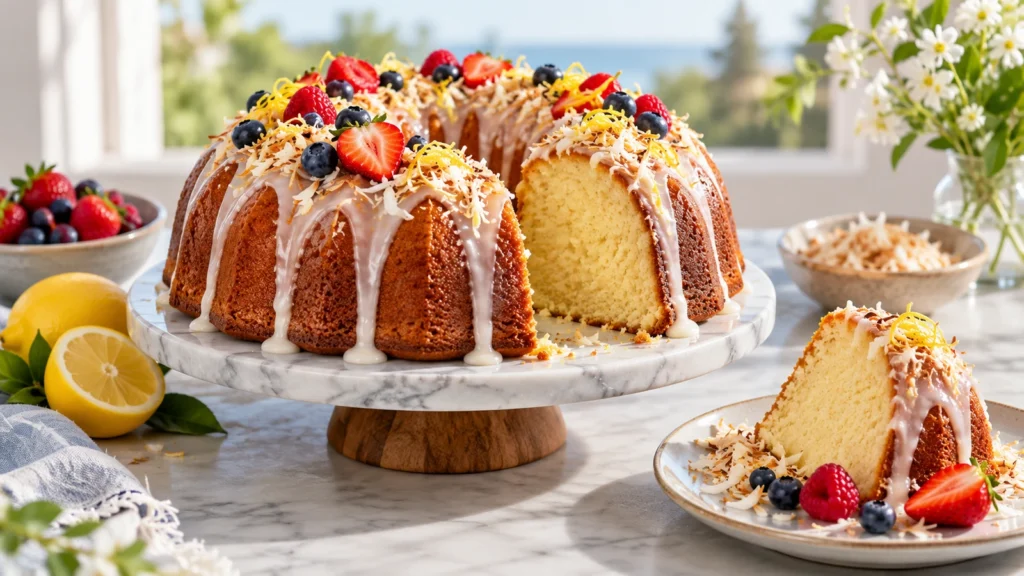
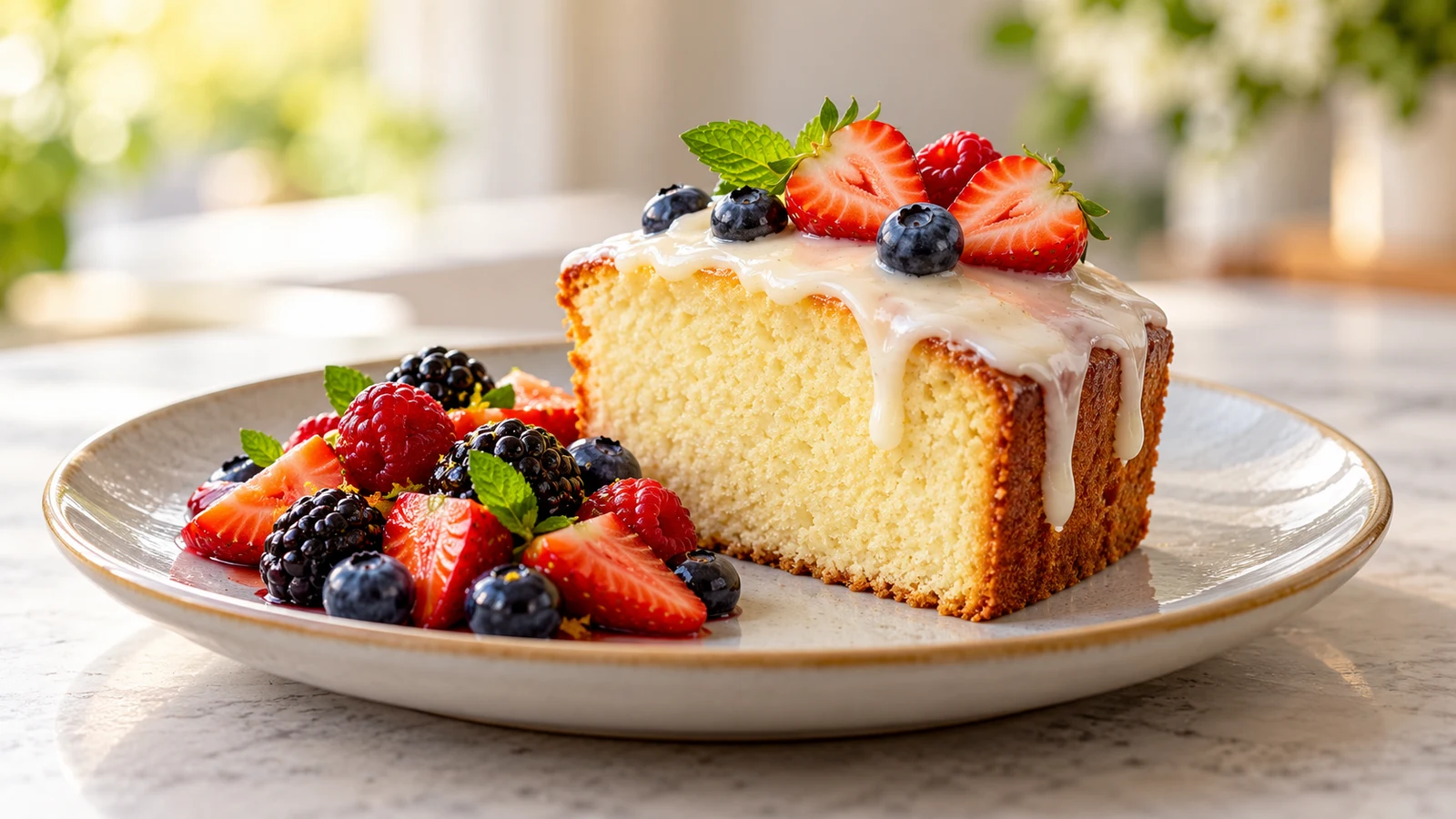
Serve slices plain, with coffee, or with lightly whipped cream and berries. Briefly toasting an unglazed slice adds crisp edges and makes a good base for fruit compote or ice cream. Thin slices also work well on a dessert platter because they hold their shape.
For spring and summer, pair the vanilla pound cake recipe with strawberries, peaches, blueberries, or lemon curd. In cooler months, serve it with warm apples, pears, caramel sauce, or a light dusting of confectioners’ sugar.
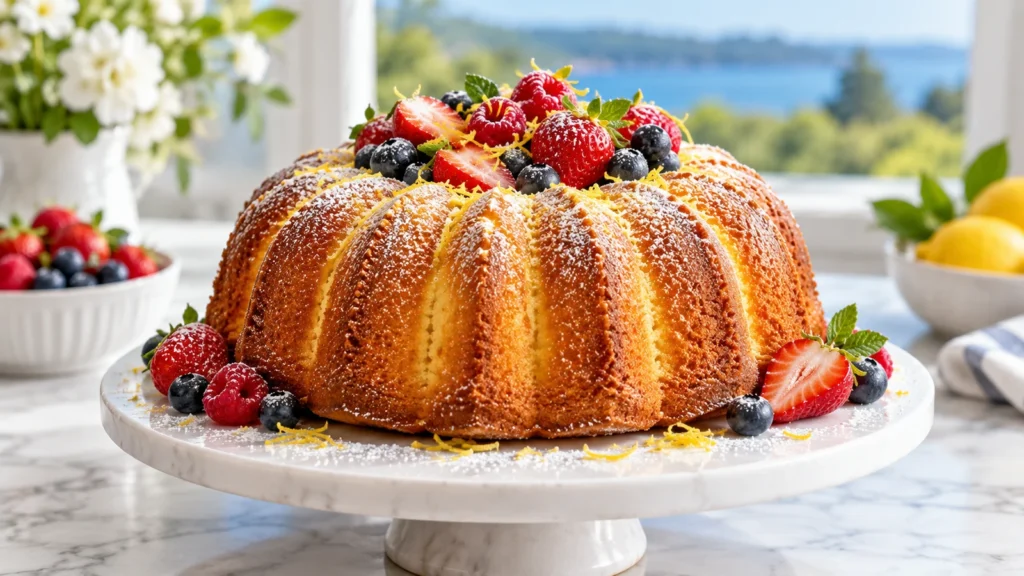
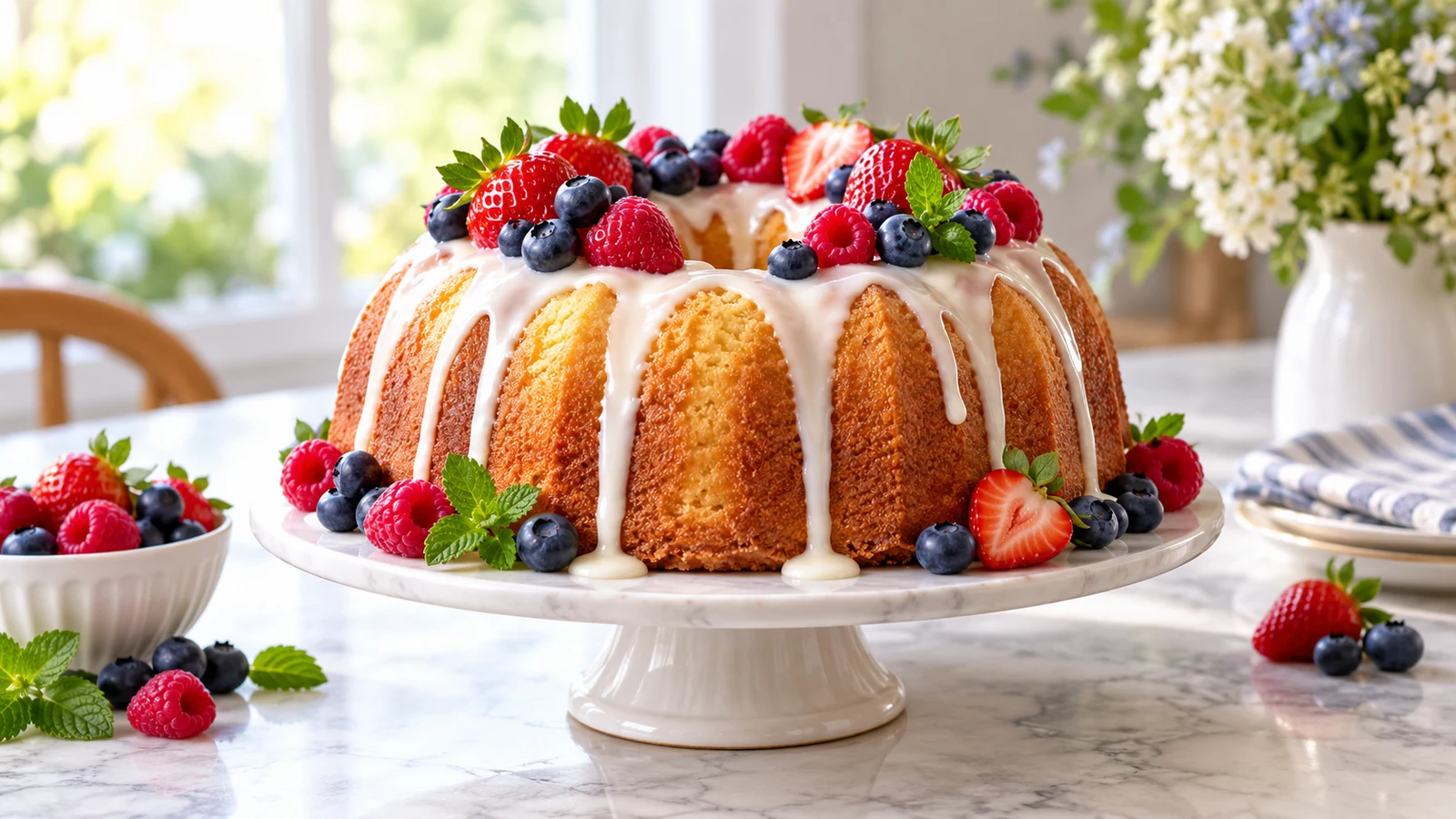
For a celebration, spoon berries into the center of the Bundt cake after the glaze sets. Keep wet toppings separate until serving so the crust does not become soggy. A serrated knife and gentle sawing motion produce the neatest slices.
Make-Ahead, Storage, and Freezing
Making the Cake Ahead
This vanilla pound cake recipe is well suited to advance preparation because the crumb stays moist and the flavor settles overnight. Bake it one day before serving, cool it completely, and store it airtight. Add the glaze shortly before presentation for the freshest appearance.
You can also prepare the glaze one day ahead and refrigerate it in a covered container. Return it to room temperature and whisk until smooth before using. If it thickens, adjust it with a small amount of the stated milk.
Room-Temperature and Refrigerator Storage
Keep the cooled cake in an airtight container at room temperature for up to 3 days or refrigerate it for up to 1 week. Bring refrigerated slices to room temperature before serving, or warm one slice in the microwave for 8–12 seconds.
Store cut surfaces tightly covered because exposed crumb dries faster than the crust. If the cake carries fresh fruit or another perishable topping, store that topping separately and follow its own refrigeration requirements.
How to Freeze Pound Cake
For longer storage, wrap the whole unglazed cake or individual slices tightly, place them in a freezer-safe container, and freeze for up to 3 months. Individual portions are convenient when you want to thaw only enough for one or two servings.
Thaw overnight in the refrigerator, then unwrap and bring to room temperature. Keeping the cake wrapped during the first stage of thawing helps condensation form on the wrapping instead of the crumb. Glaze only after the cake has fully thawed.
Nutrition
One of 16 glazed slices contains approximately 510 calories, 22 g fat, 73 g carbohydrates, 5 g protein, and 180 mg sodium. This is an estimate and will vary with brands, slice size, and the amount of glaze used.
Frequently Asked Questions
Why did my vanilla pound cake recipe turn out gummy?
Too much liquid, underbaking, or cutting the cake while warm can cause gumminess. Verify the center temperature and let the cake cool completely before slicing. Also scrape the mixing bowl thoroughly so no dense, unmixed batter remains at the bottom.
Can I use a different Bundt-pan size?
Yes. Fill the pan no more than about three-quarters full and bake any extra batter in a small loaf pan. A smaller or deeper pan may require more time, so rely on visual and temperature cues.
Why did my batter curdle?
The ingredients were probably too cold or the eggs were added too quickly. Add eggs individually and, if needed, mix in a spoonful of the measured flour; minor curdling usually smooths out when the flour is added.
Can I make the vanilla pound cake recipe without a glaze?
Yes. Dust the cooled cake lightly with confectioners’ sugar or serve it plain. The cake itself has enough vanilla flavor and moisture to stand alone, and leaving it unglazed makes toasted slices especially convenient.
Can I replace all the sour cream with Greek yogurt?
Replacing up to half is the recommended option for this formula. A complete substitution may change the tang, moisture, and crumb. If sour cream is the flavor you want to emphasize, use a dedicated sour cream pound cake recipe with ratios tested for that result.
Can I turn this into a chocolate pound cake recipe?
Do not simply replace an equal amount of flour with cocoa. Cocoa affects moisture, structure, and flavor intensity, so a tested chocolate pound cake recipe is more dependable than an improvised conversion.
Is this the same as 7up recipes pound cake?
No. 7up recipes pound cake formulas use soda as part of their liquid and flavor balance. This cake relies on sour cream for moisture and vanilla extract for its central flavor, producing a different crumb and aroma.
How does this compare with an afroman lemon pound cake recipe?
An afroman lemon pound cake recipe is sought for its lemon-forward character, while this version emphasizes butter and vanilla. The optional zest and lemon glaze variation provides citrus brightness without changing the complete base formula.
How long should pound cake cool before slicing?
Cool it in the pan for 15 minutes, invert it, and let it cool completely for about 2 hours. Cutting too early compresses the warm crumb and can create gummy-looking slices even when the cake was properly baked.
Can I bake the batter as cupcakes?
This dense batter was developed for a Bundt, tube, or loaf pan, and no cupcake time is specified. Use one of the tested pan options to preserve the stated baking guidance and avoid uncertain results.
Why does pound cake taste better the next day?
After the cake cools and rests in an airtight container, moisture becomes more evenly distributed and the butter and vanilla aromas settle into the crumb. This makes the vanilla pound cake recipe particularly convenient for entertaining.
Recipe Card
Description: A rich, moist vanilla pound cake with a fine crumb and simple vanilla glaze.
- Prep time: 25 minutes
- Baking time: 70–85 minutes
- Cooling time: 2 hours 15 minutes
- Total time: About 3 hours 55 minutes
- Yield: 16 slices
- Pan: 10- to 12-cup Bundt pan
- Temperature: 325°F (165°C), or 300°F (150°C) convection
Ingredients: 1 cup (226 g) unsalted butter, 2 1/2 cups (500 g) sugar, 5 eggs, 1 cup (240 g) sour cream, 1 tablespoon vanilla, 3 cups (360 g) flour, and 1 teaspoon salt. For the glaze, use 1 cup (120 g) confectioners’ sugar, 2–3 tablespoons milk, 1 teaspoon vanilla, and a pinch of salt.
Instructions: Grease and flour the pan. Cream butter and sugar for 4–5 minutes; add eggs individually, then mix in sour cream and vanilla. Add flour and salt on low speed. Bake for 70–85 minutes, cool in the pan for 15 minutes, invert, cool completely, and glaze.
Notes: Use room-temperature ingredients, weigh the flour, and do not overmix. The cake is done when golden, springy, and 205–210°F (96–99°C) in the center. Estimated nutrition per slice is 510 calories.
A Classic Cake Worth Making Again
This carefully paced vanilla pound cake recipe produces a tender cake with the substantial crumb that makes pound cake so satisfying. Accurate measuring, patient creaming, gentle final mixing, and complete cooling are the keys to consistent results.
Choose this vanilla pound cake recipe when you want a buttery centerpiece with broad serving possibilities. For another occasion, explore a sour cream pound cake recipe, 7up recipes pound cake, chocolate pound cake recipe, or afroman lemon pound cake recipe according to the flavor profile you want.
Reviews
Reader reviews are managed separately (outside this build).