Cake
Easy chocolate pudding cake recipe with Gooey Magic
Try this chocolate pudding cake recipe, made with pantry staples and one simple hot-water trick for gooey sauce. Serve warm with vanilla ice cream.
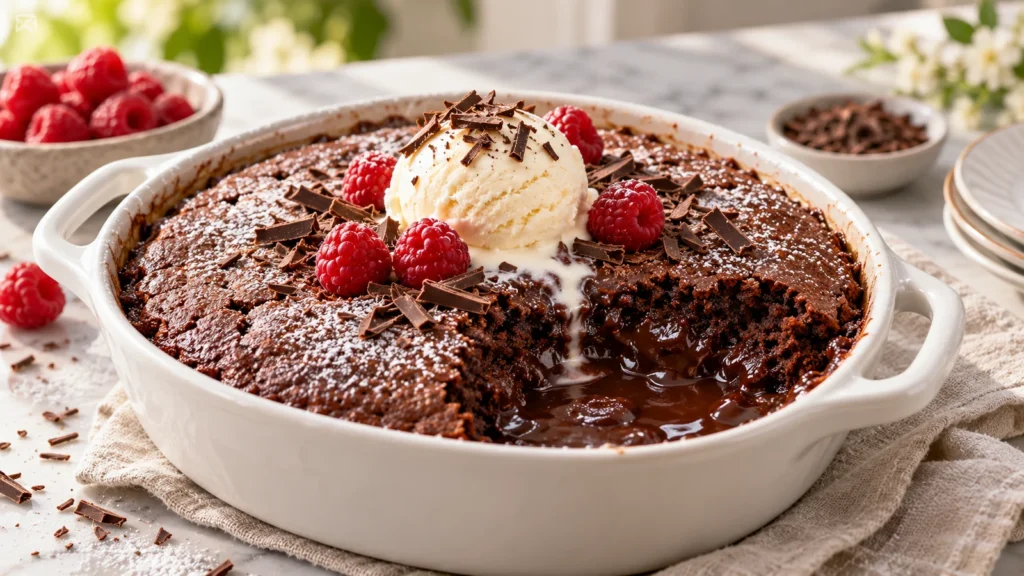
This chocolate pudding cake recipe bakes into a tender chocolate cake with a warm, gooey sauce hidden underneath. It is an easy self-saucing dessert that needs no frosting, pudding mix, or separate saucepan.
The magic comes from layering cocoa and sugar over the batter, then gently pouring very hot water on top without stirring. As the dessert bakes, the cake rises while the liquid sinks and thickens into a glossy chocolate sauce.
Unlike a chocolate bundt cake recipe or chocolate pound cake recipe, this dessert is meant to be scooped rather than sliced. The contrasting textures make it especially comforting: each serving combines soft cake, rich pudding, and enough warm sauce to coat a scoop of ice cream.
Table of Contents
Why You’ll Love This Chocolate Pudding Cake Recipe
- Simple: The batter is mixed by hand with everyday ingredients.
- Self-saucing: One baking dish produces both fluffy cake and hot fudge pudding.
- Flexible: Reliable dairy-free and gluten-free substitutions are included.
- Quick: It is ready to serve in about 45 minutes.
- Convenient: No mixer, frosting, or complicated decorating is required.
- Comforting: It can be served casually from the dish while the sauce is still warm.
Ingredients
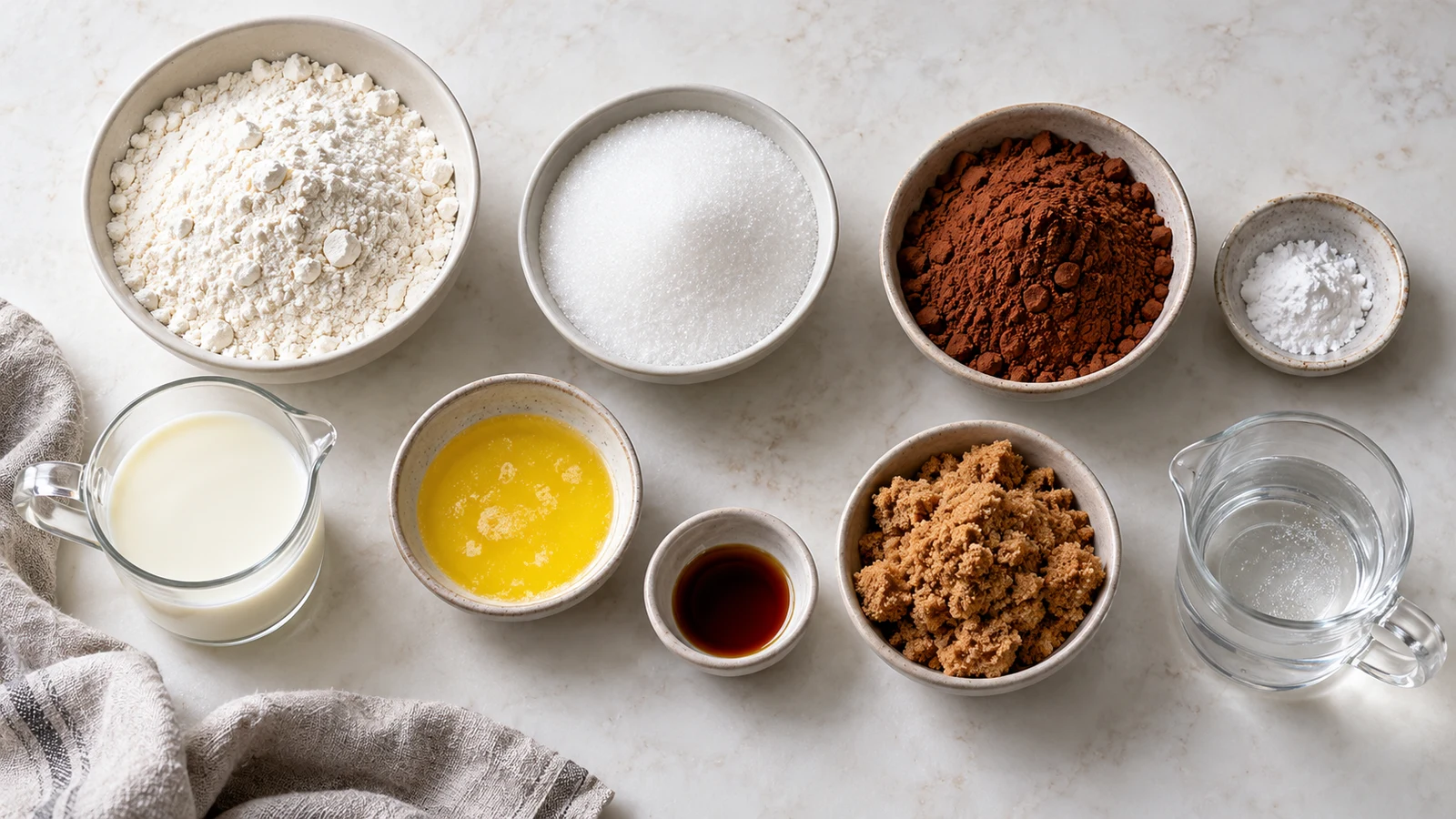
- 1 cup (120 g) all-purpose flour
- 3/4 cup (150 g) granulated sugar
- 1/4 cup (21 g) unsweetened natural cocoa powder
- 2 teaspoons baking powder
- 1/4 teaspoon fine salt
- 1/2 cup (120 ml) whole milk
- 4 tablespoons (57 g) unsalted butter, melted and slightly cooled
- 1 teaspoon vanilla extract
- For the topping: 1/2 cup (100 g) granulated sugar
- For the topping: 1/2 cup (105 g) packed light brown sugar
- For the topping: 1/4 cup (21 g) unsweetened natural cocoa powder
- For the topping: 1 1/4 cups (300 ml) very hot water, about 190°F to 200°F (88°C to 93°C)
Understanding the Key Ingredients
Natural cocoa gives the dessert a familiar, slightly tangy chocolate flavor and works well with the baking powder. Dutch-process cocoa creates a darker, smoother result, although the flavor will be less sharp. This guide to cocoa powder varieties explains how natural and Dutch cocoa differ.
Granulated sugar sweetens the cake and helps keep its crumb tender. The brown sugar in the topping contributes moisture and a gentle caramel note. Both sugars also dissolve into the hot water, creating the base of the sauce in this chocolate pudding cake recipe.
Baking powder provides the lift needed for the batter to rise above the liquid. Check its expiration date before baking, especially if the container has been open for several months. Fresh baking powder helps produce a light upper layer rather than a heavy or gummy cake.
Whole milk and butter give the cake a rounded flavor and soft crumb. The vanilla may seem subtle beside the cocoa, but it makes the chocolate taste fuller. Fine salt balances the sweetness without making the finished dessert taste salty.
Choosing the Right Baking Dish
Use an 8-inch square metal or ceramic baking dish at least 2 inches deep. A 9-inch square pan also works, but the shallower cake may finish several minutes sooner. Set the dish on a rimmed sheet pan if its sides are low, since the bubbling sauce needs room.
A glass dish retains heat and may continue cooking the edges after it leaves the oven. Begin checking promptly and place hot glass on a dry trivet rather than a cold or wet surface. Avoid a springform pan because the thin sauce can leak before it thickens.
This recipe should not be transferred directly to the pan used for a chocolate bundt cake recipe. A Bundt pan makes it difficult to distribute the topping and hot water evenly, and the finished pudding cake cannot be inverted without losing its sauce.
How to Make This Chocolate Pudding Cake Recipe
- Prepare the oven and pan. Heat the oven to 350°F (175°C). Lightly grease the bottom and sides of an 8-inch square baking dish.
- Mix the dry ingredients. Whisk the flour, 3/4 cup granulated sugar, 1/4 cup cocoa, baking powder, and salt in a medium bowl. Break up every cocoa lump so the finished cake does not contain bitter pockets.
- Make the batter. Stir in the milk, melted butter, and vanilla just until no dry flour remains. The batter should be smooth, glossy, and thicker than pancake batter but loose enough to spread with a spoon. Scrape it evenly into the prepared dish.
- Add the dry topping. Mix the remaining granulated sugar, brown sugar, and cocoa. Sprinkle the mixture evenly over the batter, reaching all four corners. Do not press it down.
- Add the hot water without stirring. Heat the water until steaming and nearly boiling. Pour it slowly over the back of a large spoon held just above the surface, moving across the pan so the topping is moistened evenly. Do not stir, swirl, or poke the layers after adding the water; this separation creates the sauce beneath the cake.
- Bake. Bake for 30 to 35 minutes. The top should look set and slightly cracked, the center should spring back lightly, and sauce should bubble around the edges. A toothpick inserted only into the upper cake layer should show moist crumbs, not wet batter.
- Rest before serving. Let the cake stand for 10 to 15 minutes. This pause thickens the sauce while keeping it fluid. Spoon portions into bowls, scooping from the bottom to preserve plenty of sauce for each serving.
Expert Tips for the Best Results
- Measure accurately: Spoon flour into the cup and level it, or use the gram weight. Too much flour is the most common reason for a dry cake.
- Remove cocoa lumps: Whisk or sift the cocoa before mixing so bitter pockets do not remain in the batter or sauce.
- Mix gently: Stir only until the flour disappears. Prolonged mixing develops gluten and can make the cake layer tough.
- Spread the batter evenly: A level base helps the topping dissolve consistently and gives every portion a similar balance of cake and sauce.
- Use very hot water: The heat starts dissolving the sugar-cocoa topping and encourages an even sauce.
- Protect the layers: Pour the water over a spoon and never stir after it is added. The unusual appearance before baking is correct.
- Check the upper layer: Do not judge doneness by a clean toothpick pushed to the bottom; it will naturally pick up pudding sauce.
- Avoid overbaking: Remove the dish when the cake layer is set but the edges are still visibly bubbling.
- Allow a short rest: Serving immediately produces a runnier sauce, while waiting too long lets the cake absorb more of it.
- Adjust for altitude: Above 3,500 feet, reduce the baking powder to 1 1/2 teaspoons, add 1 tablespoon milk, and begin checking 4 minutes early.
For another perspective on the layering method and expected texture, see this chocolate pudding cake technique. The essential lesson for any chocolate pudding cake recipe is to preserve the distinct batter, topping, and water layers.
Variations and Substitutions
Gluten-Free Chocolate Pudding Cake
For a tested gluten-free version, replace the flour with 1 cup (120 g) of a cup-for-cup gluten-free baking blend containing xanthan gum. Let the mixed batter rest for 5 minutes before adding the topping. Measure by weight because gluten-free blends vary in how densely they fill a cup.
This adaptation gives the chocolate pudding cake recipe a soft crumb while preserving its signature sauce. When you want a traditional layer cake instead, try this gluten free chocolate cake recipe.
Dairy-Free Variation
Use unsweetened oat or soy milk and an equal amount of melted plant-based butter. Coconut milk works but adds a noticeable coconut flavor. Check that the plant-based butter is suitable for baking and avoid strongly flavored oils that could compete with the cocoa.
Deeper Chocolate Flavor
Stir 1 teaspoon instant espresso powder into the dry batter ingredients. This amount strengthens the cocoa flavor without making the dessert taste distinctly like coffee. Natural cocoa offers a brighter profile, while Dutch-process cocoa makes a darker, milder hot fudge pudding cake.
Flavor Accents
Add a small pinch of cinnamon to the dry ingredients for gentle warmth, or replace part of the vanilla with peppermint extract for a cool finish. Use restrained amounts so the variation supports the original chocolate pudding cake recipe instead of overwhelming it.
What Not to Substitute
Avoid sweetened drinking chocolate, which changes both the sugar balance and cocoa intensity. Do not replace the hot water with additional milk because milk solids can alter how the sauce thickens. A liquid sweetener is also unsuitable as a direct replacement for either topping sugar.
Serving Ideas for Chocolate Pudding Cake
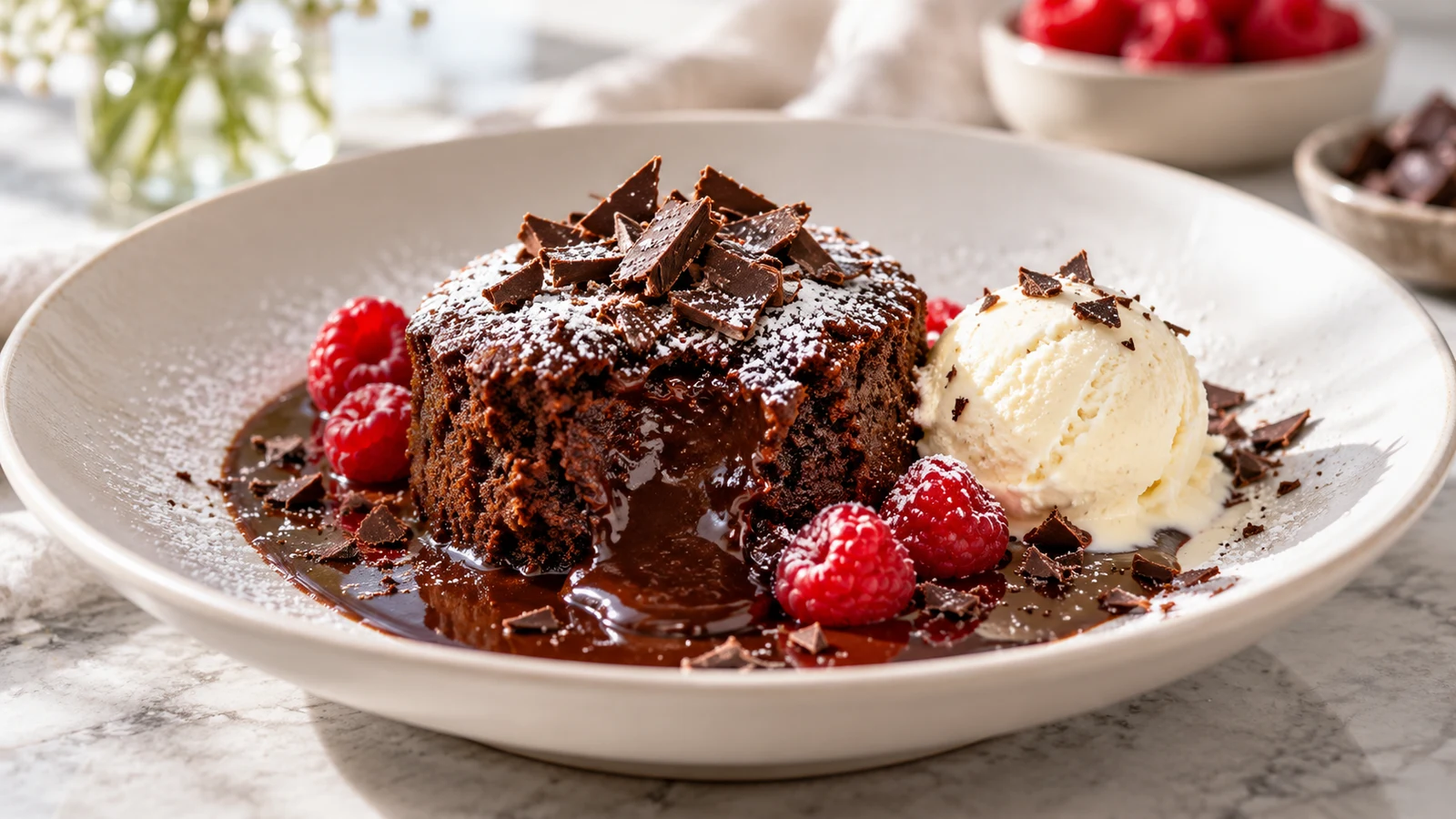
Serve the cake warm with vanilla ice cream, lightly whipped cream, raspberries, or sliced strawberries. A small pinch of flaky salt balances the sweet gooey chocolate sauce. Spoon sauce from the bottom of the dish over each portion just before it reaches the table.
For a simple dinner-party presentation, use shallow dessert bowls and place a modest scoop of ice cream beside each warm serving. Add berries at the last moment so they remain fresh. The rustic appearance is part of the appeal, so elaborate decoration is unnecessary.
Coffee and cold milk both pair naturally with this chocolate pudding cake recipe. For a more intense dessert, add a light dusting of cocoa. For a sweeter finish, use whipped cream and chocolate shavings, but avoid heavy frosting because the pudding sauce already supplies richness.
For individual portions, a microwave version uses a different timing and vessel; consult these microwave self-saucing cake instructions rather than microwaving this full batch.
Troubleshooting This Chocolate Pudding Cake Recipe
Why Is the Cake Dry?
Too much flour, an oversized pan, or excess baking time is usually responsible. Weigh the flour and begin checking at 30 minutes. Remember that the cake continues to set slightly during its resting period, so it should leave the oven while sauce still bubbles at the edges.
Why Is the Sauce Too Thin?
Rest the dessert for the full 15 minutes. If it remains watery, it was probably underbaked or the water was measured generously. Confirm that the oven was fully preheated and that you used the stated 1 1/4 cups of water.
Why Is There Too Little Sauce?
Overbaking allows the cake to absorb more liquid. The same thing happens naturally during storage, which is why the dessert is sauciest on the first day. Use a deep 8-inch dish and remove it when the upper cake is set but not firm.
Why Did the Dish Overflow?
Use a dish at least 2 inches deep and place it on a rimmed sheet pan. Never fill a smaller casserole to the brim. The batter rises while the sauce bubbles vigorously, so unused space above the assembled layers is essential.
Why Are There Bitter Cocoa Patches?
Sift lumpy cocoa and distribute the topping evenly. Pour the water slowly so every dry area becomes wet. Do not fix dry spots by stirring, as that blends the topping into the batter and prevents the layers from forming properly.
Why Is the Cake Heavy?
Old baking powder, excessive mixing, or water that was not hot enough may be responsible. Use fresh leavening, stop stirring once the batter is smooth, and heat the water until it is steaming and close to boiling.
Make-Ahead, Storage, and Reheating
Preparing Components in Advance
For make-ahead preparation, combine the dry batter ingredients and topping in separate airtight containers. Measure the milk, cover it, and refrigerate it. Melt the butter and assemble the chocolate pudding cake recipe shortly before it goes into the oven.
Do not pour hot water over the batter hours in advance. The baking powder will begin reacting while the flour absorbs the liquid, weakening the rise and changing the sauce. For the best contrast between cake and pudding, bake immediately after assembly.
Refrigerating Leftovers
Cool leftovers, cover the dish, and refrigerate for up to 4 days. The cake absorbs some sauce as it sits, so it is at its sauciest on the day it is baked. Refrigerate within 2 hours and keep the dish well covered to prevent the crumb from drying out.
Reheating Without Drying
Reheat individual servings for 20 to 30 seconds in the microwave. To warm the covered dish, use a 300°F (150°C) oven for 10 to 15 minutes. Heat only until warm because repeated or prolonged heating reduces the remaining sauce.
Freezing Instructions
Freeze cooled portions in airtight containers for up to 2 months. Thaw them overnight in the refrigerator and reheat gently. The texture will be softer and less saucy than a freshly baked chocolate pudding cake recipe, but the flavor remains satisfying.
Frequently Asked Questions
Does This Chocolate Pudding Cake Recipe Require Instant Pudding Mix?
No. The pudding layer forms from cocoa, sugars, hot water, and starch released from the batter. Packaged pudding mix would make the dessert overly thick and sweet, and it is not needed to create the self-saucing effect.
Why Do the Cake and Sauce Layers Reverse?
The aerated batter rises as the baking powder releases gas. Meanwhile, the denser hot sugar-and-cocoa liquid moves downward and thickens beneath it, producing a self-saucing chocolate cake.
Must the Water Be Boiling?
It should be steaming and close to boiling, around 190°F to 200°F (88°C to 93°C), but it need not remain at a rolling boil. Warm tap water is not hot enough for the most reliable sauce.
Can I Double the Chocolate Pudding Cake Recipe?
Yes. Double every ingredient and bake it in a deep 9-by-13-inch dish for approximately 35 to 42 minutes. Place the dish on a sheet pan and rely on the visual doneness signs rather than time alone.
Can I Make This Recipe in Ramekins?
Individual dishes require adjusted filling levels and a shorter baking time. Divide the batter, topping, and hot water evenly, leaving plenty of headroom. Begin checking early and place the ramekins on a rimmed sheet pan to catch possible drips.
Can I Use a 9-Inch Round Pan?
A deep 9-inch round baking dish can work, although the cake will be shallower and may bake sooner. Avoid a loose-bottomed pan. Start checking several minutes early and use the same set top, bubbling edges, and moist-crumb cues.
How Is This Different From a Chocolate Pound Cake Recipe?
A chocolate pound cake recipe has a dense, buttery crumb designed for clean slices. This dessert has a lighter upper layer and a liquid chocolate sauce beneath it, so it is served warm with a spoon.
How Is This Different From a Chocolate Bundt Cake Recipe?
A chocolate bundt cake recipe is baked in a shaped tube pan and turned out before serving. Pudding cake stays in its baking dish because inverting it would spill the soft sauce that forms underneath.
Can I Adapt a Baker’s German Chocolate Cake Recipe This Way?
A baker’s german chocolate cake recipe relies on sweet baking chocolate and typically includes coconut-pecan frosting. Those ingredients and proportions are not interchangeable with this cocoa-based, self-saucing dessert, so follow the dedicated recipe for dependable results.
Can I Use the Flour From a Gluten Free Chocolate Cake Recipe?
Yes, if the gluten free chocolate cake recipe uses a cup-for-cup blend containing xanthan gum. Different single flours absorb liquid differently, so almond, coconut, or rice flour alone should not replace the all-purpose flour without further testing.
How Do I Know When It Is Ready to Serve?
After baking, wait 10 to 15 minutes. The cake should hold together when spooned, while the sauce should remain glossy and fluid beneath it. A longer rest makes the pudding thicker and allows more of it to soak into the crumb.
Related Chocolate Cake Recipes
If you enjoy classic chocolate-and-coconut flavors, make this baker’s German chocolate cake recipe. It offers a distinctly different experience, with structured cake layers and a rich coconut-pecan finish.
For a familiar cocoa layer cake, the Hershey’s chocolate cake recipe is a useful next bake. A chocolate bundt cake recipe or dense chocolate pound cake recipe is better when you need neat slices rather than a spoonable dessert.
When dietary needs are the priority, the linked gluten free chocolate cake recipe provides a classic frosted option. Choose this chocolate pudding cake recipe when you want a warm, informal dessert with sauce already built into every serving.
Printable Recipe Card
Chocolate Pudding Cake Recipe
- Prep time: 15 minutes
- Cook time: 30 to 35 minutes
- Resting time: 10 to 15 minutes
- Yield: 8 servings
- Pan: 8-inch square baking dish
- Temperature: 350°F (175°C)
- Nutrition: Approximately 310 calories, 4 g protein, 55 g carbohydrate, 10 g fat, and 30 g sugar per serving; values vary by ingredients.
- Note: Add the hot water last, pour it gently over a spoon, and never stir the assembled layers.
A Warm Dessert Worth Sharing
This chocolate pudding cake recipe turns simple pantry ingredients into two satisfying textures in one dish. Careful measuring, very hot water, and undisturbed layers are the keys to a tender cake with a generous pool of glossy sauce.
Serve it after its brief rest, when the cake can hold its shape and the pudding is still spoonable. Whether you add ice cream, berries, or nothing at all, this chocolate pudding cake recipe makes a comforting finish to a family meal or relaxed gathering.
Reviews
Reader reviews are managed separately (outside this build).