Cake
Foolproof chocolate sponge cake recipe: Light, Fluffy
Try this foolproof chocolate sponge cake recipe for a light, moist, fluffy bake, with egg-whipping cues, folding advice, fixes, fillings, and swaps.
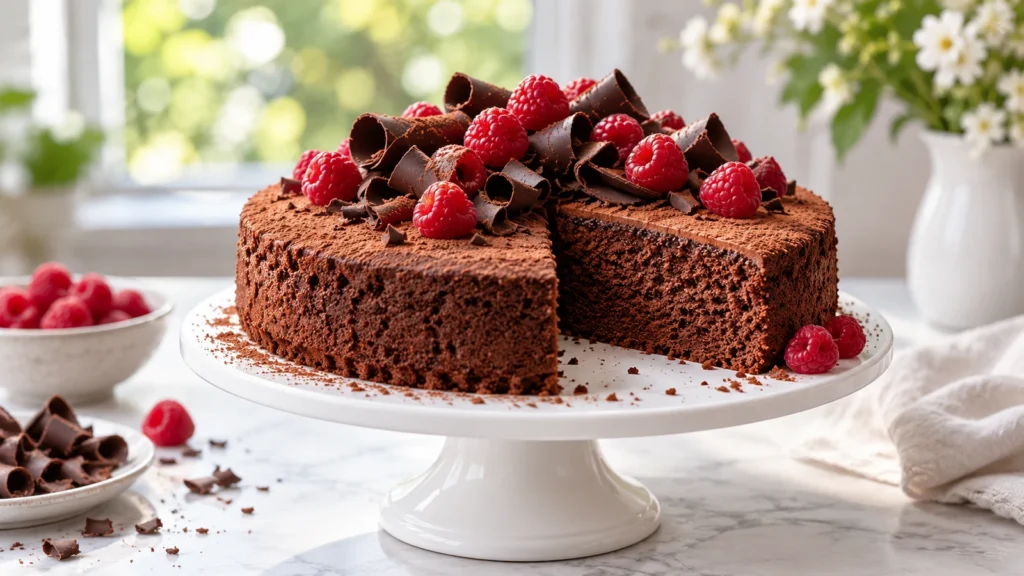
This chocolate sponge cake recipe produces a light, fluffy crumb with deep cocoa flavor and enough structure for layering. Whipped eggs provide most of the lift, so the cake feels airier than a butter-based chocolate cake while remaining pleasantly moist.
The keys are room-temperature ingredients, properly whipped eggs, and gentle folding. Follow the visual cues below and weigh the dry ingredients when possible for the most consistent result. Unlike a chocolate pound cake recipe, this method depends on preserving tiny air bubbles rather than creaming butter.
Table of Contents
Why You’ll Love This Chocolate Sponge Cake Recipe
- Light texture: Whipped eggs create an airy crumb without chemical leavening.
- Reliable cues: Ribbon-stage, folding, and doneness descriptions remove guesswork.
- Layer-friendly: The cake slices cleanly and pairs with many fillings.
- Make-ahead option: It freezes well before filling or decorating.
- Versatile flavor: Serve it simply with fruit or turn it into a celebration layer cake.
Equipment
- 8-inch (20 cm) round cake pan, 3 inches deep
- Parchment paper, mixing bowls, and fine-mesh sieve
- Stand mixer or handheld electric mixer
- Flexible spatula and kitchen scale
- Wire cooling rack and serrated knife
A tall-sided pan supports the rise and helps this chocolate sponge cake recipe bake into a layer that can be divided. A flexible spatula is useful because it reaches the bottom of the bowl without crushing the foam.
Ingredients
- 4 large eggs, 7 ounces without shells (200 g), at room temperature
- 3/4 cup granulated sugar (150 g)
- 1 teaspoon vanilla extract
- 3/4 cup cake flour (90 g)
- 1/3 cup natural unsweetened cocoa powder (30 g)
- 1/4 teaspoon fine salt
- 3 tablespoons whole milk (45 ml), lukewarm
- 2 tablespoons neutral oil (30 ml), at room temperature
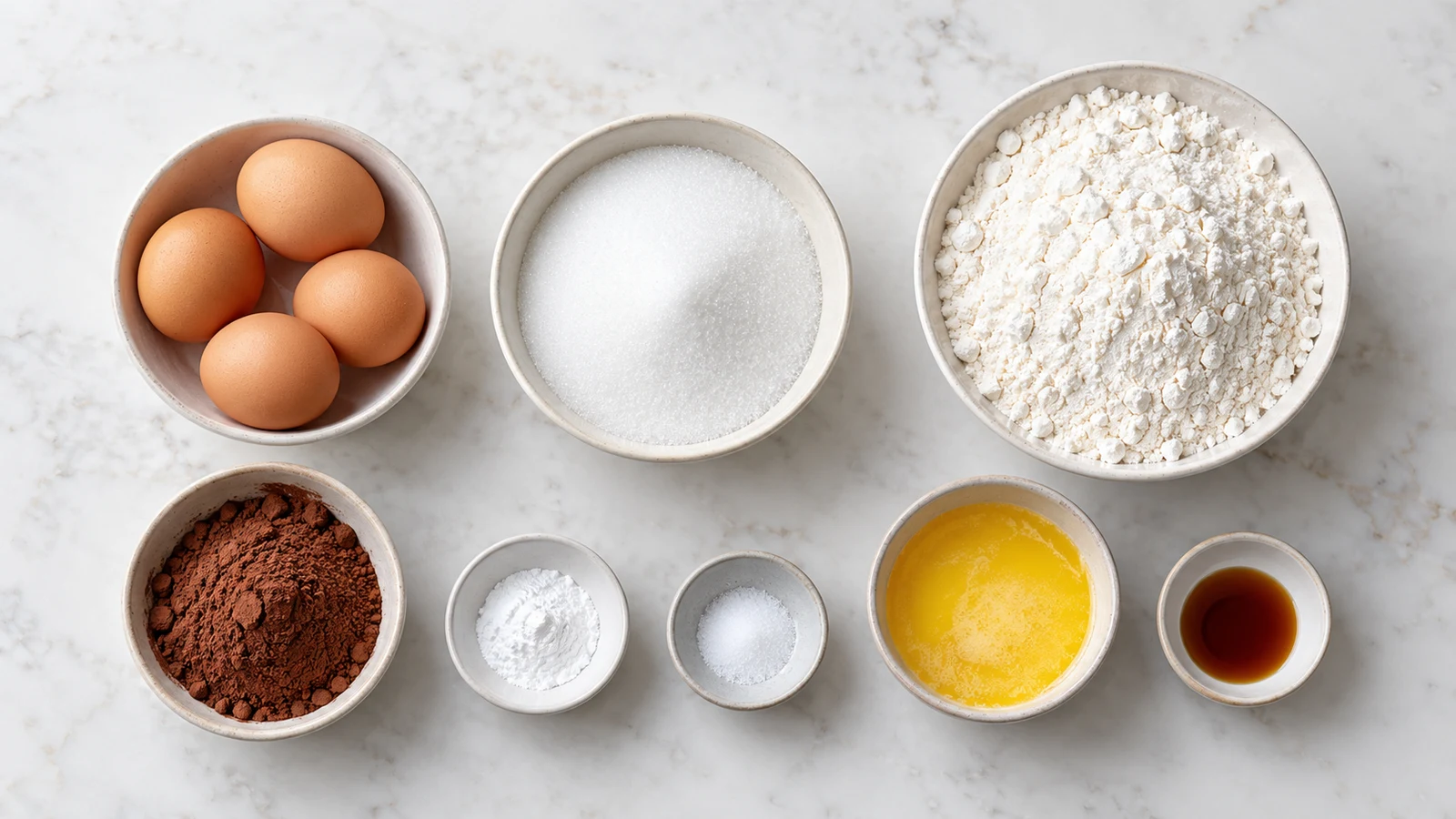
Ingredient and Preparation Notes
Room-temperature eggs whip to greater volume than cold eggs. If needed, place uncracked eggs in warm water for 10 minutes. Natural cocoa gives a balanced flavor and dependable acidity; Dutch-process cocoa also works here but produces a darker, mellower sponge.
Sift the flour, cocoa powder, and salt together twice to remove lumps. Line only the pan bottom with parchment and leave the sides ungreased, giving the batter something to grip as it rises. The milk should feel barely warm, not hot.
Why Cake Flour Matters
Cake flour has less protein than all-purpose flour, so it forms less gluten and helps preserve a tender crumb. Cocoa also absorbs moisture, which makes accurate weighing important. Adding extra flour or cocoa can turn a light chocolate sponge cake recipe into a dry, compact cake.
Choosing the Oil and Cocoa
Use a neutral oil such as vegetable, canola, or grapeseed oil so the cocoa remains the dominant flavor. Avoid strongly flavored oils unless that flavor is intentional. Unsweetened cocoa is essential; sweetened drink powder contains sugar and other ingredients that would alter the recipe.
How to Make This Chocolate Sponge Cake Recipe
- Prepare the oven and pan. Heat the oven to 350°F (175°C). Line the bottom of an 8-inch (20 cm) round pan with parchment.
- Whip the eggs. Beat the eggs and sugar on high speed for 7–9 minutes, then mix in the vanilla. The mixture is ready at ribbon stage: it should be pale, roughly tripled in volume, and thick enough that batter falling from the whisk leaves a visible trail for 3–4 seconds. For another useful comparison of aeration cues, see this light and airy sponge technique.
- Fold in the dry ingredients. Sift one-third of the flour mixture over the eggs. Cut down through the center with a spatula, sweep along the bottom, and turn the batter over while rotating the bowl. Repeat with the remaining dry ingredients. Stop when only a few faint streaks remain; correctly folded batter looks evenly chocolate-colored, glossy, and still voluminous.
- Add the liquids. Stir about 1 cup of batter into the milk and oil, then gently fold this lighter mixture back into the main bowl. This prevents the liquids from sinking and deflating the foam.
- Bake. Pour into the pan and bake for 25–30 minutes. Do not open the oven during the first 22 minutes.
- Check doneness. The top should spring back after a light touch, the edges should begin pulling from the pan, and a skewer should emerge clean or with a few dry crumbs. Additional sponge-cake process details are available in this chocolate sponge guide.
- Cool and release. Cool upright in the pan for 10 minutes. Run a thin knife around the edge, turn the cake onto a rack, remove the parchment, and cool completely for about 1 hour before slicing.
Expert Tips for a Tall, Airy Sponge
Recognize a Stable Egg Foam
Do not judge the eggs by mixing time alone. Bowl shape, mixer power, and egg temperature all affect how quickly they aerate. When the whisk is lifted, the mixture should fall in a thick ribbon and briefly hold its shape. This visual test is central to a successful chocolate sponge cake recipe.
Fold Without Losing Volume
Use a large bowl so there is room to lift and turn the batter. Scrape from the bottom because pockets of flour often hide there. Rotate the bowl after every fold and stop promptly once the mixture is uniform. Slow, efficient motions retain more air than many small strokes.
Temper the Milk and Oil Mixture
Pouring oil directly into the egg foam can make it sink. Mixing the liquids with about 1 cup of batter first creates a lighter emulsion that incorporates more easily. Fold it through carefully, checking the bottom of the bowl for any oily streaks.
Move the Batter to the Oven Promptly
The whipped eggs begin losing air as the batter sits. Have the pan lined and the oven fully heated before mixing. Once the batter is ready, transfer it to the pan, level the surface gently, and bake without delay.
More Tips for the Best Results
- Measure flour and cocoa by weight; excess dry ingredients make the cake dry or dense.
- Fold with broad, deliberate strokes. Vigorous stirring knocks air from the whipped eggs.
- Use a clean, dry mixing bowl because grease can interfere with stable aeration.
- Keep the oven rack in the center so heat circulates evenly around the pan.
- If the cake is dense or rubbery, the eggs were likely under-whipped or the batter was overmixed.
- A sunken center usually indicates underbaking, an early oven-door opening, or severe deflation.
- Cracks can result from an oven that runs hot. An inexpensive oven thermometer helps.
- For uneven layers, spread the batter level and bake on the center rack.
Variations and Substitutions
Dairy-Free Chocolate Sponge
For a dairy-free sponge, replace the milk with unsweetened oat or almond milk; no other adjustment is needed. Choose an unflavored milk so it does not compete with the cocoa and vanilla.
Gluten-Free Variation
For a tested-style gluten-free approach, replace the cake flour by weight with 90 g of a cup-for-cup blend containing xanthan gum and fold especially gently. If you prefer a richer gluten free chocolate cake recipe, try this gluten-free chocolate cake.
A gluten free chocolate cake recipe may absorb liquid differently depending on the flour blend. Let the finished sponge cool completely before assessing its texture, and use a sharp serrated knife when dividing it into layers.
Natural or Dutch-Process Cocoa
Natural cocoa offers a brighter, more traditional cocoa taste. Dutch-process cocoa creates a darker color and a smoother, less acidic flavor. Either works because this chocolate sponge cake recipe does not rely on baking soda for its rise.
Flourless, Bundt, and Pound Cake Alternatives
A flourless cake is a different dessert with a dense, fudgy structure rather than an aerated crumb. This flourless chocolate cake reference illustrates that distinction.
A chocolate bundt cake recipe typically uses a heavier batter designed to capture the details of a shaped pan. A chocolate pound cake recipe also has a close, buttery crumb. Neither style should be substituted directly for this foam-based sponge batter.
Pan Size, Scaling, and Altitude Adjustments
For two 6-inch (15 cm) pans, divide the batter evenly and bake for 22–27 minutes. A 9-inch (23 cm) pan makes a thinner layer that generally needs 20–25 minutes. To double the recipe, prepare two separate batches so the foam does not sit while another pan bakes.
Do not bake this batter in a decorative pan as though it were a chocolate bundt cake recipe. Its delicate foam needs the support and predictable depth of a straight-sided pan, and an intricate pan may make release difficult.
Above 3,500 feet (1,067 m), reduce the sugar by 1 tablespoon, add 1 tablespoon milk, and raise the oven temperature to 365°F (185°C). Begin checking 3–5 minutes early because cakes bake and dry more quickly at altitude.
Fillings, Layering, and Serving Ideas
For neat layers, wrap the completely cooled cake and rest it for several hours before cutting. Brush each cut surface lightly with simple soaking syrup—about 1–2 tablespoons per layer—then add whipped cream, chocolate ganache, berries, pastry cream, or buttercream. Too much syrup can make the delicate crumb soggy.
Simple Everyday Serving
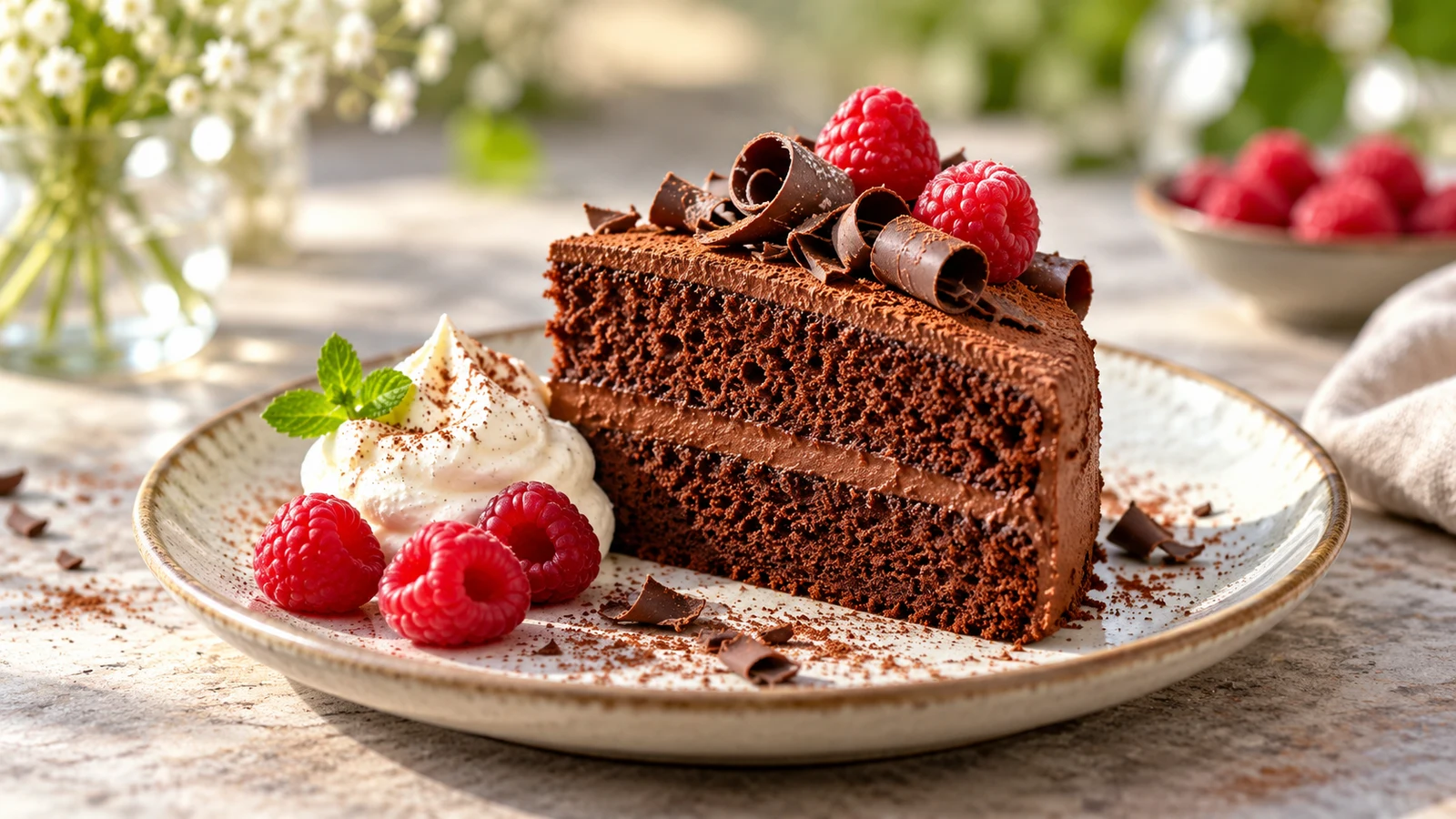
Dust the top lightly with cocoa and serve slices with raspberries, strawberries, or cherries. Softly whipped cream balances the cocoa without overwhelming the airy texture. For a warm contrast, accompany each serving with coffee or tea rather than heating the cake itself.
Celebration Cake Ideas
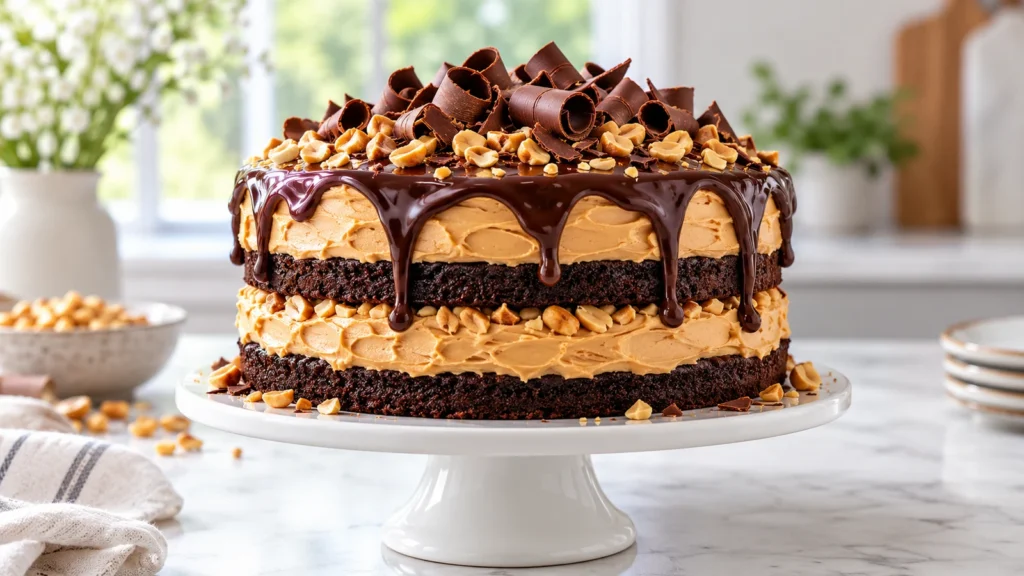
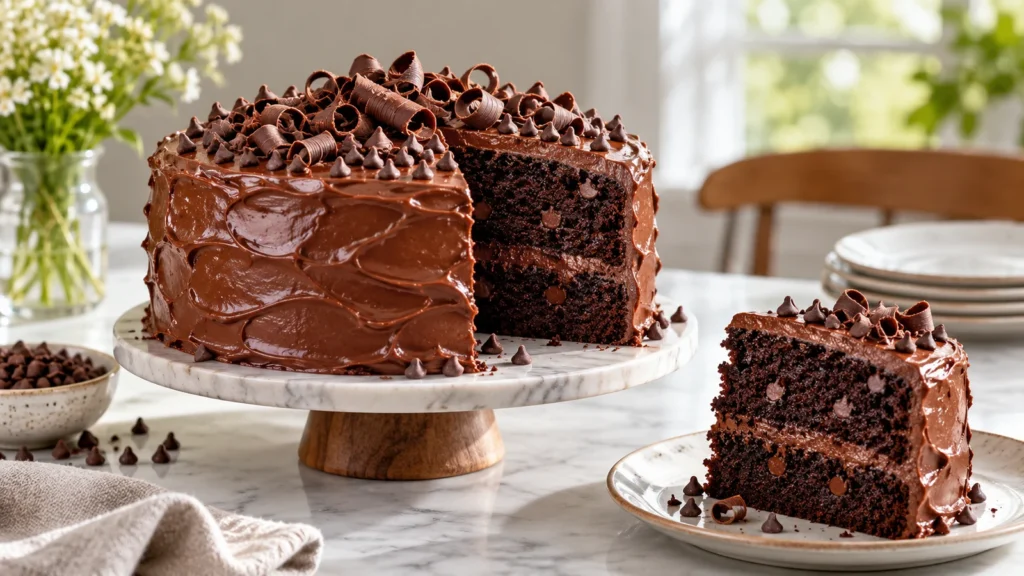
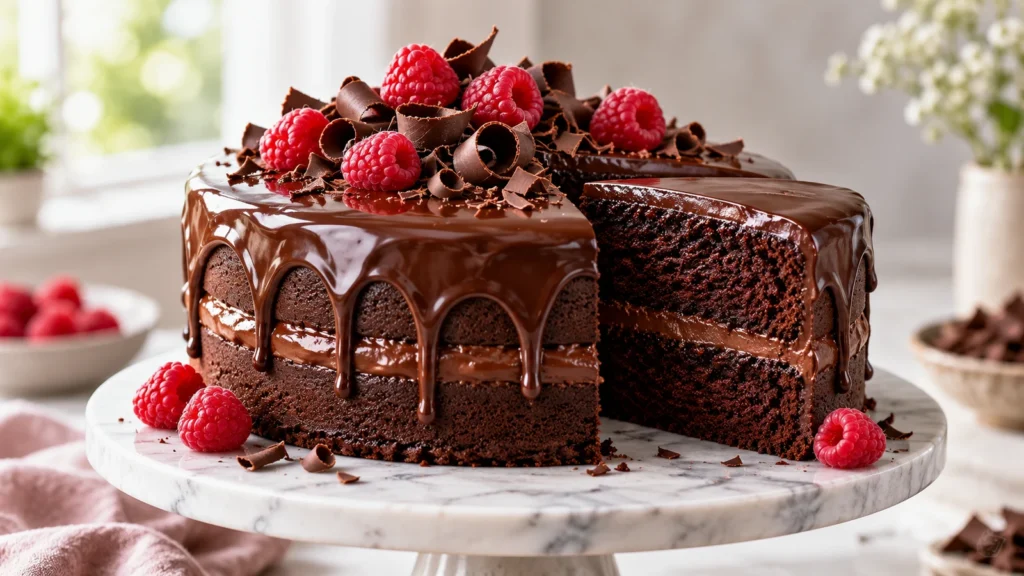
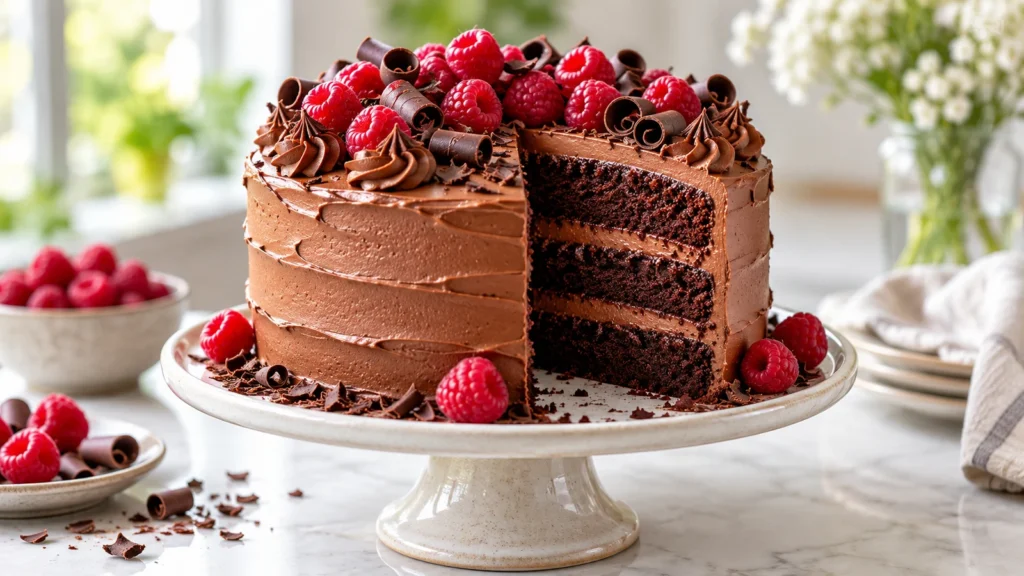
Divide the cooled sponge into two or three even layers. Pipe a frosting border before adding a soft filling so it stays contained. A thin ganache coating creates a polished finish, while chocolate curls, fresh berries, or a restrained cocoa dusting add decoration without weighing down the cake.
Other Chocolate Cake Styles
For a nutty, caramel-like filling, compare the coconut-pecan topping in this baker’s German chocolate cake recipe. That filling is richer and heavier, so apply a moderate layer if pairing it with this delicate sponge.
The two-tone presentation in this chocolate and vanilla marble cake is another attractive option. Choose a chocolate bundt cake recipe or chocolate pound cake recipe instead when you want a tighter, richer crumb that can support a simple glaze.
Make-Ahead, Storage, and Freezing
Making the Sponge Ahead
Bake the cake one or two days before assembling it. Once completely cool, wrap it tightly and keep it at room temperature. Resting the wrapped sponge for several hours makes it less fragile and easier to cut into level layers.
Storing at Room Temperature or in the Refrigerator
Keep the unfilled cake tightly wrapped at room temperature for up to 2 days or refrigerate it for up to 5 days. Bring chilled cake to room temperature before serving; reheating is unnecessary and can dry it out.
Once filled, storage depends on the filling. Cakes containing whipped cream, pastry cream, or other perishable components should remain refrigerated. Keep cut surfaces covered to prevent moisture loss and allow a chilled slice to lose its refrigerator chill before serving.
How to Freeze the Cake
To freeze, wrap the cooled cake in plastic, add a layer of foil, and freeze for up to 2 months. Thaw overnight in the refrigerator while wrapped, then let it stand at room temperature for 30–60 minutes before unwrapping, splitting, and filling.
Keeping the chocolate sponge cake recipe wrapped during thawing prevents condensation from settling directly on the crumb. Freeze the sponge unfilled when possible because delicate cream and fruit fillings may change texture after thawing.
Troubleshooting This Chocolate Sponge Cake Recipe
The Cake Is Dense or Rubbery
The eggs were probably under-whipped, or too much air escaped during folding. Confirm ribbon stage before adding the dry ingredients. Fold only until no flour pockets or oily streaks remain, and put the batter in the oven immediately.
The Center Sank
A sunken center often means the cake was removed before its structure had set. Opening the oven during the first 22 minutes can also cause a temperature drop. Check that the oven is fully preheated and use all three doneness cues before removing the pan.
The Cake Is Dry
Overbaking and excess dry ingredients are the usual causes. Weigh the flour and cocoa, begin checking at 25 minutes, and remove the cake when the skewer shows no wet batter. After cooling, wrap it promptly to limit moisture loss.
Dry Ingredients Formed Lumps
Cocoa readily clumps and may resist folding once it meets the moist foam. Sift the flour, cocoa, and salt together twice, then sift each portion over the eggs. Do not press stubborn lumps into the batter with repeated stirring.
The Bottom Has Oily Streaks
The tempered milk and oil mixture was not fully incorporated. During the final folds, sweep the spatula across the bottom and up the side of the bowl. Stop as soon as the color and texture look even.
The Top Cracked or Rose Unevenly
The oven may be too hot, the rack may be off-center, or the batter may have been distributed unevenly. Verify the temperature with an oven thermometer and gently level the batter before baking. Avoid banging the pan, which can deflate the foam.
The Cake Stuck to the Pan
The ungreased sides intentionally help the sponge climb, so release requires a thin knife after the 10-minute cooling period. Run it carefully around the edge without cutting inward. The parchment-lined bottom should then peel away cleanly.
Nutrition
One of 10 unfrosted servings contains approximately 165 calories, 4 g protein, 27 g carbohydrate, 5 g fat, and 17 g sugar. Values are estimates and will change with fillings, syrup, or frosting.
Frequently Asked Questions
Why did my chocolate sponge cake recipe turn out dense?
The eggs may not have reached ribbon stage, or the batter may have lost volume during folding. Sift the dry ingredients and use slow, sweeping folds only until combined.
Can I make this chocolate sponge cake recipe without an electric mixer?
Yes, but whipping four eggs by hand can take 15–20 minutes. Use a large balloon whisk and a wide bowl, and rely on the ribbon-stage test rather than the clock.
Can I use Dutch-process cocoa powder?
Yes. Because this sponge does not depend on baking soda, either natural or Dutch-process cocoa works; Dutch cocoa gives a darker color and smoother flavor.
How do I keep the sponge moist?
Avoid overbaking, wrap the cake after it cools, and apply a modest amount of soaking syrup before filling. Oil also helps the finished crumb remain tender when chilled.
Can I prepare the cake in advance?
Yes. Bake it one or two days ahead and wrap it tightly, or freeze it for longer storage. A rested sponge is often easier to divide into even layers.
Can I turn this into a baker’s German chocolate cake recipe?
You can pair the sponge with coconut-pecan filling for a creative variation, but a traditional baker’s German chocolate cake recipe generally uses a richer cake base. Keep the filling layers moderate so the airy sponge remains stable.
Can I bake this as a chocolate bundt cake recipe?
This batter is not ideal for an intricate Bundt pan because its delicate structure may stick or tear. Use a purpose-made chocolate bundt cake recipe when you want the firm crumb and clean definition associated with that shape.
How does this differ from a chocolate pound cake recipe?
A chocolate pound cake recipe relies on butter and has a close, rich crumb. This sponge gets most of its height from whipped eggs, producing a lighter cake that works especially well with cream, fruit, and soft fillings.
Can I adapt it into a gluten free chocolate cake recipe?
Replace the cake flour by weight with 90 g of a cup-for-cup blend containing xanthan gum. Fold gently because gluten-free batter can lose air easily, and cool the cake fully before slicing.
Why should the pan sides remain ungreased?
The foam-based batter needs to grip the sides as it rises. Grease can make the batter slide downward before the structure sets. Line the bottom with parchment, then release the cooled edge carefully with a thin knife.
Can I frost the cake while it is warm?
No. Warm cake can melt frosting, release crumbs, and compress under the weight of a filling. Let it cool completely for about 1 hour after the initial 10 minutes in the pan before wrapping, cutting, or decorating.
Recipe Card
Chocolate Sponge Cake Recipe
Prep time: 20 minutes
Bake time: 25–30 minutes
Cooling time: 1 hour 10 minutes
Yield: 10 servings
Pan: One 8-inch (20 cm) round pan
- 4 large room-temperature eggs (200 g without shells)
- 3/4 cup granulated sugar (150 g)
- 1 teaspoon vanilla extract
- 3/4 cup cake flour (90 g)
- 1/3 cup natural cocoa powder (30 g)
- 1/4 teaspoon fine salt
- 3 tablespoons lukewarm whole milk (45 ml)
- 2 tablespoons neutral oil (30 ml)
- Heat the oven to 350°F (175°C); line the pan bottom.
- Whip eggs and sugar for 7–9 minutes to ribbon stage; add vanilla.
- Sift and gently fold in flour, cocoa, and salt in three additions.
- Mix a cup of batter with milk and oil, then fold it back into the bowl.
- Bake for 25–30 minutes, until springy and a skewer comes out clean.
- Cool in the pan for 10 minutes, release, and cool fully on a rack.
Notes: Do not grease the pan sides. Keep folding to a minimum, and wait until the cake is completely cool before cutting it into layers.
Final Tips for Success
This chocolate sponge cake recipe is most reliable when preparation happens before mixing: warm the eggs, sift the dry ingredients, line the pan, and preheat the oven. Then focus on ribbon stage, efficient folding, and prompt baking.
Choose this airy sponge for layered desserts, fruit, or whipped cream. Save a baker’s German chocolate cake recipe for a richer coconut-pecan presentation, a chocolate bundt cake recipe for a sculpted pan, a chocolate pound cake recipe for buttery density, or a gluten free chocolate cake recipe when avoiding wheat is the priority.
With properly whipped eggs and careful folding, the cocoa sponge bakes tall, slices cleanly, and stays tender enough for simple serving or an elegant layered dessert.
Reviews
Reader reviews are managed separately (outside this build).