Cake
Best Chocolate Peanut Butter Cake Recipe: Decadent Bliss
Try this chocolate peanut butter cake recipe for moist chocolate layers, creamy peanut butter frosting, rich ganache, plus a foolproof baking guide.
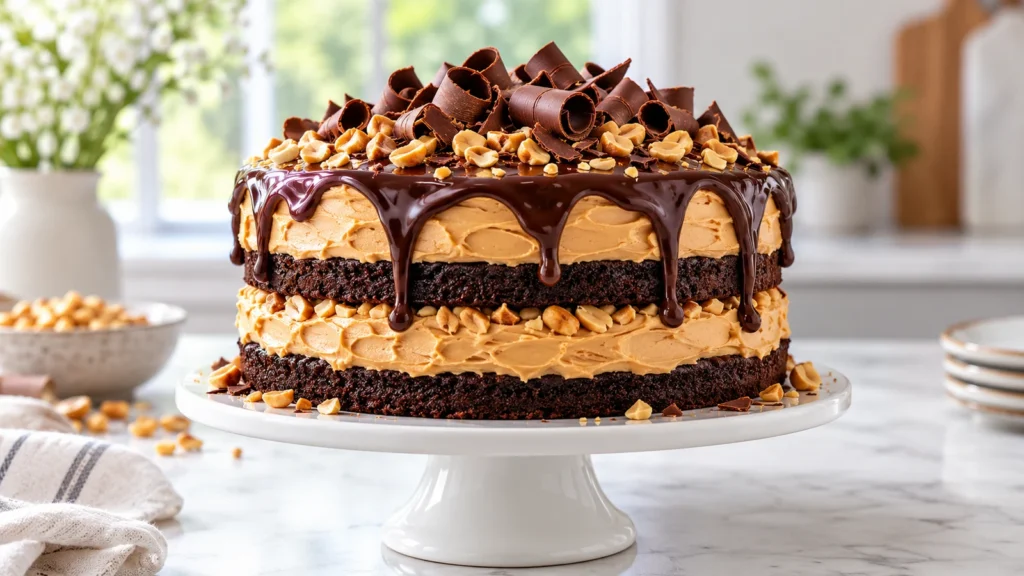
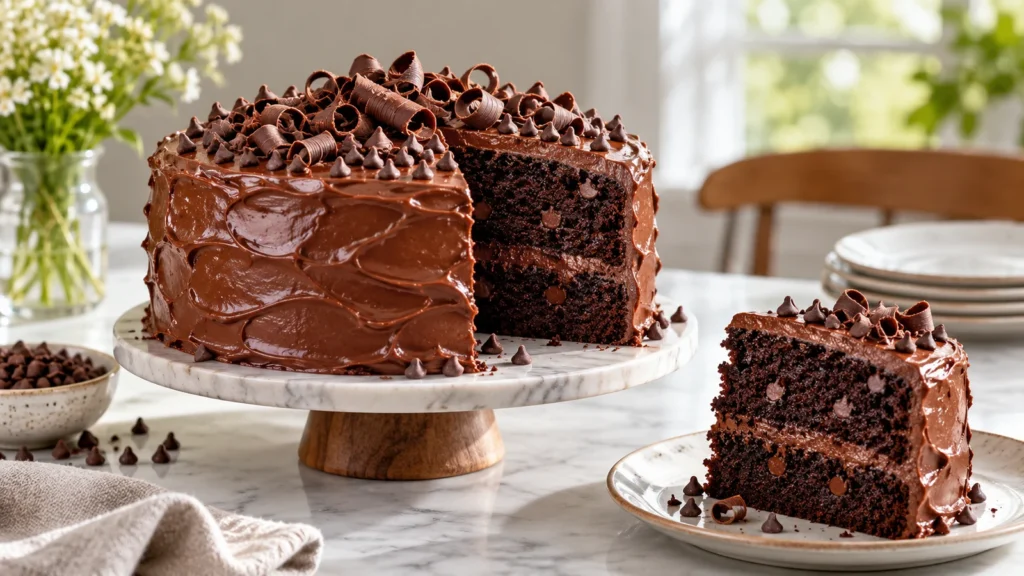
This chocolate peanut butter cake recipe layers a moist cocoa cake with silky peanut butter frosting and a glossy chocolate ganache. It is rich enough for a celebration, yet every step is manageable with basic baking equipment. The contrast between tender cake, creamy frosting, and soft ganache makes each slice especially satisfying.
Oil and buttermilk keep the crumb tender, while conventional creamy peanut butter creates a stable, smooth frosting. The recipe makes one 8-inch two-layer cake, yielding 12 generous or 16 smaller portions. Unlike a chocolate bundt cake recipe or chocolate pound cake recipe, this layer cake offers three distinct textures and an impressive finish.
Table of Contents
Why You’ll Love This Chocolate Peanut Butter Cake Recipe
- Moist texture: Buttermilk, oil, and a thin batter produce a soft cake that stays tender for days.
- Balanced flavor: Deep cocoa, lightly salty peanut butter, and semisweet ganache keep every slice from tasting overly sweet.
- Make-ahead friendly: The layers, frosting, and assembled cake can all be prepared in stages.
- Simple finishing: A crumb coat and pourable ganache create a polished result without advanced decorating skills.
- Celebration-ready: The tall layers look dramatic on a cake stand, while the familiar chocolate and peanut butter combination appeals to a crowd.
Ingredients
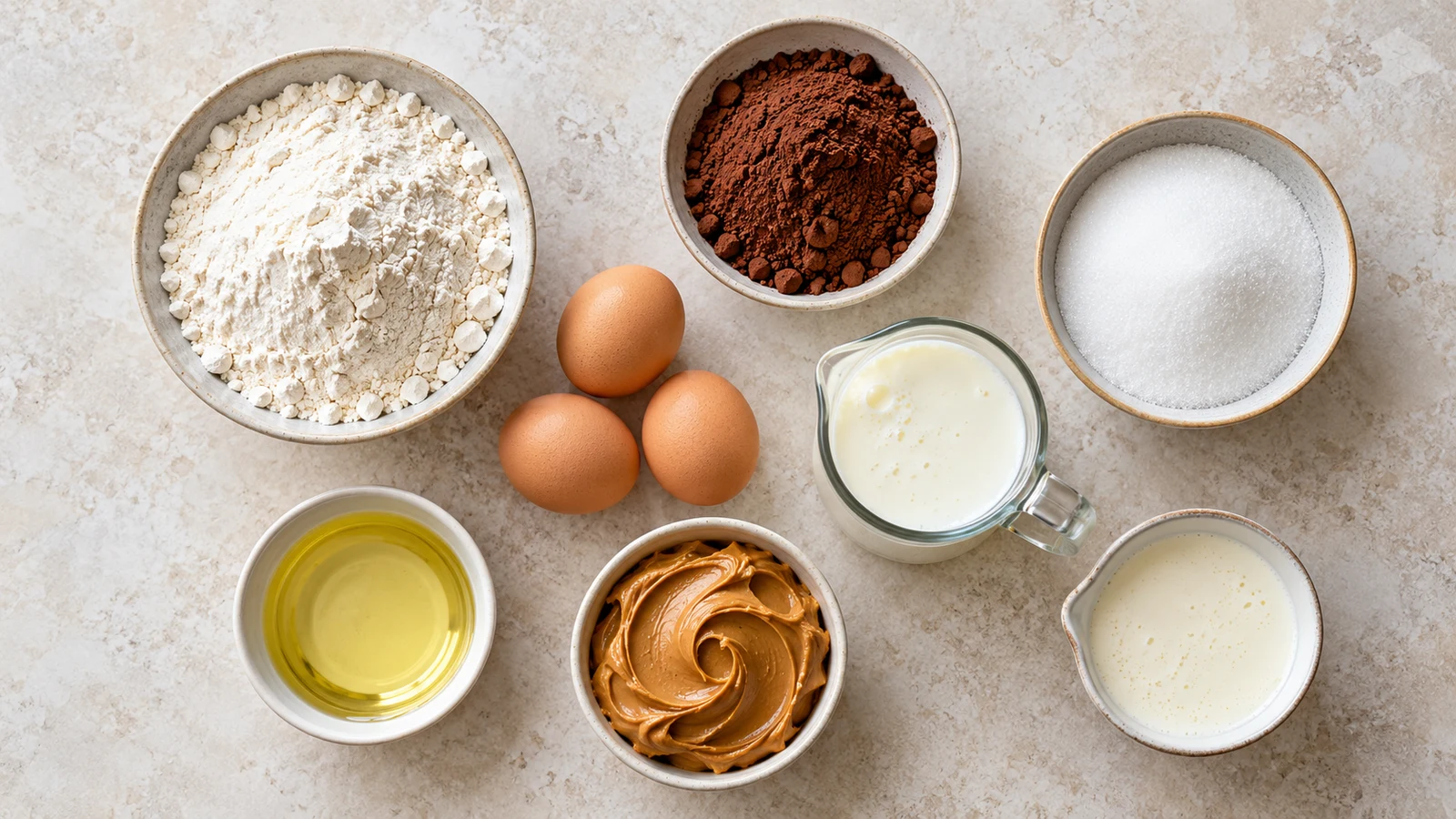
- 1 3/4 cups (210 g) all-purpose flour, spooned and leveled
- 3/4 cup (64 g) natural unsweetened cocoa powder, not Dutch-process
- 1 3/4 cups (350 g) granulated sugar
- 1 1/2 teaspoons baking soda
- 1 teaspoon baking powder
- 1 teaspoon fine salt
- 2 large eggs, at room temperature
- 1 cup (240 ml) buttermilk, at room temperature
- 1/2 cup (120 ml) neutral oil, such as canola or vegetable oil
- 2 teaspoons vanilla extract
- 1 cup (240 ml) hot coffee or hot water
- 1 cup (256 g) conventional creamy peanut butter, at room temperature
- 1 cup (226 g) unsalted butter, softened to about 67°F (19°C)
- 3 1/2 cups (420 g) confectioners’ sugar
- 1/3 cup (80 ml) heavy cream, plus more as needed
- 1/2 teaspoon fine salt
- 6 ounces (170 g) semisweet chocolate, finely chopped
- 3/4 cup (180 ml) heavy cream, for the ganache
- Optional garnishes: chopped roasted peanuts, miniature peanut butter cups, chocolate curls, or flaky salt
How to Make This Chocolate Peanut Butter Cake Recipe
- Prepare the equipment: Heat a conventional oven to 350°F (175°C). Grease two 8-by-2-inch round cake pans, line the bottoms with parchment, and grease the paper. If you lack round pans, use one 9-by-13-inch pan and begin checking it after 32 minutes. Have two mixing bowls, a whisk, spatula, mixer, cooling rack, and offset spatula ready.
- Combine the dry ingredients: Whisk the flour, cocoa, sugar, baking soda, baking powder, and salt in a large bowl. Break up every cocoa lump so the finished cake has an even crumb.
- Mix the wet ingredients: In another bowl, whisk the room-temperature eggs, buttermilk, oil, and vanilla until uniform. Pour the wet mixture into the dry ingredients and stir just until only a few flour streaks remain.
- Finish the batter: Gradually whisk in the hot coffee. The batter should look smooth, glossy, and noticeably thin; this is expected. Avoid continued mixing once it is uniform, since overmixing can make the layers tough.
- Bake: Divide the batter evenly between the pans, about 3 cups per pan. Bake for 28 to 34 minutes. The tops should spring back lightly, the edges should begin pulling from the pans, and a tester inserted in the center should carry a few moist crumbs rather than wet batter. These visual and tactile cake doneness tests are more reliable than timing alone.
- Cool completely: Let the layers cool in their pans for 15 minutes. Turn them onto a rack, remove the parchment, and cool for at least 90 minutes before frosting.
- Make the peanut butter frosting: Beat the softened butter and conventional creamy peanut butter for 2 minutes. Add the confectioners’ sugar gradually, then beat in 1/3 cup cream and the salt for 2 to 3 minutes. Use shelf-stable, emulsified peanut butter; natural peanut butter can separate and make the frosting oily.
- Fill and crumb-coat: Place one layer on a serving plate and spread about 1 cup frosting over it. Add the second layer. Cover the entire cake with a very thin frosting layer to trap loose crumbs, then chill for 20 to 30 minutes.
- Frost the cake: Spread the remaining frosting over the chilled cake. For more guidance on smooth layers and finishing, see this cake with chocolate ganache recipe.
- Add the ganache: Put the chopped chocolate in a heatproof bowl. Heat 3/4 cup cream until steaming but not boiling, pour it over the chocolate, and wait 3 minutes. Stir until smooth, then cool to 86–90°F (30–32°C), when it should flow slowly from a spoon. Pour over the chilled cake and gently guide it toward the edges. Garnish as desired and let the ganache set for 20 minutes.
Expert Tips for a Dependable Chocolate Peanut Butter Cake Recipe
Measure the Dry Ingredients Accurately
Weigh the flour and cocoa when possible. If using cups, loosen the flour, spoon it into the measuring cup, and level the surface without packing it. Scooping directly from the bag can add enough flour to make this chocolate peanut butter cake recipe dry or heavy.
Use Room-Temperature Ingredients
Room-temperature eggs and buttermilk blend into the batter more evenly. Cold ingredients can cause uneven mixing and reduce the cake’s rise. Set them out before preparing the pans, or place the eggs in lukewarm water briefly. Do not heat the buttermilk until hot.
Let the Coffee Enhance the Cocoa
Hot coffee deepens the chocolate flavor without making the cake taste strongly of coffee. Hot water remains an acceptable option. Add either liquid gradually because the batter becomes thin quickly. That fluid consistency helps produce the tender crumb expected from this chocolate peanut butter cake recipe.
Mix Only Until Combined
Once flour meets liquid, excessive stirring encourages gluten development. Mix until the batter is uniform, scraping the bottom and sides of the bowl once. A few small bubbles are normal. Vigorous, prolonged beating can create tunnels or a rubbery texture more typical of an overworked chocolate pound cake recipe.
Check Doneness in More Than One Way
Ovens and pan finishes affect baking time, so begin checking at 28 minutes. Look for a gently springing center, slightly receded edges, and moist crumbs on a tester. Wet batter means the center needs more time. A completely clean, dry tester can indicate overbaking.
Cool Before Decorating
Do not frost warm layers. Trapped heat softens the butter, loosens the filling, and may cause the upper layer to slide. If time is limited, cool the layers fully on a rack and then chill them briefly. Cold cake is also easier to crumb-coat neatly.
Control the Frosting Consistency
If the frosting is stiff, beat in heavy cream 1 teaspoon at a time. If it is loose, chill it for 10 minutes or add confectioners’ sugar 2 tablespoons at a time. The ideal consistency spreads without tearing the cake and holds a soft peak when the spatula is lifted.
Test the Ganache Before Pouring
Ganache that is too hot will melt the frosting, while ganache that has cooled too far will not drip cleanly. Test a spoonful near the back edge of the chilled cake. If it races downward, wait a few minutes. If it barely moves, warm it very gently.
Variations and Substitutions
Gluten-Free Option
For a tested flourless adaptation, use a dedicated gluten free chocolate cake recipe instead of replacing flour cup for cup here. A reputable 1-to-1 gluten-free baking blend may work, but texture varies by brand. A dedicated gluten free chocolate cake recipe offers more predictable structure and moisture.
When baking for someone with celiac disease or a serious intolerance, verify every packaged ingredient and prevent contact with wheat flour, utensils, pans, and work surfaces. A gluten free chocolate cake recipe is only suitable when all ingredients and preparation practices meet the diner’s needs.
Buttermilk and Dairy Alternatives
Cultured buttermilk provides the most consistent rise. In a pinch, combine 1 tablespoon lemon juice with enough milk to make 1 cup and rest it for 5 minutes. For dairy-free cake layers, use unsweetened soy milk mixed with lemon juice and choose a neutral oil.
The frosting and ganache additionally require plant-based butter, dairy-free chocolate, and a suitable cream alternative, so results will be softer. Chill the decorated cake if the frosting begins losing definition, and allow slices to soften briefly before serving.
Peanut Butter Choices and Allergy Safety
Conventional creamy peanut butter gives the frosting a uniform texture because its oils remain emulsified. Crunchy peanut butter can interfere with smooth decorating, and natural peanut butter may make the frosting oily. This recipe is not appropriate for anyone with a peanut allergy.
Substituting another nut or seed butter does not make shared utensils or surfaces safe. Follow established guidance for avoiding allergen cross-contact and confirm that every ingredient is appropriate for the intended guests.
Other Chocolate Cake Styles
For a coconut-pecan filling and a lighter chocolate profile, try a baker’s German chocolate cake recipe. A baker’s German chocolate cake recipe is distinct from this cake because it traditionally pairs sweet baking chocolate with a cooked coconut-pecan filling.
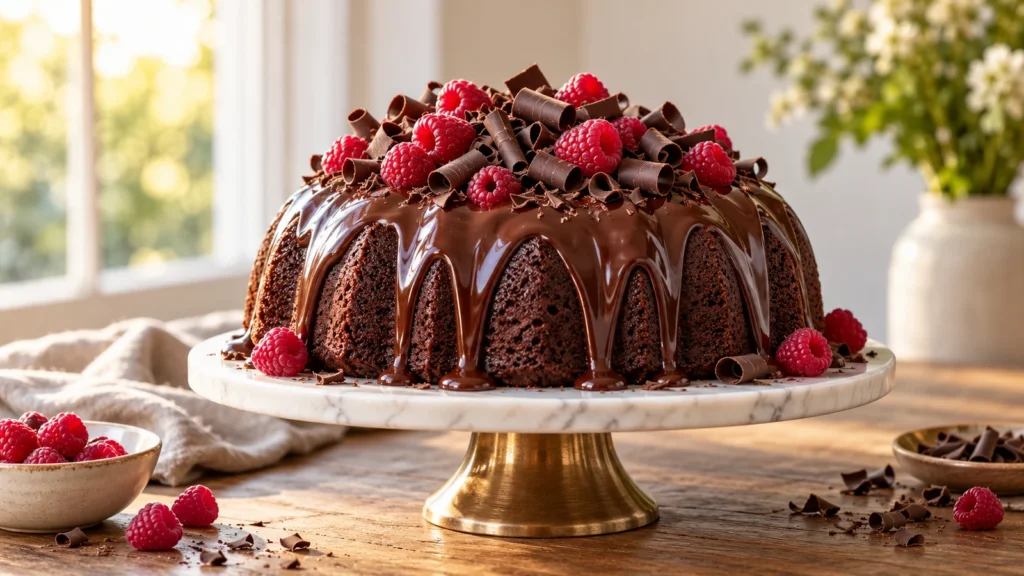
A chocolate bundt cake recipe is useful when you want a shaped cake that needs minimal decorating. Choose a chocolate pound cake recipe for a close, buttery crumb that slices cleanly for picnics or gifting. Neither provides the same frosting-forward experience as this chocolate peanut butter cake recipe.
Make-Ahead Plan and Storage Details
Prepare the Components in Stages
The unfrosted layers can be wrapped twice after cooling and kept at room temperature for 1 day, refrigerated for 3 days, or frozen for up to 2 months. Place parchment between layers if stacking them. Keeping the layers wrapped while they thaw helps prevent condensation from settling directly on the cake.
Make the frosting up to 3 days ahead and refrigerate it in an airtight container. Let it soften, then beat it again before using. If it remains firm, add cream sparingly. Ganache can be refrigerated for 1 week and gently warmed until pourable.
Store the Finished Cake
Keep the finished cake covered at room temperature for up to 1 day or refrigerated for up to 5 days. A cake carrier protects the ganache and prevents the exposed edges from drying. Keep strongly flavored foods away from the cake because butter-based frosting can absorb refrigerator odors.
Let refrigerated slices stand for 30 to 45 minutes before serving. Reheating is unnecessary and can melt the frosting. Bringing the cake toward room temperature softens the buttercream and restores the cocoa cake’s tender texture.
Freeze Individual Slices
To freeze, chill the cake until firm, wrap individual slices securely, and freeze for up to 2 months. Individual portions thaw more evenly than a decorated whole cake. Thaw overnight in the refrigerator, following general freezing and food-safety guidance.
Troubleshooting This Chocolate Peanut Butter Cake Recipe
Why Is the Cake Dry or Dense?
Too much flour, cold ingredients, overmixing, or excessive baking can produce a dense cake. Check the oven early and remove the pans when the tester holds a few moist crumbs. Cutting the layers before they cool can also release steam and make the crumb seem gummy or compressed.
Why Did the Layers Sink?
Opening the oven early, underbaking, expired leaveners, or measuring excess liquid can cause sinking. Wait until at least 25 minutes before checking. Measure the baking soda and baking powder carefully, and confirm that the center springs back before removing the pans.
Why Is the Frosting Oily or Separated?
Natural peanut butter, overly warm butter, or prolonged mixing in a hot kitchen can destabilize the frosting. Use conventional creamy peanut butter and butter softened to about 67°F (19°C). If the mixture looks greasy, chill it briefly and beat again at medium speed.
Why Is the Cake Sliding?
Warm layers, soft frosting, or too much filling can make the cake shift. Use about 1 cup of frosting between the layers, apply a thin crumb coat, and chill for 20 to 30 minutes. Center the top layer before applying the final coat.
Why Is the Ganache Grainy?
Chocolate can turn grainy if water enters the bowl or if it is overheated. Use a dry bowl, finely chop the chocolate, and pour steaming cream over it. Allow the mixture to rest before stirring slowly from the center outward until glossy.
Serving and Decorating Ideas
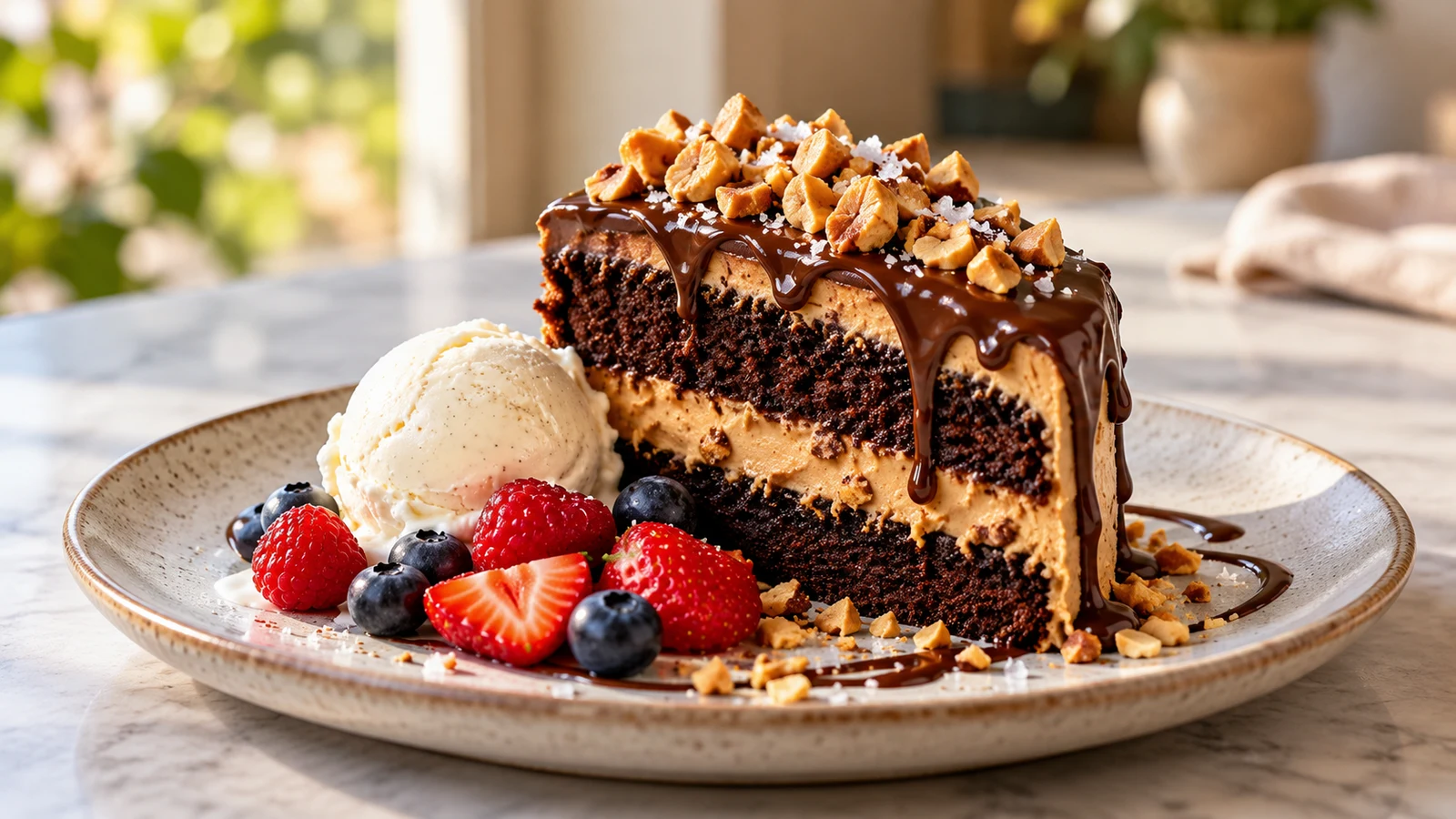
Serve this chocolate peanut butter cake recipe at cool room temperature so the frosting is creamy and the ganache cuts cleanly. Use a long, sharp knife dipped in hot water and wiped dry between cuts. This creates tidy slices without dragging frosting through the layers.
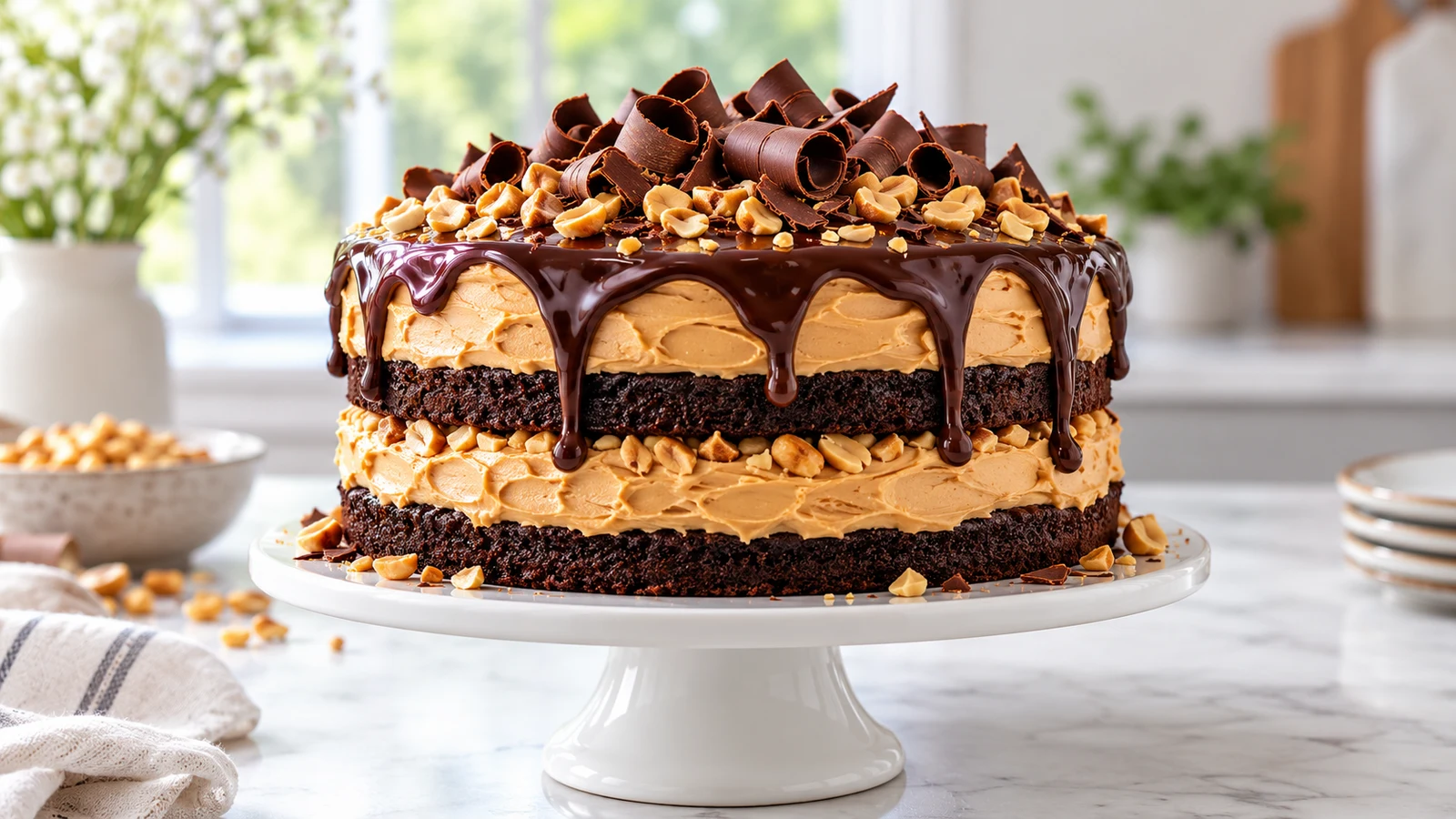
For a classic finish, press chopped roasted peanuts around the lower edge and add chocolate curls on top. Miniature peanut butter cups make the flavor instantly recognizable. A small amount of flaky salt sharpens the chocolate and peanut notes without adding more sweetness.
Vanilla ice cream, lightly sweetened whipped cream, or fresh berries provide contrast. Cold milk and hot coffee are equally good choices. For a dessert table, pair smaller slices with a baker’s German chocolate cake recipe so guests can compare creamy peanut frosting with coconut-pecan filling.
If the cake must travel, chill it until firm and place it in a fitted carrier on a level surface. A chocolate bundt cake recipe or chocolate pound cake recipe is easier for a long journey, but this layer cake travels well when cold and securely contained.
Frequently Asked Questions
Can I use Dutch-process cocoa in this chocolate peanut butter cake recipe?
Natural cocoa is recommended because its acidity works with the baking soda. Dutch-process cocoa may change the rise, color, and flavor unless the leavening is reformulated. For consistent results, use the natural unsweetened cocoa specified in the ingredient list.
Can I make this chocolate peanut butter cake recipe without coffee?
Yes. Replace the hot coffee with the same quantity of hot water. Coffee intensifies the cocoa flavor, but the cake will still be moist and chocolatey with water. Keep the liquid quantity and temperature unchanged.
Can I bake the layers ahead?
Yes. Bake, cool, and wrap the layers tightly up to 1 day in advance at room temperature, or freeze them for up to 2 months. Thaw wrapped layers before decorating so condensation stays on the wrapping rather than the cake.
Can I turn this into a chocolate bundt cake recipe?
A chocolate bundt cake recipe needs pan-specific batter volume, release preparation, and baking guidance. This batter was designed for two round pans or one 9-by-13-inch pan, so using it in a Bundt pan may lead to sticking or uneven baking.
How does this differ from a chocolate pound cake recipe?
A chocolate pound cake recipe generally has a tighter, richer crumb supported by a higher proportion of butter and eggs. This cake uses oil, buttermilk, and hot liquid for a softer crumb suited to filling, stacking, and frosting.
Is this the same as a baker’s German chocolate cake recipe?
No. A baker’s German chocolate cake recipe typically uses sweet baking chocolate and coconut-pecan filling. This recipe uses natural cocoa, peanut butter frosting, and semisweet ganache, creating a darker chocolate flavor and a smooth, nutty finish.
Should I use a gluten free chocolate cake recipe instead of substituting flour?
Yes, when dependable gluten-free results matter. A tested gluten free chocolate cake recipe accounts for structure, hydration, and the characteristics of alternative flours. A direct cup-for-cup substitution in this batter may produce a different rise or crumb.
Can I use a 9-by-13-inch pan?
Yes. Prepare one 9-by-13-inch pan and begin checking the cake after 32 minutes. Because pan materials and ovens differ, rely on the springy center and moist-crumb test instead of removing it at a fixed time.
What is the approximate nutrition per serving?
When cut into 16 portions, one slice has approximately 700 calories, 42 grams fat, 78 grams carbohydrate, and 10 grams protein. Values vary with chocolate, peanut butter, garnishes, and portion size.
Printable Recipe Card
Chocolate Peanut Butter Layer Cake
- Yield: One 8-inch layer cake; 12 to 16 servings
- Prep time: 40 minutes
- Bake time: 28 to 34 minutes
- Cooling and decorating: About 2 hours 30 minutes
- Oven: 350°F (175°C)
Prepare two lined 8-by-2-inch pans. Whisk the dry ingredients separately from the eggs, buttermilk, oil, and vanilla; combine, then add hot coffee. Divide and bake for 28 to 34 minutes. Cool fully, fill and crumb-coat with peanut butter frosting, chill, apply the final frosting layer, and finish with ganache cooled to 86–90°F (30–32°C).
A Celebration Cake Worth Making
This chocolate peanut butter cake recipe delivers soft cocoa layers, creamy frosting, and a neat ganache finish in every slice. Careful measuring, complete cooling, and properly cooled ganache make it dependable enough for birthdays and relaxed celebrations alike.
When you want stacked layers and a bold peanut butter finish, this chocolate peanut butter cake recipe is an excellent choice. Save the baker’s German chocolate cake recipe, chocolate bundt cake recipe, chocolate pound cake recipe, and gluten free chocolate cake recipe for occasions when those distinct textures or dietary needs suit the gathering better.
Reviews
Reader reviews are managed separately (outside this build).