Beef
Easy beef shank recipe slow cooker: Tender Magic
Try this beef shank recipe slow cooker with red wine, vegetables, and herbs for fork-tender meat, rich sauce, precise timings, and easy serving ideas.
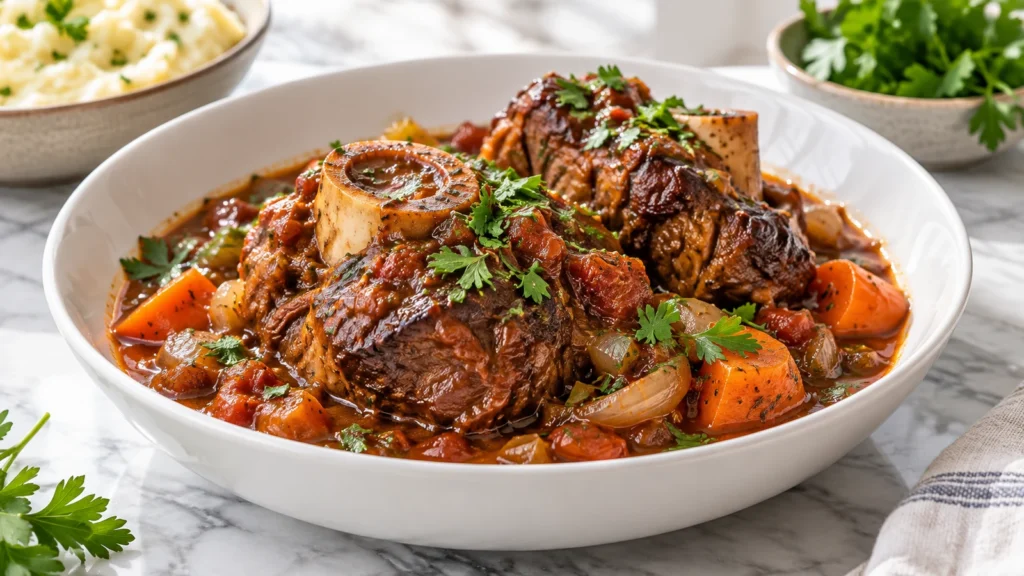
This beef shank recipe slow cooker method transforms an economical, collagen-rich cut into fork-tender beef with a deeply savory red wine sauce. After a quick sear, the slow cooker does the gentle braising work for an easy, comforting dinner.
Allow about 25 minutes for preparation, then cook the shanks for 7–8 hours on LOW or 4–5 hours on HIGH. This beef shank recipe serves four and can be prepared a day ahead for even easier serving.
The key to this braised beef shank recipe is patience. Beef shanks contain sturdy connective tissue that needs sustained, moist heat to soften. Once that collagen becomes gelatin, the meat turns succulent and the cooking liquid develops a naturally full-bodied texture.
Table of Contents
Why You’ll Love This Beef Shank Recipe
- Reliable: Clear cooking times and doneness cues take away the guesswork.
- Flavorful: Browning, aromatics, tomato paste, and wine create a rich sauce.
- Mostly hands-off: The slow cooker handles the long, gentle braise.
- Flexible: Alcohol-free and gluten-free substitutions are included.
- Make-ahead friendly: The flavor improves overnight, and chilled fat is easy to remove.
- Comforting: This beef shank recipe slow cooker dinner pairs naturally with potatoes, polenta, noodles, or bread.
What Is Beef Shank?
Beef shank is cut from the leg, a hardworking muscle with abundant connective tissue and relatively little intramuscular fat. Long, moist cooking converts its collagen into gelatin, giving slow-braised beef shanks their tender texture and silky sauce.
Cross-cut, bone-in beef shanks contain marrow, which enriches the cooking liquid. They resemble osso buco, though traditional osso buco is generally made with veal shanks. For more background, see this guide to cooking beef shank with the bone.
A braised beef shank recipe is especially well suited to a slow cooker because the enclosed environment limits evaporation while maintaining steady heat. That combination helps the connective tissue soften without requiring constant attention at the stove.
Buying Guide and Ideal Shank Thickness
Choose shanks that are 1 1/2–2 inches (4–5 cm) thick, similar in size, and bright red with firm white fat. Pieces thinner than 1 inch may dry around the edges, while very thick pieces can require extra cooking time. Plan on one 12–16-ounce shank per person, allowing for the bone.
Look for meat surrounding the bone evenly and avoid packages holding excessive liquid. If only boneless shank is available, use it, but begin checking earlier because smaller pieces may cook faster.
Ask the butcher for cross-cut shanks if the package is not clearly labeled. Uniform pieces are important in a beef shank recipe slow cooker preparation because they are more likely to become tender at the same time.
Ingredients
- 4 bone-in beef shanks, 12–16 ounces each and 1 1/2–2 inches thick
- 1 1/2 teaspoons kosher salt, plus more to taste
- 1 teaspoon black pepper
- 2 tablespoons olive oil
- 1 large yellow onion, diced
- 4 garlic cloves, minced
- 1 cup dry red wine
- 2 cups low-sodium beef broth
- 2 tablespoons tomato paste
- 3 medium carrots, cut into 1-inch pieces
- 2 sprigs fresh rosemary
- 1 tablespoon Worcestershire sauce
- 2 tablespoons cornstarch mixed with 2 tablespoons cold water, optional
- 2 tablespoons chopped parsley, for serving
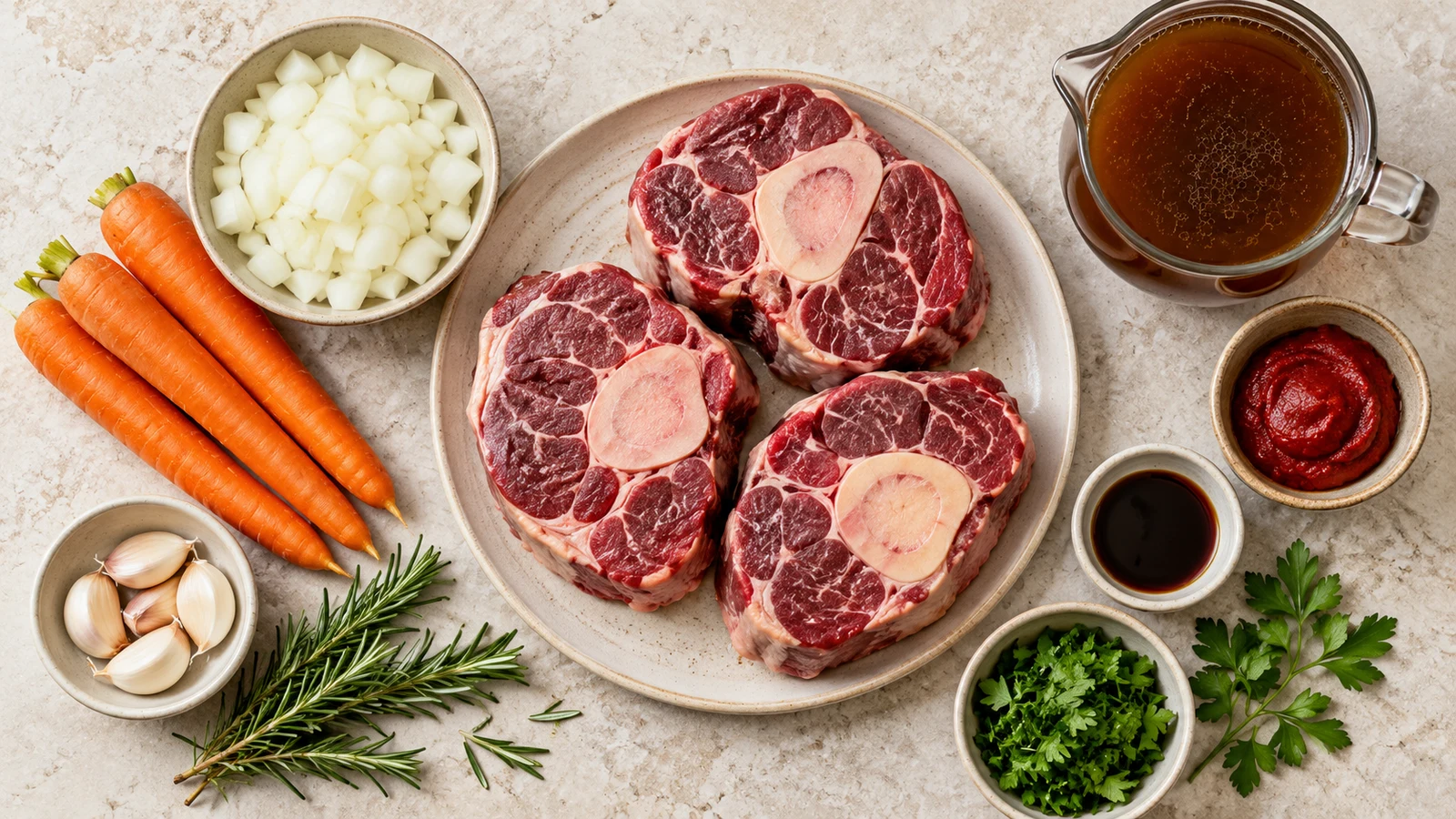
For an alcohol-free version, replace the wine with additional beef broth plus 1 tablespoon balsamic vinegar. For a gluten-free meal, verify that the broth and Worcestershire sauce are certified gluten-free. Additional cut and seasoning options are available in this classic beef shank recipe.
Equipment
- 6-quart slow cooker
- Large heavy skillet
- Tongs and wooden spoon
- Small bowl and whisk
- Instant-read thermometer, optional
A wide skillet gives the shanks enough room to brown instead of steam. A 6-quart cooker also provides space for the meat to sit in a fairly even layer, which helps this beef shank recipe slow cooker method cook consistently.
How to Make Beef Shank Recipe Slow Cooker
- Prepare the meat: Pat the shanks very dry, then season all sides with salt and pepper. Dry surfaces brown more effectively.
- Sear the shanks: Heat the oil in a large skillet over medium-high heat. Brown the shanks for 3–4 minutes per side, working in batches if necessary. Searing is optional, but it creates flavorful browned compounds that give this braised beef shank recipe greater depth.
- Cook the aromatics: Transfer the meat to the slow cooker. Reduce the skillet heat to medium, add the onion, and cook for 4 minutes. Add the garlic and tomato paste; cook for 1 minute.
- Deglaze: Pour in the wine and scrape up the browned bits. Simmer for 2–3 minutes, then transfer the mixture to the slow cooker.
- Assemble: Add the broth, carrots, rosemary, and Worcestershire sauce. The liquid should reach approximately halfway to two-thirds up the meat. Do not completely submerge the shanks; they will release additional liquid.
- Slow-cook: Cover and cook on LOW for 7–8 hours without repeatedly lifting the lid. Follow established slow-cooker food-safety guidance, including thawing the meat before cooking.
- Check and rest: The meat is ready when a fork slides in easily and twists with little resistance. Transfer it carefully to a platter and rest for 10 minutes while finishing the sauce.
HIGH Setting and Doneness Guide
For faster cooking, use HIGH for 4–5 hours. LOW usually produces the most even, succulent result, but either setting works. Start checking at the early end of the range; shank thickness and individual slow cookers affect timing.
Beef may be food-safe before its connective tissue has softened, so tenderness—not temperature alone—is the practical doneness test. The center should exceed the minimum temperature listed in the USDA safe temperature chart, but tough shanks generally need more cooking time until collagen breaks down.
When testing this beef shank recipe, insert a fork into the thickest portion without relying on meat pulling away from the bone alone. The fork should enter with almost no resistance, and the meat should yield when gently twisted. If it feels springy or firm, replace the lid and continue cooking.
How to Finish and Thicken the Sauce
Discard the rosemary and skim visible fat from the surface. For a thicker sauce, pour the liquid into a saucepan and simmer for 10–15 minutes, or return it to the slow cooker on HIGH and whisk in the cornstarch slurry. Cook uncovered for 10–15 minutes until glossy.
Marrow is edible and can be stirred into the sauce for richness or spread on toast. If the sauce seems greasy, remove excess fat with a spoon or chill it and lift off the solidified layer.
Taste only after reducing because evaporation concentrates salt. The finished sauce for a braised beef shank recipe should coat a spoon lightly without becoming pasty. If it thickens too much, whisk in a small splash of broth until it reaches the desired consistency.
Expert Tips for Beef Shank Recipe Slow Cooker Success
Build a Deep Brown Crust
Moisture prevents browning, so blot every surface thoroughly before seasoning. Let the oil become hot before adding the meat, and leave space between pieces. A deep golden-brown crust provides the savory foundation for this beef shank recipe slow cooker sauce.
Deglaze Every Browned Bit
After sautéing the onion, garlic, and tomato paste, scrape the skillet carefully when adding the wine. Those caramelized bits dissolve into the liquid and contribute concentrated flavor. If the pan begins to scorch rather than brown, lower the heat before adding the aromatics.
Keep the Lid Closed
Opening a slow cooker releases heat and steam, extending the cooking time. Check the beef only near the early end of the recommended range. This is particularly helpful when making a beef shank recipe with thick, bone-in pieces.
Handle Tender Shanks Carefully
Properly cooked shanks can separate from the bone when lifted. Slide a broad spoon beneath each piece and steady it with tongs rather than gripping the meat tightly. Resting it for 10 minutes makes serving easier while the sauce is finished.
Adjust Seasoning at the End
Broth, Worcestershire sauce, and reduction all add saltiness. Use the stated seasoning at the beginning, then taste the finished sauce before adding more. Parsley adds a fresh contrast without changing the central character of the braised beef shank recipe.
More Tips for the Best Results
- Do not crowd the skillet; crowded meat steams instead of browning.
- Keep the braising liquid halfway to two-thirds up the shanks.
- If the meat is tough, cover it and continue cooking for 30–60 minutes.
- If the sauce is thin, reduce it before using cornstarch for better flavor.
- If seasoning tastes weak, reduce the liquid first, then add salt, pepper, or a small splash of Worcestershire sauce.
- If there is excess liquid, remove the meat and simmer the sauce separately. These practical slow-cooker tips also help maintain consistent results.
- Arrange the carrots around the beef instead of placing every piece beneath it, where they may become overly soft.
- Use low-sodium broth so the sauce remains easy to balance after reduction.
Variations and Substitutions
Replace rosemary with thyme or add a bay leaf. Mushrooms, celery, or parsnips can join the carrots. For a tomato-forward sauce, add 1 cup crushed tomatoes and reduce the broth by 1/2 cup. Boneless chuck roast works in a pinch, although it will not provide the marrow-rich character of shank.
Alcohol-Free Braised Beef Shank Recipe
Use 1 additional cup of beef broth and 1 tablespoon balsamic vinegar in place of the wine. The vinegar supplies gentle acidity, while the extra broth preserves the required liquid volume. This substitution keeps the savory balance without leaving a strong vinegar flavor.
Herb and Vegetable Variations
Thyme can replace rosemary in equal spirit, while a bay leaf may be added and discarded before serving. Mushrooms deepen the earthy flavor, celery adds an aromatic note, and parsnips provide mild sweetness. Keep the original carrots and all stated cooking times unchanged.
Tomato-Rich Beef Shank Recipe
Add 1 cup crushed tomatoes and reduce the broth by 1/2 cup as directed. This produces a brighter, more tomato-forward sauce that works especially well with polenta or pasta. Do not omit the tomato paste because cooking it briefly creates a deeper base flavor.
Gluten-Free Option
The main ingredients are naturally suitable for many gluten-free diets, but packaged broth and Worcestershire sauce can vary. Check both labels for certified gluten-free versions. Cornstarch is the optional thickener, so no flour substitution is needed.
Using Boneless Beef
Boneless shank may be used when bone-in pieces are unavailable. Begin checking it earlier, especially if the pieces are small. Chuck roast is another substitute, but the resulting dish will differ from a traditional beef shank recipe because it lacks the marrow bone and shank’s distinctive gelatin-rich texture.
Serving Ideas for Braised Beef Shank Recipe
For what to serve with beef shanks, choose something that catches the sauce: mashed potatoes, creamy polenta, buttered noodles, or crusty bread. Roasted green beans, sautéed spinach, or a crisp salad balances the rich meat. For additional preparation ideas, read how to cook beef shank.
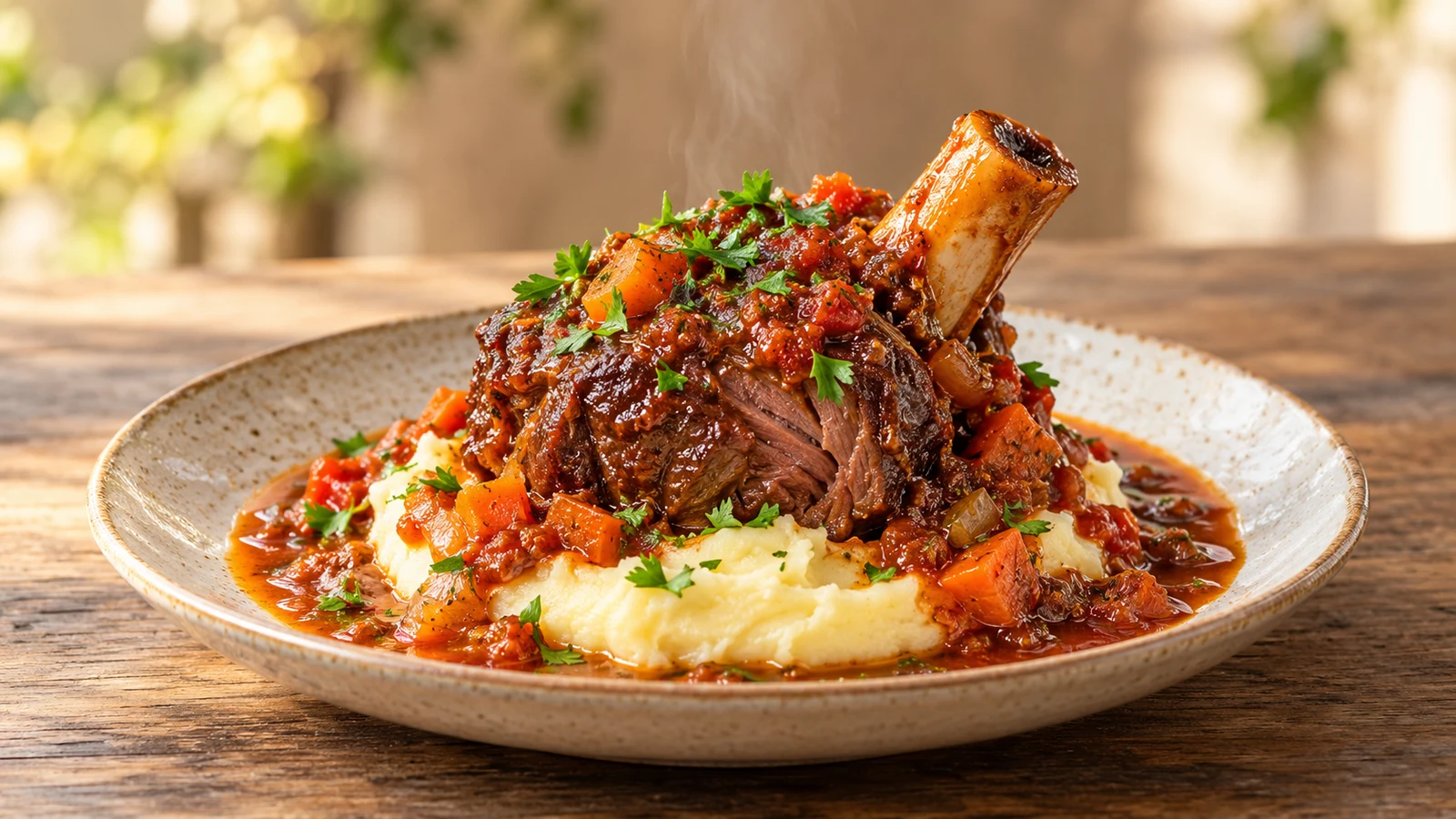
For a classic comfort-food plate, spoon mashed potatoes into a shallow bowl and place one shank on top. Add carrots and enough sauce to moisten the potatoes, then finish with parsley. Creamy polenta offers a similarly smooth base for the robust sauce.
Buttered noodles make this beef shank recipe slow cooker meal especially family-friendly. For a lighter contrast, serve the beef with sautéed spinach or roasted green beans and add a crisp salad dressed with a bright vinaigrette.
Crusty bread is useful for capturing the last of the sauce and marrow. If the shanks are exceptionally large, remove the meat from the bones and divide it among four plates while keeping the stated yield unchanged.
Make-Ahead Instructions
This braised beef shank recipe is an excellent make-ahead dinner because the flavors meld as the meat rests in its sauce. Cook the dish completely, cool it promptly, and refrigerate the shanks submerged in their cooking liquid. Keeping the meat covered by sauce protects it from drying out.
The next day, lift off the hardened fat before reheating. Warm the meat and sauce gently in a covered saucepan over low heat or in a covered 325°F (165°C) oven. Avoid a rapid boil, which can break apart the tender meat and reduce the sauce too aggressively.
You may also prepare the onion, garlic, tomato paste, and wine mixture one day ahead. Refrigerate it separately, then assemble the beef shank recipe slow cooker ingredients when ready to cook. Always start with fully thawed beef and follow appropriate slow-cooker safety practices.
How to Store and Reheat
Cool leftovers promptly and refrigerate them in a shallow airtight container for up to 4 days. The dish can be made one day ahead; chill the meat in its sauce, remove the hardened fat, and reheat gently.
Freeze cooled shanks and sauce for up to 3 months. Thaw overnight in the refrigerator. Reheat, covered, on the stovetop over low heat or in a 325°F (165°C) oven until the center reaches 165°F (74°C), adding a splash of broth if needed.
For convenient portions, freeze individual servings with enough sauce to cover the meat. Leave room in each container for expansion. Although the carrots may soften slightly after thawing, the flavor and tender texture of the beef remain well suited to reheating.
Avoid reheating the entire batch repeatedly. Remove only the portion you plan to serve and warm it until hot throughout. Gentle reheating preserves the texture of this beef shank recipe better than hard simmering.
Troubleshooting Beef Shank Recipe Slow Cooker
Why Is the Beef Still Tough?
Tough meat usually needs more time, not higher heat. Cover the slow cooker and continue cooking for 30–60 minutes before checking again. Shank thickness, starting temperature, cooker design, and frequent lid lifting can all delay tenderness.
Why Is the Sauce Watery?
Slow cookers retain moisture, and the meat and vegetables release additional liquid. Transfer the sauce to a saucepan and simmer it for 10–15 minutes to concentrate its flavor. If needed, add the optional cornstarch slurry and cook until glossy.
Why Is the Sauce Too Salty?
Add a small amount of unsalted broth to dilute it, then taste again. Do not reduce the sauce further. Using low-sodium broth from the beginning gives you greater control when finishing any braised beef shank recipe.
Why Does the Sauce Taste Flat?
First reduce a thin sauce so its flavors become more concentrated. Then adjust with salt, black pepper, or a small splash of Worcestershire sauce. An alcohol-free batch may benefit from the stated balsamic vinegar, which adds balance as well as acidity.
Why Is the Sauce Greasy?
Marrow and surface fat naturally enrich the sauce, but excess fat can mute its flavor. Skim it with a spoon while warm, or chill the completed dish and remove the solid layer. Retain only enough fat to keep the sauce pleasantly rich.
Why Did the Meat Fall Apart?
Falling apart indicates that the beef became very tender or cooked beyond the point needed for neat presentation. It remains delicious. Serve it in large pieces over potatoes or polenta, and use a broad spoon when moving the remaining shanks.
Frequently Asked Questions
Do I have to sear beef shanks first?
No, but searing noticeably improves color and savory flavor. If time is short, skip it and add the ingredients directly to the slow cooker.
Should beef shanks be completely submerged?
No. Liquid halfway to two-thirds up the meat is sufficient because the covered cooker traps moisture and the ingredients release juices.
How long do beef shanks take in a slow cooker?
The typical slow cooker cooking time is 7–8 hours on LOW or 4–5 hours on HIGH. Continue cooking if a fork does not slide and twist easily.
What is the difference between beef shank and osso buco?
Beef shank describes the cut from a cow’s leg. Osso buco is an Italian braised-shank dish traditionally prepared with cross-cut veal, though beef versions are common.
Can I make this beef shank recipe slow cooker meal without wine?
Yes. Replace the 1 cup of wine with 1 additional cup of beef broth plus 1 tablespoon balsamic vinegar. This maintains the liquid amount and adds acidity that balances the rich meat and marrow.
Can I put frozen beef shanks in the slow cooker?
No. Thaw the shanks completely in the refrigerator before cooking. Frozen meat can spend too long warming through in a slow cooker, so begin this beef shank recipe with fully thawed pieces.
Is LOW or HIGH better for a braised beef shank recipe?
LOW for 7–8 hours generally provides the most gradual and even tenderizing, but HIGH for 4–5 hours also works. In either case, use fork tenderness as the final doneness test.
Can I prepare the ingredients the night before?
You can cook and refrigerate the aromatic wine mixture separately one day ahead. Keep the raw beef properly refrigerated, then assemble everything when you are ready to start the cooker. Do not store raw meat inside the slow-cooker insert with warm ingredients.
Can I double the beef shank recipe?
Double it only if the meat fits without tightly packing or overfilling the cooker. The shanks should sit in a reasonably even arrangement, and the lid must close fully. A larger batch may require a larger cooker or two separate cookers.
How do I know when the connective tissue has softened?
Insert a fork into the thickest portion and twist gently. Properly cooked meat yields with little resistance and begins to separate easily. If it remains firm even after reaching a safe temperature, continue cooking it covered.
What can I do with leftover beef and sauce?
Remove the meat from the bone, warm it gently in the sauce, and serve it over noodles, polenta, or mashed potatoes. Leftovers from this beef shank recipe also make a rich filling for toasted sandwiches when excess sauce is drained.
Complete Recipe Card
Prep time: 25 minutes
Cooking time: 7–8 hours on LOW or 4–5 hours on HIGH
Yield: 4 servings
Method: Season and sear four beef shanks. Sauté the onion, garlic, and tomato paste; deglaze with wine. Transfer everything to a 6-quart slow cooker with broth, carrots, rosemary, and Worcestershire sauce. Cook until fork-tender, then skim and thicken the sauce as desired.
Estimated nutrition per serving: 560 calories, 52 g protein, 20 g carbohydrate, 27 g fat, 6 g saturated fat, 4 g fiber, and 790 mg sodium. Values vary with shank size, ingredient brands, and the amount of fat consumed.
Notes: Use fully thawed shanks of similar thickness. For alcohol-free cooking, substitute broth and balsamic vinegar; for gluten-free cooking, check every packaged ingredient. Add extra cooking time whenever the meat remains firm.
A Comforting Slow-Cooked Dinner
This beef shank recipe slow cooker approach rewards patience with tender meat, savory vegetables, and a deeply flavored sauce. Browning the beef, deglazing the skillet, and allowing enough cooking time deliver the best results without complicated hands-on work.
Whether you serve this braised beef shank recipe over mashed potatoes, polenta, noodles, or alongside crusty bread, let tenderness guide the final cooking time. Finish the sauce to your preferred consistency, add fresh parsley, and bring the shanks to the table while warm.
Reviews
Reader reviews are managed separately (outside this build).