Beef
30-Minute Beef Stir Fry Recipe with Noodles: Easy Win
Try this beef stir fry recipe with noodles: tender beef, crisp vegetables, and noodles in homemade savory sauce, ready in 30 minutes.
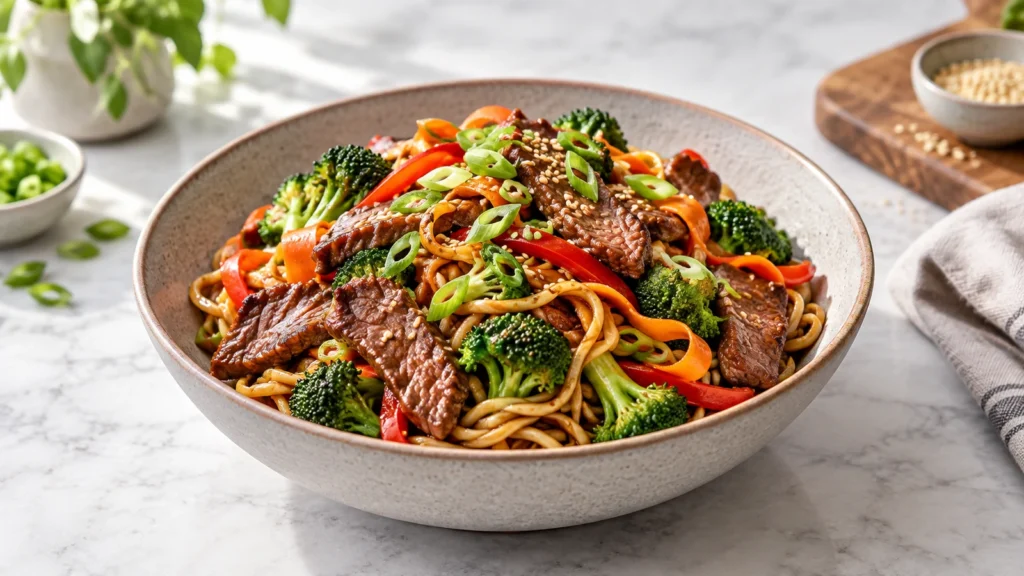
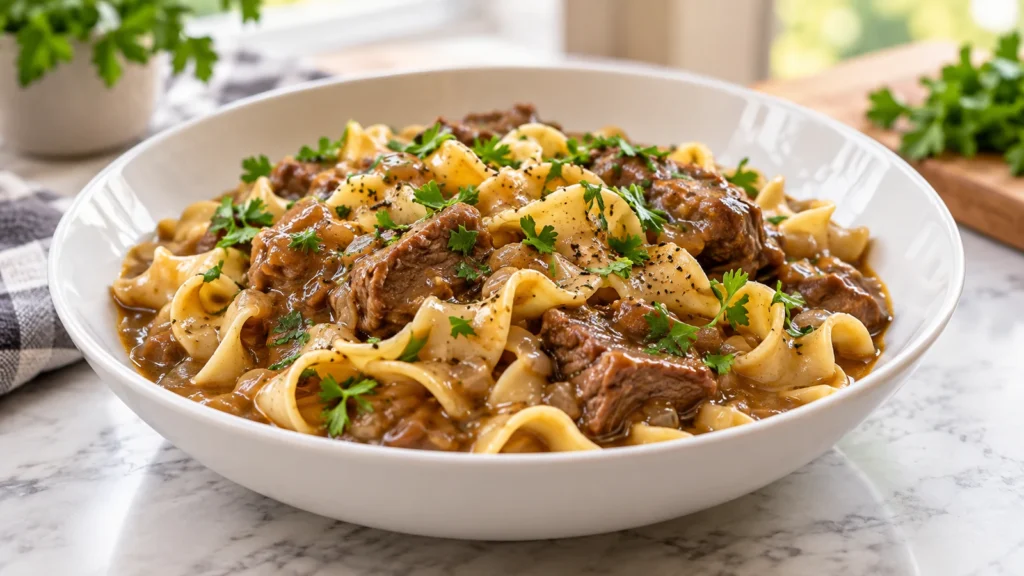
This beef stir fry recipe with noodles puts tender strips of beef, crisp vegetables, chewy noodles, and a savory homemade sauce on the table in 30 minutes. It is fast enough for a weeknight but flexible enough to use the vegetables and noodles you already have.
The key is preparing everything before the wok gets hot, then cooking the beef in batches so it sears instead of steaming. If you enjoy adaptable beef stir fry recipes, this version is an excellent starting point. The straightforward method also makes this beef stir fry recipe with noodles approachable for cooks who are new to high-heat cooking.
Table of Contents
Why You’ll Love This Beef Stir Fry Recipe with Noodles
- Quick: Preparation and cooking take about 30 minutes.
- Balanced: Beef, noodles, and colorful vegetables make a complete meal.
- Flexible: Change the beef cut, noodles, vegetables, or spice level.
- Reliable: Exact sauce ratios and high-heat cooking produce consistent results.
- Practical: Components can be prepared ahead, making the final stir-fry especially fast.
Unlike some beef stir fry recipes that require specialty ingredients, this dish relies on familiar supermarket staples. The sauce is made in one bowl, and the vegetables can be adjusted without changing the essential cooking method.
Ingredients
- 8 ounces (225 g) dried lo mein noodles
- 1 pound (450 g) flank steak or sirloin steak
- 2 tablespoons neutral high-heat oil, divided
- 1 red bell pepper, thinly sliced
- 2 cups small broccoli florets
- 1 medium carrot, cut into thin matchsticks
- 3 scallions, sliced, white and green parts separated
- 3 garlic cloves, minced
- 1 teaspoon grated fresh ginger
- 1/3 cup low-sodium beef broth
- 1/4 cup low-sodium soy sauce
- 2 tablespoons brown sugar
- 1 tablespoon rice vinegar
- 2 teaspoons toasted sesame oil
- 1 tablespoon cornstarch
- 1/4 teaspoon crushed red pepper flakes, optional
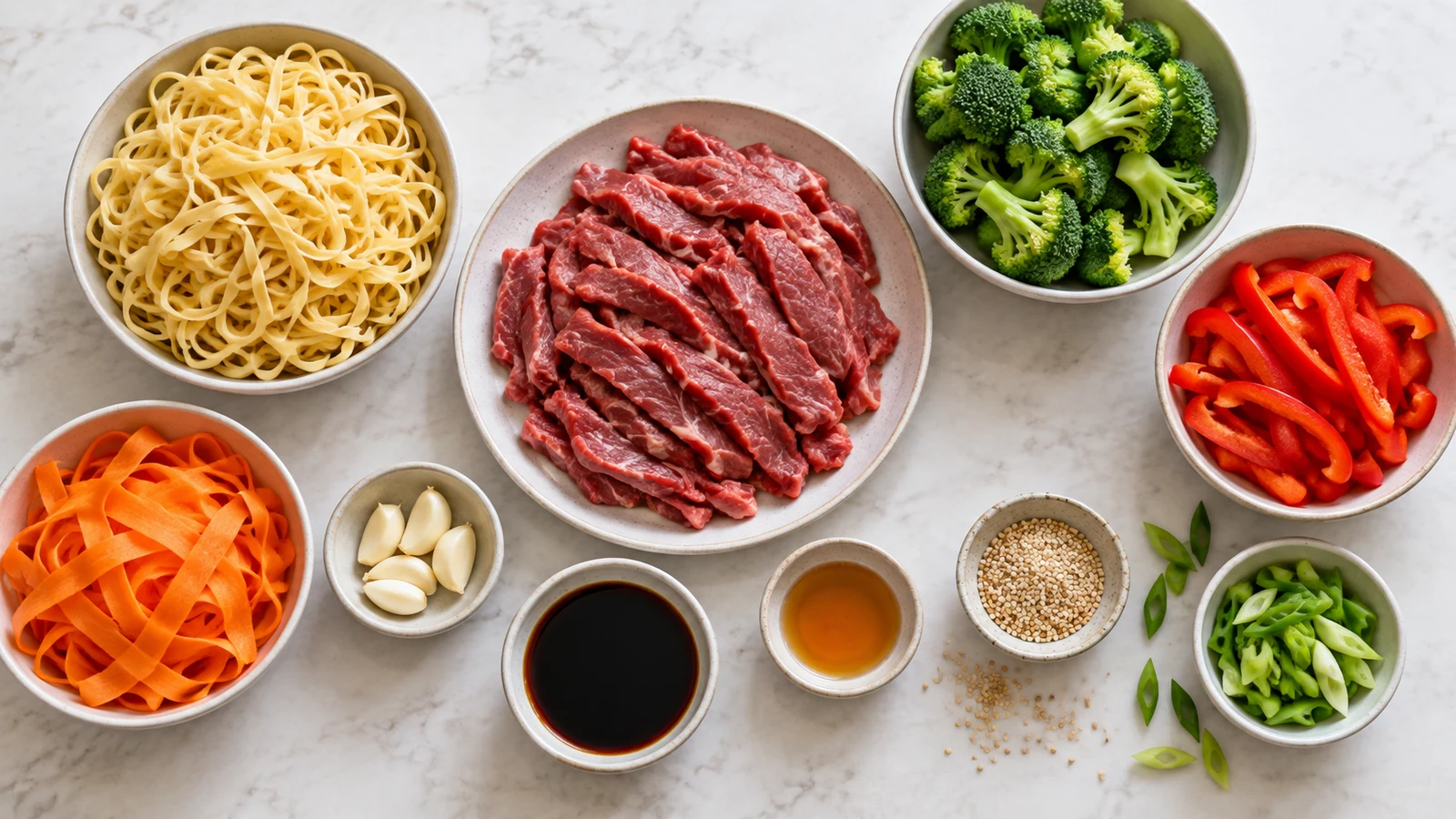
Homemade Stir-Fry Sauce
This beef stir fry sauce recipe uses a dependable ratio: 1/3 cup broth, 1/4 cup soy sauce, 2 tablespoons brown sugar, 1 tablespoon rice vinegar, 2 teaspoons sesame oil, and 1 tablespoon cornstarch. Whisk until no white cornstarch pockets remain. For a deeper look at balancing salty, sweet, and savory flavors, see this homemade beef stir-fry sauce guide.
The sauce is ready when it bubbles and changes from thin and cloudy to glossy enough to lightly coat a spoon. If it remains watery, let it simmer for another 30 to 60 seconds before adding extra thickener.
Whisk the mixture again immediately before pouring because cornstarch settles quickly. This small step helps the beef stir fry sauce recipe thicken evenly instead of leaving a dense layer at the bottom of the bowl.
How the Sauce Ingredients Work
Broth gives the sauce enough volume to coat the noodles, while soy sauce supplies salt and savory depth. Brown sugar rounds out those flavors, and rice vinegar adds brightness without making the dish sour. Toasted sesame oil contributes aroma, so the measured amount is sufficient.
Cornstarch thickens the liquid only after it reaches a simmer. For that reason, a beef stir fry sauce recipe should be mixed cold and then heated in the pan. Avoid sprinkling dry cornstarch directly over the finished dish because it can form stubborn lumps.
Best Beef and Noodles for Stir-Frying
Flank steak offers bold flavor, while sirloin is slightly more tender and forgiving. Skirt steak and flat iron steak also work. Slice the beef across the visible muscle fibers, not parallel to them; cutting against the grain shortens those fibers and makes every bite easier to chew.
Lo mein or fresh wheat noodles are ideal because they remain pleasantly chewy. Udon, ramen, rice noodles, or even spaghetti can substitute, although cooking times vary. The noodles should be just tender and thoroughly drained before they enter the wok.
Whatever combination you choose, keep the total amount of noodles and beef unchanged so the sauce remains balanced. That dependable proportion is one reason this beef stir fry recipe with noodles coats every component without becoming dry or soupy.
Preparation Before Cooking
Stir-frying moves quickly, so slice the vegetables, mix the sauce, and boil the noodles before heating the pan. Rinse cooked wheat noodles briefly under cool water, drain very well, and toss them with a teaspoon of oil to prevent clumping.
Partially freezing the steak for 15 to 20 minutes makes thin slicing easier. Pat the strips dry so they brown properly. For another straightforward combination of beef and vegetables, try this easy beef and broccoli recipe.
Set Up an Efficient Stir-Fry Station
Place the drained noodles, sliced beef, vegetables, aromatics, sauce, oil, and serving plate beside the stove. Keep the garlic and ginger together because they enter the pan at the same time. Put the scallion greens aside for the final garnish.
This arrangement matters because there is little time to search for an ingredient once cooking begins. Most beef stir fry recipes succeed when ingredients are added in a deliberate order: beef first, sturdy vegetables next, aromatics briefly, and sauce and noodles last.
How to Make Beef Stir Fry Recipe with Noodles
- Cook the noodles: Boil them according to the package directions, stopping about 1 minute before fully tender. Drain, rinse briefly, and toss with a little oil.
- Prepare the beef: Slice the steak against the grain into strips about 1/4 inch (6 mm) thick. Pat dry and season lightly with black pepper.
- Mix the sauce: Whisk the broth, soy sauce, brown sugar, vinegar, sesame oil, cornstarch, and optional pepper flakes.
- Sear in batches: Heat a wok or large skillet over high heat until very hot. Add 1 tablespoon oil and half the beef in one layer. Cook for 60 to 90 seconds, turn, and cook another 30 to 60 seconds. Transfer to a plate and repeat without crowding the pan.
- Cook the vegetables: Add the remaining oil, broccoli, pepper, carrot, and scallion whites. Stir-fry for 3 to 4 minutes. Add garlic and ginger and cook for 30 seconds.
- Finish the dish: Whisk the sauce again, pour it into the pan, and let it bubble. Add the noodles and beef, tossing for 1 to 2 minutes until everything is hot and evenly coated. Garnish with scallion greens.
A wok is useful but not required. A wide, heavy stainless-steel or cast-iron skillet provides ample surface area; preheat it well and keep each beef batch small. A USDA-developed beef stir-fry preparation also demonstrates how this combination can incorporate vegetables into a complete meal.
Watch the appearance of the ingredients rather than relying only on the clock. The beef should develop browned edges, the vegetables should brighten while retaining some firmness, and the sauce should turn glossy. Those visual cues make this beef stir fry recipe with noodles easier to repeat successfully.
Expert Tips for Beef Stir Fry Recipes
- Keep the heat high: Let the pan recover for 30 seconds between batches so the second batch sears properly.
- Do not crowd the beef: Overcrowding cools the pan and creates gray, tough meat.
- Undercook the noodles slightly: They finish in the sauce without becoming soggy.
- Drain thoroughly: Water clinging to noodles dilutes the sauce and prevents thickening.
- Use a neutral oil: A high-heat oil supports browning without competing with the sesame aroma.
- Cut evenly: Similar-size vegetable pieces cook at approximately the same rate.
- Toss gently: Lift and turn the noodles with tongs so they stay intact while becoming coated.
The pan should be hot before the first batch of beef goes in, but the oil should not be left unattended until it smokes heavily. Add the meat in a single layer and allow brief contact with the pan before moving it. This produces the browned flavor that distinguishes excellent beef stir fry recipes.
Control Moisture for Better Browning
Excess moisture is the most common obstacle to good stir-frying. Dry the beef, drain the noodles, and avoid washing vegetables immediately before cooking unless you have time to dry them. Even a few tablespoons of unwanted water can lower the pan temperature.
If the vegetables release significant liquid, continue stir-frying until most of it evaporates before adding the sauce. This protects the intended concentration of the beef stir fry sauce recipe and prevents the noodles from tasting bland.
Variations and Substitutions
Replace broccoli, pepper, or carrot with snap peas, mushrooms, baby corn, bok choy, cabbage, or zucchini. Explore these easy beef stir-fry variations for more combinations.
For a gluten-free version, use rice noodles and certified gluten-free tamari. To reduce sodium, choose low-sodium broth and soy sauce and increase the vinegar or ginger for flavor. Add more red pepper flakes, chili crisp, or sriracha for extra heat, or omit the pepper entirely for a mild meal.
Vegetable Variations
Choose vegetables with contrasting colors and textures, but consider how quickly each one cooks. Thinly sliced cabbage, snap peas, mushrooms, and bok choy can replace the listed vegetables. Add firm pieces first and tender leafy vegetables closer to the end.
Zucchini and mushrooms contain more water than carrots or broccoli. Cook them over high heat without crowding, allowing their moisture to evaporate before the sauce enters the pan. This approach is useful across many beef stir fry recipes.
Noodle and Flavor Substitutions
Rice noodles create a lighter texture, udon produces a thicker and softer bite, and ramen offers a springy result. Spaghetti is a practical pantry substitute. Follow the package directions for the chosen noodle, then stop cooking just before it becomes fully tender.
Fresh ginger and garlic provide the clearest flavor, but the spice level remains easy to customize. The optional crushed red pepper flakes can be omitted or increased to taste. Keep the remaining quantities unchanged so the beef stir fry sauce recipe maintains its salty, sweet, tangy, and savory balance.
Make-Ahead Plan
Slice the beef and vegetables and mix the sauce up to one day ahead, but refrigerate them in separate covered containers. Stir the sauce thoroughly before using because the cornstarch will settle. Keep the garlic and ginger covered so their aromas do not flavor other refrigerated foods.
The noodles can also be cooked in advance. Stop them about 1 minute before fully tender, rinse briefly, drain thoroughly, and toss with a teaspoon of oil. Refrigerate in a covered container, then loosen any strands gently before adding them to the pan.
For the freshest beef stir fry recipe with noodles, cook the components only when you are ready to eat. Advance preparation should reduce last-minute chopping, not replace the quick final stir-fry that preserves the meat’s tenderness and the vegetables’ crisp texture.
Serving Ideas
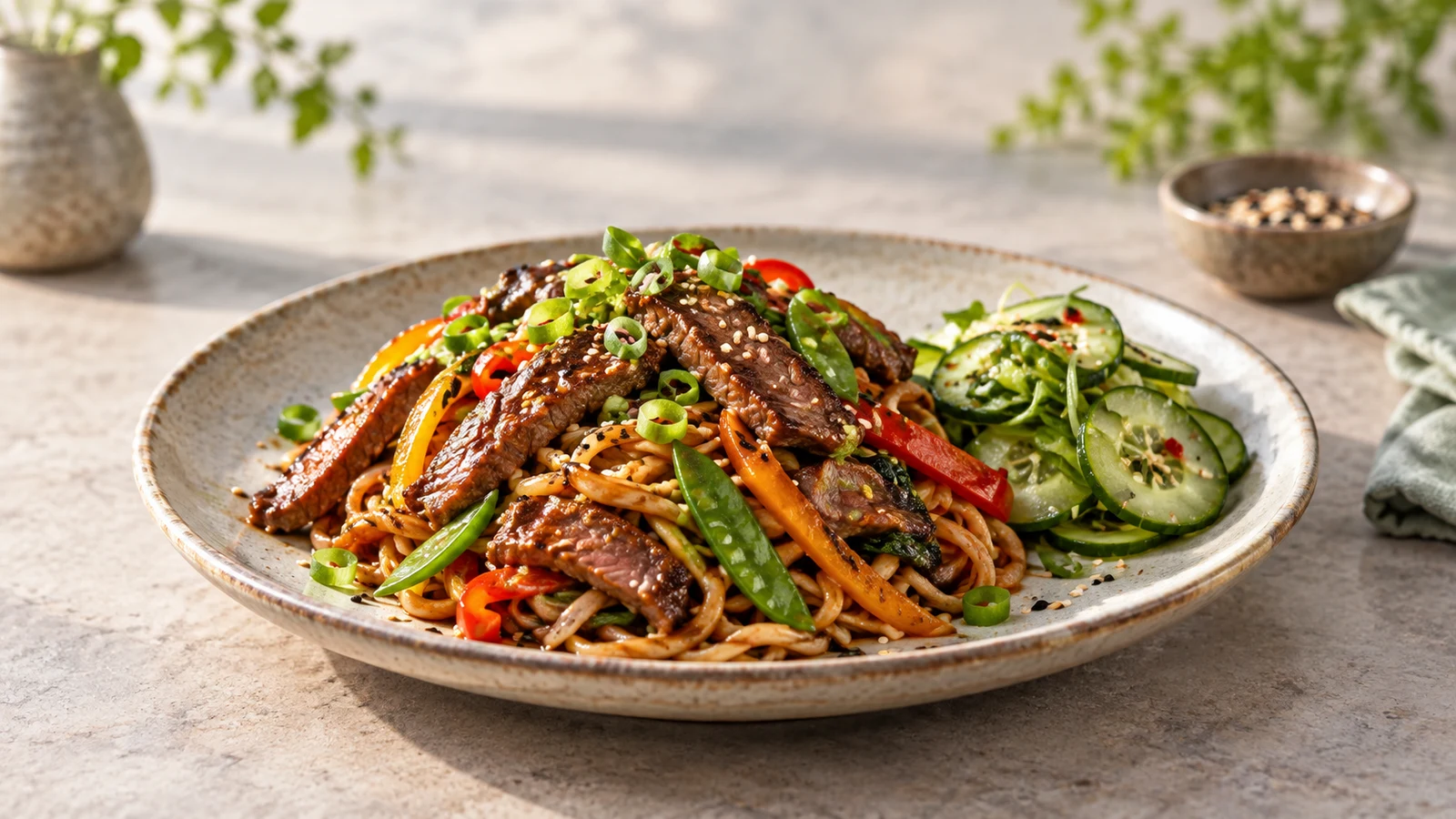
Serve the stir-fry immediately, topped with sesame seeds, scallions, or cilantro. Because it already contains noodles, protein, and vegetables, it needs little else; cucumber salad or steamed edamame makes a light accompaniment.
For a family-style meal, transfer the beef stir fry recipe with noodles to a warmed platter and set out optional garnishes. Extra scallion greens add freshness, while sesame seeds provide a gentle crunch. Diners who prefer more heat can season their own portions.
A crisp cucumber salad creates a cool contrast to the warm savory sauce. Steamed edamame or simply cooked greens also work well without making the meal feel heavy. Avoid serving another strongly sauced dish that might compete with the carefully balanced noodles.
How to Store and Reheat
Cool leftovers promptly and refrigerate them in a shallow airtight container for up to 3 to 4 days, following the USDA’s leftover safety guidance. Freeze portions for up to 2 months, although thawed noodles and vegetables will be softer.
Reheat refrigerated portions in a skillet over medium heat with 1 to 2 tablespoons of water for 3 to 5 minutes, tossing frequently. Alternatively, microwave in 45-second intervals, stirring between each, until steaming hot throughout.
Best Way to Freeze Portions
Divide cooled leftovers into meal-size airtight containers so you only thaw what you need. Leave a little room in each container and label it with the date. Freezing individual portions also helps the beef stir fry recipe with noodles thaw more evenly.
Thaw frozen leftovers in the refrigerator before reheating for the most consistent result. The flavor will remain appealing, but the vegetables and noodles naturally lose some firmness after freezing. A skillet gives them a better texture than prolonged microwave heating.
Troubleshooting Beef Stir Fry Recipes
- Watery sauce: Remove excess liquid, bring the sauce to a full simmer, or add 1 teaspoon cornstarch mixed with 1 tablespoon cold water.
- Tough beef: Slice more thinly against the grain, avoid overcrowding, and stop cooking as soon as it browns.
- Clumped noodles: Loosen them under cool water, drain, and toss with a teaspoon of oil.
- Soggy noodles: Cook them 1 minute short of the package time and avoid leaving them in the hot sauce.
- Pale beef: Dry the strips carefully and wait until the pan is very hot before searing.
- Burned aromatics: Add garlic and ginger only after the vegetables have cooked, then stir for 30 seconds.
Why Did the Sauce Become Too Thick?
The sauce can become overly thick if it simmers too long or if the noodles absorb more liquid than expected. Add a small splash of water or broth and toss over medium heat until the coating loosens. Add liquid gradually to avoid turning the beef stir fry sauce recipe watery.
Why Are the Vegetables Unevenly Cooked?
Pieces of different sizes cook at different speeds. Cut carrots into thin matchsticks, keep broccoli florets small, and slice the pepper evenly. If substituting vegetables, add firm varieties before tender ones. This sequencing improves texture in this dish and other beef stir fry recipes.
Frequently Asked Questions
What is the best beef cut for stir-fry?
Flank steak and sirloin offer the best balance of flavor, tenderness, and value. Flat iron or skirt steak also works when sliced thinly against the grain.
Must the noodles be boiled first?
Most dried wheat noodles must be boiled before stir-frying. Fresh precooked noodles may only need loosening in hot water, while rice noodles are often soaked; follow the package directions and stop just before fully tender.
How do I thicken a beef stir fry sauce recipe?
Whisk 1 tablespoon cornstarch into the cold sauce before cooking, then simmer until glossy. For a thin finished sauce, add a slurry of 1 teaspoon cornstarch and 1 tablespoon cold water.
How do I keep the beef tender?
Cut thin slices against the grain, pat them dry, and sear small batches briefly over high heat. Return the beef only at the end so it does not overcook.
Can I make this beef stir fry recipe with noodles without a wok?
Yes. Use a wide, heavy stainless-steel or cast-iron skillet that can hold high heat. Preheat it thoroughly and sear the meat in two batches. The wide surface gives moisture room to evaporate and helps the beef brown.
Can frozen vegetables be used in beef stir fry recipes?
They can, although fresh vegetables usually remain crisper. Add frozen vegetables without thawing and expect them to release extra water. Let that moisture evaporate before pouring in the sauce so the final coating does not become diluted.
Can I double this beef stir fry recipe with noodles?
Yes, but cook the beef and vegetables in additional batches instead of filling the pan. A crowded pan loses heat and steams the ingredients. Mix a double quantity of sauce in a larger bowl, then combine the cooked components at the end.
Why does my beef stir fry sauce recipe taste too salty?
Use the specified low-sodium broth and low-sodium soy sauce, and measure accurately. If the finished dish tastes too salty, a small splash of water can dilute the coating. Plain noodles or extra unsalted vegetables can also help balance it.
How can I keep noodles from sticking to the pan?
Cook them just short of tender, rinse briefly, and drain thoroughly. Tossing them with a teaspoon of oil reduces clumping before they enter the pan. Once added, keep them moving gently with tongs as the sauce thickens.
Can the beef stir fry sauce recipe be mixed ahead?
Yes. Mix it up to one day ahead and refrigerate it in a covered container. Cornstarch settles as the mixture rests, so whisk until completely smooth immediately before adding it to the hot pan.
30-Minute Beef Stir Fry Recipe with Noodles
- Prep time: 15 minutes
- Cook time: 15 minutes
- Total time: 30 minutes
- Yield: 4 servings
Equipment: Large pot, colander, sharp knife, cutting board, mixing bowl, whisk, wok or large heavy skillet, and tongs.
Recipe Card Ingredients
- 8 ounces lo mein noodles
- 1 pound thinly sliced flank steak
- 2 tablespoons neutral oil
- 1 red bell pepper, 2 cups broccoli, 1 carrot, and 3 scallions
- 3 garlic cloves and 1 teaspoon grated ginger
- 1/3 cup beef broth, 1/4 cup soy sauce, 2 tablespoons brown sugar, 1 tablespoon rice vinegar, 2 teaspoons sesame oil, and 1 tablespoon cornstarch
Recipe Card Instructions
- Cook and drain the noodles just short of tender.
- Whisk together all sauce ingredients.
- Sear the beef in two batches in a very hot oiled wok; transfer to a plate.
- Stir-fry the vegetables for 3 to 4 minutes, then add garlic and ginger.
- Add sauce, noodles, and beef. Toss for 1 to 2 minutes until glossy and hot.
Nutrition: Approximately 520 calories, 34 g protein, 59 g carbohydrate, 17 g fat, 5 g fiber, and 930 mg sodium per serving. Values are estimates and vary by brands and substitutions; the FDA’s Nutrition Facts label guide explains how daily values provide dietary context.
Notes: Prepare every ingredient before heating the wok. Use tamari and rice noodles for a gluten-free variation, and cook in batches to preserve high heat.
A Reliable Weeknight Stir-Fry
With careful slicing, a hot pan, and a well-balanced sauce, this beef stir fry recipe with noodles delivers tender beef and crisp vegetables without complicated preparation. The same preparation habits can improve many beef stir fry recipes: organize ingredients first, control moisture, and avoid crowding the pan.
Serve the beef stir fry recipe with noodles as soon as the sauce turns glossy for the best texture. Once you understand the quick sequence and the dependable beef stir fry sauce recipe, it is easy to adapt the meal to different noodles, vegetables, and preferred spice levels.
Reviews
Reader reviews are managed separately (outside this build).