Beef
Ultimate braised beef shank recipe: Cozy, Tender Bliss
Try this braised beef shank recipe for fall-apart beef in rich red-wine sauce, plus slow-cooker tips. Serve with creamy mashed potatoes.
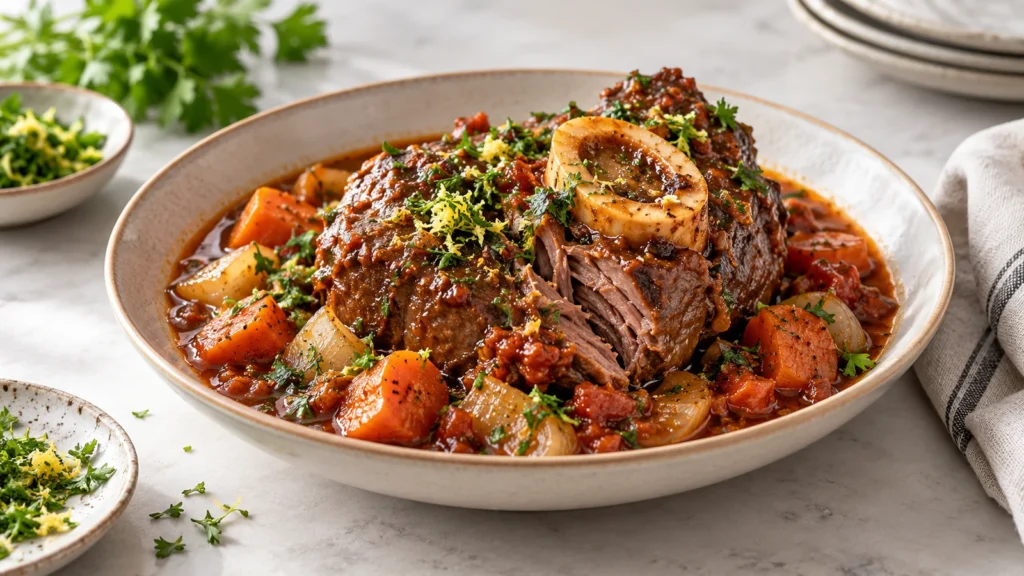
This braised beef shank recipe transforms an economical, collagen-rich cut into fork-tender beef with a deeply savory sauce. A gentle oven braise gives the connective tissue enough time to soften while the marrow enriches the red-wine-and-beef-stock cooking liquid.
This beef shank recipe is ideal for a relaxed weekend dinner and can be prepared a day ahead. Serve it with mashed potatoes, creamy polenta, or crusty bread to catch every spoonful of sauce. Although the method takes time, most of the cooking is hands-off, making this braised beef shank recipe approachable for any patient home cook.
Table of Contents
Why You’ll Love This Braised Beef Shank Recipe
- Deep flavor: Browning, aromatics, tomato paste, wine, and stock build a layered sauce.
- Tender results: Low, moist heat turns firm connective tissue into silky gelatin.
- Make-ahead friendly: The flavor improves overnight, and chilled fat is easy to remove.
- Flexible: Oven, slow-cooker, alcohol-free, and tomato-free options are included.
- Budget-conscious: This beef shank recipe makes excellent use of a flavorful cut that rewards slow cooking.
How to Choose Beef Shanks
Choose cross-cut, bone-in beef shanks about 1 1/2 to 2 inches (4 to 5 cm) thick. Look for pieces with plenty of meat surrounding the bone, visible marbling, and a moist red surface without gray edges. Four similarly sized pieces will cook more evenly than shanks of mixed thickness.
Beef shank comes from a heavily worked leg muscle, so it contains abundant connective tissue. That makes it firm when cooked quickly but wonderfully tender after low-and-slow braising. This overview of turning tough cuts tender explains how moist cooking helps collagen-rich meat soften.
For the most consistent braised beef shank recipe, ask the butcher for center-cut pieces of similar diameter. Shanks cut too thin can fall apart before the sauce develops fully, while unusually thick pieces may require additional time. A visible marrow center is desirable because it contributes richness to the braising liquid.
Equipment
A 5- to 7-quart Dutch oven with a tight-fitting lid is ideal because it holds steady heat and moves easily from stovetop to oven. A heavy oven-safe pot, deep covered roasting pan, or tightly foil-covered casserole also works. Use a wide skillet for searing if your baking dish cannot go on the stovetop.
Tongs make it easier to turn the shanks without disturbing their flour coating. You will also need a wooden spoon for loosening the flavorful browned bits and a shallow platter for resting the meat. A fat separator is optional but convenient when finishing this beef shank recipe immediately rather than chilling it overnight.
Ingredients
- 4 bone-in beef shanks, 1 1/2 to 2 inches thick, about 3 1/2 pounds (1.6 kg) total
- 2 teaspoons kosher salt, plus more to taste
- 1 teaspoon freshly ground black pepper
- 1/3 cup (42 g) all-purpose flour
- 2 tablespoons olive oil, divided
- 1 large yellow onion, diced
- 2 medium carrots, diced
- 4 garlic cloves, minced
- 2 tablespoons tomato paste
- 1 cup (240 ml) dry red wine combined with 2 cups (475 ml) low-sodium beef stock
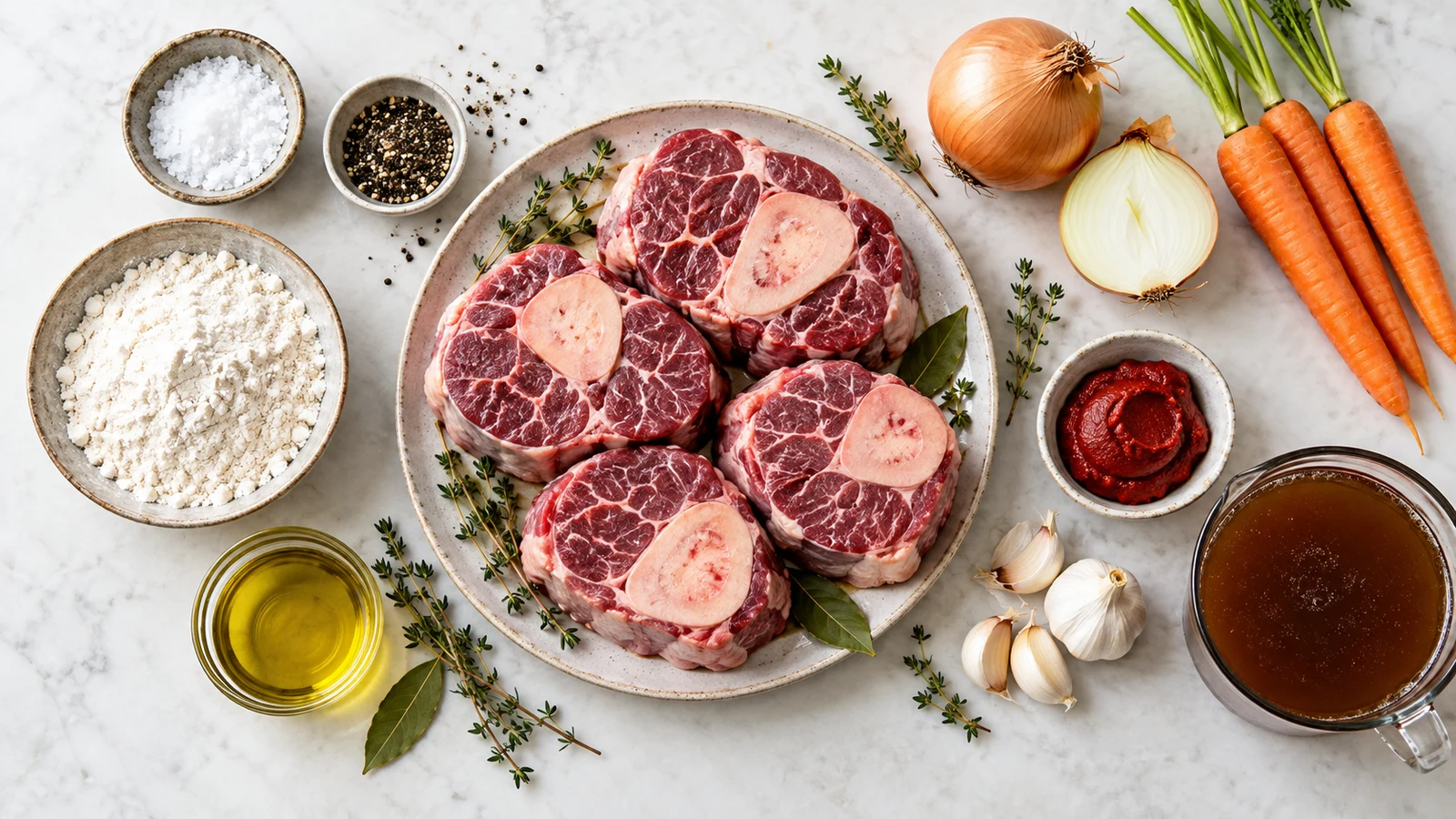
Optional but recommended: add 2 thyme sprigs and 1 bay leaf to the braising liquid. For a bright parsley gremolata, combine 1/2 cup chopped parsley, 1 teaspoon finely grated lemon zest, and 1 small grated garlic clove.
How to Make This Braised Beef Shank Recipe
- Prepare the oven and beef: Heat the oven to 325°F (165°C). Pat the shanks thoroughly dry, then season both sides with salt and pepper. Let them stand for 15 minutes.
- Flour lightly: Dust each shank with flour and shake off the excess. A thin coating encourages browning and gives the finished sauce modest body without making it pasty.
- Sear the shanks: Heat 1 tablespoon oil in a Dutch oven over medium-high heat. Brown the beef in batches for 4 to 5 minutes per side. Avoid crowding the pot, then transfer the browned shanks to a plate.
- Cook the aromatics: Reduce the heat to medium and add the remaining oil, onion, and carrots. Cook for 6 to 8 minutes, stirring often, until softened and lightly golden. Add the garlic and cook for 30 seconds.
- Toast the tomato paste: Stir in the tomato paste and cook for 1 to 2 minutes, until it darkens slightly. This removes its raw edge and adds concentrated flavor.
- Deglaze: Pour in the red wine and scrape the browned bits from the bottom with a wooden spoon. Simmer for 4 to 5 minutes, until reduced by roughly one-third.
- Add the stock: Stir in the beef stock and optional herbs. Return the shanks and their juices to the pot. The liquid should reach about two-thirds of the way up the meat rather than cover it completely.
- Braise: Bring the liquid to a gentle simmer, cover the pot, and transfer it to the oven. Cook for 2 1/2 to 3 1/2 hours, turning the shanks once, until a fork slides into the thickest meat with very little resistance.
- Reduce the sauce: Carefully move the shanks to a platter and cover loosely. Discard the herbs, skim excess grease, and simmer the uncovered liquid on the stovetop for 8 to 15 minutes, until glossy enough to coat a spoon. Taste and adjust the salt and pepper.
- Serve: Return the meat to the sauce briefly to warm it. Spoon sauce over each shank and finish with parsley gremolata if desired.
Expert Tips for the Best Beef Shank Recipe
- Judge doneness by texture: Cooking time is only a guide. The beef is ready when it yields easily to a fork but still holds together well enough to serve.
- Keep the heat gentle: The liquid should barely simmer. Vigorous boiling can tighten the meat and evaporate the sauce too quickly.
- Brown in batches: Space around each shank allows moisture to escape, producing a richer crust.
- Watch the liquid: Check after two hours. Add 1/2 cup stock or water if the pot looks dry or the sauce begins catching on the bottom.
- Handle marrow carefully: The marrow inside the bones is edible and rich. Scoop it onto bread or stir a small amount into the sauce, according to your preference.
Dry the Meat Before Searing
Surface moisture creates steam and prevents a strong crust. Pat each piece dry immediately before seasoning and flouring it. This small step gives the braised beef shank recipe a more complex roasted flavor and leaves better browned bits on the pot for the sauce.
Control the Braising Liquid
The liquid should reach about two-thirds of the way up the shanks. Completely submerging them turns the method closer to boiling, while too little liquid risks scorching. Keep the lid closed except when turning or checking the beef so the beef shank recipe retains moisture and steady heat.
Let the Sauce Finish Separately
Remove the tender shanks before reducing the sauce. This protects the meat from breaking apart and lets you control the consistency. A properly reduced sauce should lightly coat a spoon. If it becomes too concentrated, stir in a small splash of stock before returning the beef.
For more background on the method, see this guide to braising beef shanks.
Beef Shank Recipe Slow Cooker Method
For a beef shank recipe slow cooker adaptation, season, flour, and sear the beef as directed. Sauté the vegetables, garlic, and tomato paste, then deglaze the skillet with wine. Transfer everything to a 6-quart slow cooker, reduce the stock to 1 1/2 cups, and cook on LOW for 7 to 9 hours or HIGH for 4 to 5 hours, until fork-tender.
Move the meat to a platter and reduce the sauce in a saucepan if it is thin. For another dedicated approach, follow this slow-cooker beef shank guide.
Do not skip the stovetop browning when preparing the beef shank recipe slow cooker version unless time is extremely limited. A slow cooker retains moisture efficiently but cannot create the same browned crust. Searing and deglazing first preserve the deep flavor expected from the oven-braised dish.
When to Choose the Slow Cooker
Choose the beef shank recipe slow cooker method when you need a flexible cooking window or want to keep the oven free. The LOW setting generally produces the most even tenderness. Arrange the pieces in one layer when possible, and keep the lid closed because every peek releases heat and extends cooking.
Variations and Substitutions
- Alcohol-free: Replace the wine with 1 cup additional beef stock plus 1 tablespoon balsamic or red wine vinegar. The vinegar supplies brightness without making the dish taste sour.
- Tomato-free: Omit the tomato paste and add 1 tablespoon Worcestershire sauce. Use a little extra flour during the final reduction if the sauce needs body.
- Gluten-free: Replace the flour with a gluten-free all-purpose blend or omit it and reduce the sauce longer.
- Different aromatics: Add celery, mushrooms, rosemary, or strips of orange zest.
Herb and Vegetable Variations
For an earthier braised beef shank recipe, add sliced mushrooms after the carrots have begun to soften. Rosemary can replace the thyme, but use it sparingly because its flavor becomes stronger during a long braise. Celery adds a familiar savory note, while orange zest gives the sauce a subtle Italian-inspired fragrance.
Adjusting the Sauce Without Changing the Method
The core beef shank recipe works with several flavor profiles. For extra depth, allow the tomato paste to caramelize against the bottom of the pot before deglazing. For a lighter finish, skim the sauce thoroughly and add the gremolata immediately before serving. These changes preserve the original quantities, temperature, and timing.
Beef shanks are leaner and more collagen-rich than short ribs, with marrow bones and a slightly firmer texture. Short ribs are generally fattier and richer; compare them with this beef chuck short ribs recipe. Osso buco refers to cross-cut shanks braised in an Italian style and is traditionally made with veal, though beef is a common alternative.
Troubleshooting This Braised Beef Shank Recipe
- Tough meat: It usually needs more time. Add a splash of stock, cover, and continue cooking for 20 to 30 minutes before checking again.
- Thin sauce: Remove the meat and simmer the liquid uncovered. Reduction concentrates flavor, so adjust salt only afterward.
- Scorching: Lower the heat, add stock, and transfer the unburned contents to a clean pot without scraping up blackened residue.
- Excess grease: Skim it with a spoon, use a fat separator, or chill the sauce and lift off the firm fat before reheating.
Why Did the Meat Fall Apart?
The shanks may have cooked beyond the point of fork tenderness or been handled too often. Turn them only once during braising and lift them with broad tongs or a spatula. Falling-apart meat still tastes excellent, so serve it over mashed potatoes with sauce if neat portions are no longer possible.
Why Does the Sauce Taste Flat?
A flat sauce may need further reduction rather than more salt. Simmer it uncovered, taste again, and then adjust the seasoning. The gremolata also adds freshness. In the alcohol-free beef shank recipe, the measured vinegar helps supply the acidity normally contributed by red wine.
Why Is the Slow-Cooker Sauce Watery?
A slow cooker produces little evaporation. That is why the beef shank recipe slow cooker method uses less stock. If the finished liquid remains thin, transfer it to a saucepan and simmer it for 8 to 15 minutes after removing the meat. Season only when the sauce reaches the desired consistency.
Serving Ideas for Beef Shanks
Serve the shanks over buttery mashed potatoes or soft polenta, or add crusty bread for dipping. Parsley gremolata cuts through the richness with fresh herbs, lemon, and garlic. If you enjoy slow-cooked beef dinners, these crockpot beef short ribs offer another convenient option.
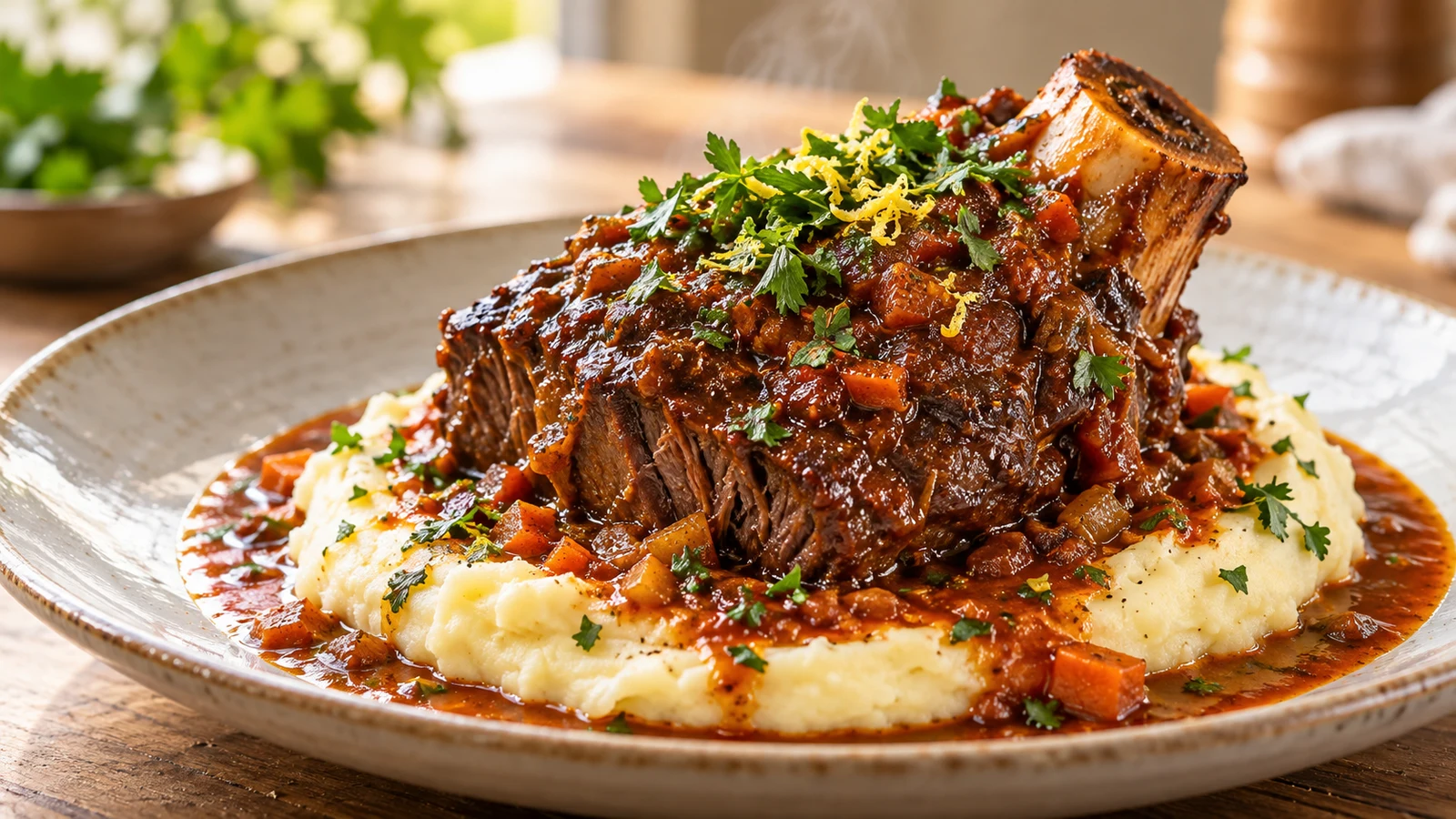
For a balanced plate, pair this braised beef shank recipe with a crisp green salad, roasted green beans, or lightly dressed bitter greens. These sides provide contrast without competing with the sauce. Buttered noodles or cooked grains are practical alternatives when potatoes and polenta are not available.
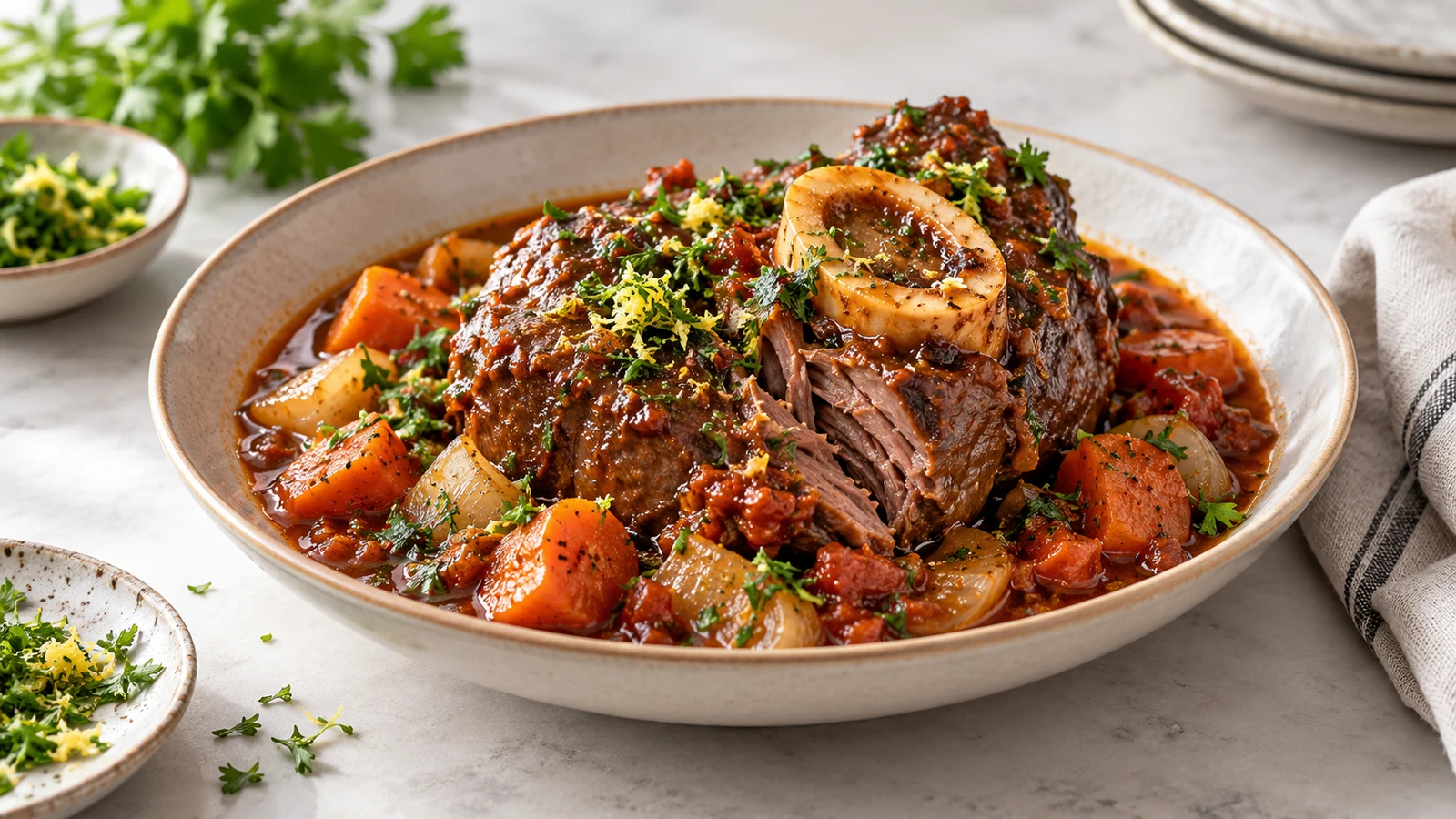
Present one shank per person in a shallow bowl, spoon the vegetables and sauce around it, and add gremolata at the last moment. Warm the serving bowls first so the sauce remains glossy. Provide a small spoon for diners who want to enjoy the marrow.
Make-Ahead, Storage, Freezing and Reheating
Making the Dish Ahead
This beef shank recipe is especially well suited to advance preparation. Complete the braise, cool the shanks in their sauce, and refrigerate them together. Resting overnight allows the flavors to meld while the fat firms on the surface, making it easy to remove before reheating.
To preserve attractive portions, leave the meat on the bones and handle it gently while cold. Reheat the braised beef shank recipe slowly in a covered pot so the sauce does not evaporate before the centers become hot. Add a small splash of stock only if the chilled sauce is unusually thick.
Refrigerating and Freezing
Cool leftovers promptly and refrigerate the beef with its sauce in an airtight container for up to four days. The USDA provides additional leftover food-safety guidance. For freezing, remove the meat from the bones if desired, cover it with sauce, and freeze for up to three months.
Freeze individual portions when convenient meals are the priority. Leaving enough sauce around the meat protects it from drying out. Label the container with the date and thaw it overnight in the refrigerator rather than on the counter.
Reheating Without Drying the Beef
Thaw overnight in the refrigerator. Reheat gently in a covered saucepan or 325°F (165°C) oven, adding a splash of stock if needed, until hot throughout. Making the dish one day ahead is especially useful because the flavors meld and the chilled fat lifts away easily.
Microwaving can work for a single boneless portion, but use moderate power and pause to stir the sauce. The oven or stovetop provides more even results for whole shanks. Avoid a hard boil because it can break apart meat that is already tender.
Frequently Asked Questions
Why is my beef shank still tough after three hours?
The collagen has not fully softened yet. Keep the meat covered in a gentle braise and test every 20 to 30 minutes; thickness, oven accuracy, and the age of the animal can affect timing. In this braised beef shank recipe, easy fork penetration is a more reliable signal than the clock.
Can I make this beef shank recipe without a Dutch oven?
Yes. Sear and sauté in a skillet, then transfer everything to a deep baking dish. Cover it tightly with a lid or a double layer of foil before braising. Check the liquid after two hours because a foil-covered dish may release more steam than a heavy Dutch oven.
How much meat should I plan per person?
Allow one meaty shank per person, usually 12 to 16 ounces before cooking. Bone size varies, so buy by appearance as well as weight.
What is the approximate nutrition per serving?
One serving, based on four portions, contains approximately 620 calories, 52 grams protein, 28 grams fat, and 23 grams carbohydrates. Values vary with shank size, marrow consumption, sauce reduction, and substitutions.
Can I prepare the braised beef shank recipe without wine?
Yes. Replace the wine with 1 cup additional beef stock plus 1 tablespoon balsamic or red wine vinegar. Deglaze the pot in the same way, scraping up every browned bit. The resulting sauce remains savory, while the vinegar supplies enough brightness to balance its richness.
Should beef shanks be completely covered with liquid?
No. The liquid should reach about two-thirds of the way up the meat. The covered pot traps steam while the exposed upper surface continues to braise gently. Check during cooking and add 1/2 cup stock or water only if the pot looks dry.
Can I skip flour in this beef shank recipe?
Yes. The flour improves browning and gives the sauce modest body, but the dish can be made without it. Pat and sear the seasoned shanks directly, then reduce the sauce a little longer at the end. This is also the simplest gluten-free option.
Is LOW or HIGH better for a beef shank recipe slow cooker version?
LOW generally gives the connective tissue more time to soften evenly and offers a forgiving cooking window. HIGH also works within the stated 4 to 5 hours. With either setting, use fork tenderness as the final test and reduce the sauce separately if needed.
Can I use boneless beef shank?
Bone-in shanks are preferred because the marrow enriches the sauce, but boneless pieces can be braised with the same general technique. Monitor them carefully because their shape and thickness may differ. Keep every piece partly surrounded by liquid and judge doneness by texture.
What can I do with leftover beef and sauce?
Remove the meat from the bone, shred it gently, and warm it in the sauce. Serve it over polenta, noodles, potatoes, or cooked grains. Leftover braised beef shank recipe portions are also excellent with crusty bread, provided they have been stored and reheated safely.
Printable Recipe Card
Braised Beef Shanks
- Yield: 4 servings
- Prep time: 25 minutes
- Cook time: 3 to 4 hours
- Oven: 325°F (165°C)
Directions: Season and flour four beef shanks, then sear them in olive oil. Sauté onion and carrots, add garlic and tomato paste, and deglaze with red wine. Add beef stock, return the shanks, cover, and braise until fork-tender. Remove the meat, reduce the sauce until glossy, season to taste, and serve with gremolata.
Final Thoughts
This comforting braised beef shank recipe rewards patience with tender beef, savory sauce, and versatile leftovers. Use the fork test as your guide, reduce the sauce to your preferred consistency, and serve it with something creamy or crusty.
Whether you choose the oven method or the beef shank recipe slow cooker adaptation, gentle heat and sufficient time are the keys. Once you master this beef shank recipe, an economical, firm cut becomes an impressive meal with a glossy sauce and deeply satisfying flavor.
Reviews
Reader reviews are managed separately (outside this build).