Beef
Perfect Beef Tips and Gravy Recipe for Tender Results
Try this beef tips and gravy recipe for tender stovetop beef in rich brown gravy, plus a slow-cooker option and easy family serving ideas tonight.
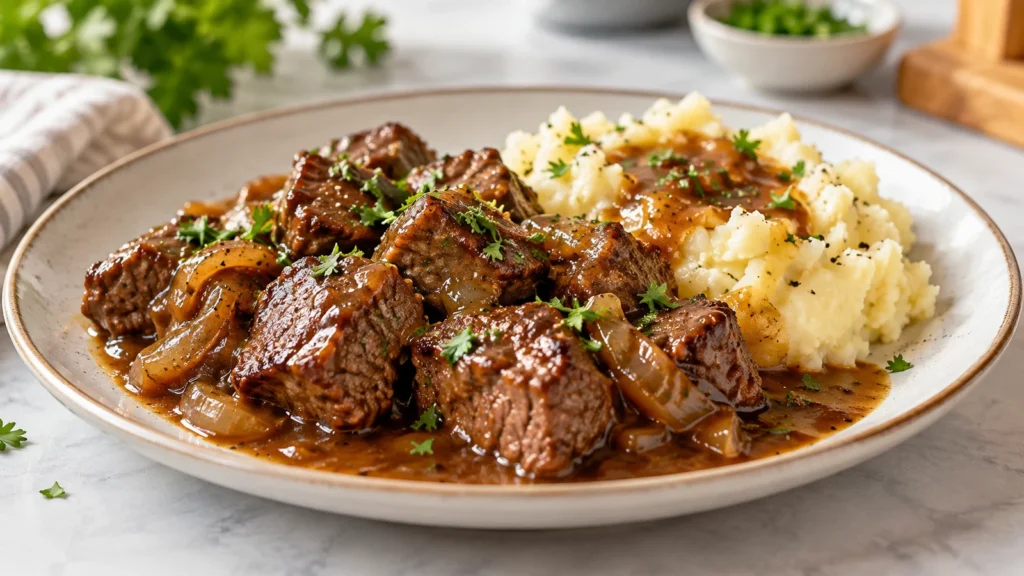
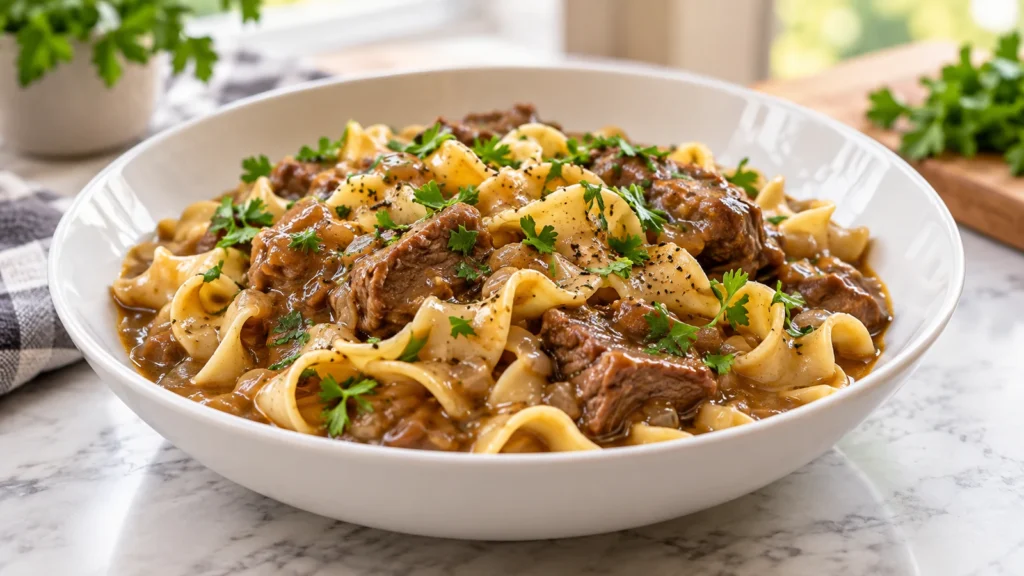
This beef tips and gravy recipe turns bite-size pieces of sirloin into fork-tender beef coated in rich brown gravy. It is a practical comfort-food dinner for serving over mashed potatoes, noodles, or rice.
This easy beef tips recipe yields 6 servings and takes about 20 minutes to prepare and 1 hour 25 minutes to cook. The beginner-friendly stovetop method uses a heavy Dutch oven, while an optional slow-cooker method offers extra flexibility.
Unlike a beef sirloin tip roast recipe, this dish cuts the meat into small, even pieces before cooking. That creates more browned surface area and lets the savory gravy surround every bite. You can also turn the finished dish into a beef tips and noodles recipe or beef tips and rice recipe without changing the cooking method.
Table of Contents
Why You’ll Love This Beef Tips and Gravy Recipe
- Tender results: Gentle simmering softens the beef without drying it out.
- Flavorful gravy: Deglazing captures the browned bits left after searing.
- Flexible serving options: Pair it with potatoes, noodles, rice, or vegetables.
- Make-ahead friendly: The flavor becomes even richer after refrigeration.
- Approachable technique: This beef tips recipe uses simple browning, sautéing, and braising skills that are easy to follow.
- Adaptable presentation: One batch can become a classic plated dinner, a beef tips and noodles recipe, or a beef tips and rice recipe.
Ingredients
- 2 pounds (907 g) boneless beef sirloin steak or chuck roast
- 1 teaspoon kosher salt, plus more only if needed
- 1/2 teaspoon ground black pepper
- 1/2 teaspoon garlic powder
- 2 tablespoons neutral oil, divided
- 1 medium yellow onion, diced
- 8 ounces (227 g) cremini mushrooms, sliced
- 3 garlic cloves, minced
- 2 tablespoons unsalted butter
- 3 tablespoons all-purpose flour
- 3 cups (710 ml) low-sodium beef broth
- 1 tablespoon Worcestershire sauce
- 1 teaspoon Dijon mustard
- 1/2 teaspoon dried thyme
- 1 bay leaf
- 1 tablespoon cornstarch mixed with 1 tablespoon cold water, if needed
- Chopped parsley, for serving
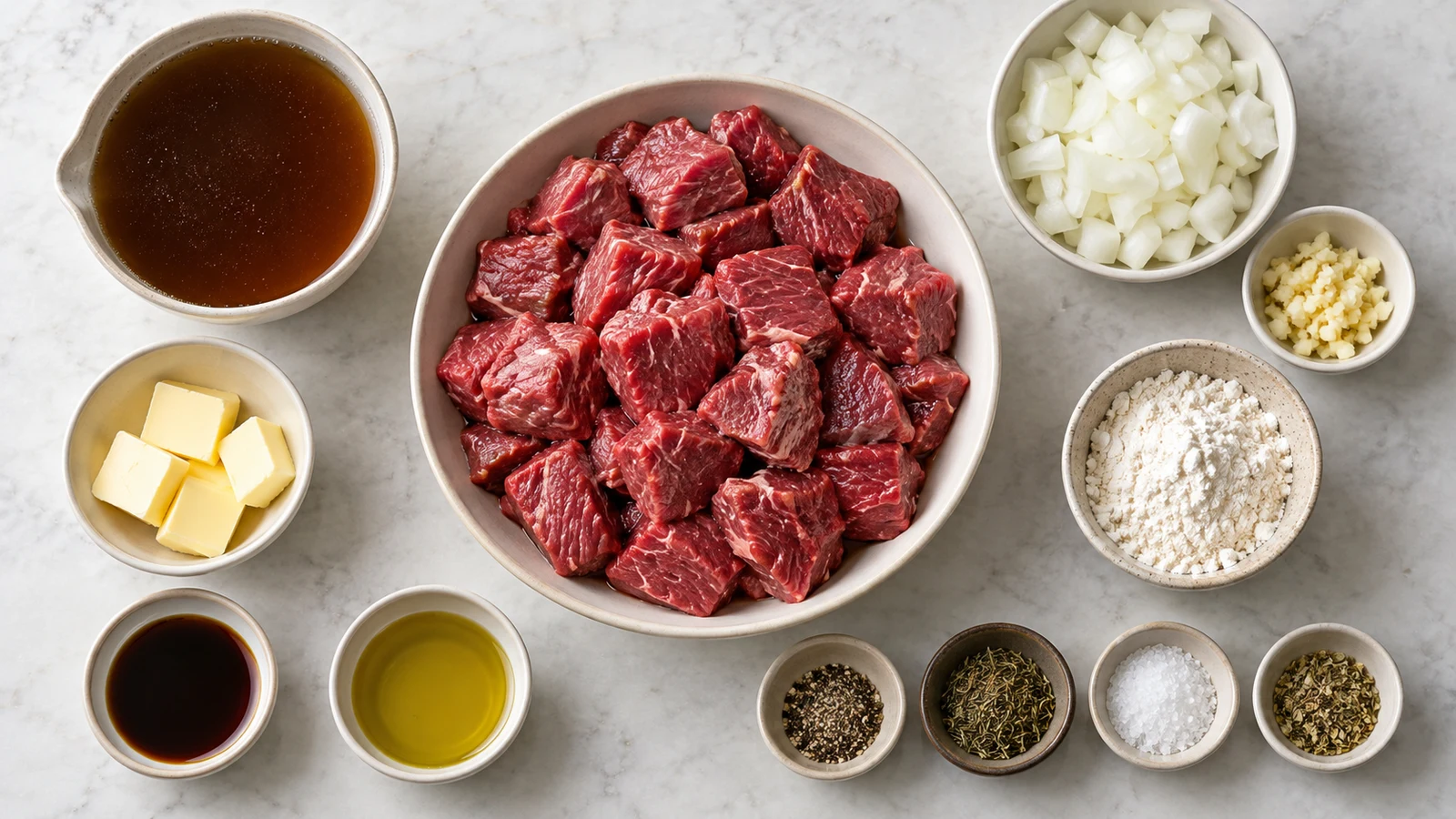
Beef-cut guidance: Sirloin tips cook relatively quickly and remain tender, while chuck has more connective tissue and benefits from the full simmering time. Cut either choice across the grain into uniform 1 1/4-inch pieces so every piece finishes at about the same time. Stew meat can work, although its mixed cuts may cook unevenly.
A beef sirloin tip roast recipe is a different dish: it normally cooks one large roast that is sliced after cooking. Here, smaller pieces are browned and braised directly in gravy. For another detailed approach, see this guide to making tender beef tips.
What Each Gravy Ingredient Does
Flour and butter form the base of the gravy, while broth supplies most of its body and beef flavor. Worcestershire sauce contributes savory depth, Dijon mustard adds gentle tang, and thyme and bay leaf provide an aromatic background. These ingredients keep the beef tips and gravy recipe balanced without hiding the flavor of the browned meat.
Cremini mushrooms deepen the savory character as they brown. Yellow onion adds sweetness, and garlic gives the sauce a fuller aroma. Low-sodium broth is important in this beef tips recipe because the liquid reduces while the meat braises.
How to Make This Beef Tips and Gravy Recipe
- Prepare the beef. Pat the meat dry, trim thick surface fat, and cut it into equal pieces. Season with salt, pepper, and garlic powder.
- Sear in batches. Heat 1 tablespoon oil in a Dutch oven over medium-high heat. Add half the beef in one uncrowded layer and brown for 2 to 3 minutes per side. Transfer it to a plate and repeat with the remaining oil and beef. Batch searing leaves room for moisture to evaporate; an overcrowded pan traps steam and limits browning.
- Cook the vegetables. Reduce the heat to medium. Add the onion and mushrooms, then cook for 6 to 8 minutes, stirring occasionally. Add the garlic and cook for 30 seconds.
- Build the gravy. Melt the butter in the pot. Sprinkle in the flour and stir for 1 minute. Slowly whisk in 1 cup broth until smooth, scraping up the flavorful browned bits. Whisk in the remaining broth, Worcestershire sauce, mustard, thyme, and bay leaf. Broth provides an effective alcohol-free deglazing liquid.
- Braise gently. Return the beef and accumulated juices to the pot. Bring the liquid just to a simmer, cover, and reduce the heat to low. Cook sirloin for 45 to 60 minutes or chuck for 75 to 90 minutes, stirring occasionally.
- Check doneness. The meat is ready when a fork enters easily and a piece separates with gentle pressure. If it is still chewy, continue simmering in 10-minute intervals rather than increasing the heat. Follow safe handling practices, including preventing cross-contamination, using the USDA’s four steps to food safety.
- Finish the gravy. Remove the bay leaf. If the gravy is thin, stir in the cornstarch slurry and simmer for 1 to 2 minutes. Taste before adding more salt, then garnish with parsley.
Optional Slow-Cooker Method
Sear the beef and sauté the vegetables as directed, then transfer them to a 5- or 6-quart slow cooker. Add all remaining ingredients except the butter, flour, and cornstarch slurry. Cook sirloin on low for 5 to 6 hours or chuck on low for 7 to 8 hours, until fork-tender. High heat works in 3 to 4 hours, but low heat generally gives more consistent slow cooker beef tips.
At the end, whisk the butter and flour with 1 cup hot cooking liquid in a saucepan. Simmer until smooth, return it to the cooker, and cook on high for 10 minutes. The same method is useful in this slow-cooker beef shank recipe.
The slow-cooker version of this beef tips and gravy recipe is convenient when the meal needs to cook with limited attention. Searing first is still worthwhile because it creates the browned flavor that distinguishes a rich gravy from a plain broth-based sauce.
Expert Tips for the Best Beef Tips Recipe
- Use a heavy pot: A 5- to 6-quart Dutch oven distributes heat evenly and provides enough surface area for batch searing.
- Dry the surface: Moisture prevents quick browning. Pat every piece thoroughly before seasoning so the beef sears instead of steaming.
- Cut across the grain: Shortening the muscle fibers makes each bite easier to chew. Keep the pieces evenly sized so they become tender together.
- Leave the beef undisturbed: Once a batch enters the hot pot, allow the first side to develop a brown crust before turning it.
- Preserve the browned bits: The dark residue on the bottom of the pot should be loosened with broth. It is a key source of flavor in this beef tips and gravy recipe.
- Avoid tough beef: Maintain a lazy simmer. Rapid boiling tightens the muscle fibers, while stopping before the connective tissue softens leaves chuck chewy.
- Prevent lumpy gravy: Cook the flour briefly, add the first cup of broth gradually, and whisk thoroughly before adding more liquid.
- Fix thin gravy: Simmer uncovered for 5 to 10 minutes or use the cornstarch slurry. Always mix cornstarch with cold water before adding it.
- Fix thick gravy: Stir in low-sodium broth, 2 tablespoons at a time, until it coats a spoon without feeling pasty.
- Control salt: Start with low-sodium broth and unsalted butter. Worcestershire sauce adds salt, so adjust the final seasoning only after reduction.
- Rest before serving: Let the finished pot stand for about 5 minutes. This allows the bubbling to settle and makes the gravy easier to judge.
If you enjoy slowly braised cuts with deep flavor, this braised beef shank uses a related low-and-slow technique.
Variations and Substitutions
For a gluten-free version, verify that the broth and Worcestershire sauce are gluten-free, omit the flour, and thicken the finished gravy with 2 tablespoons cornstarch mixed with 2 tablespoons cold water. For dairy-free stovetop beef tips, replace butter with olive oil or plant-based butter.
To scale the recipe down, halve every ingredient and use a 3- to 4-quart pot, but keep the cooking time similar. To double it, use two pots or sear in additional batches; crowding one pot reduces browning and can make the gravy watery.
Beef and Mushroom Options
Sirloin gives this beef tips recipe a shorter braising window and a relatively lean finish. Chuck develops a richer texture after its longer simmer. If using packaged stew meat, check individual pieces as they cook because a mixture of cuts may not soften at exactly the same rate.
White button mushrooms can replace cremini mushrooms for a milder taste. If you omit mushrooms, use the suggested extra half onion. Do not add watery vegetables during braising, because extra liquid can dilute the gravy and make its final consistency less predictable.
Herb and Flavor Variations
The thyme and bay leaf create a classic savory profile. For a slightly brighter finish, add extra chopped parsley at serving time. If your family prefers a milder gravy, retain the stated ingredients but choose a gently flavored low-sodium broth. Taste at the end instead of adding extra seasoning early.
A beef sirloin tip roast recipe may use a dry seasoning crust, but small braised pieces need a sauce-friendly balance. Avoid loading the pot with strong spices that could overwhelm the Worcestershire sauce, mustard, mushrooms, and browned beef.
Serving Variations
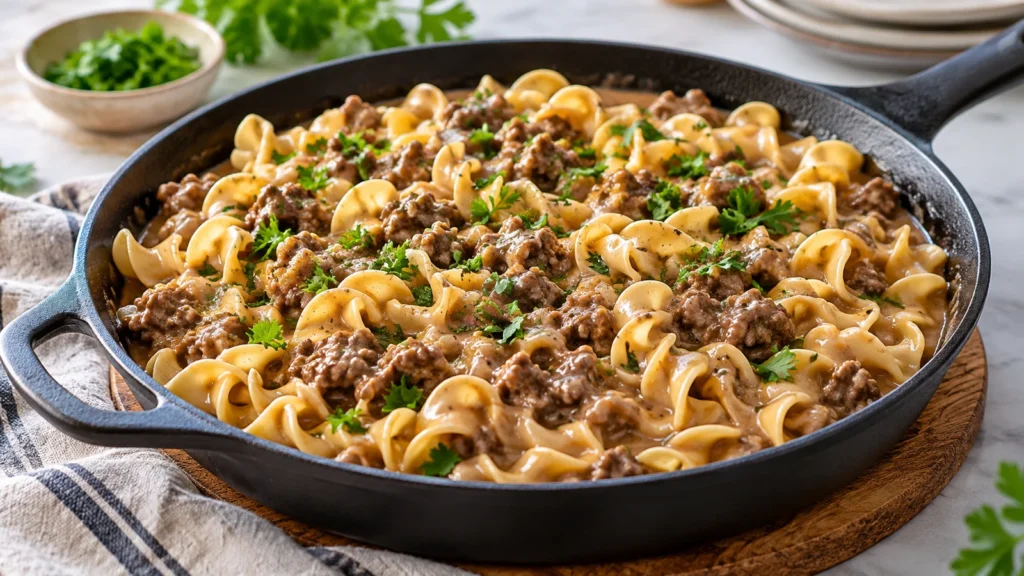
For a beef tips and noodles recipe, spoon the finished meat and gravy over 12 ounces of cooked egg noodles. For a beef tips and rice recipe, serve it with about 4 cups cooked white or brown rice. Creamy mashed potatoes are especially good at catching the gravy, while roasted green beans or broccoli add color and balance.
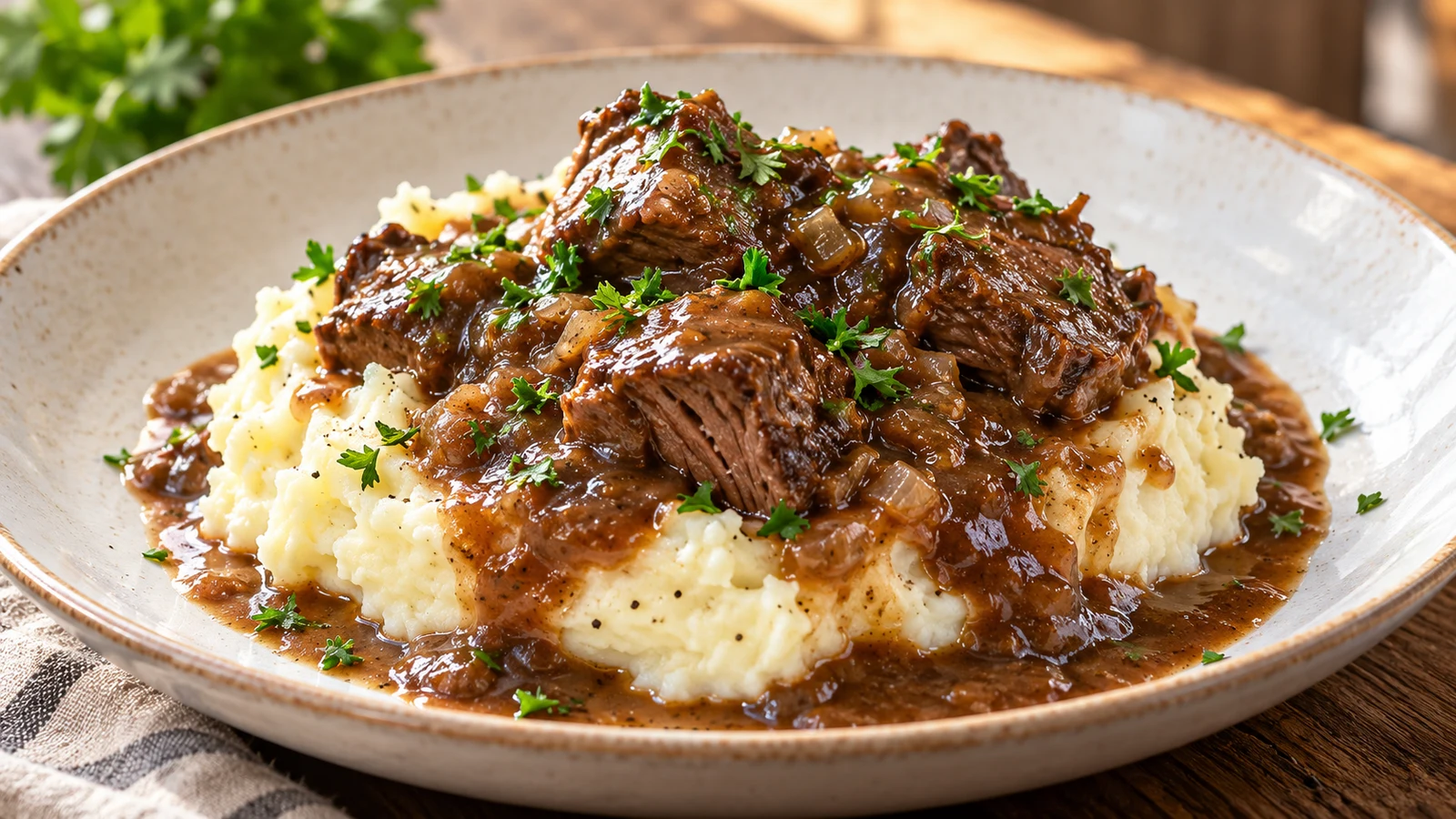
Serving Ideas for Beef Tips and Gravy
Mashed potatoes are a classic choice because their mild, creamy texture balances the deep brown gravy. Spoon the beef beside or over the potatoes, then add parsley just before serving. Green beans, peas, glazed carrots, or roasted broccoli make useful side dishes without competing with the main course.
When serving this as a beef tips and noodles recipe, cook the noodles shortly before the beef is ready so they remain springy. Drain them well to prevent water from thinning the sauce. Wide egg noodles offer plenty of surface area for the gravy.
For a beef tips and rice recipe, use white rice for a soft, neutral base or brown rice for a nuttier taste. Keep the rice separate until plating, especially when storing leftovers, so it does not absorb all the gravy in the refrigerator.
Crusty bread also works well for soaking up sauce. For a balanced dinner, choose one starch and one simply cooked green vegetable. The beef tips and gravy recipe is rich enough that the side dishes do not need heavy sauces of their own.
Make-Ahead Instructions
This beef tips recipe is particularly suitable for advance preparation because the flavors blend as the covered dish rests. Cook it completely up to two days before serving, cool it promptly, and refrigerate it in a shallow airtight container. Keep the parsley separate so it stays fresh.
When making the meal ahead, leave the gravy just slightly looser than your ideal serving consistency. It will thicken as it chills. During reheating, add a small splash of broth only if needed, then reassess after the sauce is hot.
You can also prepare selected ingredients earlier in the day. Cut the onion and mushrooms and refrigerate them in separate covered containers. Cut beef should remain refrigerated and separate from produce. Season and sear it when you are ready to cook.
How to Store and Reheat
Cool leftovers promptly and refrigerate them in a shallow airtight container for up to 4 days. The USDA offers additional leftover storage and reheating guidance.
Freeze cooled beef and gravy for up to 3 months, leaving a little expansion space. Thaw overnight in the refrigerator. Reheat gently in a covered saucepan over medium-low heat with a splash of broth, stirring occasionally; hard boiling can make the meat tough and cause a dairy-based gravy to separate.
Freezing Individual Portions
Divide the cooled beef and gravy among meal-size freezer containers so you can thaw only what you need. If you plan to serve it as a beef tips and rice recipe or beef tips and noodles recipe, freeze the beef mixture separately from the cooked starch for the best texture.
Nutrition
One of six servings contains approximately 410 calories, 38 grams protein, 22 grams fat, 13 grams carbohydrate, and 650 milligrams sodium, excluding noodles, rice, or potatoes. Values vary with the beef cut and brands used. For accurate temperature checks when cooking meat, consult the USDA safe minimum internal temperature chart.
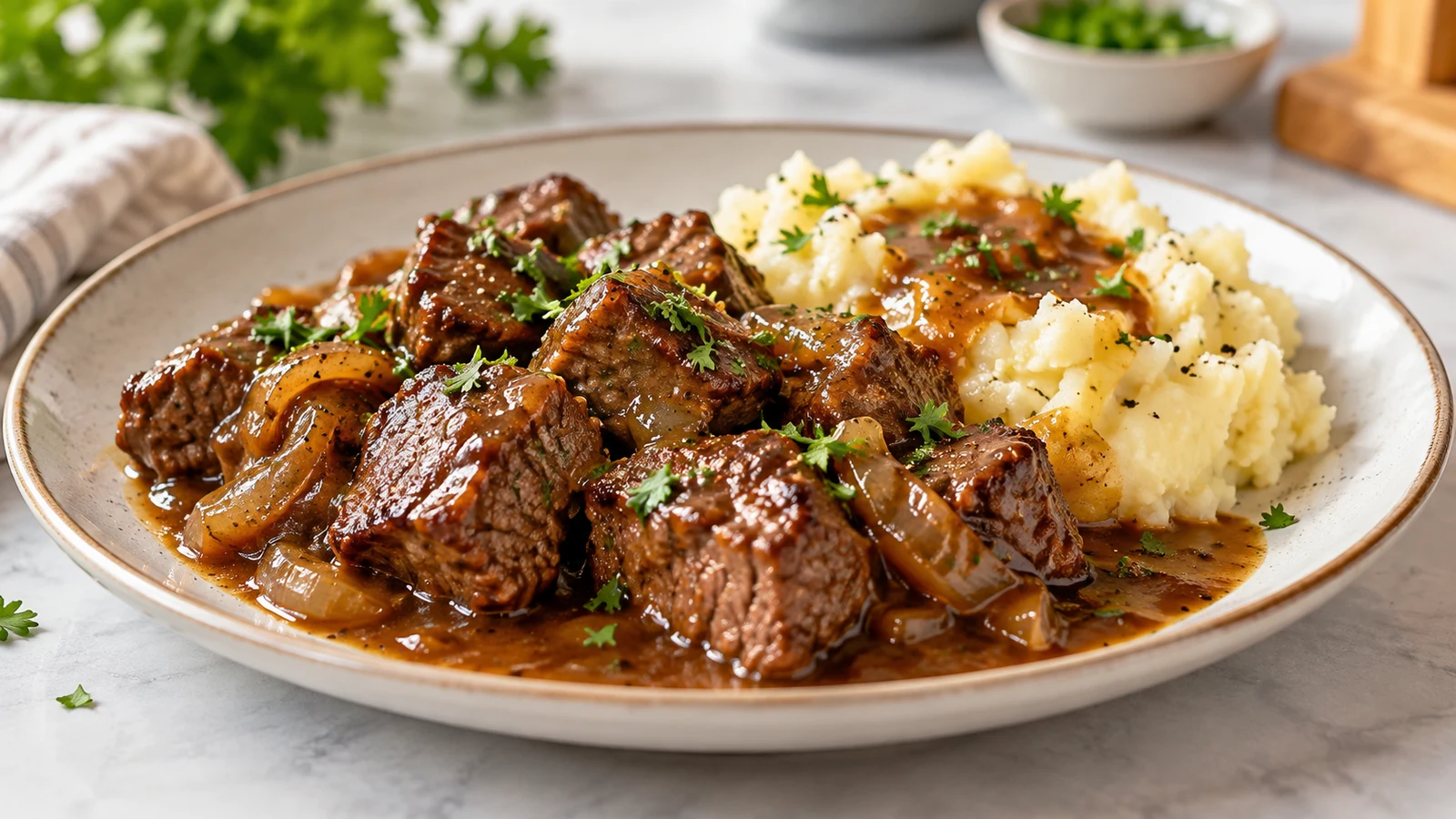
Troubleshooting This Beef Tips and Gravy Recipe
Why Did the Beef Steam Instead of Brown?
The pan may not have been hot enough, the beef may have been damp, or too many pieces may have been added at once. Remove excess liquid, let the pot regain heat, and sear the remaining pieces in smaller batches. Good browning gives a beef tips recipe much of its savory foundation.
Why Is the Beef Still Chewy?
Chewy chuck commonly needs more time for its connective tissue to soften. Keep the liquid at a gentle simmer and test again after 10 minutes. Sirloin should be monitored sooner. Raising the heat will not create tenderness faster and may tighten the meat.
Why Is My Gravy Lumpy?
Lumps can form when broth is added too quickly to the flour mixture. Press small lumps against the side of the pot with a whisk and continue stirring. Adding the first cup of broth gradually is the easiest way to keep the gravy smooth.
Why Is the Gravy Too Thin?
First simmer the uncovered sauce for 5 to 10 minutes so excess water can evaporate. If it remains thin, use the stated cornstarch slurry and simmer for 1 to 2 minutes. Do not sprinkle dry cornstarch directly into the pot.
Why Is the Gravy Too Thick?
Flour-based gravy continues to thicken as it stands. Add low-sodium broth 2 tablespoons at a time and stir after each addition. Stop when the sauce coats the meat and spoon but still flows easily.
Why Does the Gravy Taste Flat?
Make sure the browned bits were scraped from the pot and the sauce simmered with the thyme and bay leaf. Taste only after the beef is tender and the gravy reaches its final thickness. At that point, add salt only if needed.
Frequently Asked Questions
Why are my beef tips tough?
They may need more time, especially if you used chuck, or the liquid may have boiled too vigorously. Keep the pot at a gentle simmer and check again every 10 minutes until the beef yields easily to a fork.
How can I keep the gravy from becoming overly salty?
Use low-sodium broth and unsalted butter, and do not season repeatedly while the gravy reduces. If it is already too salty, add unsalted broth and thicken again as necessary; serving it over unseasoned potatoes or rice also helps.
Can I skip the mushrooms?
Yes. Omit them without changing the other quantities, or replace them with an extra half onion. The gravy will be slightly less earthy but still savory.
Can I make this beef tips recipe ahead?
Yes. Prepare it up to two days ahead, cool it promptly, and refrigerate. Reheat slowly with a small amount of broth, adding the garnish only before serving.
Can I use stew meat in this beef tips and gravy recipe?
Yes, but packaged stew meat may contain several cuts with different tenderness levels. Cut unusually large pieces to match the others and allow enough time for every piece to become fork-tender.
Is a beef sirloin tip roast recipe the same as beef tips?
No. A beef sirloin tip roast recipe generally cooks the cut whole and slices it afterward. Beef tips are smaller pieces that are browned on several sides and then gently braised in gravy.
What noodles work best for a beef tips and noodles recipe?
Wide egg noodles are a classic choice because their broad surface holds the gravy. Cook 12 ounces according to the package directions, drain thoroughly, and serve the beef mixture over them rather than stirring everything together in the storage container.
Which rice works for a beef tips and rice recipe?
Both white and brown rice work well. Prepare about 4 cups cooked rice and place it beneath the beef and gravy at serving time. White rice is softer and more neutral, while brown rice contributes a firmer, nuttier base.
Can I double the beef tips and gravy recipe?
Yes, but use two pots or brown the beef in more batches. The pieces need open space around them to sear. Cooking time stays similar, although a larger volume may take longer to return to a simmer.
Can I omit the cornstarch?
Yes. The cornstarch slurry is only needed if the finished gravy remains thin. You can instead simmer it uncovered for 5 to 10 minutes. Watch it closely because reduction also concentrates salt.
Printable Recipe Card
Yield: 6 servings
Prep time: 20 minutes
Cook time: 1 hour 25 minutes
Method: Stovetop braising
Difficulty: Easy
Directions: Cut and season 2 pounds beef. Brown it in two batches in 2 tablespoons oil, then transfer it to a plate. Cook one diced onion and 8 ounces mushrooms for 6 to 8 minutes; add three minced garlic cloves. Melt 2 tablespoons butter, stir in 3 tablespoons flour, and gradually whisk in 3 cups low-sodium beef broth. Add 1 tablespoon Worcestershire sauce, 1 teaspoon Dijon mustard, 1/2 teaspoon thyme, and one bay leaf. Return the beef, cover, and simmer gently until fork-tender. Remove the bay leaf, adjust the gravy with a cornstarch slurry if needed, and serve warm.
A Comforting Dinner Worth Repeating
With careful browning, gentle heat, and a final gravy check, this beef tips and gravy recipe delivers tender meat and smooth, savory gravy every time. Serve it over potatoes for a classic meal, or adapt the same batch into a beef tips and noodles recipe or beef tips and rice recipe for an equally satisfying dinner.
Reviews
Reader reviews are managed separately (outside this build).