Beef
Easy Beef Tips and Rice Recipe with Luscious Gravy
Try this beef tips and rice recipe with tender sirloin, fluffy rice, and rich brown gravy for a simple, comforting stovetop dinner everyone loves.
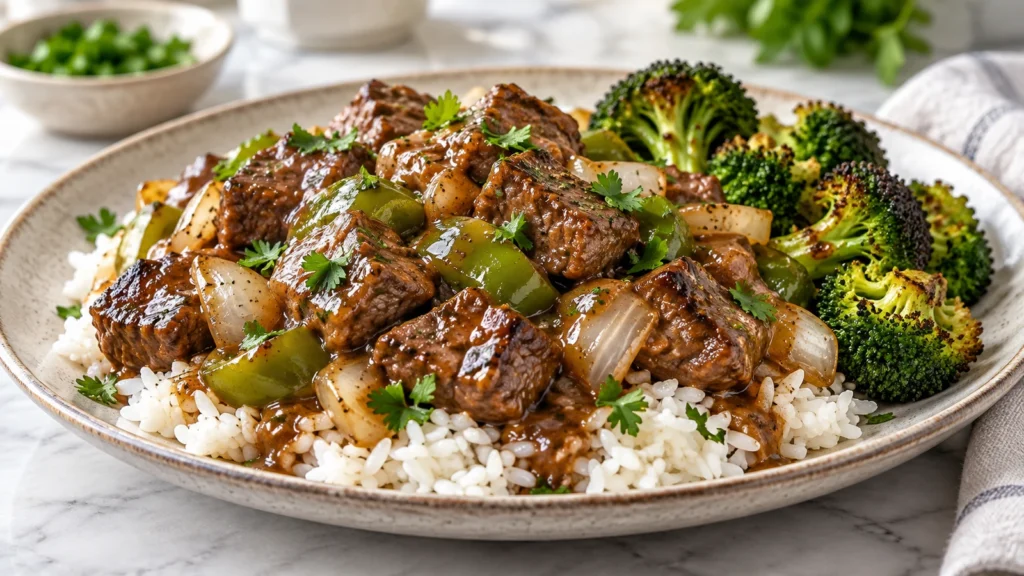
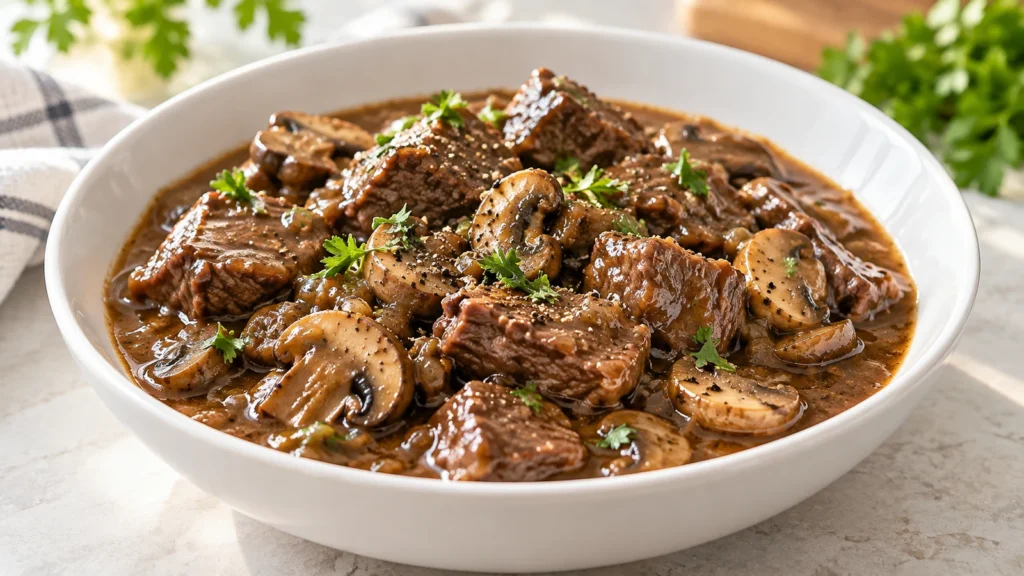
This beef tips and rice recipe pairs tender, browned beef with fluffy long-grain rice and a rich homemade gravy. It is a comforting main dish made with simple ingredients, clear timing for different beef cuts, and plenty of savory flavor.
Cooking the rice separately gives you better control over both textures, while a cornstarch slurry makes the gravy easy to adjust. This approachable beef tips recipe works for a relaxed family dinner, meal preparation, or a cozy weekend supper.
If you enjoy the generous sauce in a beef tips and gravy recipe but want a complete meal in every bowl, rice is an ideal base. It absorbs the sauce without competing with the browned beef, mushrooms, and aromatic seasonings.
Table of Contents
Why You’ll Love This Beef Tips and Rice Recipe
- Tender and flavorful: Batch browning builds a savory crust without steaming the beef.
- Flexible: Use quick-cooking sirloin tips or budget-friendly stew meat.
- Reliable gravy: Simple fixes are included for gravy that is thin, thick, or lumpy.
- Make-ahead friendly: The beef and gravy store and freeze well.
- Easy to customize: You can change the vegetables, serving base, or gravy finish without altering the core method.
Ingredients
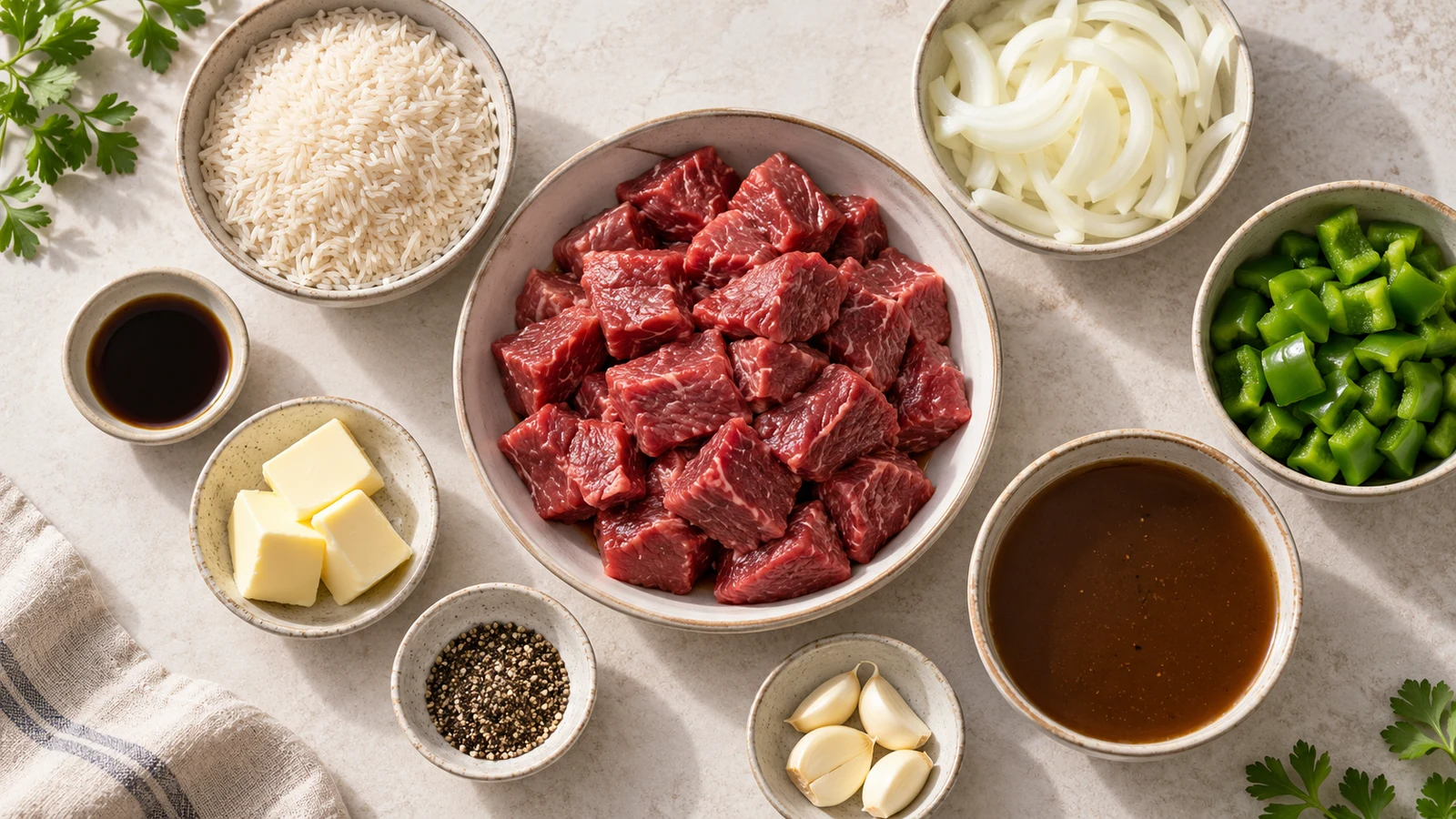
- 1 1/2 pounds (680 g) sirloin steak tips or beef stew meat, cut into 1-inch pieces
- 1 teaspoon kosher salt, divided
- 1/2 teaspoon black pepper
- 2 tablespoons neutral oil, divided
- 1 medium yellow onion, diced
- 8 ounces (227 g) cremini mushrooms, sliced, optional
- 2 garlic cloves, minced
- 3 cups low-sodium beef broth
- 1 tablespoon Worcestershire sauce
- 1 teaspoon dried thyme
- 2 tablespoons cornstarch
- 3 tablespoons cold water
- 1 tablespoon unsalted butter, optional
- 1 1/2 cups uncooked long-grain white rice
- 3 cups water, or the amount specified on the rice package
- Chopped parsley for serving, optional
The Best Cut of Beef
Sirloin tips are the best choice when speed matters. They become tender after about 20 to 30 minutes of gentle simmering and have a beefier, less fatty bite than many packages of stew meat. Buy a sirloin steak and cube it if packaged tips are unavailable.
Stew meat is economical but may contain several cuts, so allow 60 to 90 minutes for it to soften. The beef is ready when a fork enters easily and an individual piece can be cut with the side of the fork.
If you were looking for a beef sirloin tip roast recipe, note that a whole roast requires a different roasting method and should not simply replace the cubes here. Uniform 1-inch pieces are important because they brown and tenderize at approximately the same rate.
How to Make This Beef Tips and Rice Recipe
- Prepare the rice: Rinse the rice until the water is mostly clear. Combine it with 3 cups water and 1/4 teaspoon salt, bring to a boil, cover, and cook over low heat for 15 to 18 minutes. Remove from the heat and let it stand, covered, for 10 minutes.
- Dry and season the beef: Pat the cubes thoroughly dry. Season with 3/4 teaspoon salt and the pepper. Dry surfaces are essential for proper browning.
- Brown in batches: Heat 1 tablespoon oil in a wide, heavy skillet or Dutch oven over medium-high heat. Arrange half the beef in one uncrowded layer and leave it untouched for 2 minutes, then turn and brown for another 2 minutes. Transfer it to a plate and repeat with the remaining oil and beef.
- Cook the vegetables: Reduce the heat to medium. Add the onion and mushrooms, then cook for 5 to 7 minutes. Stir in the garlic for 30 seconds.
- Simmer: Add the broth, Worcestershire sauce, and thyme, scraping up the browned bits. Return the beef and its juices. Cover partially and maintain a gentle simmer for 20 to 30 minutes for sirloin tips or 60 to 90 minutes for stew meat.
- Thicken the gravy: Stir the cornstarch and cold water until completely smooth. Pour it slowly into the simmering liquid while stirring. Cook for 2 to 3 minutes, until the gravy coats the back of a spoon. Stir in butter if desired.
- Serve: Fluff the rice and spoon the beef, vegetables, and gravy over it. Garnish with parsley.
This stovetop method is also a useful foundation for a classic beef tips recipe. For another preparation reference, see this beef tips and rice preparation.
Expert Tips for a Better Beef Tips Recipe
Remove Surface Moisture Before Browning
Moisture is the main obstacle to a deep brown crust. Pat every piece dry before seasoning, preheat the pan, and wait until the oil shimmers before adding the beef. The sizzling should remain lively throughout each batch.
Preserve the Browned Bits
The caramelized residue on the skillet contributes much of the flavor in this beef tips and rice recipe. After adding the broth, scrape the bottom with a sturdy spoon so those concentrated juices dissolve into the gravy.
Maintain a Gentle Simmer
A gentle simmer produces an occasional small bubble rather than constant vigorous boiling. This controlled heat gives connective tissue time to soften. It is especially important when adapting the technique from a beef tips and gravy recipe that uses stew meat.
Test the Meat, Not Just the Timer
Beef cuts vary in age, marbling, and connective tissue, so the stated cooking range is a guide. Test one piece before thickening the gravy. If it resists a fork, continue cooking with enough broth to keep the meat partially surrounded by liquid.
Rest the Rice Before Fluffing
The covered 10-minute rest allows moisture to redistribute through the rice. Fluff gently with a fork instead of stirring vigorously. Separate grains provide a better base for the sauce and keep the finished beef tips and rice recipe from becoming heavy.
Homemade Gravy Guidance
For a balanced beef tips and gravy recipe, begin with low-sodium broth and adjust the salt only after the liquid reduces. Worcestershire sauce provides depth, while the browned residue in the pan supplies much of the roasted flavor.
If the gravy is thin, simmer it uncovered for several minutes or add another slurry made with 1 teaspoon each cornstarch and cold water. If it is too thick, whisk in warm broth 1 tablespoon at a time.
For lumps, remove the beef and whisk vigorously. Strain the gravy if necessary, then return the meat to the pan. A smooth slurry and a simmering, rather than rapidly boiling, sauce help this beef tips recipe develop a glossy finish.
More Tips for the Best Results
- Use a 12-inch heavy skillet or Dutch oven so the beef has enough room to brown.
- Do not crowd the pan. Crowded pieces release moisture and turn gray instead of developing a crust.
- Keep the braising liquid at a gentle simmer. A hard boil can tighten the meat fibers.
- Judge tenderness by feel rather than the clock, especially when using mixed-cut stew meat.
- Whisk the cornstarch with genuinely cold water before it enters the hot sauce.
- Wait until the gravy has reduced and thickened before making a final salt adjustment.
- Keep raw beef and its utensils away from ready-to-eat ingredients and follow the USDA’s four food-safety steps.
Variations and Substitutions
Gluten-Free and Lower-Sodium Options
For a gluten-free beef tips and rice recipe, confirm that the broth, cornstarch, and Worcestershire sauce are certified gluten-free. Cornstarch already thickens the gravy without flour. To reduce sodium, choose unsalted broth, use only 2 teaspoons Worcestershire sauce, and season at the table.
Slow Cooker Method
Brown the beef and vegetables as directed, then transfer them to the cooker with 2 1/2 cups broth, Worcestershire sauce, and thyme. Cook sirloin on low for 4 to 5 hours or stew meat for 7 to 8 hours. Add the slurry during the final 20 to 30 minutes on high.
Vegetable Variations
Replace mushrooms with carrots or leave them out. Carrots should be cut into small, even pieces so they soften alongside the meat. Peas may be stirred into the gravy near the end, giving the beef tips recipe extra color without requiring a separate pan.
Creamy Gravy Variation
For a creamy finish, stir in 1/3 cup sour cream off the heat. Do not boil after adding it because excessive heat can cause separation. You can also explore this beef tips and gravy recipe for another gravy-focused variation.
Noodle Variation
To make a beef tips and noodles recipe, replace the rice with 12 ounces of cooked egg noodles. Keep the gravy slightly loose because the noodles will absorb some sauce. These beef tips and noodles instructions provide more detail.
About Using a Whole Roast
A beef sirloin tip roast recipe usually cooks one large piece of meat and depends on careful slicing for tenderness. This dish uses small cubes that are browned on several sides, so replacing them with a whole roast would change both the timing and cooking technique.
Serving Ideas for Beef Tips and Rice
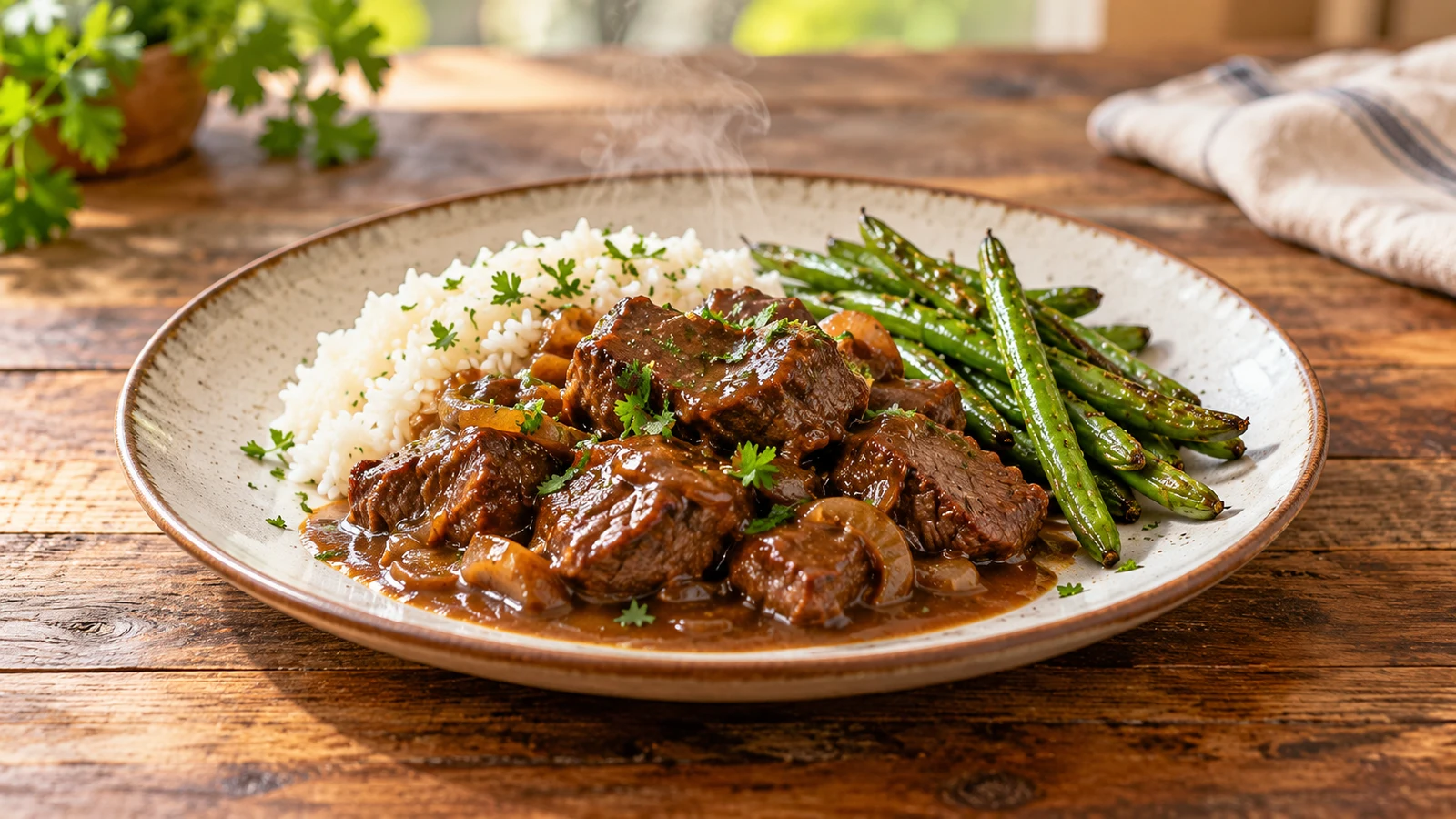
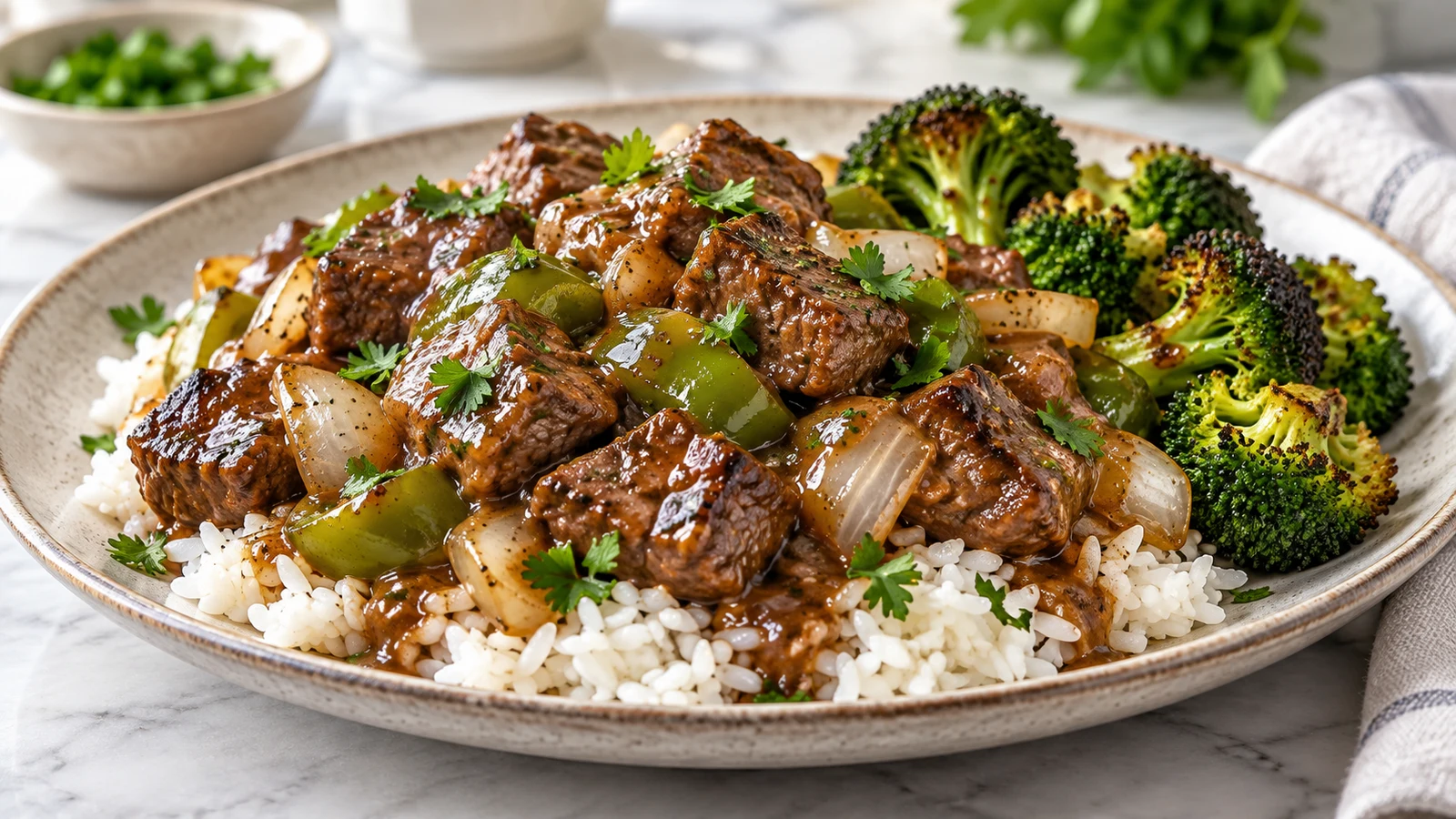
Serve the beef over white or brown rice with green beans, peas, or roasted broccoli. A crisp green salad with a tangy dressing balances the rich gravy, while steamed vegetables keep the meal simple enough for a weeknight.
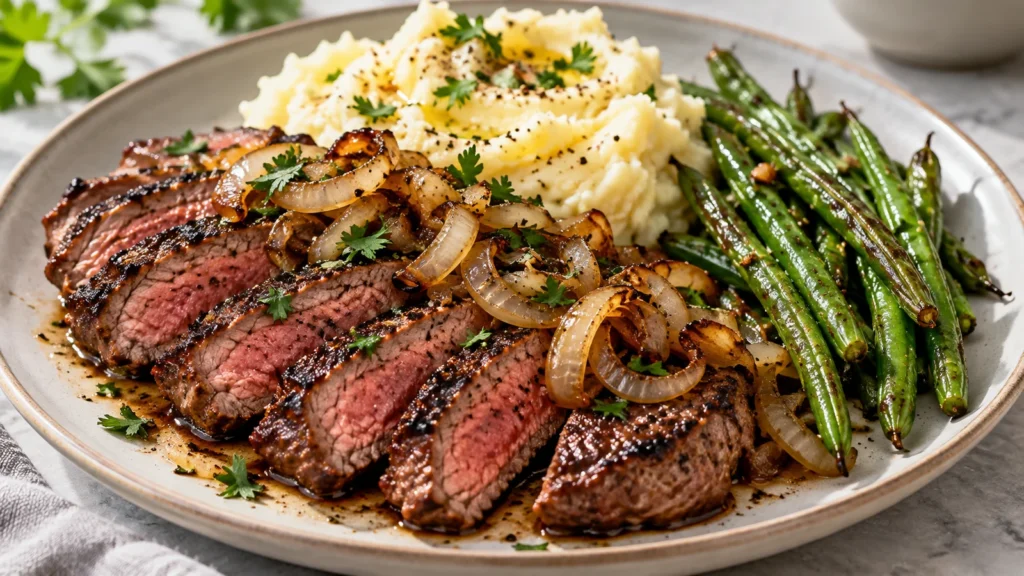
Mashed potatoes are another good base. Warm dinner rolls can help capture extra sauce, but keep portions moderate because the rice already makes the beef tips and rice recipe substantial.
For a casual family meal, place the rice, beef, and vegetables in separate serving dishes. Diners can choose their preferred ratio of rice and gravy, and leftovers remain easier to store without the grains becoming overly soft.
Make-Ahead Instructions
Prepare the beef and gravy up to two days in advance, cool them promptly, and refrigerate them in a shallow airtight container. The flavor often becomes more cohesive after resting overnight. Cook fresh rice when possible for the best texture.
If you must prepare the entire beef tips and rice recipe ahead, refrigerate the rice separately. Spread freshly cooked rice in a shallow container so it cools promptly, then cover it once chilled. Keeping the components apart also makes reheating more even.
You can complete the chopping earlier in the day. Refrigerate the beef separately from the onion, mushrooms, and garlic, and keep raw-meat utensils away from vegetables that will not receive further cooking.
How to Store, Freeze, and Reheat
Cool leftovers promptly and refrigerate the beef and gravy in a shallow airtight container for up to 3 to 4 days. Store rice separately for the best texture. This timing follows USDA leftover storage guidance.
Freeze the cooled beef and gravy for up to 3 months, leaving a little expansion space. Thaw overnight in the refrigerator. The gravy may appear slightly separated after freezing, but gentle stirring during reheating usually restores it.
Reheat the beef tips recipe gently in a covered saucepan over medium-low heat with 1 to 3 tablespoons broth. Stir occasionally until steaming hot. Low heat and added moisture help prevent the beef from drying out.
Reheat rice with a spoonful of water in a covered microwave-safe dish. Break up large clumps before heating, and serve immediately. Freeze rice separately if desired so you can thaw only the number of portions needed.
Troubleshooting This Beef Tips and Gravy Recipe
- Chewy beef: It usually needs more gentle cooking. Add a little broth and continue simmering in 10-minute increments.
- Pale beef: The pan was crowded or the meat was wet. Dry it well and brown smaller batches.
- Salty gravy: Add unsalted broth, then thicken again if necessary. A larger portion of plain rice also helps balance each serving.
- Raw cornstarch flavor: Keep the gravy simmering for at least 2 minutes after adding the slurry.
- Scorched pan residue: If the browned bits turn black or smell bitter, carefully move the beef to a clean pan before adding the broth.
- Dry rice: Sprinkle it with a little water, cover it, and let the trapped steam soften the grains.
- Greasy gravy: Skim excess fat from the surface before adding the slurry. This gives the beef tips and rice recipe a cleaner flavor.
Frequently Asked Questions
Why are my beef tips still chewy?
Sirloin can become tough if boiled aggressively, while stew meat may simply need more time. Maintain a low simmer and continue until a fork slides easily into the beef. Add broth if the pan begins to look dry.
What is the best rice for a beef tips and rice recipe?
Long-grain white rice is fluffy and holds the gravy well. Jasmine rice adds a light aroma, while brown rice offers a nuttier flavor but needs approximately 40 to 45 minutes to cook.
Does the rice cook with the beef?
No. Cooking it separately prevents it from absorbing too much gravy and makes both textures easier to control. It also allows you to refrigerate each component separately for better leftovers.
How can I adjust the gravy consistency?
Simmer thin gravy uncovered or add a small cold-water slurry. Thin overly thick gravy with warm broth. Always whisk cornstarch with cold water before adding it to prevent lumps.
Can I make this beef tips recipe without mushrooms?
Yes. Leave them out without changing the other quantities or replace them with carrots. The onion, garlic, browned beef, Worcestershire sauce, and broth still provide a well-rounded savory flavor.
Can I turn this into a beef tips and noodles recipe?
Yes. Serve the finished beef and gravy over 12 ounces of cooked egg noodles instead of rice. Add a splash of broth if needed because noodles can absorb gravy more quickly than rice.
Is this the same as a beef sirloin tip roast recipe?
No. A beef sirloin tip roast recipe cooks a whole roast, while this dish uses 1-inch pieces that brown quickly and simmer directly in gravy. The methods and cooking times are not interchangeable.
Can I double the beef tips and gravy recipe?
Yes, but brown the beef in additional batches so the pan remains uncrowded. Use a sufficiently large Dutch oven for simmering and cook the rice in a pot that can hold twice the stated quantity.
Why did my cornstarch slurry form lumps?
The water may have been warm, or the slurry may have sat long enough for the starch to settle. Use cold water, stir immediately before pouring, and add the mixture gradually while whisking the simmering gravy.
How do I know when the beef is tender?
Insert a fork into a piece and twist gently. Properly cooked beef should yield without springing back, and you should be able to divide it with the side of the fork.
Recipe Card
- Preparation time: 20 minutes
- Cooking time: 40 minutes with sirloin; up to 1 hour 40 minutes with stew meat
- Total time: 1 hour with sirloin
- Yield: 6 servings
Equipment: 12-inch heavy skillet or Dutch oven, medium saucepan with lid, cutting board, chef’s knife, tongs, whisk, and measuring cups and spoons.
Ingredients: 1 1/2 pounds cubed sirloin tips; 1 teaspoon kosher salt; 1/2 teaspoon pepper; 2 tablespoons oil; 1 diced onion; 8 ounces sliced mushrooms; 2 minced garlic cloves; 3 cups low-sodium beef broth; 1 tablespoon Worcestershire sauce; 1 teaspoon thyme; 2 tablespoons cornstarch; 3 tablespoons cold water; 1 tablespoon butter; 1 1/2 cups long-grain rice; 3 cups water.
- Cook the rice in the water with 1/4 teaspoon salt for 15 to 18 minutes; rest covered for 10 minutes.
- Season the dry beef with the remaining salt and pepper. Brown it in two batches in the oil, about 4 minutes per batch.
- Cook the onion and mushrooms for 5 to 7 minutes; add the garlic for 30 seconds.
- Add the broth, Worcestershire sauce, and thyme. Return the beef and simmer gently until fork-tender.
- Whisk together the cornstarch and cold water. Stir it into the simmering liquid and cook for 2 to 3 minutes. Finish with butter and serve over rice.
Notes: Sirloin generally needs 20 to 30 minutes of simmering; stew meat needs 60 to 90 minutes. Estimated nutrition per serving is 510 calories, 35 g protein, 55 g carbohydrate, 16 g fat, and 650 mg sodium. Values vary by the cut of beef and specific products used.
A Comforting Dinner Worth Repeating
With careful batch browning, a gentle simmer, and an adjustable homemade gravy, this beef tips and rice recipe delivers tender beef and dependable results. Keep the beef and rice separate until serving so every bowl stays flavorful without becoming soggy.
The same techniques can strengthen any beef tips recipe: dry the meat, avoid crowding, preserve the browned bits, and cook until the texture is truly tender. Once those fundamentals are in place, variations such as a beef tips and noodles recipe or creamier gravy become easy to manage.
Reviews
Reader reviews are managed separately (outside this build).