Cake
Easy, Moist Red Velvet Cake Mix Recipes That Wow
Try easy, moist red velvet cake mix recipes with homemade flavor, cream cheese frosting, Bundt and layer options, plus tested pans and storage tips.
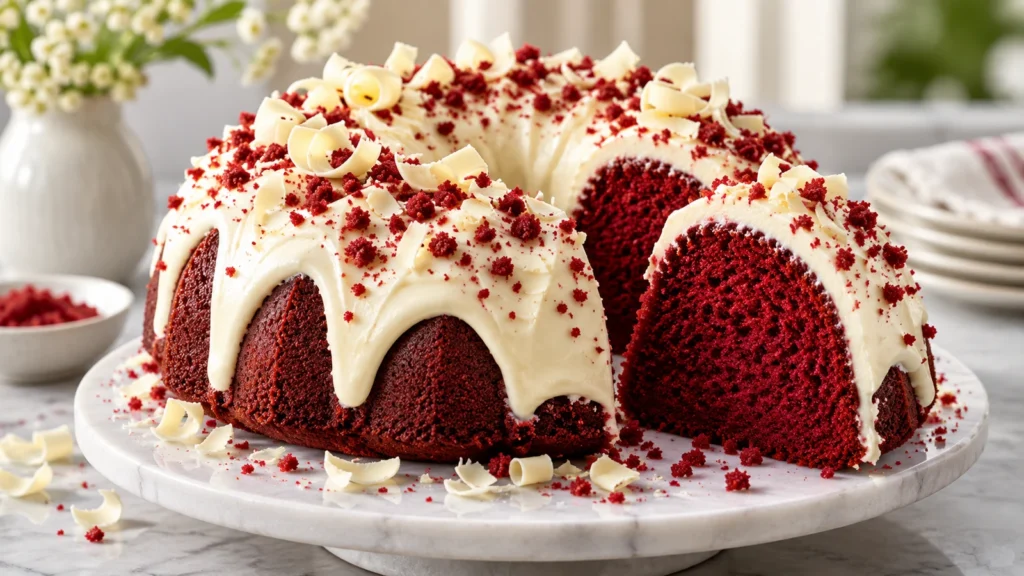
These red velvet cake mix recipes turn a boxed mix into a moist, tender cake with rich cocoa flavor and a homemade-style crumb. Greek yogurt, whole milk, melted butter, and one extra egg improve the texture without making the method complicated.
The versatile batter works in a Bundt pan, layer pans, a sheet pan, or cupcake tins. Among easy red velvet cake mix recipes, this version is especially useful because the pan options require no major changes to the batter. Finish it with tangy cream cheese frosting for a dessert that looks special enough for birthdays and holidays.
Table of Contents
Why You’ll Love These Red Velvet Cake Mix Recipes
- Dependably moist: Yogurt adds moisture and tenderness, while melted butter gives the cake a fuller flavor.
- Easy to adapt: One batter can become a Bundt cake, layers, cupcakes, or a sheet cake.
- Homemade taste: Whole milk, cocoa, and vanilla soften the recognizable flavor of boxed cake mix.
- Make-ahead friendly: The unfrosted cake freezes well, and the frosting can be prepared in advance.
- Suitable for celebrations: The deep color, velvety crumb, and cream cheese frosting create an impressive centerpiece with manageable preparation.
Ingredients
- 1 box red velvet cake mix, 15.25 ounces (432 g)
- 1/2 cup (60 g) all-purpose flour
- 2 tablespoons (10 g) unsweetened cocoa powder
- 1/3 cup (67 g) granulated sugar
- 4 large eggs, at room temperature
- 3/4 cup (180 g) plain full-fat Greek yogurt
- 3/4 cup (180 ml) whole milk, at room temperature
- 1/2 cup (113 g) unsalted butter, melted and slightly cooled
- 2 teaspoons vanilla extract
- 1 teaspoon distilled white vinegar
- Optional: 1/2 teaspoon red gel food coloring for a deeper color
- 8 ounces (226 g) full-fat block cream cheese, softened
- 1/2 cup (113 g) unsalted butter, softened
- 3 1/2 cups (420 g) confectioners’ sugar, sifted
- 1 teaspoon vanilla extract
- 1/8 teaspoon fine salt
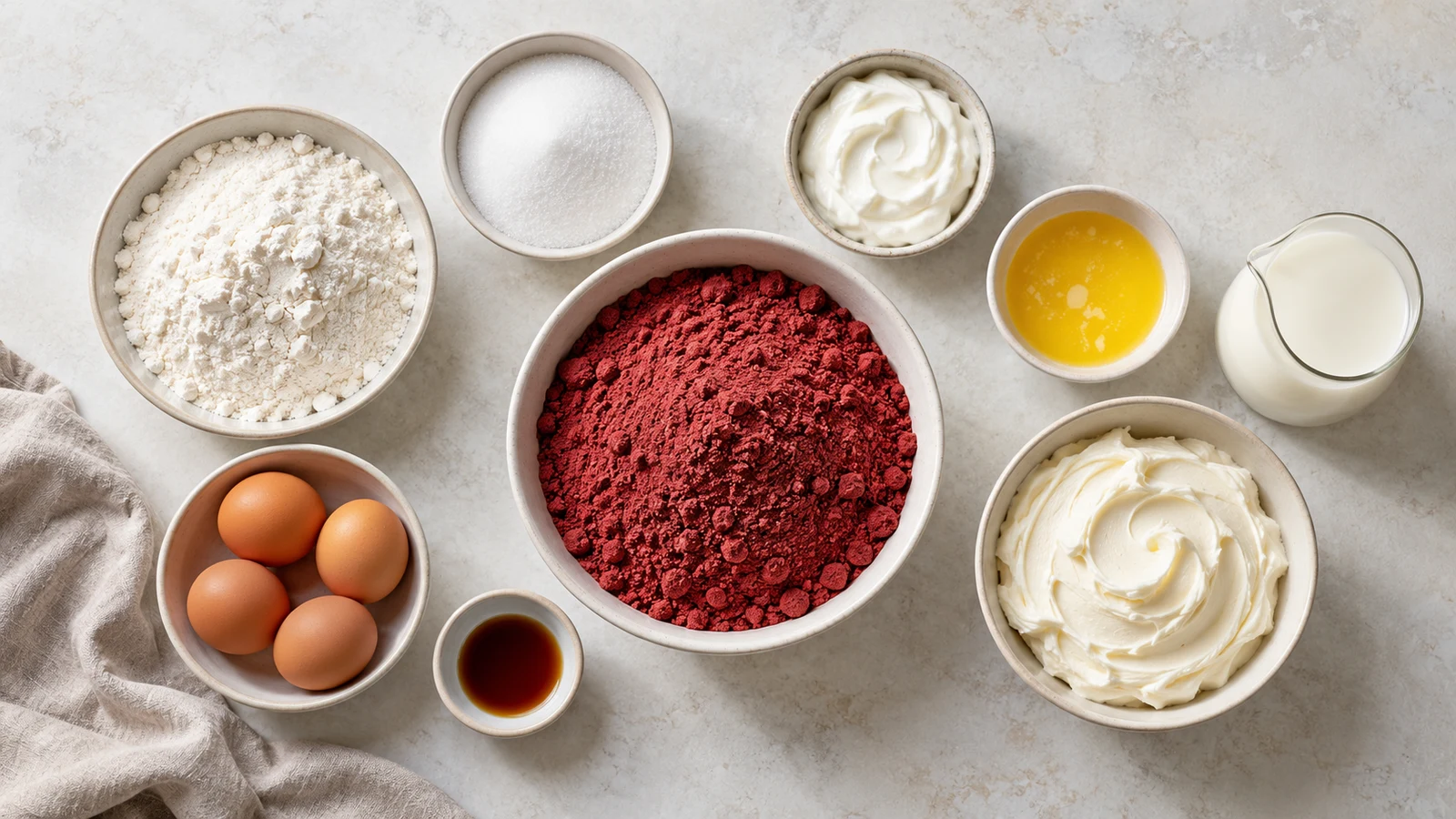
The flour gives the enhanced batter enough structure, while cocoa deepens its flavor. Yogurt retains moisture, milk makes the crumb softer, and butter supplies richness. Use block cream cheese rather than spreadable tub-style cheese so the frosting stays firm.
Why the Added Ingredients Matter
Successful red velvet cake mix recipes balance moisture with enough structure to hold a clean slice. The extra flour and egg strengthen the crumb, while yogurt and milk prevent that structure from tasting dry. Vinegar brightens the flavor and complements the gentle cocoa note rather than making the finished cake taste sour.
Melted butter brings a rounder flavor than water or oil alone. Let it cool slightly before mixing so it does not warm the eggs or create greasy pockets. Sifting the confectioners’ sugar is equally worthwhile because it produces frosting that spreads smoothly without prolonged beating.
Equipment and Pan Options
Use a large bowl, whisk, electric mixer, flexible spatula, cooling rack, and instant-read thermometer or wooden pick. Choose a 10- to 12-cup Bundt pan, two 9-inch round pans, one 9-by-13-inch pan, or two standard 12-cup muffin tins. For more Bundt-pan guidance, see this red velvet Bundt cake recipe.
A kitchen scale is helpful for consistent measurements, particularly for flour, cream cheese, and confectioners’ sugar. If making layers, use parchment circles to protect the bottoms. A small offset spatula helps level batter and frost layers, but a flexible spatula or the back of a spoon also works.
How to Make Red Velvet Cake Mix Recipes
- Prepare the oven and pan. Heat the oven to 350°F (175°C). Grease the selected pan thoroughly; add parchment to the bottoms of layer or sheet pans. Grease every Bundt-pan groove, then dust lightly with cocoa.
- Combine the dry ingredients. Whisk the cake mix, flour, cocoa, and sugar until evenly blended and free of large lumps.
- Add the wet ingredients. Add the eggs, yogurt, milk, melted butter, vanilla, vinegar, and optional coloring. Mix on low for 30 seconds, scrape the bowl, then beat on medium for 90 seconds. Stop as soon as the batter is smooth.
- Fill the pan. Spread the batter evenly in the prepared pan. Fill cupcake liners about two-thirds full. Tap the pan gently against the counter once to release large air pockets.
- Bake for the pan. Bake a Bundt cake for 38 to 48 minutes, two 9-inch layers for 24 to 30 minutes, a 9-by-13-inch cake for 30 to 36 minutes, or cupcakes for 17 to 21 minutes.
- Check doneness. The top should spring back after a light touch, the edges should just begin pulling from the pan, and a pick should emerge with a few moist crumbs but no wet batter. The center should register about 205°F to 210°F (96°C to 99°C).
- Cool completely. Cool layers, sheet cake, or cupcakes in their pans for 10 minutes before transferring them to a rack. Let a Bundt cake rest for 15 minutes, loosen the edges carefully, and invert it. Cool completely before frosting.
- Make the frosting. Beat the cream cheese and softened butter just until smooth. Add confectioners’ sugar gradually, then mix in vanilla and salt. Chill for 15 to 20 minutes if it feels soft. Frost the cooled cake; this cream cheese frosting guide offers additional consistency tips.
Pan material can affect timing, so begin checking at the lower end of each range. Light-colored metal pans generally bake more evenly than dark pans or glass. King Arthur Baking’s red velvet cake method also provides a useful reference for mixing, baking, and assembling this style of cake.
Expert Tips for Red Velvet Cake Mix Recipes
- Use room-temperature ingredients: Eggs and dairy combine more evenly, helping the batter bake with a fine, uniform crumb.
- Measure flour carefully: Spoon it into the cup and level it, or weigh 60 g. Packing flour into the cup can make the cake dry.
- Scrape the bowl: Pause after the initial mixing period and reach across the bottom, where dry cake mix often hides.
- Mix only until smooth: Excess beating develops the added flour and can create a dense or slightly rubbery crumb.
- Protect the red color: Dust a Bundt pan with cocoa instead of white flour to avoid pale residue on the crust.
- Check the oven: An inexpensive oven thermometer can reveal temperature differences that lead to dry edges or an underdone center.
- Cool every component: Warm cake melts frosting, while overbeaten cream cheese frosting can become runny.
For the most reliable red velvet cake mix recipes, judge doneness with more than the clock. Look for a springy surface and a few moist crumbs on a pick, then confirm the center temperature when possible. Carryover heat continues cooking the crumb briefly after the pan leaves the oven.
How to Frost Neatly
Place a small dab of frosting under a layer cake so it stays steady. Apply a thin crumb coat, chill it until firm, and then add the final coat. For cupcakes, spread or pipe the frosting only after the centers are completely cool. A warm center can soften frosting even when the surface feels cool.
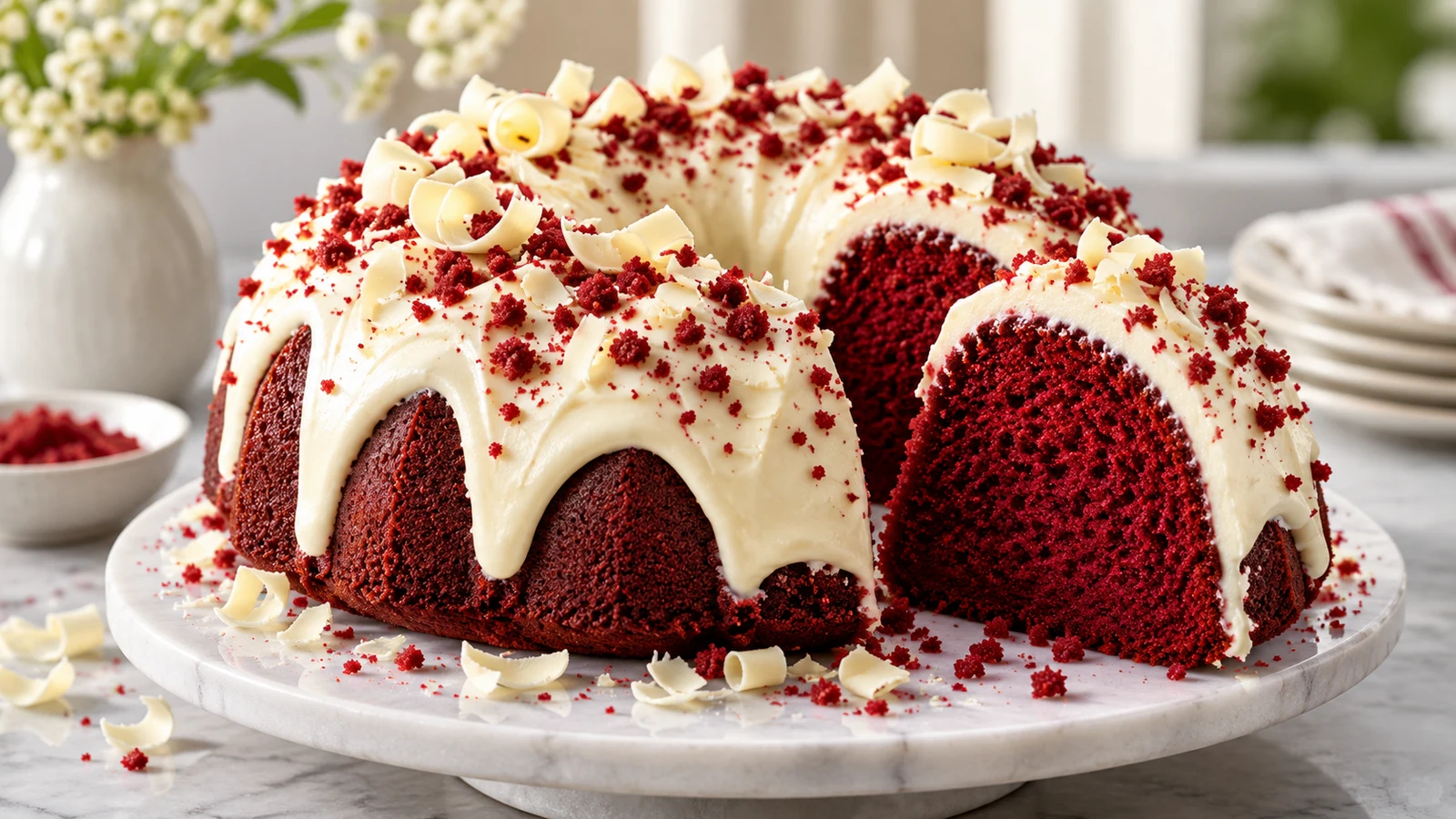
For a Bundt cake, spoon frosting around the top and encourage a few drips down the sides. This relaxed finish suits red velvet cake mix recipes because it displays both the deep red cake and pale frosting without requiring advanced decorating skills.
Variations and Substitutions
Red Velvet Bundt Cake Recipe
Use a 10- to 12-cup Bundt pan and bake for 38 to 48 minutes. This red velvet Bundt cake recipe benefits from careful pan preparation because detailed grooves can trap the tender crumb. Spoon thick frosting over the crown so it runs naturally down the sides, or thin a portion with one tablespoon of milk for a glaze.
To decorate the red velvet Bundt cake recipe, reserve a small piece of unfrosted cake, crumble it finely, and scatter the crumbs over the glaze. Toasted pecans or white-chocolate curls also add contrast without changing the batter or baking time.
Blue Red Velvet Cake Recipe
For a blue red velvet cake recipe, use a white cake mix instead of red velvet, omit the extra cocoa, and add navy or royal-blue gel coloring gradually. One teaspoon of vinegar keeps a gentle tang, while gel coloring provides stronger color without loosening the batter.
When preparing a blue red velvet cake recipe, add coloring a little at a time and remember that the baked shade may differ from the raw batter. White frosting gives the clearest color contrast. Avoid adding large amounts of liquid food coloring, which can thin the batter and leave an unwanted aftertaste.
Cheesecake and Red Velvet Cake Recipe
For a cheesecake and red velvet cake recipe, beat 8 ounces (226 g) softened cream cheese with 1 egg, 1/3 cup (67 g) sugar, and 1/2 teaspoon vanilla. Add half the cake batter to a Bundt pan, spoon the filling into the center without touching the sides, cover with remaining batter, and bake for 45 to 55 minutes.
The filling in a cheesecake and red velvet cake recipe should remain enclosed by batter. Keeping it away from the pan helps prevent sticking and creates a defined cream cheese ribbon in each slice. Chill the cooled cake before cutting if you want especially tidy portions.
Gluten Free Red Velvet Cake Recipe
Start with gluten-free red velvet cake mix and replace the added flour with a 1-to-1 gluten-free baking blend containing xanthan gum. Review this gluten-free red velvet cake recipe for a dedicated version. Ingredient behavior varies among blends, as illustrated by this gluten-free red velvet formula.
Allow the batter for a gluten free red velvet cake recipe to rest for about 10 minutes before it goes into the oven. This gives the flour blend time to hydrate and may reduce grittiness. Check that the cake mix, flour blend, cocoa, and decorations meet the dietary needs of everyone being served.
Sour cream can replace Greek yogurt measure for measure. Buttermilk may replace whole milk and adds extra tang; if using salted butter, omit the added frosting salt. For another perspective on flour blends and gluten-free technique, consult Chef Janet’s gluten-free red velvet guidance.
Other Easy Flavor Variations
- Chocolate accent: Fold in a modest amount of miniature chocolate chips so they remain distributed throughout the batter.
- Orange aroma: Add finely grated orange zest to the frosting for a fresh note that complements cocoa.
- Nutty finish: Sprinkle toasted pecans over the frosting instead of mixing them into the tender cake.
- Simple cupcakes: Divide the unchanged batter among 24 liners and use the stated cupcake baking time.
These variations show why red velvet cake mix recipes work well for gatherings with different presentation needs. Keep the base quantities and pan-specific times unchanged unless following one of the clearly described substitutions.
Troubleshooting Common Problems
Why Is the Cake Dry?
Overbaking and excess flour are the most common causes. Begin testing at the lower end of the time range, measure the added flour carefully, and keep the full amounts of yogurt and butter. Dark pans can brown the exterior faster, so watch the edges closely.
Why Is the Crumb Dense?
Cold ingredients may prevent a smooth emulsion, while prolonged mixing can strengthen the added flour too much. Bring eggs and dairy to room temperature, scrape the bowl once, and stop the mixer as soon as the batter looks smooth and evenly colored.
Why Did the Cake Stick?
Coat every corner, groove, and center tube immediately before filling the pan. Let layers rest for 10 minutes and a Bundt cake for 15 minutes before turning them out. Leaving a delicate cake in the pan too long can allow condensation to encourage sticking.
Why Did the Center Sink?
The cake may have been removed before its structure set, the oven door may have opened too early, or the cake mix may have been expired. Confirm doneness at the center and check your oven temperature. Measure leavening-sensitive ingredients exactly rather than estimating.
Why Is the Frosting Runny?
Use full-fat block cream cheese, not spreadable cream cheese from a tub. Beat the cream cheese and butter only until smooth, then mix in the sugar gradually. If the room is warm, chill the frosting for 15 to 20 minutes before trying to spread it.
Why Is the Red Color Weak?
Natural cocoa and extra cocoa can mute a bright red shade. Use the stated amount and add gel coloring rather than watery liquid coloring if deeper color is desired. Gel delivers concentrated color without significantly changing the batter’s consistency.
Make-Ahead Plan for Red Velvet Cake Mix Recipes
Bake the cake one day before serving, cool it completely, and wrap it well. Unfrosted layers are often easier to level and decorate after an overnight rest because the crumb has settled. Keep them at a cool room temperature for one day or refrigerate them if your kitchen is warm.
The frosting can be prepared up to 3 days ahead and refrigerated in an airtight container. Before decorating, let it soften briefly and stir it until spreadable. Avoid aggressively rebeating it, since too much mixing can loosen cream cheese frosting.
For a red velvet Bundt cake recipe, bake and cool the cake ahead but add a soft glaze nearer serving time for the freshest appearance. A blue red velvet cake recipe can also be baked in advance; keep it covered so the surface does not dry out before frosting.
A cheesecake and red velvet cake recipe should be refrigerated because of its cream cheese filling. Similarly, refrigerate a gluten free red velvet cake recipe once it has cream cheese frosting, and use a tightly covered container to protect the crumb from drying.
Serving and Decorating Ideas
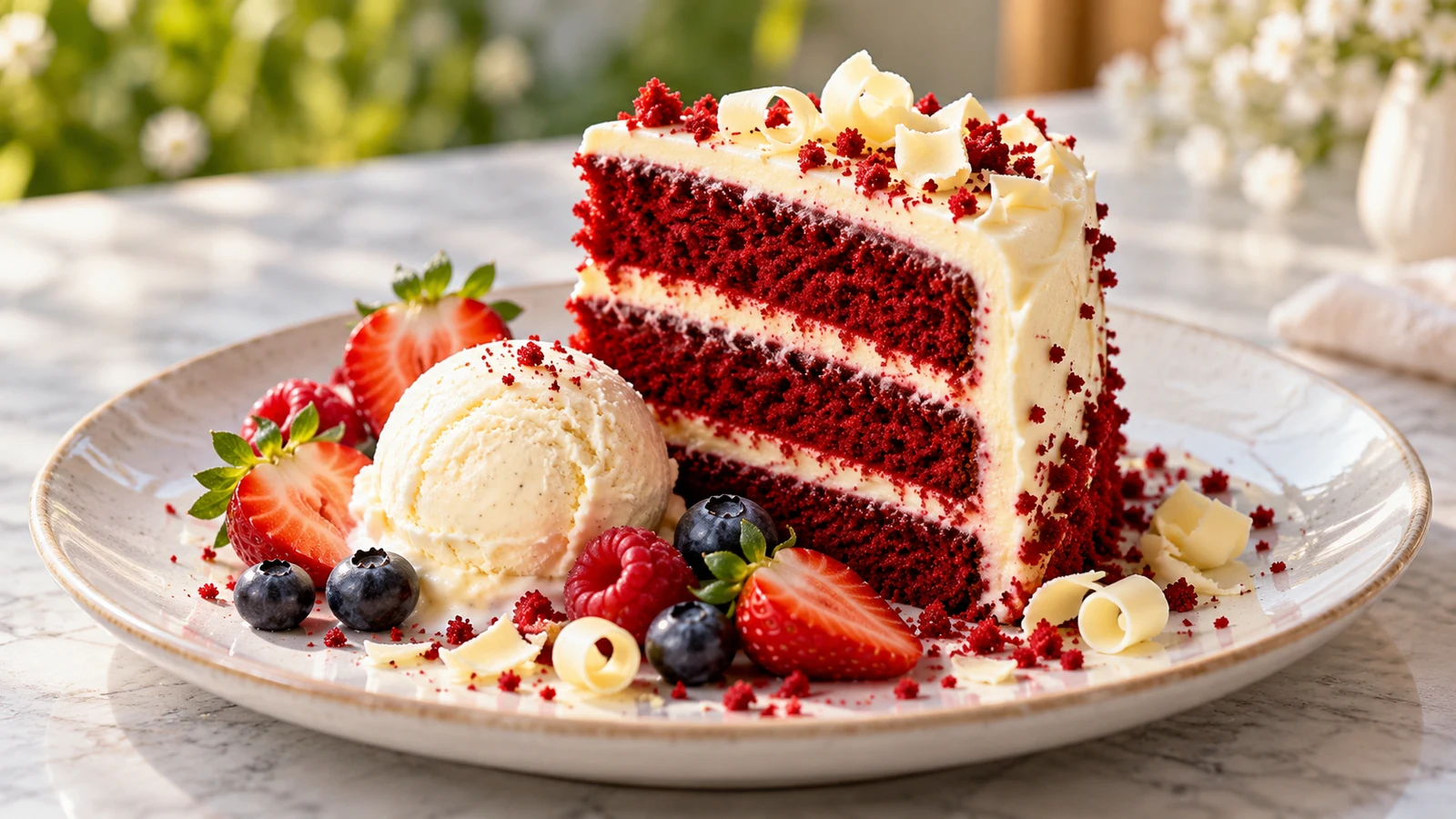
Serve slices with fresh raspberries or strawberries, chocolate curls, toasted pecans, or a small scoop of vanilla ice cream. For clean portions, chill a frosted layer cake for 20 minutes and wipe the knife between cuts.
White-chocolate curls highlight the red crumb, while a scattering of cake crumbs gives the frosting a classic bakery look. For a birthday, add simple candles after chilling the frosting. For a holiday dessert, arrange fresh berries around the serving plate rather than pressing them into the frosting too early.
Pair rich slices with coffee, black tea, or cold milk. Because the cake and frosting are both substantial, modest portions work well after a large meal. Cupcakes are convenient for buffets, while a Bundt cake offers an attractive centerpiece with minimal assembly.
How to Store and Reheat
Because of the cream cheese frosting, refrigerate the covered cake for up to 5 days. Let individual slices stand at room temperature for 20 to 30 minutes before serving; reheating is unnecessary and can melt the frosting.
Unfrosted layers can be wrapped twice and frozen for up to 3 months. Freeze frosted slices until firm, wrap them individually, and store them in an airtight container for up to 2 months. Thaw overnight in the refrigerator.
Keep cut surfaces covered closely to limit moisture loss. If storing cupcakes, arrange them in a single layer so the frosting is not crushed. Do not leave cream cheese-frosted cake at room temperature for extended periods, especially in a warm kitchen.
Freezing red velvet cake mix recipes in individual portions makes it easy to thaw only what you need. Label each package with the date and whether it is frosted. Unwrap unfrosted cake after thawing to prevent trapped condensation from making its surface sticky.
Frequently Asked Questions
Can I Make Red Velvet Cake Mix Recipes Ahead?
Yes. Bake the cake one day ahead, cool it fully, wrap it well, and frost it the next day. The frosting can be refrigerated separately for up to 3 days; soften it briefly and stir before using.
Can I Use Oil Instead of Melted Butter?
Yes. Replace the butter with 1/2 cup neutral oil for an especially soft crumb. Butter gives richer flavor, while oil usually keeps cake moist slightly longer.
Why Did My Red Velvet Bundt Cake Recipe Stick?
The pan may have had uncoated grooves, or the cake may have rested too long before inversion. For a reliable red velvet Bundt cake recipe, grease carefully, dust with cocoa, and turn it out after about 15 minutes.
Can I Turn This Batter Into Cupcakes?
Yes. Divide the batter among two standard 12-cup muffin tins, filling each liner about two-thirds full. Bake for 17 to 21 minutes and cool the cupcakes completely before frosting. The stated recipe yields 24 cupcakes.
Can I Bake the Batter in Two Round Pans?
Yes. Divide it evenly between two prepared 9-inch round pans and bake for 24 to 30 minutes. Parchment on the pan bottoms helps the tender layers release. Cool them for 10 minutes in the pans before transferring them to a rack.
How Do I Keep a Blue Red Velvet Cake Recipe Vibrant?
Use white cake mix, omit the extra cocoa, and choose concentrated navy or royal-blue gel color. Add it gradually because brands vary in strength. A blue red velvet cake recipe also looks brighter beside white cream cheese frosting.
How Do I Slice a Cheesecake and Red Velvet Cake Recipe Cleanly?
Chill the finished cake until the filling and crumb are firm. Use a thin, sharp knife, wipe it clean after each cut, and allow portions to soften briefly before serving. This gives a cheesecake and red velvet cake recipe distinct layers without ragged edges.
Which Flour Blend Works in a Gluten Free Red Velvet Cake Recipe?
Choose a 1-to-1 gluten-free baking blend that contains xanthan gum and is intended to replace wheat flour by measure. Because blends absorb liquid differently, a dedicated gluten free red velvet cake recipe offers the most predictable texture.
Can I Reduce the Sugar?
The sugar supports moisture, browning, and texture as well as sweetness, so reducing it can change the crumb. For balanced results, keep the listed quantity and serve smaller slices if desired. Tangy cream cheese frosting already helps offset the cake’s sweetness.
What Is the Approximate Nutrition?
Based on 16 frosted servings, each portion has approximately 460 calories, 22 g fat, 63 g carbohydrate, and 5 g protein. Values vary by cake-mix brand and serving size.
Recipe Card
- Prep time: 20 minutes
- Baking time: 17 to 48 minutes, depending on pan
- Cooling and frosting time: About 1 hour 15 minutes
- Oven temperature: 350°F (175°C)
- Yield: 16 cake servings or 24 cupcakes
- Nutrition: Approximately 460 calories per frosted serving
Final Thoughts
With one flexible batter, clear pan-specific timing, and a balanced cream cheese frosting, these red velvet cake mix recipes deliver a moist, attractive dessert without an all-day baking project. Careful measuring, gentle mixing, and complete cooling make the greatest difference.
Whether you choose the classic layers, the red velvet Bundt cake recipe, a colorful blue red velvet cake recipe, the creamy cheesecake and red velvet cake recipe, or a gluten free red velvet cake recipe, the same practical techniques help produce a tender crumb and polished finish.
Reviews
Reader reviews are managed separately (outside this build).